IMPERMANENCE, TEA AND THE BEAUTY OF WORN THINGS
The phrase wabi-sabi joins two older Japanese words, and the wabi sabi meaning most often given in English is an appreciation of things that are imperfect, impermanent and incomplete. The Stanford Encyclopedia of Philosophy glosses wabi as understated beauty and sabi as rustic patina. The Carnegie Library of Pittsburgh traces the aesthetic to the philosophy of cha-no-yu, the tea ceremony, in 15th-century Japan. In the following century tea masters turned from sleek Chinese imports to rustic Korean and Japanese pottery and to rooms of raw earth and timber. The compound reached Western designers through a short book published in 1994 by Leonard Koren, a writer trained in architecture, and it is now applied to ceramics, furniture and interiors.
WHAT DOES WABI SABI MEAN?

Wabi is the noun form of the verb wabu, which Shogakukan's Waraku magazine glosses as a state of desolation, sorrow or lament. EBSCO's Research Starters reference notes that until the 14th century the word described loneliness, in particular the solitude of a recluse living apart from others in nature. It later came to mean accepting hardship and finding calm within it. The Zencharoku (Zen Tea Record, 1828) opens its section on wabi by tying it to the upholding of Buddhist precepts, and says that in wabi no thought of hardship arises even in straitened circumstances. In the Stanford Encyclopedia's account, wabi was first praised in poetry before the tea tradition and its Zen setting developed it most fully.
Sabi is the noun form of the verb sabu. In the Man'yoshu poetry anthology it carries a sense of desolateness, and later it took on the meaning of something that has aged well or grown rusty. The scholar Hammitzsch, quoted in the Stanford Encyclopedia, described sabi as carrying the patina that lends old things their beauty, together with tranquillity and deep solitude. EBSCO traces a similar shift: sabi once referred to something past its prime, such as a fading plant or worn clothing, and in the 15th century Zen adherents recast it as the beauty of how things age, with flaws read as evidence of a long and useful life.
WHERE DID WABI SABI COME FROM?

Both words draw on a Buddhist understanding of reality as constant change. The Stanford Encyclopedia names this idea mujo, impermanence, and finds it expressed most forcefully by the 13th-century Zen master Dogen. The Buddhist priest Yoshida Kenko, in Essays in Idleness (Tsurezuregusa, 1332), asks whether cherry blossoms should be viewed only in full bloom and the moon only when the sky is clear, and judges branches about to blossom and gardens strewn with faded flowers more worthy of admiration. In Donald Keene's translation, Kenko writes that "the most precious thing in life is its uncertainty".
According to EBSCO, Buddhists of the 14th and 15th centuries joined the two words to express the view that impermanence holds beauty, peace and simplicity, and treated that view as a path towards spiritual maturity. The Urasenke school of tea records that Kukai brought tea to the Japanese court in the early 9th century, that Eisai (1141 to 1215) introduced the Rinzai tradition and powdered tea, and that Dogen, the Soto patriarch, brought tea utensils from China in 1227. Urasenke also names Daitokuji as the Zen temple where most of the great tea masters of the 15th and 16th centuries studied.
MURATA JUKO, TAKENO JOO AND SEN NO RIKYU
The first of the tea masters who shaped wabi was Murata Juko, whose name is also read Shuko, a 15th-century Zen adherent described in the Stanford Encyclopedia as the founder of one of the first schools of tea and a pioneer of tea aesthetics. Urasenke records that he studied Zen under Ikkyu Sojun from 1474 until Ikkyu's death, and that he urged tea drinkers to look for as many admirable qualities in Japanese objects as in Chinese ones. Waraku quotes his remark that a moon with no clouds is disagreeable, a preference for a moon partly hidden by cloud.
His student Takeno Joo was heir to a leather business in Sakai, a port city trading with China. Urasenke credits him with simplifying the tea room through unpapered earthen walls, bamboo lattice and a narrower alcove framed in natural wood, and records that he used a poem by Fujiwara Teika to illustrate the wabi spirit. Joo's own disciple was Sen no Rikyu (1522 to 1591), born in Sakai, who became his pupil at nineteen. Rikyu served Oda Nobunaga and was later appointed personal tea master to Toyotomi Hideyoshi.
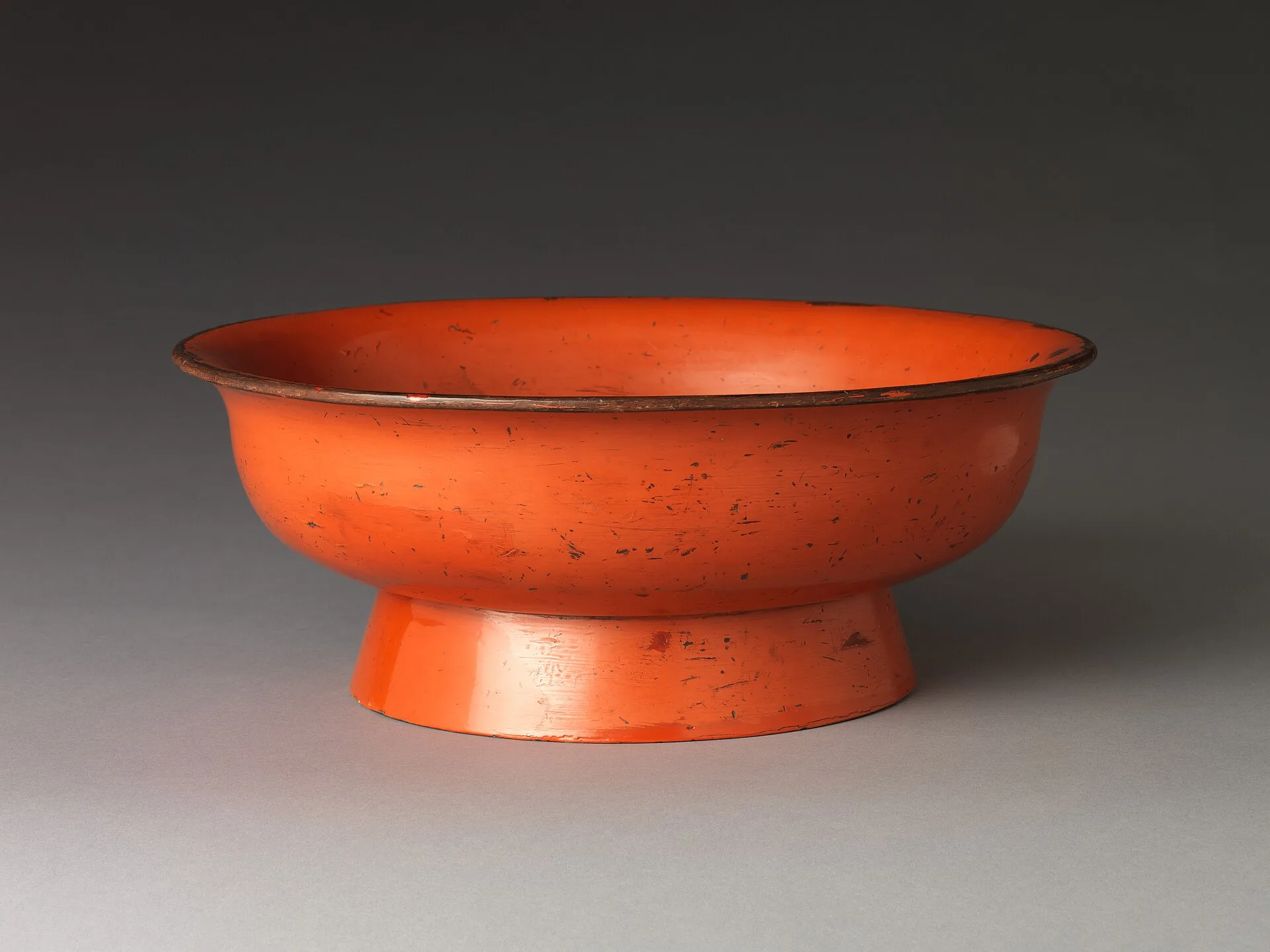
The Metropolitan Museum of Art notes that in the mid-16th century tea masters, Rikyu in particular, began using rustic Korean and Japanese vessels in place of the ancient Chinese wares first prized for tea, an aesthetic of austerity, spontaneity and apparent artlessness known as wabi. A saying of Rikyu recorded in the Namporoku (1690) holds that in a small tea room every utensil should be less than adequate. Urasenke sets this quiet wabi style against the luxury of Hideyoshi's Golden Tearoom. Rikyu's low entrance, which guests of every rank crawled through, is covered in our article on the Japanese tea house.
ASYMMETRY, ROUGHNESS AND PATINA
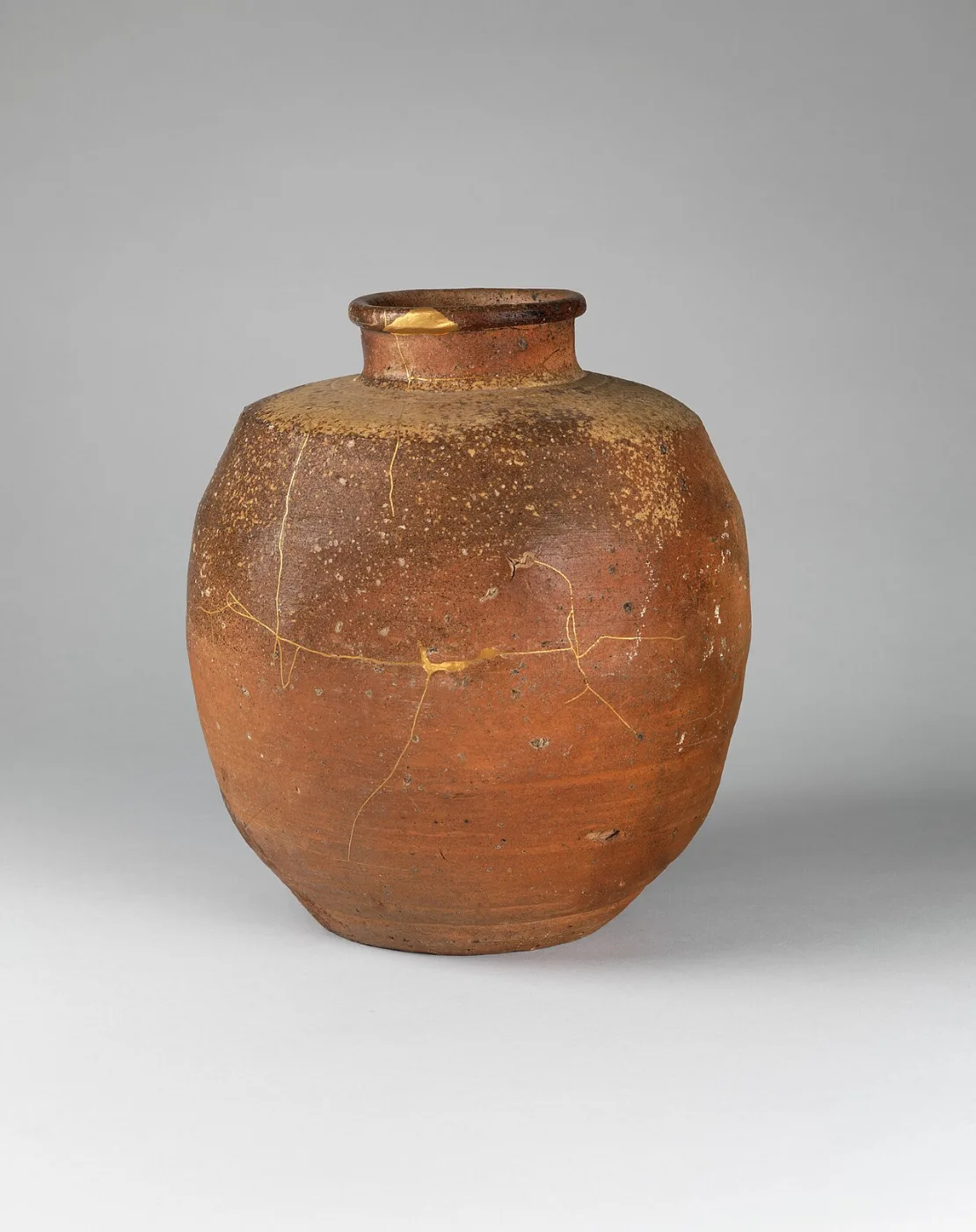
The Met describes the farm storage jars of kilns such as Shigaraki, which later drew the interest of tea practitioners, as usually built from coiled bands of clay, often resulting in asymmetrical vessels, with natural ash glazes that formed as kiln ash melted on their shoulders. The Stanford Encyclopedia notes that in tea, implements with minor imperfections are often valued more highly than flawless ones, and that broken or cracked utensils are prized as long as they have been well repaired. Visible repair is the subject of our article on kintsugi. In Rikyu's huts, walls and timber were left raw and unfinished.
EBSCO's reference sets out the same qualities in general terms. Wabi-sabi objects are natural in origin, made of wood, stone, fabric, clay or other organic materials, and synthetic materials are excluded. Colours are subdued and surfaces uneven, carrying the irregularities of the material. A stone worn smooth by water or wind fits the idea, while one cut and polished by machine does not. Forms are simple, nothing is aligned so precisely that it looks contrived, and an object may be costly without displaying wealth. Handmade cups and plates are thicker and show evidence of handwork, while thin, delicate wares sit outside the aesthetic.
WABI SABI IN JAPANESE CERAMICS AND ARCHITECTURE

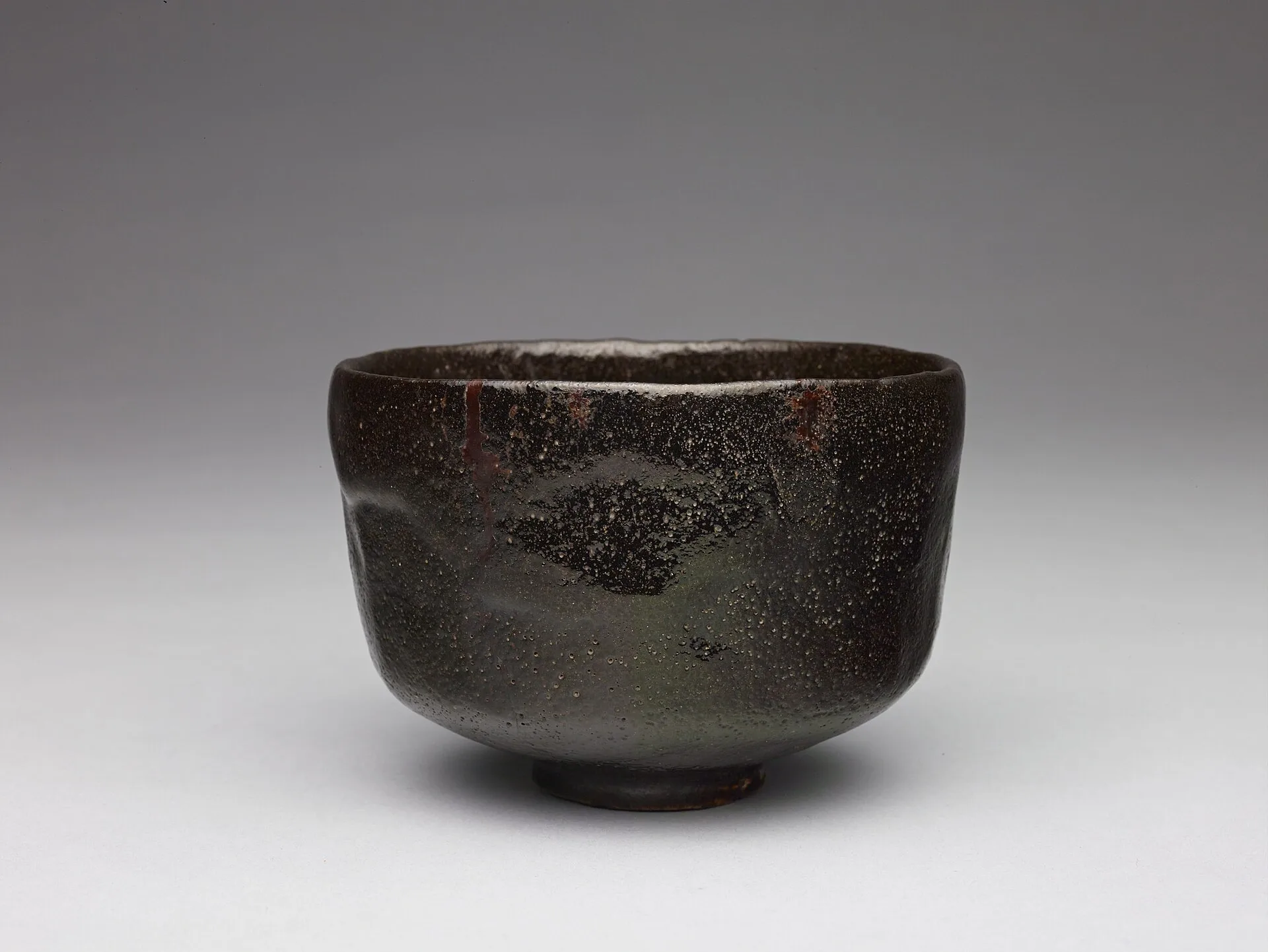
The Stanford Encyclopedia records that Rikyu enlisted the potter Chojiro to give form to tea ware embodying wabi. The Raku Museum states that it was started in the mid-16th century by Chojiro, forebear of the Raku family, whose father Ameya, originally from China, brought techniques from Ming dynasty sancai ware. Chojiro's oldest attributed work is a lion figure dated 1574, and his first tea bowl was presumably made in 1579. The museum describes the Raku tea bowl as emerging from the wabi aesthetic advocated by Rikyu. The Met describes Raku as lightweight glazed earthenware, usually tea bowls, moulded by hand rather than thrown, and notes that the family still makes them. The encyclopedia calls Raku bowls often asymmetrical and imperfect in form and finish.
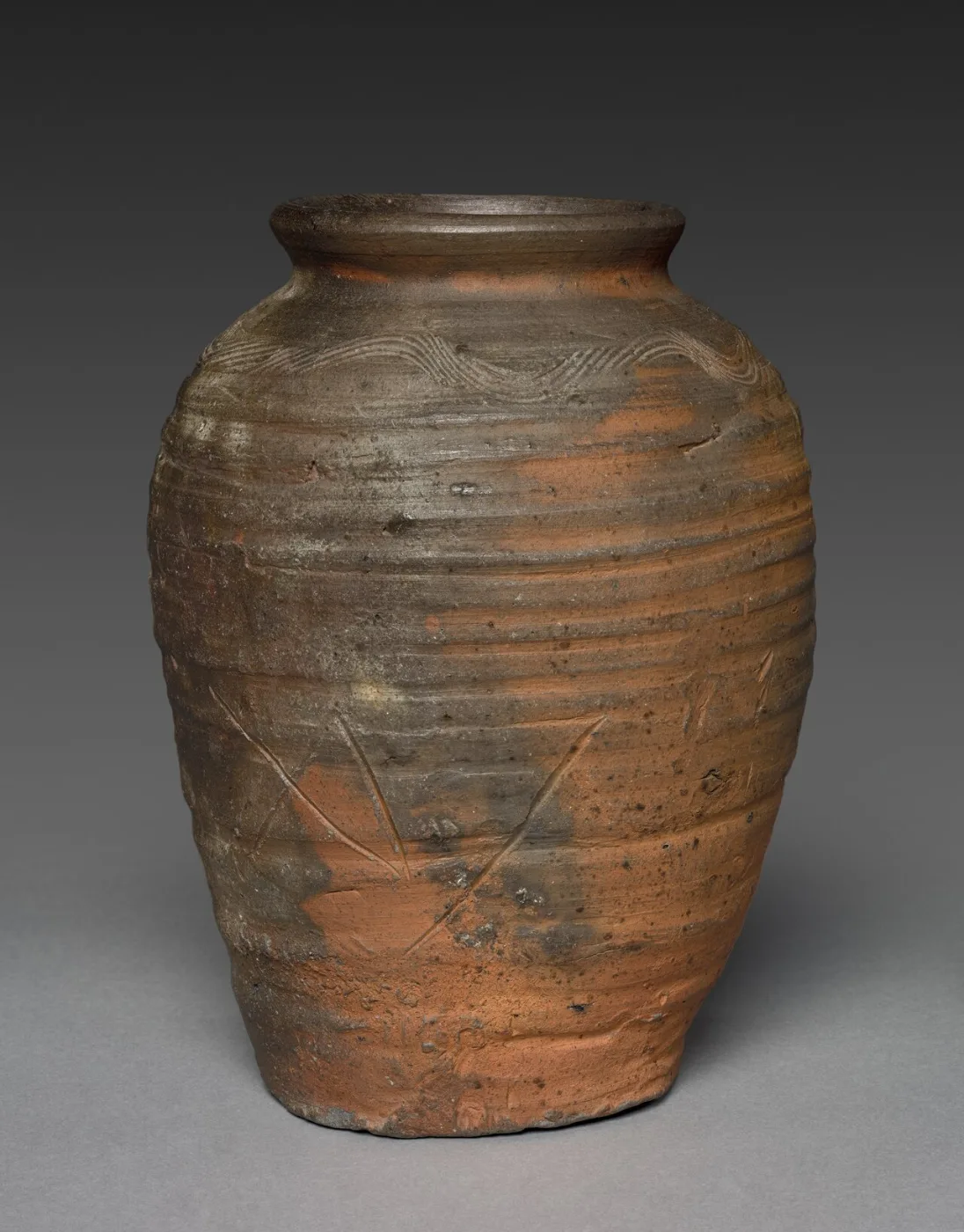
Other wares supplied the same taste. Shigaraki stoneware, first made for farmers, has a fiery orange colour and a speckled, bumpy surface caused by feldspar in the clay, while Bizen, produced since the Heian period, ranges from deep reddish to blackish brown. The tea master Furuta Oribe, a disciple of Rikyu, gave his name to Oribe ware and was known for preferring warped or seemingly flawed pieces. In architecture, the Met describes the tea room as usually large enough for only four or five people and modelled on a hermit's hut, often within a garden. The Stanford Encyclopedia calls the late 15th-century Silver Pavilion at Ginkakuji the epitome of sabi.
YUGEN, SHIBUMI AND SABI IN POETRY
Wabi-sabi sits within a wider vocabulary. Mono no aware, in the Stanford Encyclopedia's definition, is the pathos of things, deriving from their transience. Yugen first appears in Chinese philosophical texts with the meaning of dark or mysterious. In Japan, Kamo no Chomei, author of the Hojoki (An Account of my Hut, 1212), treated yugen as a primary concern of the poetry of his time and compared it to an autumn evening under a silent, colourless sky. The noh playwright Zeami Motokiyo (1363 to 1443) named yugen "the highest principle" in his treatises on noh drama.
Sabi entered poetry through haikai verse. Waraku credits Matsuo Basho with bringing wabi-sabi into haikai at a time when the form favoured more flamboyant styles, and quotes his disciple Mukai Kyorai: "Sabi is the colour of a poem." The Stanford Encyclopedia reads a 17th-century Basho haiku pairing solitude with a cypress among blossoms as typical of sabi. A related term, shibumi, meaning astringent, appears in Kuki Shuzo's The Structure of Iki, drafted in Paris in 1926 and published in 1929, where it is set against amami, sweet.
HOW WABI SABI REACHED THE WEST
In English the compound is closely tied to Leonard Koren. The San Francisco Chronicle reports that he entered UCLA in the late 1960s to study art and philosophy, left to join friends forming a mural painting company, the Los Angeles Fine Arts Squad, and later earned a graduate degree in architecture and urban planning. From 1976 to 1981 he published Wet, a magazine of gourmet bathing, and then began commuting to Tokyo for consulting work, splitting his time between San Francisco and Tokyo for about 15 years.
His Wabi-Sabi for Artists, Designers, Poets & Philosophers followed in 1994 as a slim paperback. Koren's own website describes it as the book that introduced the term wabi-sabi to the non-Japanese world, and the Chronicle names him as the writer who introduced the concept to Western readers. Koren has described wabi-sabi as "a shorthand that describes a whole aesthetic and philosophical universe", and in the book names "material poverty, spiritual richness" as its bywords. He returned to the subject in Wabi-Sabi: Further Thoughts (2015).
Designers have since applied the term to interiors and products. EBSCO describes wabi-sabi homes as using calm, natural colours, simply designed furniture and items that are often well worn, with scratches or missing handles. Each item has a place, and natural elements are mixed with personal touches. The same reference links the idea to sustainable design through eco-friendly materials, purposeful upcycling, waste reduction and a regard for craftsmanship. The Chronicle observes that the word has also become a common descriptor for lumpy pottery on Etsy.
CORTEN STEEL, PINE AND CONCRETE AT RIN SHENZHEN
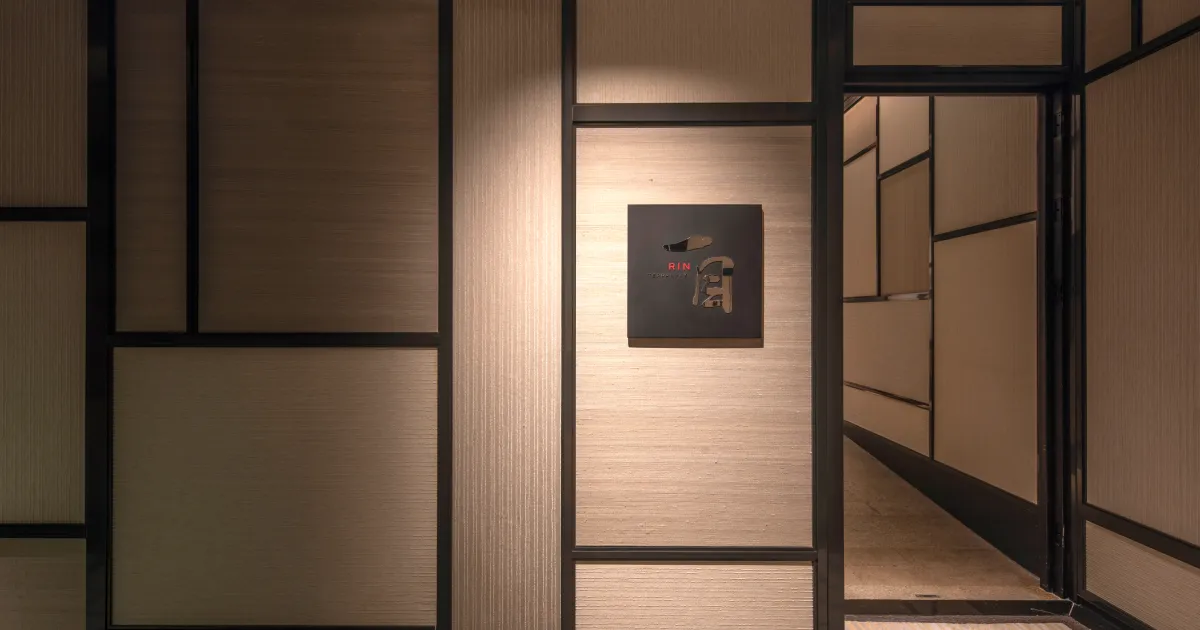
RIN is the signature Japanese restaurant at Mandarin Oriental Shenzhen, completed in 2022 and led by chef Masanobu Hoshina. It is reservation-only and every room is private. The format is teppanyaki, with ingredients prepared raw in front of guests. Equipment sits under the counter, and the sightline runs past the chef to the city. Guests begin in a Sake Lounge and pass through low doors into one of three rooms, named Corten Steel, Pine and Concrete, each taking its name from a material.
The three names can be read beside the vocabulary traced above. The Stanford Encyclopedia's account of sabi covers things that have aged well or grown rusty, and Hammitzsch's gloss refers to the patina that lends old things their beauty. EBSCO's list of wabi-sabi materials names wood and stone among the natural materials, and Rikyu's tea huts left their walls and timber raw and unfinished. The history of the weathering steel that gives the first room its name is covered in our article on Corten steel.
SOURCES
- Stanford Encyclopedia of Philosophy Japanese Aesthetics
- The Metropolitan Museum of Art The Japanese Tea Ceremony
- Urasenke An Introduction to Chado
- Raku Museum History of Raku Ware
- EBSCO Research Starters Wabi-Sabi
- Waraku (Shogakukan) Wabi-sabi
- Carnegie Library of Pittsburgh Wabi-Sabi: The Japanese Art of Finding the Beauty in Imperfections
- San Francisco Chronicle Leonard Koren's way of wabi-sabi
- Leonard Koren Leonard Koren