FROM THE DISCOVERY OF NEON IN 1898 TO CLAUDE NEON, LAS VEGAS AND HONG KONG

Neon signs are glass tubes bent into letters and shapes, emptied of air, filled with a rare gas and lit by an electric current. Neon itself was isolated at University College London in 1898 by William Ramsay and Morris Travers. The French engineer Georges Claude turned its red glow into a lamp, showed it in Paris in 1910 and patented his system in 1915, and his company, Claude Neon, sold its first signs in the United States in 1923. Plastic signs, and later LED lighting, reduced the trade, and museums in Las Vegas and Hong Kong now collect the signs that survive.
WHO DISCOVERED NEON?
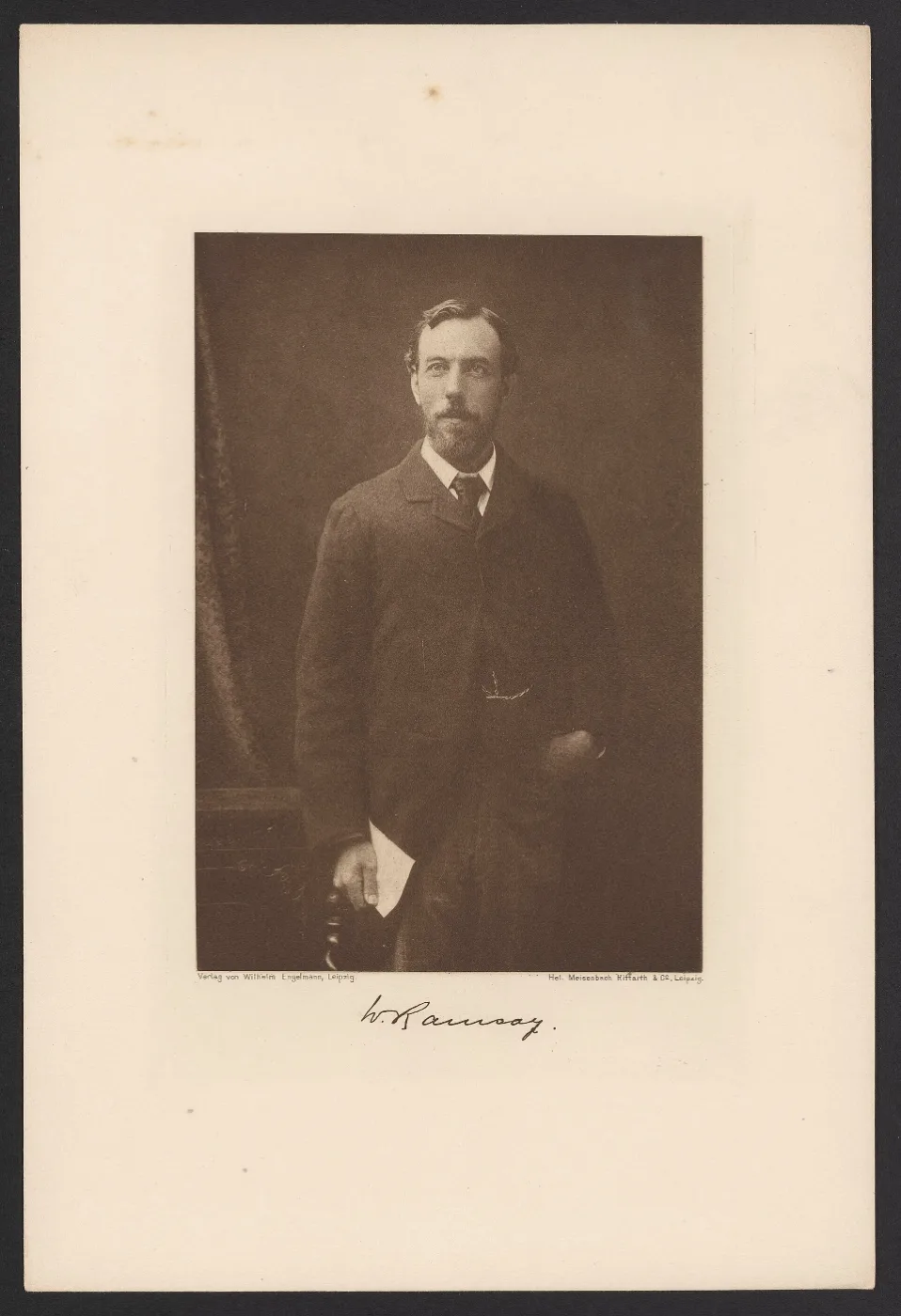
Neon was discovered in 1898 by the chemists William Ramsay and Morris Travers at University College London. Ramsay had discovered argon in 1894 and isolated helium in 1895, and the space the missing gas left in the periodic table had been a source of years of frustration. According to the Royal Society of Chemistry, the two men let solid argon, surrounded by liquid air, evaporate slowly under reduced pressure and collected the gas that came off first. They placed a sample in an atomic spectrometer and heated it.
Of the spectrometer test, Travers later wrote that the blaze of crimson light from the tube told its own story. The name comes from the Greek neos, meaning new. The Royal Society of Chemistry records that Ramsay's 13-year-old son proposed the Latin novum, and that his father preferred the Greek. Neon is now obtained from liquid air by fractional distillation, and a few tons a year meet commercial needs. Pure neon glows red, which is the colour Claude's first lamps produced.
HOW DID GEORGES CLAUDE INVENT NEON LIGHTING?
Georges Claude was born in Paris in 1870 and worked as an engineer, chemist and inventor. Britannica credits him with a process, from 1902, for producing liquefied air in quantity, developed independently of the German chemist Carl von Linde. While studying the inert gases, he found that passing an electric current through them produced light, and in 1910 he developed the neon lamp for lighting and signs. He named it after himself: Fading Neon Lights, a history of neon published by City University of Hong Kong Press in 2023, records that he called it the Claude Tube.
The Royal Society of Chemistry dates Claude's first public display of a neon lamp to 11 December 1910, at an exhibition in Paris. Smithsonian magazine and Fading Neon Lights both identify the event as the Paris Motor Show, where, according to the book, Claude set up two neon installations 39 feet (about 12 m) long. The lamp drew attention but sold no tubes, because buyers did not want red light in their homes. Claude found instead that the tubes could be bent to form glowing letters, and he patented the invention in 1915. Fading Neon Lights credits his assistant Jacques Fonseque with seeing the commercial potential of neon's glow, and records that in 1912 the two men made and sold what the book calls the world's first neon advertising sign to Palais Coiffeur, a barbershop on the Boulevard Montmartre. In 1919 Claude lit the main entrance of the Paris Opéra, the Palais Garnier, with red and blue tubes, a combination that became known as couleur Opéra.
HOW DID NEON SIGNS ARRIVE IN THE UNITED STATES?
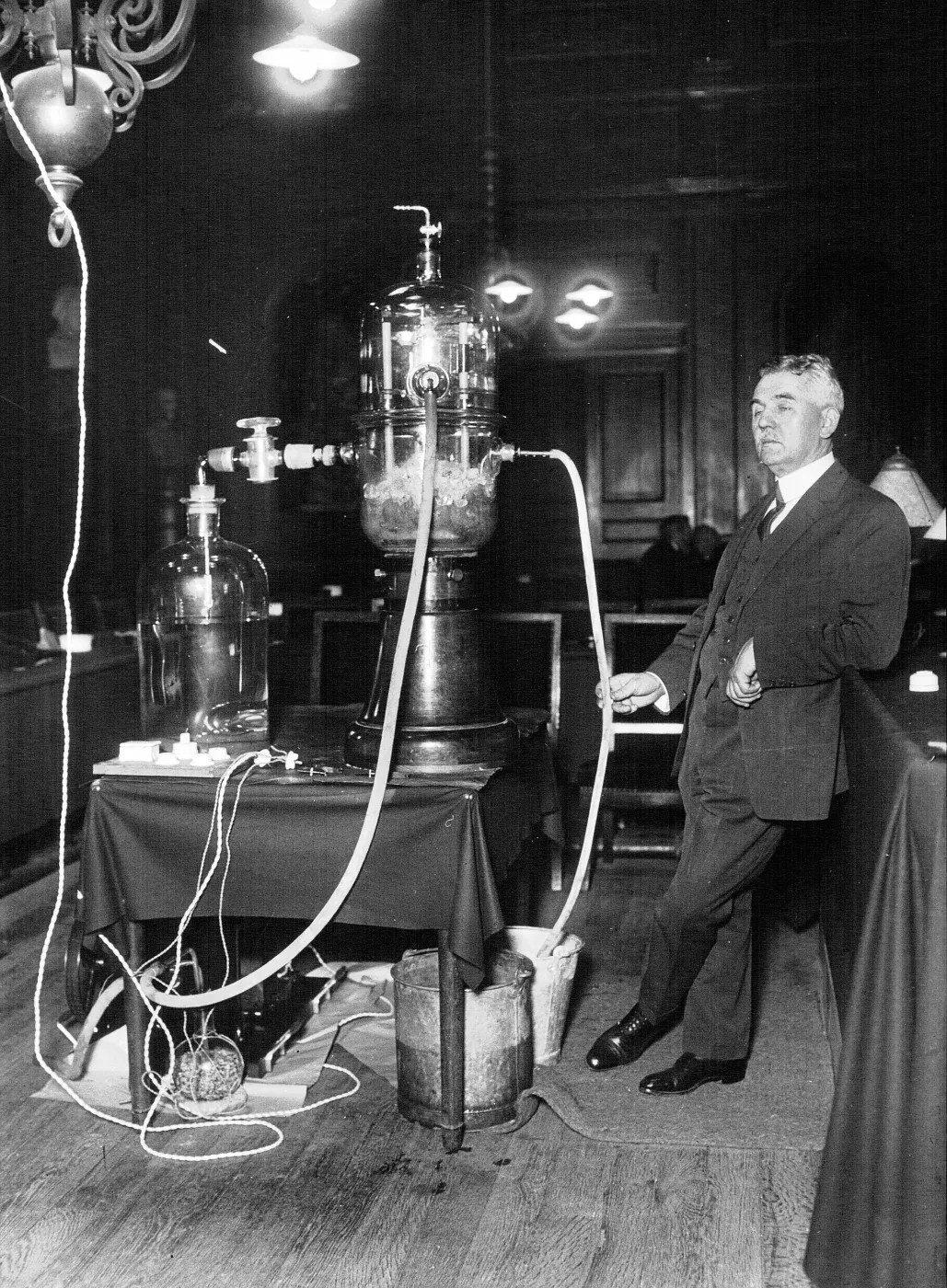
The National Park Service's Preservation Brief 25, written by Michael J. Auer in 1991, records the first documented commercial neon sign in the United States at a Packard Motor Car dealership in Los Angeles in 1923. Fading Neon Lights names the buyer as the American businessman Earle C. Anthony, who bought a sign reading PACKARD from Claude for his car dealership. The Royal Society of Chemistry states that Claude Neon sold two signs to the dealership that year. Early neon signs were nicknamed liquid fire, and the Royal Society of Chemistry notes that people stopped to stare at them even in daylight.
Neon then spread through American cities. Preservation Brief 25 records that neon first appeared in signs in the 1920s and reached its height of popularity in the 1940s, and notes that tubing could be combined with an electric timer to show images moving in sequence. According to Fading Neon Lights, several American companies soon worked with Claude to obtain authorisation to produce neon signs. By 1933 Manhattan and Brooklyn reportedly had more than 16,000 neon signs, and in the 1940s the United States had more than 2,000 neon sign companies.
HOW ARE NEON SIGNS MADE?

A neon sign starts as a drawing. M+ in Hong Kong describes tracing-paper outlines showing how each tube would bend to form characters, and separate masters for design, bending, scaffolding and installation. The M+ catalogue entry for the Sammy's Kitchen sign sets out the core process: glass tubes are heated with a gas torch and bent by hand to the design, evacuated with a vacuum pump and filled with gas. Preservation Brief 25 adds that each new tube is purified by heating the glass and the metal electrode at each end in turn, which burns off surface impurities before the tube is evacuated.
The gas and the glass set the colour. Preservation Brief 25 states that neon produces red and a mercury and argon mixture produces blue, and that other colours come from coloured glass and phosphor coatings inside the tube: mercury and argon in yellow glass, for example, gives green. The Royal Society of Chemistry counts more than 150 possible colours from varying proportions of argon, mercury and phosphors. Fading Neon Lights records that 24 neon colours were available by the 1960s and that the number has since risen to 100.
According to Preservation Brief 25, a neon sign can last 50 years, though 20 to 25 years is more typical, and failures usually come from broken tubes, electrodes or transformers rather than from the gas. Intense flickering points either to a failing transformer or to gas pressure that is too high or too low, in which case the gas must be repumped. A failing transformer may have to be replaced, and if a tube is broken, a new one must be made by a highly skilled glass bender.
WHY DID NEON SIGNS DECLINE?
Preservation Brief 25 places the change in the decades after the Second World War, when plastic, inexpensive and suited to mass production, quickly became the dominant sign material. Plastic signs were translucent and lit from behind so that they appeared to glow. The brief also notes the rise in this period of national chain stores and franchises, which brought standard corporate signs in place of many local businesses. Smithsonian adds that cities banned neon for being overly gaudy, that cheaper plastic signage gained popularity, and that repairing a neon sign is time-consuming and expensive. Vancouver once had about 19,000 neon signs; in 2020 a source quoted by Smithsonian estimated that there might be 25.
Preservation Brief 25 describes neon as once in, then out, then in again. After its period of decline it underwent a renaissance from the 1970s, when artists experimented with neon as a conscious art form and several notable architects helped bring it back, and the renewed interest also sparked interest in preserving historic neon signs. The same brief notes that many notable signs had already been lost because local sign controls were written while neon was out of favour, and that neon is still held in disfavour in some areas. Smithsonian also reports a renaissance, with vintage enthusiasts restoring old signs and turning their collections into museums.
WHERE ARE HISTORIC NEON SIGNS PRESERVED?

The Neon Museum in Las Vegas was founded in 1996 as a non-profit organisation to collect, preserve, study and exhibit the city's signs. Its campus includes the Neon Boneyard, an outdoor space holding more than 250 unrestored signs alongside restored signs that are lit, a North Gallery of further rescued signs, and a visitors' centre in the former lobby of the La Concha Motel. The collection runs from the 1930s to the present and records changes in sign design and technology. Smithsonian lists signs from the Sahara and Stardust casinos among its holdings.
Preservation Brief 25 sets out how historic signs should be treated in place. It recommends keeping them wherever possible and lists neon, with gold leaf and stainless steel lettering, among the features that date a sign to its period. A neon studio can establish a sign's original colours, and repair of neon signs is not a matter for amateurs. The brief cites Glen Echo Park, an early 20th-century amusement park near Washington, DC, whose neon signs were repaired and relit by professional fabricators, and notes that communities are increasingly adopting ordinances that recognise older and historic signs and allow them to stay.
WHAT HAPPENED TO HONG KONG'S NEON SIGNS?
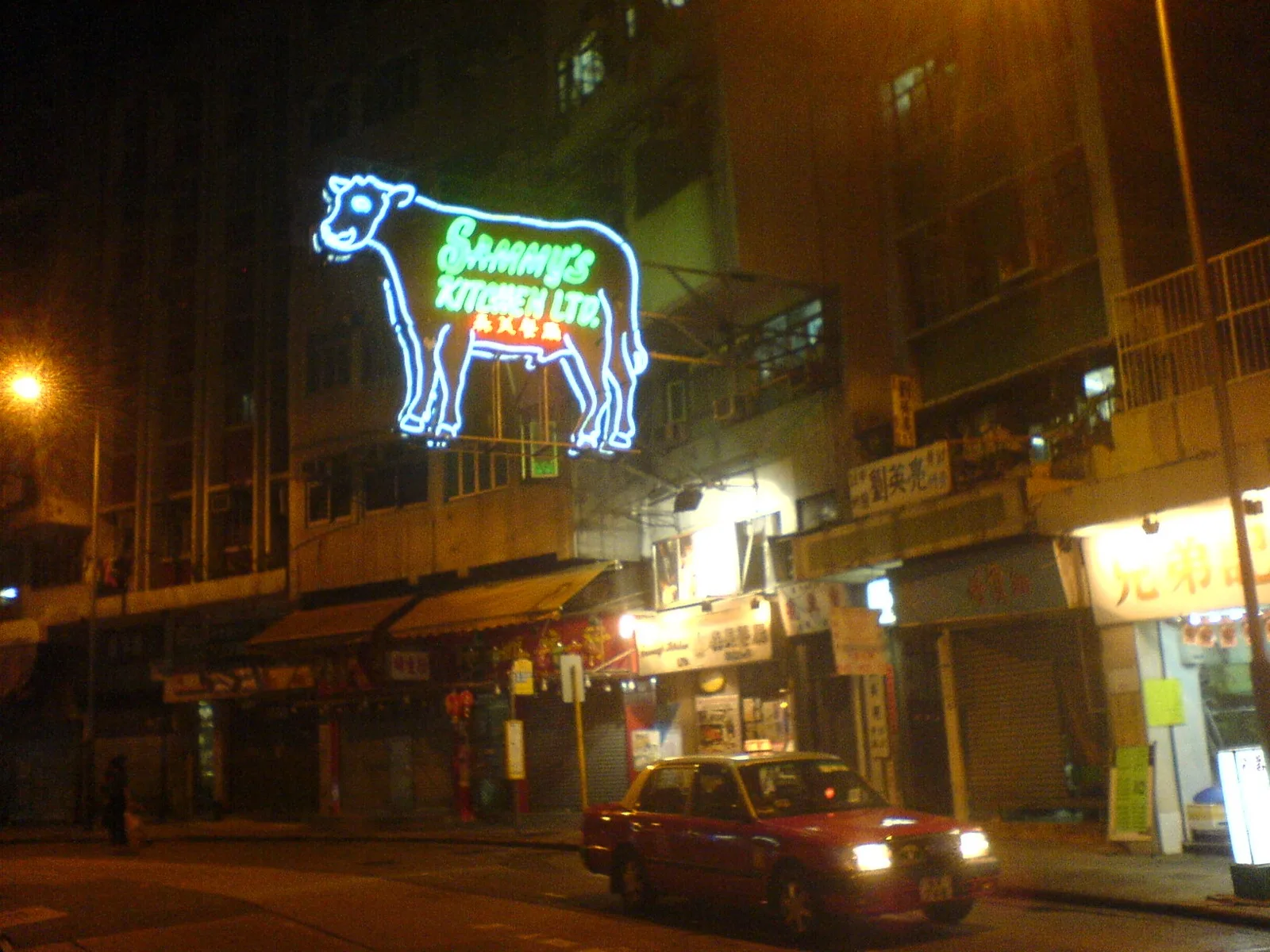
M+ dates neon's arrival in Hong Kong to the 1920s, citing a 1929 newspaper report. The South China Morning Post describes neon as once a ubiquitous sight, with a heyday in the decades up to the 1980s. The decline began around 2000, as businesses moved to cheaper and more flexible LED lighting, and most manufacturing moved to Shenzhen in the 2000s. The Post reported that only eight neon masters were left in Hong Kong, none of them working full-time. In 2026 a craftsperson interviewed by M+ put the number of active craftsmen at fewer than ten.
M+ began collecting neon signs in 2013 and held five, with a large archive of design drawings from the maker Nam Wah Neonlight & Electrical, by 2020. One is the cow-shaped sign of Sammy's Kitchen at 204 to 206 Queen's Road West, Sai Ying Pun, made around 1978. It was designed by the owner, Sammy Yip, with Pak-Fuk Chiu of Fu Wah Neon Engineering, founded in 1969. The sign measures 450 by 360 by 40 cm and is built from vacuum glass tubes, neon, argon, zinc, steel and paint. Yip based it on an Angus cow and lengthened its legs after the neon maker said it would not read as a cow from a distance.
BROADWAY AT EMIRATES PALACE ABU DHABI

Broadway is a brasserie and brewery bar at Emirates Palace Abu Dhabi, completed in 2023 and styled as a 1920s New York theatre-district warehouse brewery, with beer brewed on site. It uses a 1920s typeface, and the Broadway name is set in neon lettering. The 1920s is the decade in which neon reached the United States: the Packard signs went up in Los Angeles in 1923, and Preservation Brief 25 dates the first neon signs to the same decade, with their height of popularity in the 1940s.
The brick is painted with faded 1920s advertising as ghost art, and the Cellar lounge has theatre ghost art under a brick vaulted ceiling. In its original form, neon lettering is glass tubing heated with a gas torch and bent by hand to a drawn design, purified by heating the glass and the metal electrode at each end, evacuated with a vacuum pump and filled with neon for red or with argon and mercury for blue. If a tube breaks, a new one must be made by a highly skilled glass bender.
SOURCES
- Royal Society of Chemistry Chemistry in its element: neon
- Britannica Georges Claude
- City University of Hong Kong Press Fading Neon Lights, Chapter 1: History, Aesthetics, and Conservation, 2023
- Smithsonian Magazine A Vibrant Tour of America's Neon Signs, 2020
- National Park Service Preservation Brief 25: The Preservation of Historic Signs (Michael J. Auer, 1991)
- The Neon Museum Neon Boneyard
- M+ Neon sign, Sammy's Kitchen, 204-206 Queen's Road West, Sai Ying Pun, Hong Kong
- M+ Collecting Neon Signs from Hong Kong's Streets, 2020
- M+ A City's Collage: Conserving Hong Kong's Neon, 2026
- South China Morning Post Lights out for Hong Kong's neon signs? Tradition losing shine as businesses struggle to meet rules