CORUNDUM, BERYL AND THE CRAFT OF COLOURED GEMSTONES
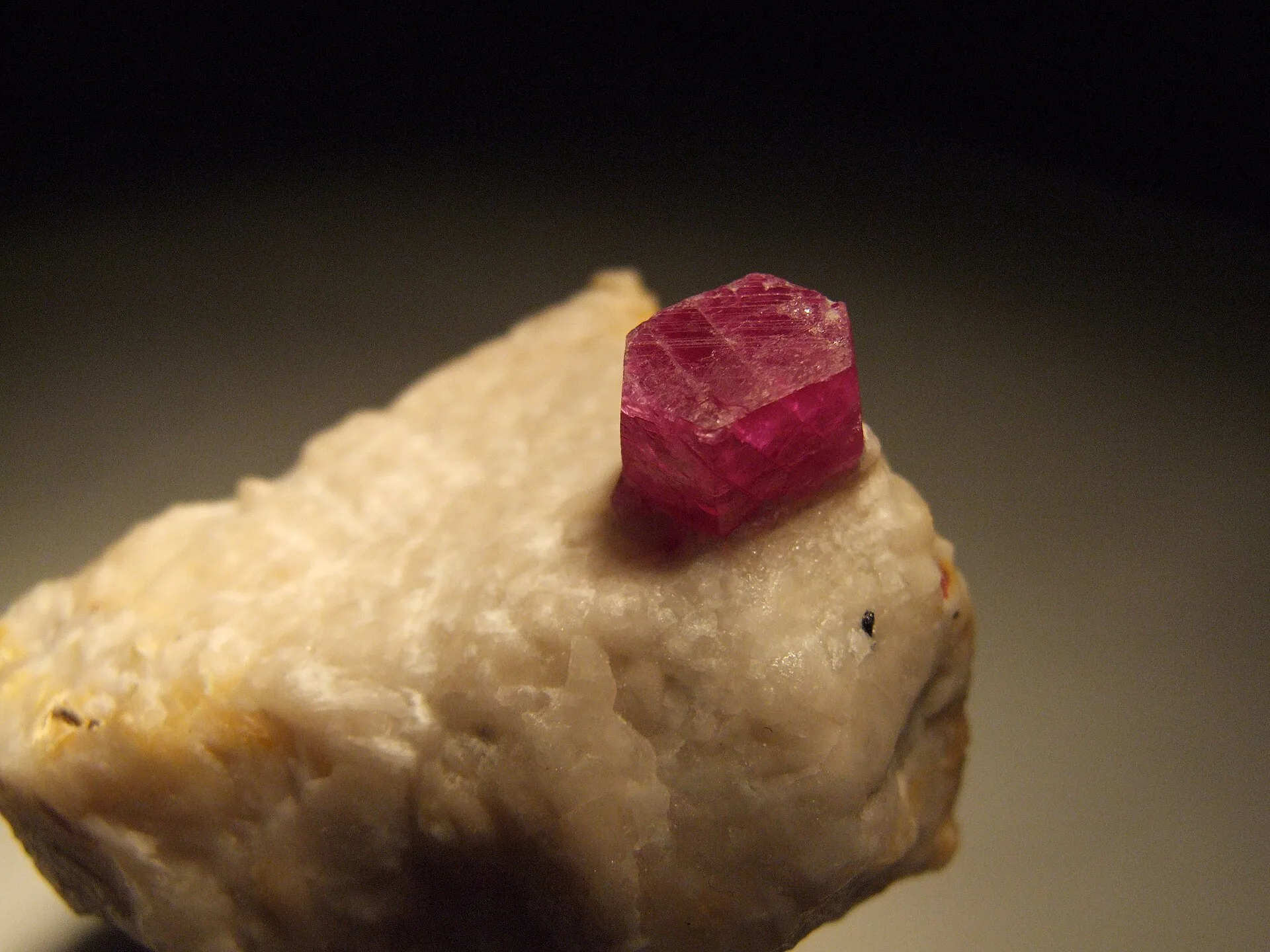
Ruby, sapphire and emerald belong to just two mineral species. Ruby and sapphire are both corundum, an aluminium oxide, separated only by colour: red corundum is ruby, and every other gem colour of corundum is sold as sapphire. Emerald is the green gem variety of beryl. In each case a trace of another element in the crystal sets the colour, and the geological conditions needed to grow clear, well coloured crystals are rare enough that fine stones have come from a short list of places, among them Mogok in Myanmar, Sri Lanka, Kashmir and the Muzo district of Colombia. The trade grades them on colour, clarity, cut and carat weight, and heating and oiling are routine treatments.
WHAT ARE RUBY, SAPPHIRE AND EMERALD?
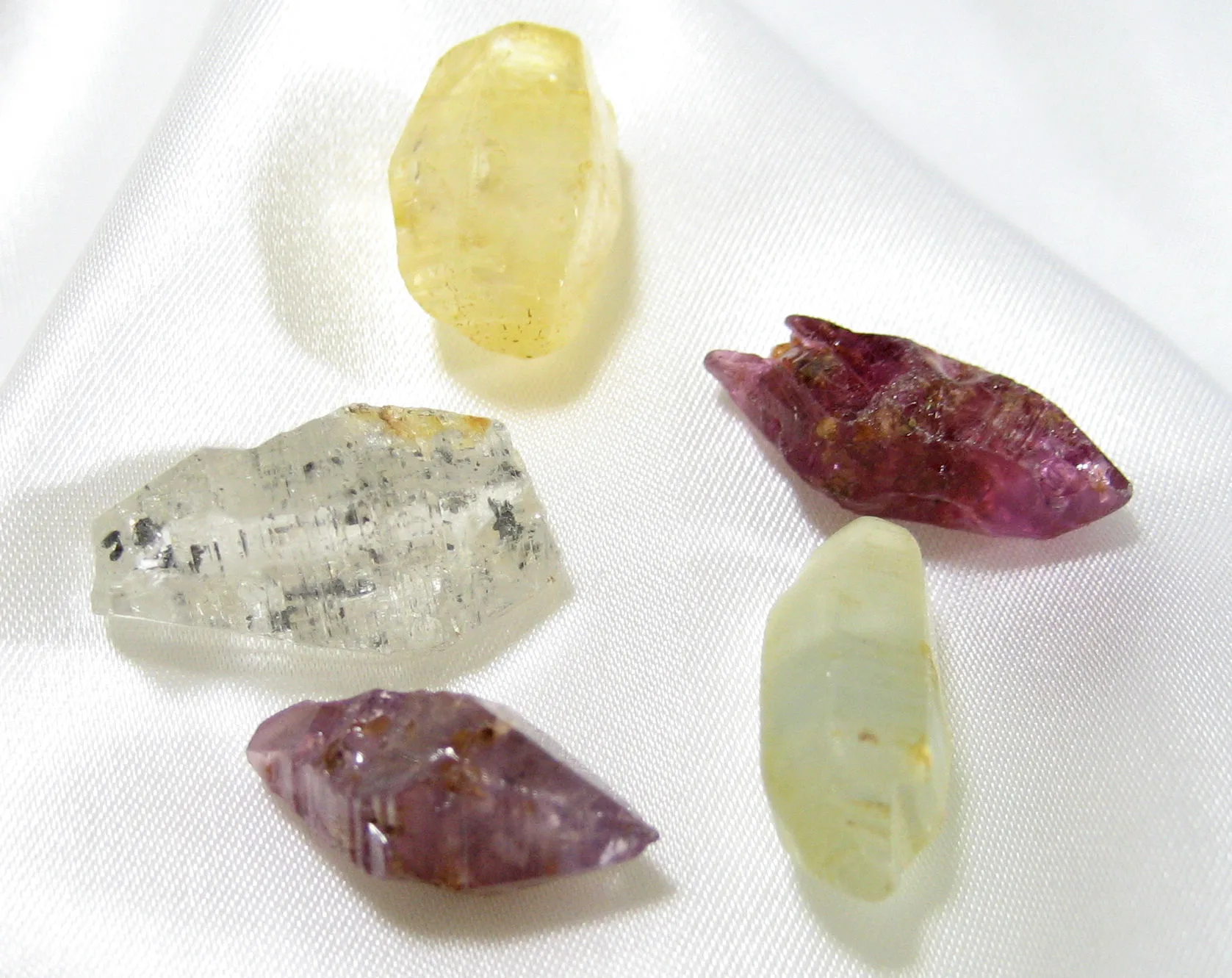
Corundum is aluminium oxide, Al2O3. Britannica describes sapphire as a transparent to translucent variety of corundum and notes that red gem corundum is called ruby, while colourless, grey, yellow, pink, orange, green, violet and brown corundum is still called sapphire. The line between the two is drawn by colour alone. GIA's grading guidance notes that a red stone too light in tone may be classed as pink sapphire even when its colour is strong. The names come from classical languages: GIA traces ruby to the Latin ruber, meaning red, and sapphire to the Greek sappheiros. Britannica records that sapphire has been prized as a gemstone since about 800 BC.
The colours come from trace elements. In corundum, chromium produces red, and GIA states that the more chromium a stone contains, the stronger the red. Britannica attributes the blue of sapphire mainly to small amounts of iron and titanium. Emerald, the green gem variety of beryl, owes its colour to trace amounts of chromium, vanadium or both replacing aluminium in the crystal structure, according to a 2019 review by Gaston Giuliani and Lee A. Groat in GIA's journal Gems & Gemology. GIA traces the name emerald to smaragdos, ancient Greek for a green gem. Emerald rates 7.5 to 8 on the Mohs scale, against 10 for diamond, so it scratches more easily.
HOW DO RUBY, SAPPHIRE AND EMERALD FORM?
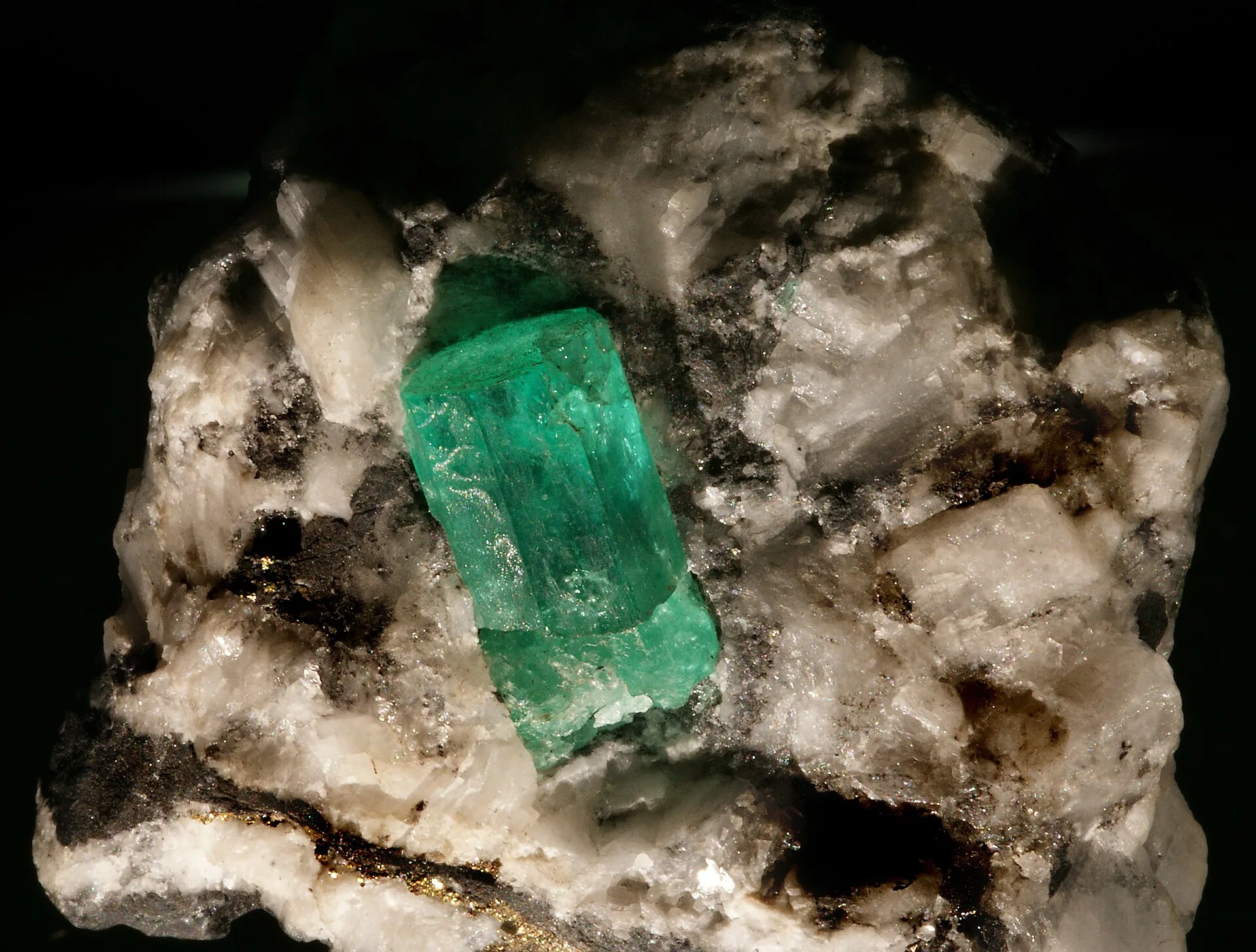
Giuliani and Groat describe corundum as a high temperature mineral that forms naturally by metamorphism of alumina-rich rocks. Many of the finest rubies are marble-hosted: the ruby is confined to impure marble horizons whose original rock was carbonate rich in detrital clays. The review groups corundum formation into periods. The oldest deposit lies in Archean metamorphic rocks dated 2.97 to 2.6 billion years ago. A second period came with the Pan-African orogeny of 750 to 450 million years ago. The third corresponds to the Himalayan orogeny, from 45 million years ago to the Quaternary, which produced the marble-hosted ruby deposits of Central and Southeast Asia.
A separate group of sapphires and rubies is linked to basalt. These stones occur as xenocrysts, crystals carried up from depth in alkali basalt magmas that rise where the crust is being stretched above upwelling mantle plumes. Emerald needs a rarer combination. Beryllium has to meet chromium or vanadium, and the review notes that unusual geological and geochemical conditions are required for this to happen. The Colombian deposits show no evidence of magmatic activity. Their emeralds grew from hot basinal fluids circulating through black shales at 300 to 330°C during tectonic activity. The oldest emeralds known, from the Gravelotte deposit in South Africa, are dated to 2.97 billion years.
MOGOK, SRI LANKA, KASHMIR AND MUZO
The Mogok Stone Tract in Myanmar has produced rubies of the colour known as pigeon's blood since 600 CE, according to Giuliani and Groat. GIA notes that the area is also known for sapphire, which typically occurs alongside ruby but in much smaller quantities. Sri Lanka has been a source of sapphire for more than 2,000 years, and Giuliani and Groat cite its placers in metamorphic terrain at Ratnapura and Elahera. Britannica notes that most commercial sapphire has come from alluvial gravels and other placers. Newer sources have joined the list: GIA describes Mozambique, with its mines at Montepuez, as an important new source of rubies that have been compared with those of Mogok.
Kashmir's sapphires were found around 1881, when, GIA records, a landslide high in the Himalaya exposed a pocket of velvety cornflower blue crystals. Thousands of large crystals were recovered between 1882 and 1887, and production has been sporadic since. Giuliani and Groat describe these as the blue sapphires most prized for their colour. Colombia has produced emeralds for more than 500 years, according to GIA, and each district has a recognised character: Muzo yields darker pure greens, Chivor lighter bluish greens and Coscuez slightly yellowish greens. Muzo and Coscuez belong to what Giuliani and Groat call the western emerald zone.
HOW ARE RUBY, SAPPHIRE AND EMERALD GRADED?
GIA assesses these stones on colour, clarity, cut and carat weight, and colour is judged by hue, tone and saturation. The finest ruby is a pure, vibrant red to slightly purplish red, and orange or purple overtones lower its value. Tone must be neither too dark nor too light. For emerald, the ideal is bluish green to pure green with vivid saturation and a tone that is not too dark; a stone too yellowish or too bluish is classed as a different variety of beryl. Even colour with no eye-visible zoning is preferred. The trade term pigeon's blood historically described red to slightly purplish red rubies with a soft red fluorescence, and GIA cautions that such terms may describe only a small share of stones from a source.
Clarity standards differ from diamond. Inclusion-free rubies are practically nonexistent, and the trade expects some inclusions; value drops sharply only when they reduce transparency or brightness. A common ruby inclusion is silk, formed by intersecting needles of rutile. Emeralds without eye-visible inclusions are very rare, and their inclusions are called jardin, French for garden. Carat weight compounds these factors. GIA notes that the price per carat of ruby rises significantly with size and that fine-quality rubies over one carat are very rare. Emerald prices also rise dramatically with size; stones of 1 to 5 carats are popular as centre stones, while some prestigious jewellery uses emeralds over 20 carats.
HOW ARE RUBY, SAPPHIRE AND EMERALD CUT?
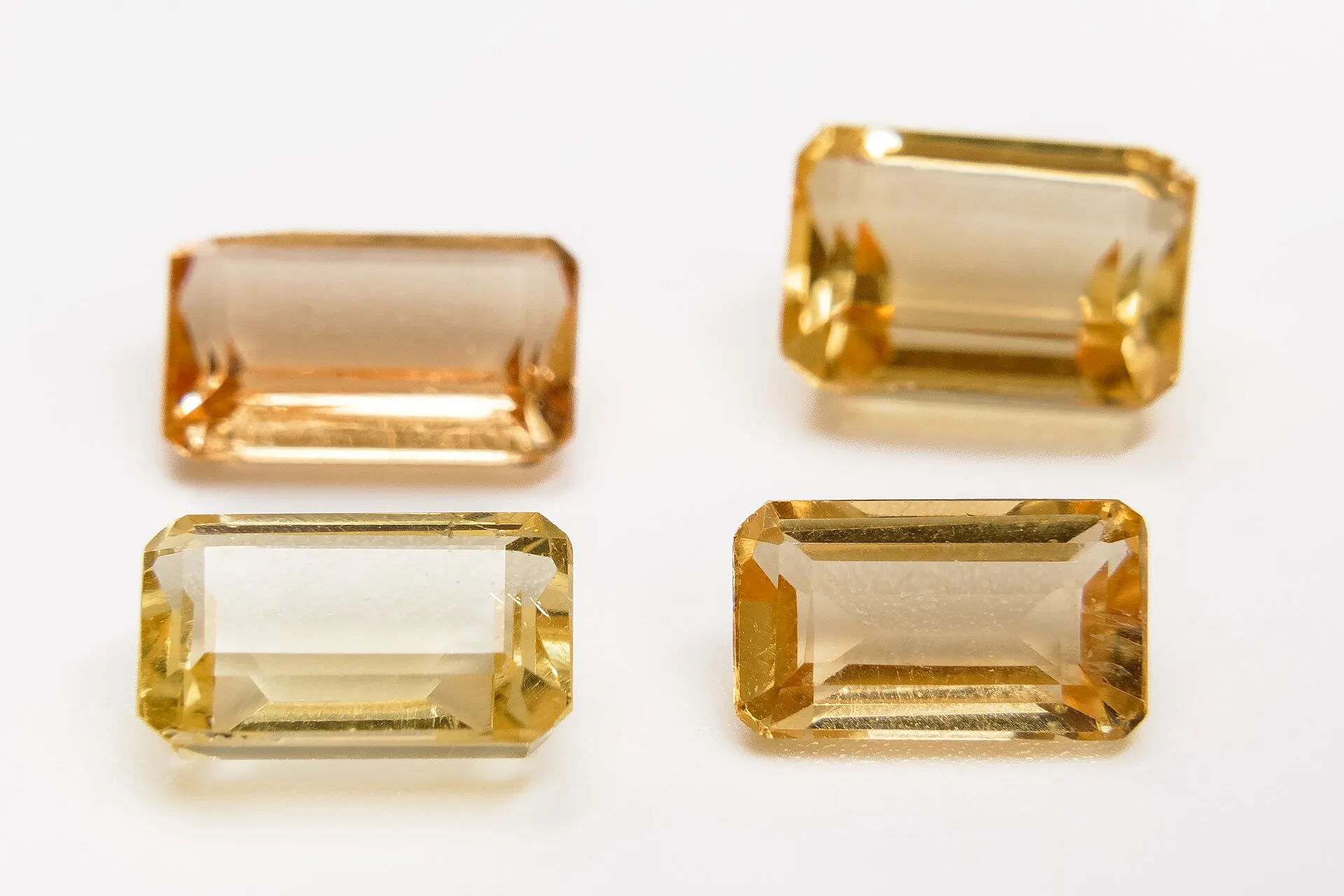
The rough sets the cut. GIA notes that a ruby's crystal shape dictates its suitability for certain cuts, and describes rubies with brilliant-cut crowns of kite-shaped and triangular facets above step-cut pavilions of concentric rows of rectangular or square facets. If the pavilion is cut too flat, light escapes through it and leaves a see-through area called a window. Britannica records that transparent sapphire is usually faceted in the brilliant style, and that unevenly coloured stones can be cut so that only the deeper coloured portion shows through the top. Emerald gives its name to the emerald cut, the most common cut for the stone. Its faceted corners protect the vulnerable points of the gem and give a comparatively safe place for prongs.
Stones that are not transparent, or that show optical effects, are cut en cabochon, with a smooth convex top and no facets. Star sapphire is the classic example. Britannica explains that its star, known as asterism, is produced by tiny, regularly arranged inclusions, commonly rutile, together with elongated cavities; synthetic star sapphires show more regular stars. In ruby, GIA notes, the same intersecting rutile needles can produce asterism when the stone is cut with a curved upper surface. Cabochons also suit unusual growth patterns: GIA illustrates a trapiche emerald cut as a cabochon to show its unusual arrangement.
HEAT TREATMENT, OILING AND DISCLOSURE
Heating is the standard treatment for corundum. GIA states that rubies are often heat treated to remove purplish colouration and leave a purer red, and that the trade typically accepts this because the result is stable under normal wear. For sapphire, heat treatment is common and its results permanent, and milky white Sri Lankan sapphire known as geuda can be heated to a rich blue. Britannica lists other colour changes produced by careful heating and cooling, such as yellow to colourless or greenish blue and violet to pink. Intact silk shows that a ruby has not been heated to very high temperatures, though GIA notes that lower temperature heating may still have taken place.
Emerald is treated differently because of its fractures. Oils, waxes or artificial resins are introduced to reduce the visibility of fractures that reach the surface, and paler stones with many fractures are sometimes dyed. The stability of the filler depends on the substance used. GIA advises never putting an emerald in an ultrasonic cleaner, because vibration and heat can push the filler out of the fractures, and recommends a soft brush with warm, soapy water instead. Some ruby treatments, including lattice diffusion, dyeing and glass filling, can leave a stone more vulnerable to damage. For ruby and sapphire, GIA advises buyers to ask whether a stone has been treated, and by what method.
FAMOUS RUBY, SAPPHIRE AND EMERALD STONES IN MUSEUMS

The Smithsonian's National Museum of Natural History holds two benchmark stones. The Carmen Lúcia Ruby weighs 23.10 carats and was mined in the Mogok region in the 1930s. The museum calls it the largest faceted ruby in the National Gem Collection, notes that high-quality Burmese rubies over 20 carats are exceedingly rare, and describes its colour as a richly saturated, homogeneous red. It is set in a platinum ring with two triangular-cut diamonds totalling 2.38 carats, and was given in 2004 by Dr Peter Buck in memory of his wife, Carmen Lúcia Buck. The Chalk Emerald, a 37.8 carat Colombian stone, originally weighed 38.4 carats before it was recut and set in a platinum and gold ring designed by Harry Winston, Inc., with 60 pear-shaped diamonds totalling 15 carats.
The Smithsonian records a legend that the Chalk Emerald was once the centrepiece of a necklace belonging to a Maharani of Baroda. It was given to the museum by Mr and Mrs O. Roy Chalk in 1972. In New York, the American Museum of Natural History displays the Star of India, a sapphire of just over 563 carats that the museum describes as the largest gem-quality star sapphire known. The museum dates the stone to about 2 billion years old and notes that its star, technically a flaw, is created by trace amounts of the mineral rutile.
RUBY, SAPPHIRE AND EMERALD AT GRAND IMPERIAL COURT

Grand Imperial Court is a Chinese fine dining restaurant at MGM Macau, completed in 2024. Its private suites are themed on four materials: sapphire, emerald, ruby and gold. Three of these themes are the gemstones described above. Ruby and sapphire are the red and the non-red varieties of corundum, coloured by chromium in the one case and mainly by iron and titanium in the other, and emerald is the green variety of beryl, coloured by chromium, vanadium or both. Gold, the fourth theme, is a metal rather than a gemstone; how it is beaten into leaf and applied to surfaces is covered in Gold Leaf: How Gilding Is Made and Applied.
Guests enter through an automated sliding entry that leads to a Moutai display wall. The wall is made up of floating, lit jewel-box vitrines in red and gold, which hold rare vintage bottles. The history of the Guizhou spirit itself is covered in Moutai: How a Guizhou Baijiu Became China's Most Valuable Spirit. Red is also the defining colour of ruby: GIA describes the finest ruby as a pure, vibrant red to slightly purplish red, a colour that comes from chromium in the corundum crystal.
SOURCES
- GIA, Gems & Gemology Geology of Corundum and Emerald Gem Deposits: A Review (Giuliani and Groat, Winter 2019)
- Britannica Sapphire
- GIA July Birthstone: Ruby
- GIA September Birthstone: Sapphire
- GIA May Birthstone: Emerald
- GIA Ruby Quality Factors
- GIA Emerald Quality Factors
- Smithsonian National Museum of Natural History Carmen Lúcia Ruby
- Smithsonian National Museum of Natural History Chalk Emerald
- American Museum of Natural History Star of India