FROM SELANGOR TIN TO CAST, FILED AND HAND HAMMERED PEWTERWARE
Pewter in Malaysia has a documented starting point in Kuala Lumpur. The city grew from a tin mining settlement founded at Ampang in 1857, and in 1885, according to Tatler Asia, the pewtersmith Yong Koon arrived there from China. Two of his brothers were already working as tinsmiths in the town, and the family's early pewter was made for Chinese altars. The family business continued as Selangor Pewter, moved to Setapak in 1962 and was renamed Royal Selangor in 1992. Its pewtersmiths still demonstrate casting, polishing and assembly at the company's visitor centre in Setapak. Malaysian pewter history draws together an alloy used since Roman times, the tin fields of the Kinta and Klang valleys, and a sequence of workshop processes that includes casting, filing, polishing and hand hammering.
WHAT IS MALAYSIAN PEWTER MADE OF?
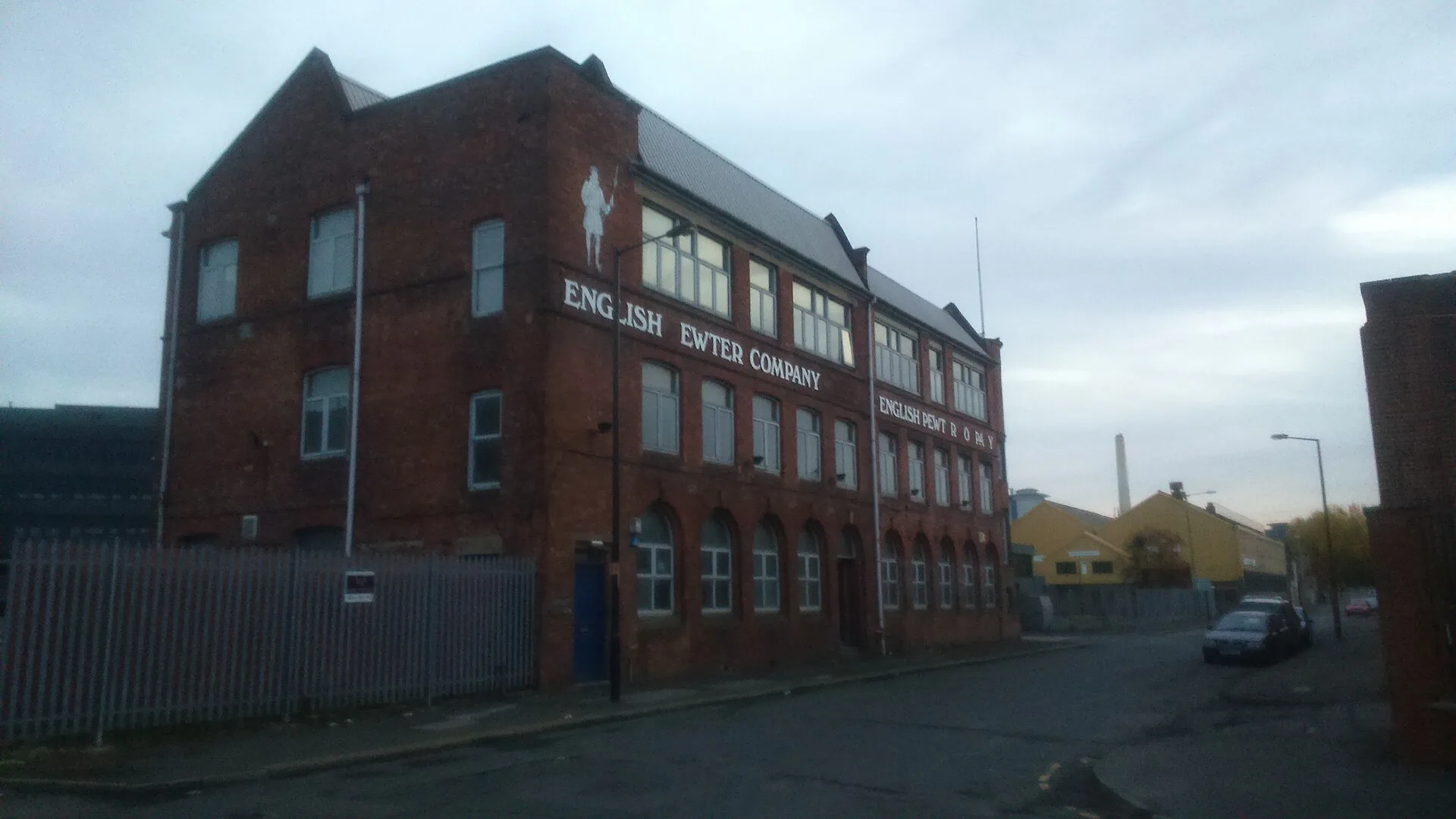
Pewter is an alloy made mainly of tin. The Pewter Society describes it as tin combined with varying quantities of hardening agents such as antimony, bismuth, copper and lead. In medieval Europe tin was alloyed with copper and bismuth, which made it harder than pure tin while leaving it easy enough to melt for casting. According to Encyclopaedia Britannica, ancient pewter was about 70 per cent tin and 30 per cent lead, a mix that darkened greatly with age. Modern pewter contains no lead and is roughly 91 per cent tin, 7.5 per cent antimony and 1.5 per cent copper. Britannica adds that alloys containing antimony and bismuth are more durable and brighter, and that modern pewter has a bluish white surface that resists tarnish.
Historic grades were fixed by rule. The ordinances of the Worshipful Company of Pewterers in London specified two grades, fine metal and lay metal. Fine was used for sadware such as plates and chargers, and for spoons and church flagons; lay metal, in which lead served as a cheaper bulking agent, was used for hollowware such as pots and measures. The Victoria and Albert Museum notes that before 1800 lead was allowed in lay metal but banned in flatware such as plates, dishes and porringers, and that the best alloys contain over 90 per cent tin. Tatler Asia describes Royal Selangor's pewter as a tin compound hardened with copper and antimony, two of the hardening agents named by the Pewter Society and the two that Britannica lists alongside tin in modern pewter.
WHERE DID PEWTER COME FROM?

Britannica dates the use of pewter to at least 2,000 years ago, in Roman times, and records that pewterware making developed in various European countries from the 14th century. It was mainly a practical material, used where the precious metals were too costly, and pewter work often copied designs in silver. The Pewter Society describes extensive use across medieval Europe but notes that little early pewter survives, because worn and damaged vessels were melted down and recycled. In the 17th century an alloy containing antimony, already used in Continental Europe and known in Britain as hard metal, appeared in British workshops, in the period the Society calls the golden age of pewter making. In Sheffield towards the end of the 18th century, the Vickers company developed Britannia metal, a lead free alloy of tin, antimony and copper that could be rolled, spun and pressed for industrial production.
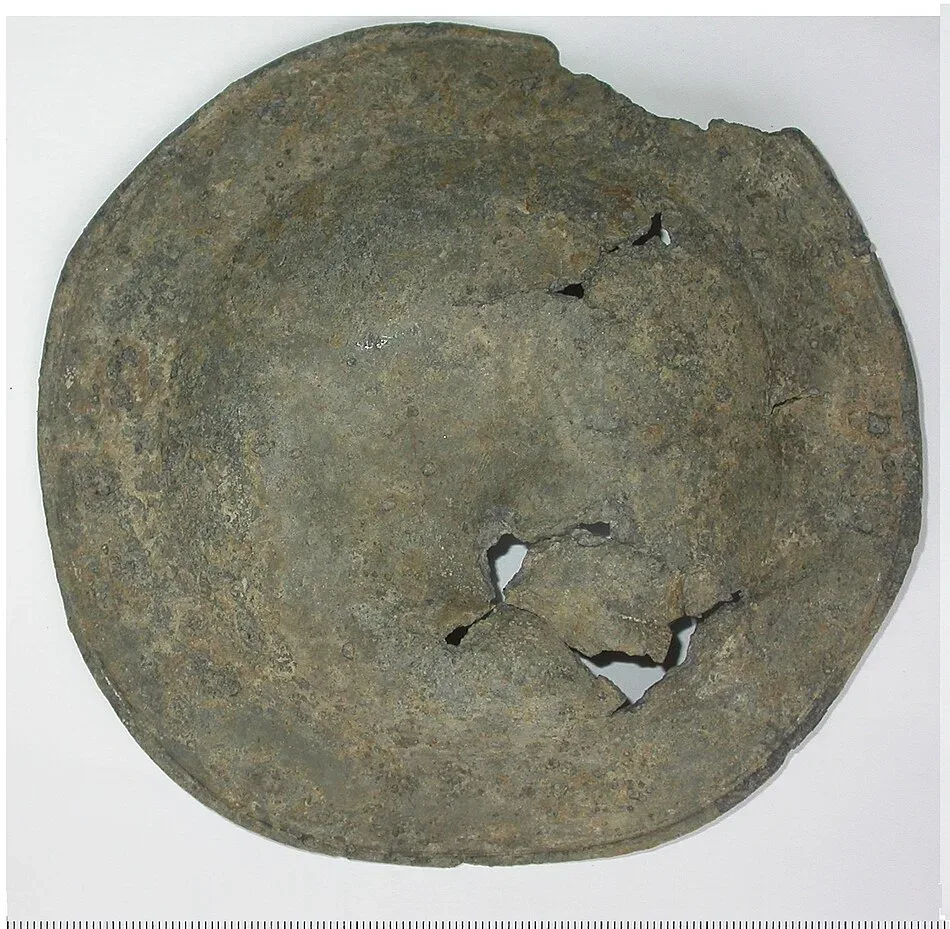
In London the trade was regulated by the Worshipful Company of Pewterers. A V&A catalogue entry explains that after an apprenticeship a pewterer had to register a touchmark to stamp on his wares, that the wares had to meet set quality standards, and that the Company's searchers visited workshops and tested pieces; substandard wares incurred fines and were liable to destruction. The same entry describes a cast and turned pewter dish made in London between 1490 and 1500, one of 20 similar dishes found during building work at Guy's Hospital in 1899. It carries a half erased bell mark and a stamped crown and feather, the mark of the heir apparent to the English throne. Other dishes from the same find are held by the British Museum, the Museum of London and the Worshipful Company of Pewterers.
TIN FROM THE KINTA AND KLANG VALLEYS
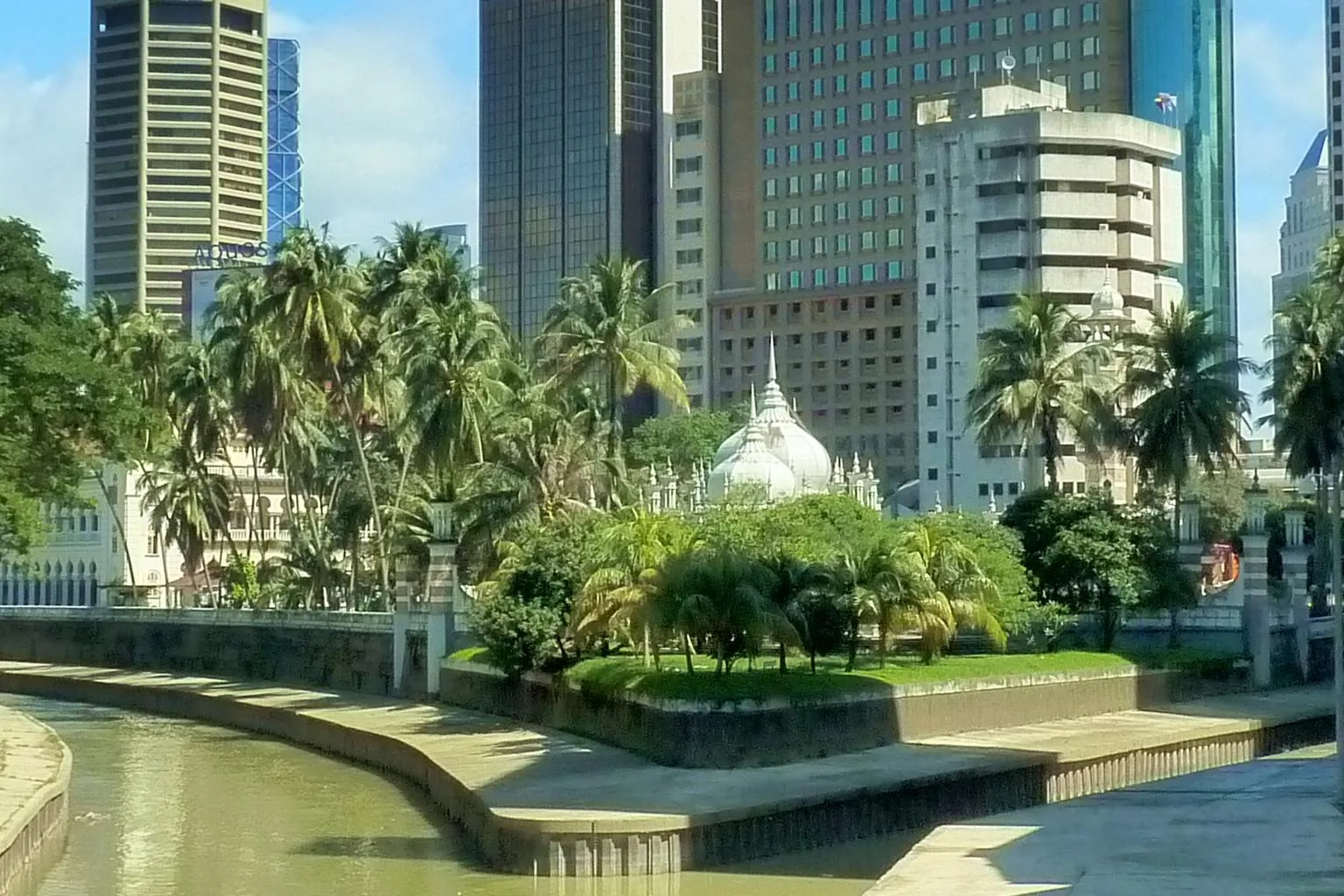
The tin for Malaysian pewter came from the mining districts of the peninsula's west coast. Britannica traces Kuala Lumpur to 1857, when a group of 87 Chinese tin miners founded a settlement at what is now the suburb of Ampang. The town stood at the confluence of the Kelang (Klang) and Gombak rivers, flourished as a tin collecting centre and replaced Klang as the state capital in 1880. Further north in Perak, Tourism Perak records that by 1890 Kinta had become the principal tin producing district not only in Perak but in the whole Malay peninsula, and that Ipoh became known during the boom as the City of Millionaires. The mines, dredges and labour of that industry are covered in how tin built Kuala Lumpur.
Tin was also money. Rasanubari Asmaramah, head of the Money Museum and Archives Unit at Bank Negara Malaysia, writes in ICOMON conference proceedings that early currency in the central Malay states took the form of solid tin ingots of standard weight and purity. In Selangor the ingot best known to foreign merchants weighed one kati; smaller sugar loaf and pagoda shaped ingots served everyday trade, and heavier ones were used for export or customs duties. Kedah issued tin money in the shape of a cockerel perched on rings, and in Melaka the earliest known tin cash was issued by Sultan Muzaffar Shah (1445 to 1459). The Royal Selangor Visitor Centre displays animal shaped tin currency, including a large replica of crocodile tin money. Britannica notes that most pewter alloys are ductile and easily worked, and cold working does not harden them enough to require annealing.
YONG KOON AND THE SELANGOR PEWTER WORKSHOP
Published accounts of the founder differ in detail. A 2010 family history in Options, the lifestyle section of The Edge Malaysia, describes Yong Koon as a 14 year old pewtersmith from Dabu in Guangdong, while Tatler Asia, writing in 2015, names Shantou as his origin and dates his arrival in Kuala Lumpur to 1885, when thousands of Chinese came to the town following the discovery of tin. According to Options, his two brothers were already working there as tinsmiths, and together they opened a shop named Ngeok Foh, Hakka for Jade Peace, whose hallmark was stamped on their pewter. They first made household goods in tin and galvanised steel, then pewter incense burners, joss stick holders and candle stands for Chinese altars. Tatler records that these altar pieces were stamped with the mark Yu He Zu Xi.
Yong Koon married Loh Pat, and they had four sons: Peng Pow, Peng Sin, Peng Kai and Peng Seong. The family moved into a shophouse at 219 Pudu Road, where they started Malayan Pewter Works; Tatler's timeline places the move under 1930. The workshop also made thousands of small zinc spouts to ease rubber tapping, and it turned to European style products such as cigarette boxes, ashtrays, vases and teapots. A melon shaped teapot made by Yong Koon, which Options described in 2010 as more than 100 years old, is kept in the company archives. Yong Koon died in 1952. His sons went on to run separate pewter companies, and of these only Selangor Pewter, run by Peng Kai, survived.
In 1962 Selangor Pewter set up in a new 4,000 square foot facility in Setapak, where the company has remained. In 1979 the Sultan of Selangor appointed the company royal pewterer, and in 1992 it changed its name to Royal Selangor. Options reported in 2010 that the Setapak site formed part of an award winning visitor centre attracting more than 150,000 visitors a year, and Tatler Asia, describing the same centre in 2015, gave a figure of over 200,000 a year. Tatler describes Royal Selangor as the largest pewter maker in the world.
HOW IS MALAYSIAN PEWTER MADE?
Britannica summarises the traditional sequence: pewter is usually cast, then finished by hammering, turning on a lathe, burnishing and sometimes engraving, and some objects, such as snuffboxes, are made from separate pieces soldered together. The London dish in the V&A was made this way, cast and then turned. Royal Selangor describes nine processes in its own workshop. Casting comes first: the alloy is melted in a kiln at 250°C, scooped out with a casting ladle and poured into a mould, which the company says captures the detail of the mould and produces a sturdier piece. Freshly cast pieces are then filed to remove excess metal and the seam lines left by the mould, and to shape the piece before it is assembled.
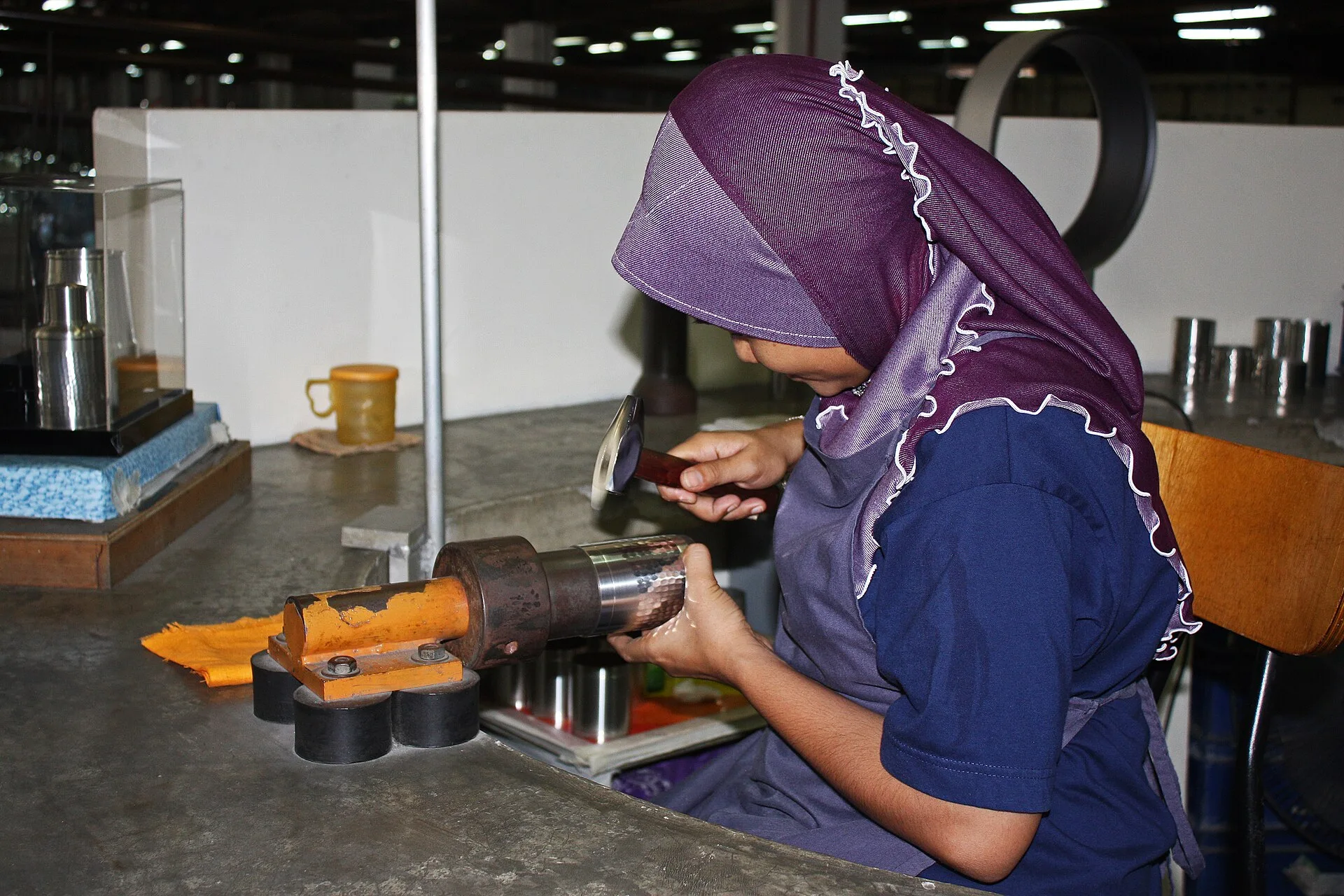
Two or more parts are then joined by soldering, with each piece assembled and soldered by hand. Polishing follows in two stages. Hand polishing reaches areas a machine cannot and removes tiny rough edges, while supervised machine polishing gives a mirror-like finish without wearing away the motifs. Scotching with a scouring pad after filing gives a smooth, lustrous sheen. Hammering is still completed by hand and gives flat sheets a richly dimpled texture, and buffing on a machine with a polishing compound produces the bright finish the company treats as its signature. Engraving, used for personalisation, is largely mechanised, although hand engraving is still practised.
WHERE TO SEE PEWTER MADE IN MALAYSIA TODAY
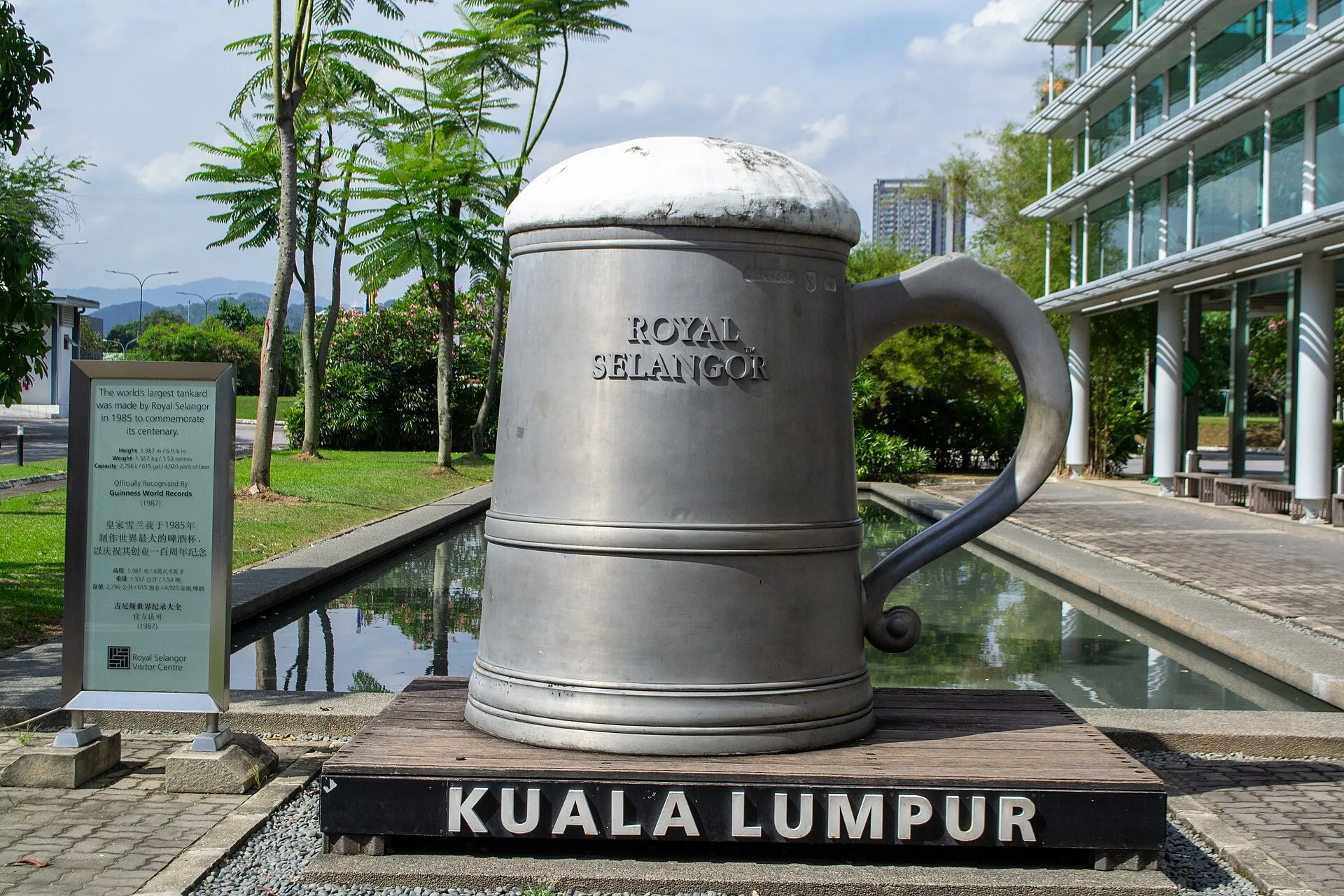
The Royal Selangor Visitor Centre stands at 4 Jalan Usahawan 6, Setapak Jaya, Kuala Lumpur, and opens from 9am to 5pm every day, including public holidays, with free admission and free guided tours that are booked in advance. A live craftsmanship showcase shows pewtersmiths at work through casting, polishing and assembling, and visitors can try making a hammered finish themselves. A Science Discovery Gallery explains the properties and uses of pewter through hands-on exhibits that engage sight, touch and sound. The Giant Tankard, recognised by Guinness World Records as the largest pewter tankard of its kind, stands in the building as a landmark.
Other exhibits draw on the company's archive and output. A rendition of the Petronas Twin Towers is made from more than 7,000 pewter tankards, a teapot made by Yong Koon is on show, and the Comyns Archive holds more than 35,000 artefacts from Comyns, a sterling silver brand founded in 1645. Visitors can also work the metal themselves. In the School of Hard Knocks workshop, open to all ages, participants craft a simple pewter dish in about 30 minutes. In The Foundry, for ages 15 and above, they choose a preset mould or their own design, then make a pewter accessory from scratch in about an hour.
HYATT CENTRIC CITY CENTRE KUALA LUMPUR AND THE TIN MINING INFLUENCE

Hyatt Centric City Centre Kuala Lumpur was completed in 2024 in a repurposed 22-storey building, and Silverfox Studios designed the whole tower. Its design influences are graffiti, batik and tin mining. Batik, the textile tradition traced in Malaysian batik, informs the pattern, print, colour and layered finishes of the interiors. The floors carry leaf-patterned carpets and hand-tufted rugs that evoke reflected water. Tin mining, the third influence, is the industry from which Kuala Lumpur grew and on which the city's pewter craft was built.
The settlement founded by 87 tin miners at Ampang in 1857 flourished as a tin collecting centre at the meeting of the Kelang and Gombak rivers and became the state capital in 1880. By 1890 the Kinta district of Perak led tin production across the Malay peninsula. Yong Koon's brothers were already working as tinsmiths in Kuala Lumpur when he joined them, and the workshop they started became Royal Selangor, whose pewtersmiths still cast and finish tin alloy in Setapak.
SOURCES
- Encyclopaedia Britannica Pewter
- The Pewter Society What is pewter?
- Victoria and Albert Museum Dish, London, 1490 to 1500 (M.39-1945)
- Encyclopaedia Britannica Kuala Lumpur: facts and related content
- Tourism Perak The Tin Mining Story
- ICOMON, ICOM International Committee for Money and Banking Museums Gold and tin coins of the Malay States (Rasanubari Asmaramah, Bank Negara Malaysia)
- The Edge Malaysia (Options) Cover Story: First Family of Pewter
- Tatler Asia How Royal Selangor became the largest pewter maker in the world
- Royal Selangor Craftsmanship
- Royal Selangor Visitor Centre Royal Selangor Visitor Centre