FROM AN ORINOCO RIVER TOWN TO THE WORLD'S COCKTAIL BARS

Angostura bitters is an aromatic bitters first produced in 1824 by Dr Johann Gottlieb Benjamin Siegert, a German surgeon based in the Venezuelan town of Angostura on the Orinoco River. Siegert's sons moved production to Port of Spain, Trinidad, in 1875, and Trinidad remains its home. The liquid is bottled at 44.7 per cent alcohol by volume but is measured into drinks by the dash, and a few dashes are standard in the Manhattan and the Old Fashioned. The Trinidad and Tobago Ministry of Trade and Industry reports that Angostura aromatic bitters reaches more than 170 countries and is consistently among the country's top ten export commodities.
WHERE DID ANGOSTURA BITTERS COME FROM?

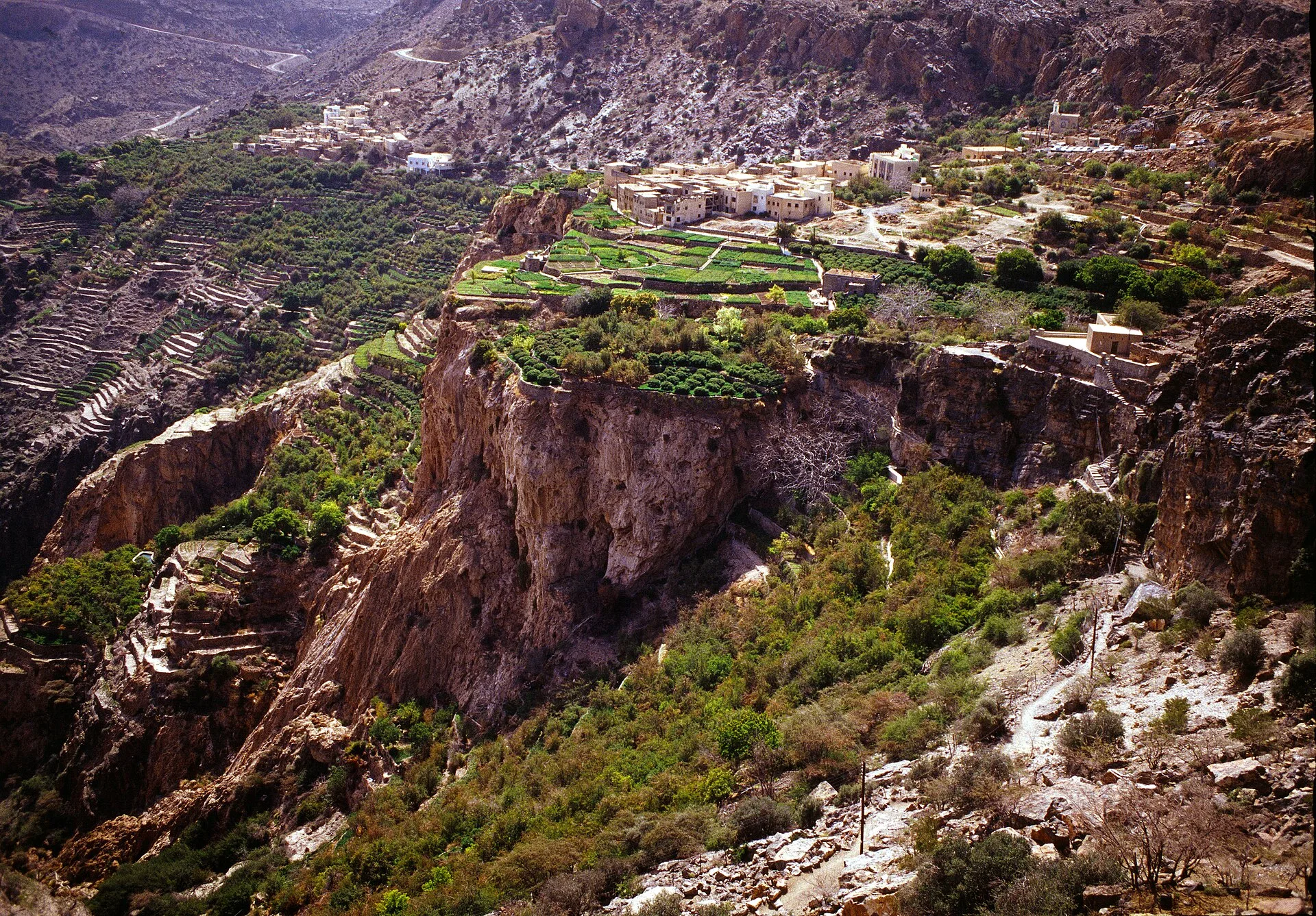
The town that gave the bitters its name was founded in 1764 as San Tomás de la Nueva Guayana de la Angostura. According to Britannica, it stands on a small hill on the south bank of the Orinoco, at the head of navigation for large vessels. Difford's Guide explains that the name comes from a native word for "narrow", a reference to the nearby Orinoco. The town was renamed Ciudad Bolívar in 1846 and is today the capital of Bolívar state in southeastern Venezuela. Siegert, born in 1796, moved from Germany to Angostura in 1820 to serve as an army surgeon general, according to the company's own history.
By 1824, the company says, Siegert had perfected a formula he called Amargo Aromatico, or aromatic bitters, which he used in his medical practice. The Oxford Companion to Spirits & Cocktails describes it as a rum-based tincture of gentian and other spices and dates his first commercial batch to 1824. Difford's Guide records that he first gave the bitters only to his patients, family and friends, and that sailors on the Orinoco and Caribbean trade routes later carried them further, with British naval officers sharing them among colleagues. As demand grew, the product took the name of the town.
HOW ANGOSTURA BITTERS MOVED TO PORT OF SPAIN

Sales spread beyond Venezuela within Siegert's lifetime. The Oxford Companion records exports to England as early as 1830, while the company's own timeline places the start of exports to England, the Caribbean and the United States in 1850. Carlos Dámaso Siegert (1830 to 1905), the founder's eldest son, took over marketing. Under him the bitters won an Honourable Mention at the Great London Exhibition of 1862, which, according to the Oxford Companion, gained them British distribution in 1863, with American distribution following soon after. Siegert died in 1870, and production passed to his sons.
In the 1870s Siegert's three sons migrated to Trinidad, and by 1875 the family business was operating there under the name J.G.B. Siegert & Hijos, run by Carlos, Alfredo and Luis Siegert. Britannica notes that manufacture in Ciudad Bolívar ended that year. In 1912 the partnership became a public limited liability company registered in England, and on 30 August 1921 Angostura Bitters (Dr J.G.B. Siegert & Sons) Limited was formed. The company changed its name to Angostura Limited in 1992, and it also uses the name House of Angostura.
North American sales were built by George Diogracia Wuppermann (1838 to 1915), the firm's Venezuelan agent, who moved to New Jersey and later Manhattan around 1878. The Oxford Companion credits him with taking the brand from being "a cocktail bitters to being the cocktail bitters". His son Frank became a vice president of the family firm in 1934. Five years later, under his stage name Frank Morgan, he played the title role in the MGM film The Wizard of Oz, released in 1939.
THE OVERSIZED ANGOSTURA LABEL AND THE MEDALS
The paper label on the bottle is too large for it, and the explanation is told as a story rather than documented in records. In the version given in the Oxford Companion, Carlos Siegert and his younger brother Alfredo independently designed a new bottle and a new label without consulting each other, so the label came out too large. The brothers lost a subsequent competition with it, but a judge advised that the label was good for brand identity, and it was kept. Difford's Guide tells the same story, introducing it with "the story goes", and adds that the oversized label was retained as a trademark.
The company's timeline lists its medals and royal appointments. Angostura aromatic bitters received the Medal of Excellence in Vienna in 1873 and a gold medal for product excellence at the World Trade Fair in Philadelphia in 1876. Royal appointments came next: in 1904 Alfredo Siegert was appointed purveyor of Angostura aromatic bitters to the King of Prussia, and in 1907 to King Alfonso XIII of Spain. In 1912 the company became a direct supplier to King George V, and in 1955 it was appointed manufacturer of Angostura aromatic bitters to Queen Elizabeth II.
WHAT ARE AROMATIC BITTERS?
The Oxford Companion defines bitters as liquid essences generally made by macerating herbs, spices and other botanicals in a base spirit, usually added to a drink by the dash. Most are built on a bitter core ingredient, traditionally gentian, cinchona bark or wormwood. The entry divides them into digestive bitters, which were potable and include the amari category, and cocktail or aromatic bitters, which were not meant to be drunk alone and were used for mixing. Before Prohibition the two main cocktail categories were aromatic and orange, the latter a Dutch creation introduced to America in the 1860s. The foundational example of bitters, Stoughton's Stomachic Bitters, was sold at apothecaries from around 1690.
Angostura entered a crowded field of nineteenth-century brands that included Boker's (1828), Peychaud's (1838) and Hostetter's (1853), with Abbott's following around 1872. Its strength is high: the Oxford Companion notes that, despite its 44.7 per cent ABV, Angostura bitters is not classified as a potable alcoholic beverage in the United States. The exact recipe is not public. The Oxford Companion calls it a tightly held secret known to a handful of company executives, and Difford's Guide puts the number at five people, adding that ingredients are shipped to England and relabelled before returning to Trinidad.
ANGOSTURA BITTERS IN CLASSIC COCKTAILS
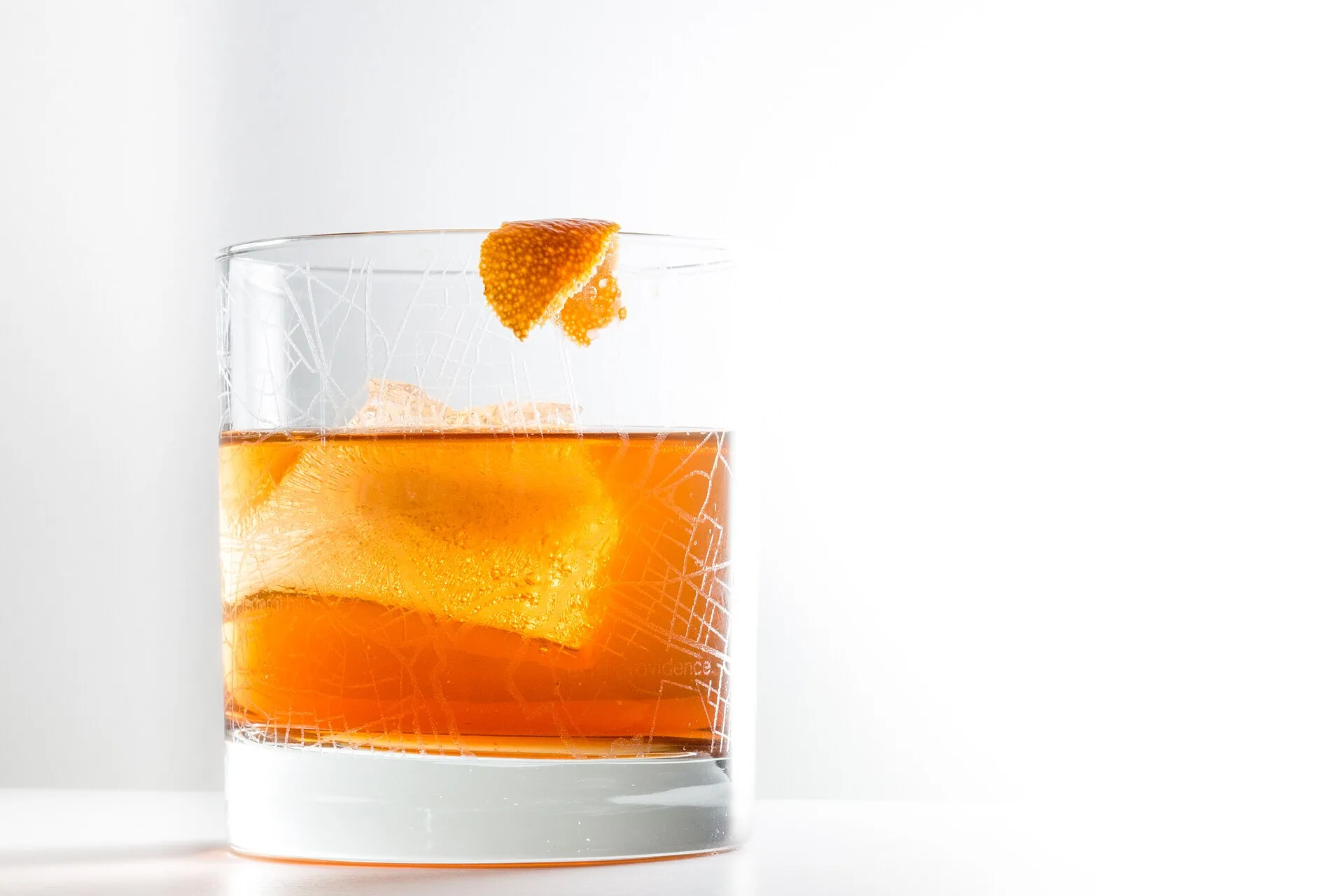
Angostura continued to be marketed as a stomachic, but the Oxford Companion records that it quickly found use as a drink enhancer in Pink Gin and in cocktails. Its entry on bitters notes that the cocktail was the first drink to require them, although the bitters cited in Jerry Thomas's 1862 manual were Boker's, misprinted as Bogart's. Mark Twain was an early admirer of Angostura, asking his wife to have it ready with scotch whisky, lemon and sugar on his return to the United States in 1874. A few dashes are standard in the Old Fashioned.
The Champagne cocktail predates the Manhattan. The Oxford Companion's earliest description comes from an American bar in Panama in 1855 and includes ice and sugar saturated with bitters, and Jerry Thomas published a recipe in 1862. Thomas called for the drink to be shaken, while the 1887 edition of his book, published after his death, advised only gentle stirring. The modern version given in the same reference places a sugar cube in a large flute, adds three dashes of Angostura and fills the glass with cold Champagne, finished with a twist of lemon peel.
The Manhattan combines American whisky, sweet vermouth and bitters, and the Oxford Companion describes it as often considered the first "modern" cocktail. Its earliest known reference appears in an 1882 "Gotham Gossip" column, and in 1884 it was printed in three cocktail books: Byron's Modern Bartenders' Guide, Winters's How to Mix Drinks and Gibson's Scientific Bar-Keeping. The Manhattan Club in New York was the most popular attribution in the late nineteenth century. The modern recipe in the entry stirs 60 millilitres of rye or bourbon with 30 millilitres of Italian red vermouth and two to three dashes of Angostura, with a cherry, which first appeared in the drink around 1891.
PINK GIN, THE SWIZZLE AND THE TRINIDAD SOUR
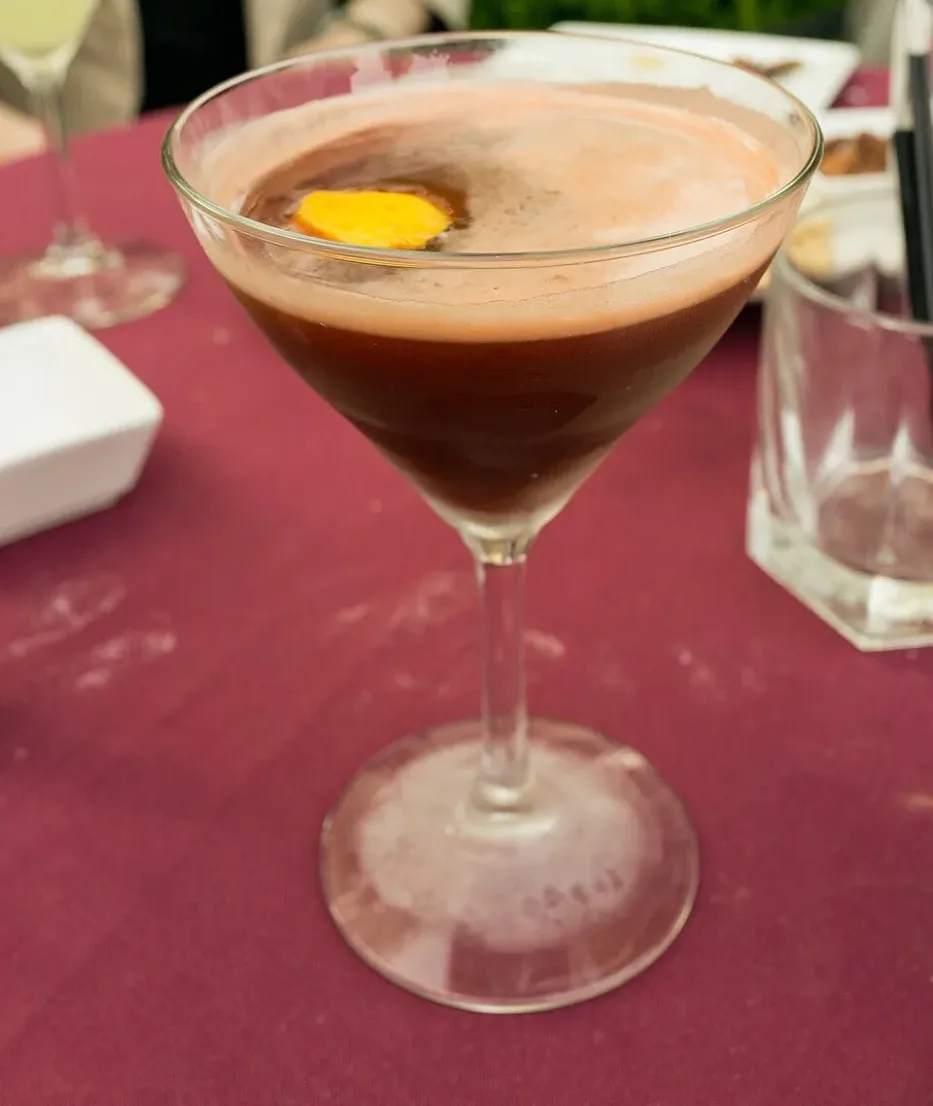
Pink Gin is the simplest of the Angostura drinks: gin and bitters, nothing else. Writing in PUNCH in 2014, Brad Thomas Parsons traces it to naval officers who visited Angostura, took up the local bitters and added a dash or two to the daily gin ration. Plymouth, in England, shipped thousands of barrels of its gin to the Royal Navy each year. Sean Harrison, Plymouth's master distiller, told PUNCH that most people today have never heard of the drink, let alone ordered it.
Trinidad has its own Angostura drink in the Queen's Park Swizzle, which the Oxford Companion says was created at the Trinidad hotel of the same name and is crowned with a float of Angostura bitters. Later drinks use the bitters as the base. In 2008 Valentino Bolognese created the Trinidad Especial for a European competition, using 30 millilitres of Angostura with pisco, orgeat and lime juice. In 2009 Giuseppe Gonzalez, then at the Clover Club in Brooklyn, New York, followed with the Trinidad Sour, which uses 45 millilitres of Angostura.
PUNCH, which notes that Gonzalez claims to have created the drink early in his brief time at Clover Club, lists the Trinidad Sour as 1 1/2 ounces of Angostura bitters, 1 ounce of orgeat, 3/4 ounce of lemon juice and 1/2 ounce of rye whiskey. According to the Oxford Companion, Gonzalez's recipe was inspired by Bolognese's Trinidad Especial. The same entry also names two tiki drinks by Donn Beach that call for Angostura, the Zombie and Three Dots and a Dash.
THE HOUSE OF ANGOSTURA AFTER 200 YEARS

Rum has been part of the business since the nineteenth century. The Oxford Companion notes that Siegert's Bouquet, a bottling of the Trinidad rum used in the bitters, was in the portfolio by 1878, and that in 1947 the company's growing need for rum, both for the bitters and for its rum brands, led it to build its own distillery. The same entry records that in 1920, during American Prohibition, a bar owner in Washington, Wisconsin, obtained a pharmacist's licence to dispense Angostura shots to his "patients". The last Siegert in Trinidad retired in 1990.
The company launched Angostura orange bitters worldwide in 2007, describing it as its first innovation in almost 200 years, followed by Amaro di Angostura, which the company dates to 2014 and the Oxford Companion to 2015. It marked the 200th anniversary of the House of Angostura at a gala on 15 September 2024, which Gordon Siegert, the great great grandson of the inventor, addressed by video. Trinidad and Tobago's Ministry of Trade and Industry recorded that bitters made up 8 per cent of the country's food and beverage exports from 2019 to 2023.
PROHIBITION BAR AT MANDARIN ORIENTAL SHENZHEN
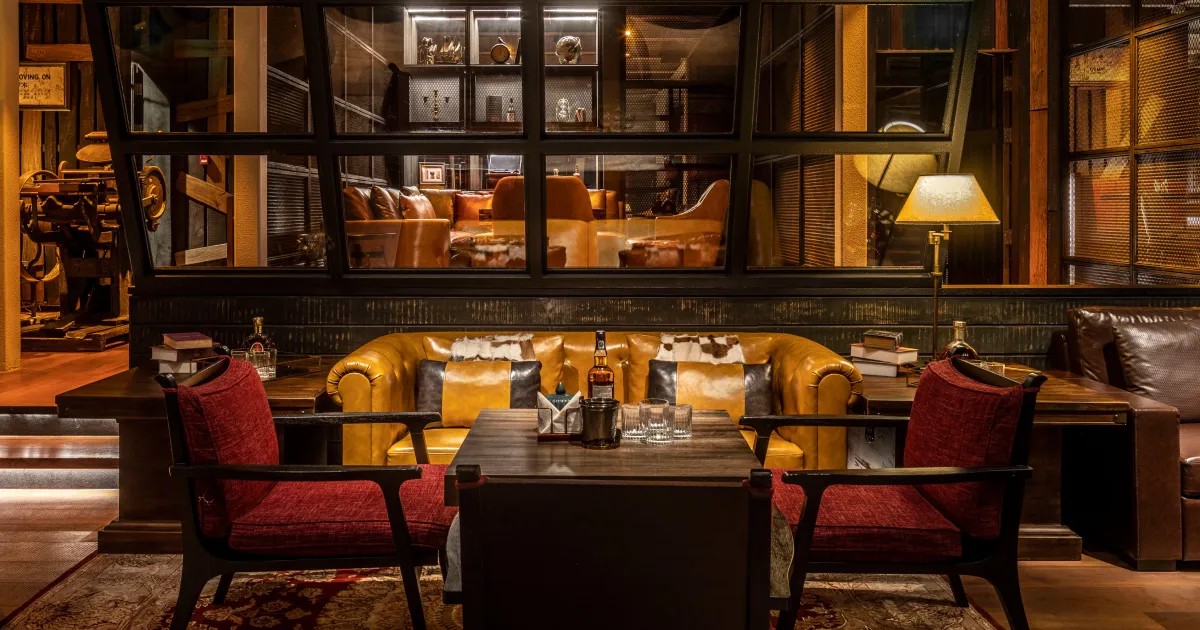
Prohibition Bar is a semi-hidden bar within the MO Bar on the 79th floor of Mandarin Oriental Shenzhen. The project was completed in 2022. It was designed to recreate the intrigue of Prohibition, the period in which the Wisconsin bar owner described above dispensed Angostura under a pharmacist's licence. Guests reach the bar by a separate lift from L78 and a long corridor. The route runs through a storage-style passage lined with aged hand-painted liquor advertisements and crates, set beneath exposed ductwork.
The main space has a long bar with a DJ booth and a cocktail station, with distressed timber and steel beams. The lounge is furnished with Chesterfields and iron screens and has skyline views. The Champagne cocktail and the Manhattan, both of which take Angostura in their modern recipes, were each in print decades before American Prohibition began in 1920. The Trinidad Sour, which uses 45 millilitres of Angostura, followed in 2009, 89 years after the Wisconsin bar owner obtained his pharmacist's licence.
SOURCES
- ANGOSTURA Our story
- The Oxford Companion to Spirits & Cocktails (Spirits & Distilling) Angostura Bitters
- The Oxford Companion to Spirits & Cocktails (Spirits & Distilling) Bitters
- The Oxford Companion to Spirits & Cocktails (Spirits & Distilling) The Manhattan
- The Oxford Companion to Spirits & Cocktails (Spirits & Distilling) Champagne cocktails
- Britannica Ciudad Bolívar
- Difford's Guide Angostura history
- PUNCH Created and Forgotten at Sea: Pink Gin
- PUNCH Trinidad Sour
- Ministry of Trade and Industry, Trinidad and Tobago Minister Gopee-Scoon congratulates Angostura on its bicentennial anniversary