BEER BREWED WHERE IT IS SERVED, FROM BURTON ABBEY TO THE AMERICAN BREWPUB
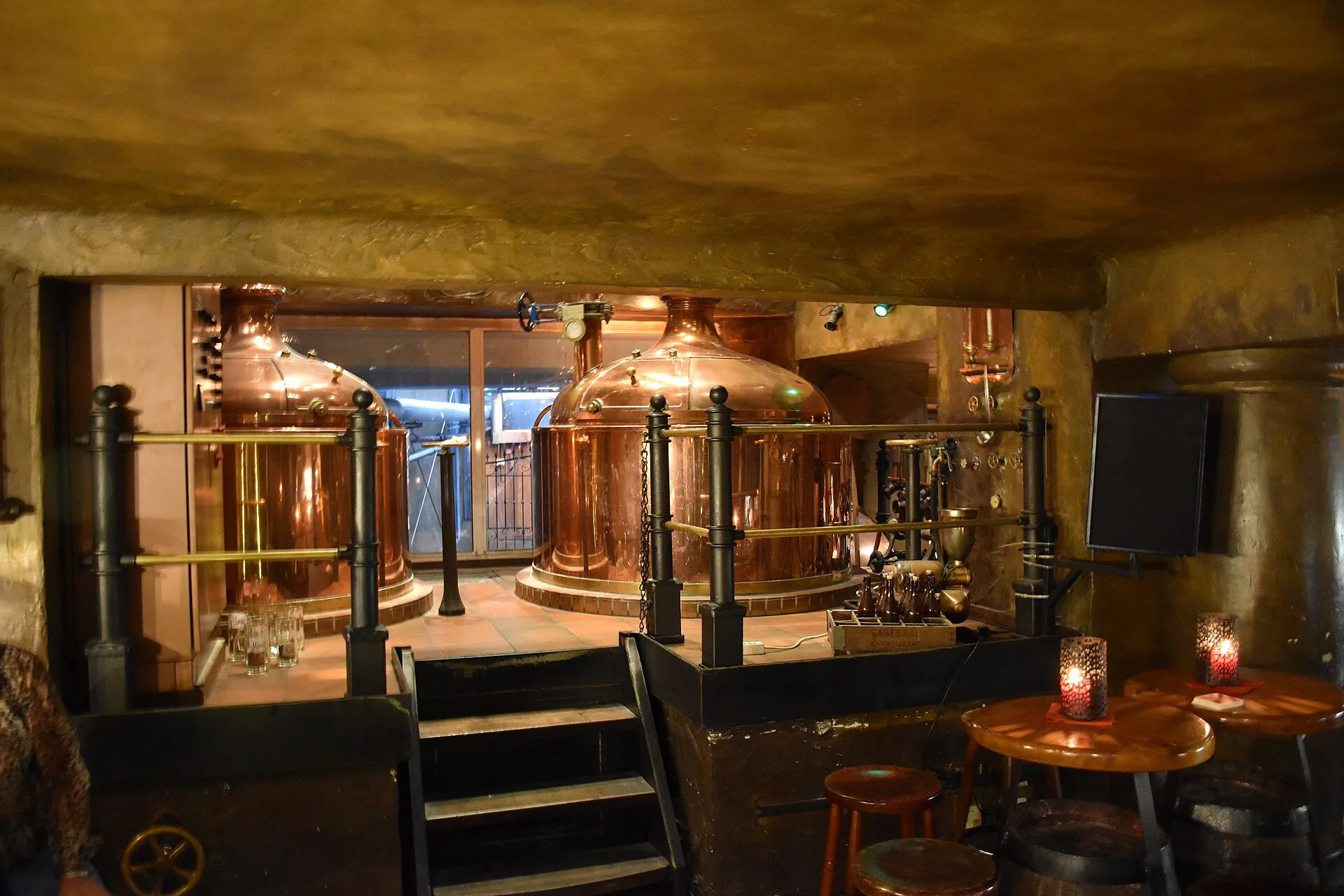
A brewpub is a restaurant that brews its own beer and sells a large share of it on the premises. The Brewers Association, which defines an American craft brewer as small and independent, sets the threshold at 25 percent of a brewery's beer sold on site, together with significant food service. In England, some brewers were already controlling their retail trade in the 17th century. Munich's Hofbräuhaus brewed at its Platzl site until 1896. The format returned with the Firkin pubs in London from 1979 and with brewpubs in Washington state from 1982 and California from 1983.
WHAT IS A BREWPUB? THE BREWERS ASSOCIATION DEFINITIONS
The Brewers Association divides American craft brewing into six market segments, defined by how much beer a brewery makes and where it is sold. A brewpub is a restaurant-brewery that sells 25 percent or more of its beer on site and operates significant food services. A taproom brewery meets the same 25 percent on-site threshold but does not operate significant food services. A microbrewery produces less than 15,000 barrels a year and sells 75 percent or more of its beer off site. A regional brewery produces between 15,000 and 6,000,000 barrels a year.
The Oxford Companion to Beer, edited by Garrett Oliver and published by Oxford University Press in 2012, describes the brewpub as a modern business model for an old practice: selling beer where it is brewed. Large brewers have adopted the model too, and the Companion cites Paulaner in Germany and San Miguel in the Philippines as companies that later opened brewpubs. Some are large: the now-defunct Bardo Rodeo in Arlington, Virginia, held around 800 patrons indoors, and the Tawandang Microbrewery in Bangkok filled 2,000 seats.
WHERE DID BREWING ON THE PREMISES BEGIN?
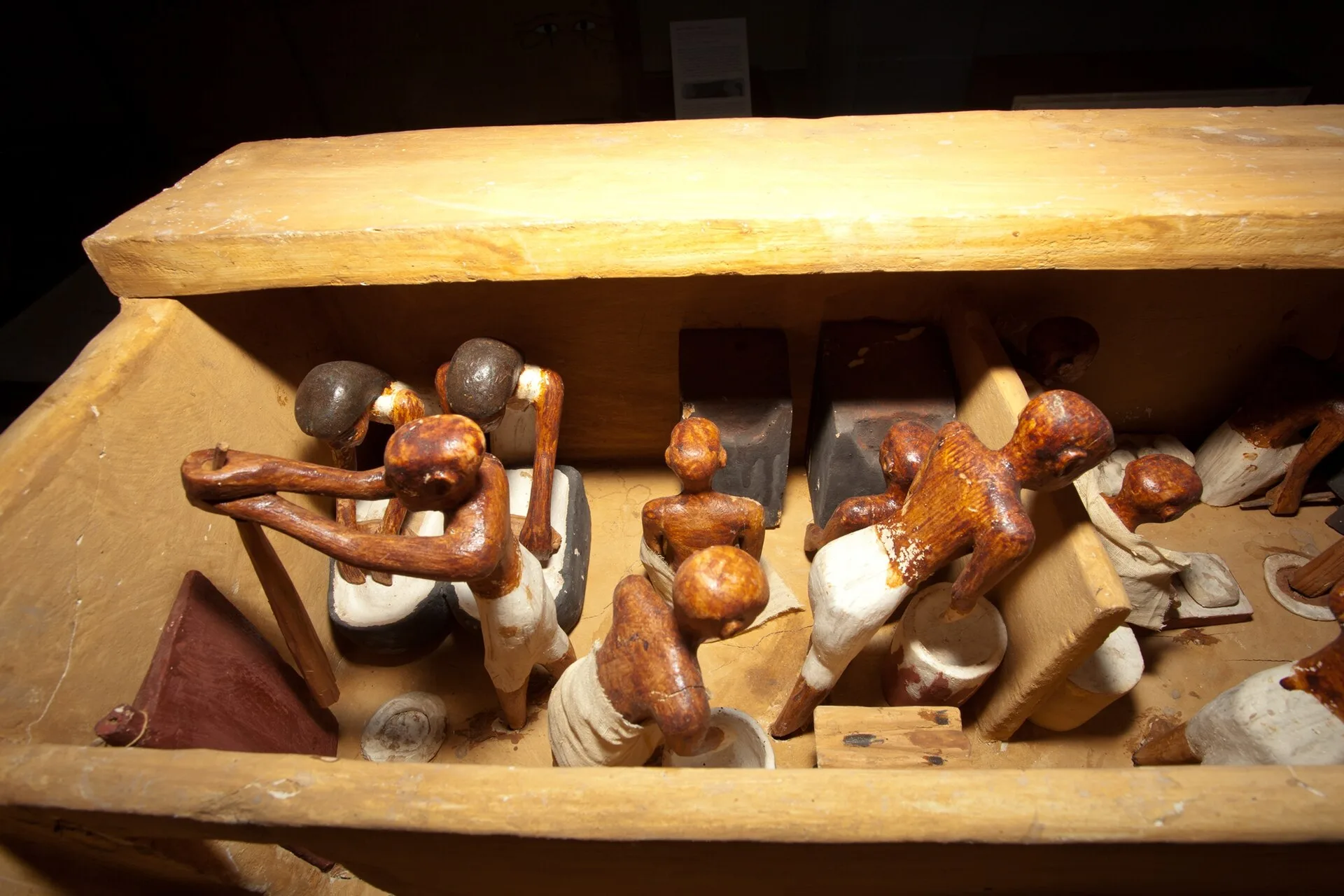
Britannica records that beer was made from barley in Sumer and Babylonia before 6000 BCE, and that reliefs on Egyptian tombs dating from 2400 BCE show barley being crushed, mixed with water and dried into cakes. Britannica also notes evidence that on every continent brewing was primarily a female activity, performed as a household task. The Oxford Companion to Beer describes brewing as once a cottage industry, alongside baking and cheese making, and industrialisation as the change that separated drinkers from the people who made their beer.
Britannica traces the brewing industry of Burton upon Trent to the monks of Burton Abbey, a Benedictine abbey founded there in 1002. The town's well water, impregnated with calcium sulphate derived from gypsum, proved particularly suitable for brewing. By 1801 there were nine brewing firms in Burton. As commercial brewing grew, the Oxford Companion to Beer notes, the more successful brewers were obliged to expand, which required capital and was risky unless new business could be secured. Competition between brewers was more intense in towns.
THE BREWER-PUBLICAN AND BRITAIN'S TIED-HOUSE SYSTEM
The Oxford Companion to Beer notes that as far back as the 17th century, certain English brewers were more interested in controlling business than expanding it. Brewers secured outlets by buying pubs or otherwise controlling them. A pub bound to sell only its owner's beer was a tied house, and an independent pub was a free house. Many urban publicans fell into debt to brewers, and in 1686 the Commissioners of Excise described London publicans as “most of them in debt to the Brewers”.
Some indebted publicans were forced to cede assets, and many sold their pubs to brewers and leased them back. Rising land values, licence fees and fit-out costs made it hard to open a pub without outside money, and brewers offered loans in exchange for guaranteed trade. Through the 19th century, larger brewers expanded their tied estates mainly by buying smaller breweries together with their pubs. From 1880 brewery ownership of licensed outlets grew quickly, and by the mid-1890s about 90 percent of on-trade beer sales in Manchester, Liverpool and Birmingham were tied.
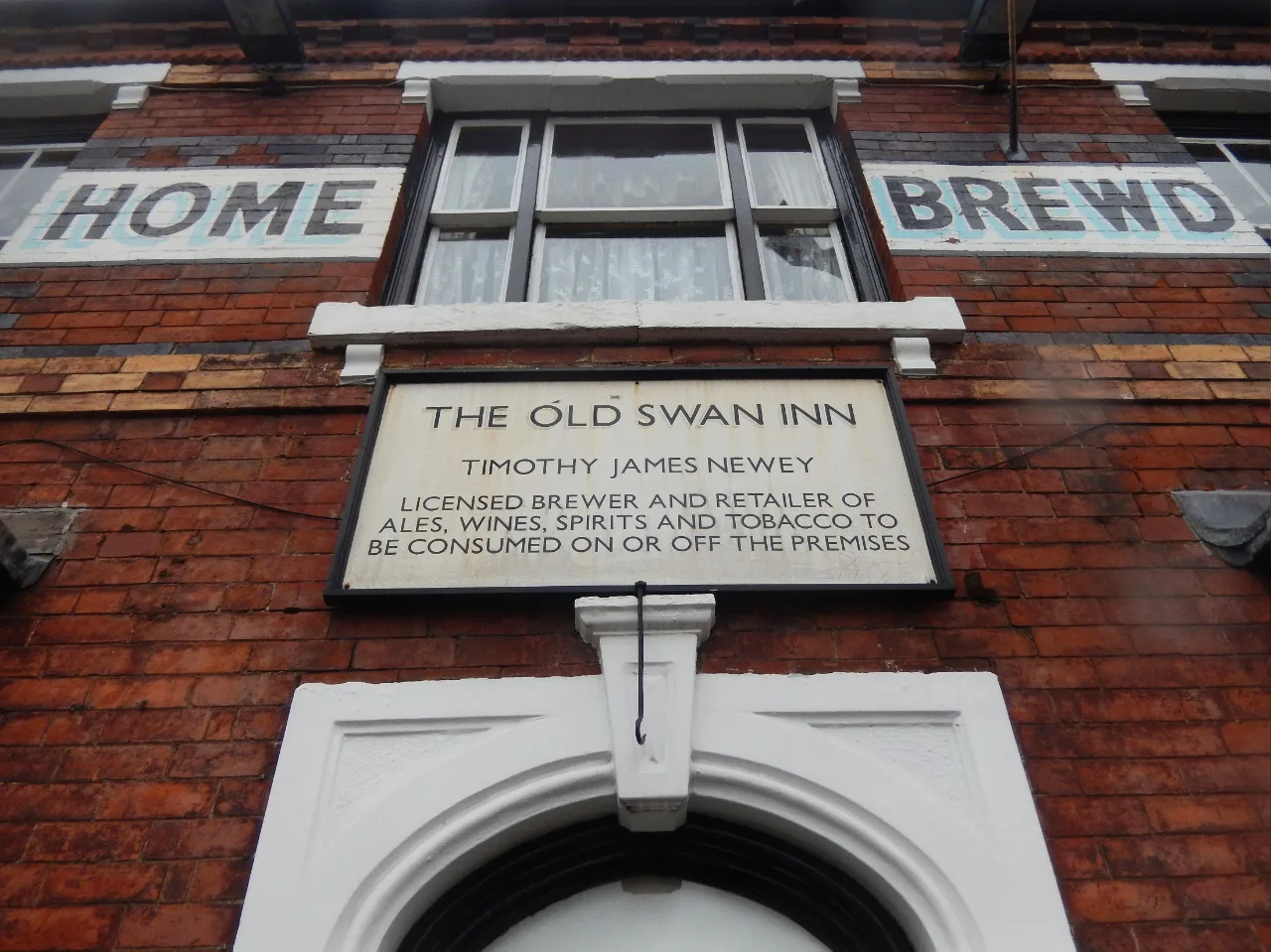
Pubs that brewed their own beer continued alongside the tied estates. The Old Swan in Netherton, in the borough of Dudley, was built in 1863 as a public house and brewhouse, and Historic England listed it at Grade II on 2 April 2001. The list entry describes the brewhouse as a red brick range of two storeys and a loft, with blue brick dressings, four bays and small-paned cast-iron windows with cambered heads. It records that the brewhouse is complete with its brewing equipment.
THE HOFBRÄUHAUS AND THE BAVARIAN COURT BREWHOUSE

In Bavaria, one house that brewed and served its own beer belonged to the ruling court. According to the City of Munich, the Wittelsbach court was buying its beer at high cost from outside sources, and in 1589 Duke Wilhelm V commissioned his own brewing operation. The city reports that brewing took place from 1607 on the site where the Hofbräuhaus still stands, on the Platzl in the Old Town. The Oxford Companion to Beer notes that brewery Gasthäuser and farm brewery taprooms in Germany and Belgium had operated for centuries, although both countries later saw the brewpub reinvented in more modern forms.
The Hofbräuhaus stopped brewing on the Platzl in 1896, when the brewery moved to Haidhausen, and it moved again in 1988 to Riem. The present building dates from a reconstruction of 1896 and 1897 to a design by the architect Max Littmann, which opened in September 1897; rebuilding after wartime destruction was completed in 1958. The ground-floor Schwemme seats around 1,000 people at long wooden tables, and the Festsaal holds about 1,500. The city states that brewing no longer takes place at the Platzl.
WHY DID PUBS STOP BREWING THEIR OWN BEER?
In 20th-century Britain, brewing became concentrated in fewer and larger companies. British brewers kept enlarging their estates, often buying smaller breweries mainly for their pubs. The Oxford Companion to Beer identifies the 1958 merger of Watneys with Mann, Crossman & Paulin, which formed Watney Mann, as the catalyst for a wave of takeovers in the 1960s that produced the “Big Six” brewers. The number of brewery sites in Britain fell from 567 in 1950 to 177 twenty years later. By the late 1980s the Financial Times reported that the Big Six made 75 percent of UK beer.
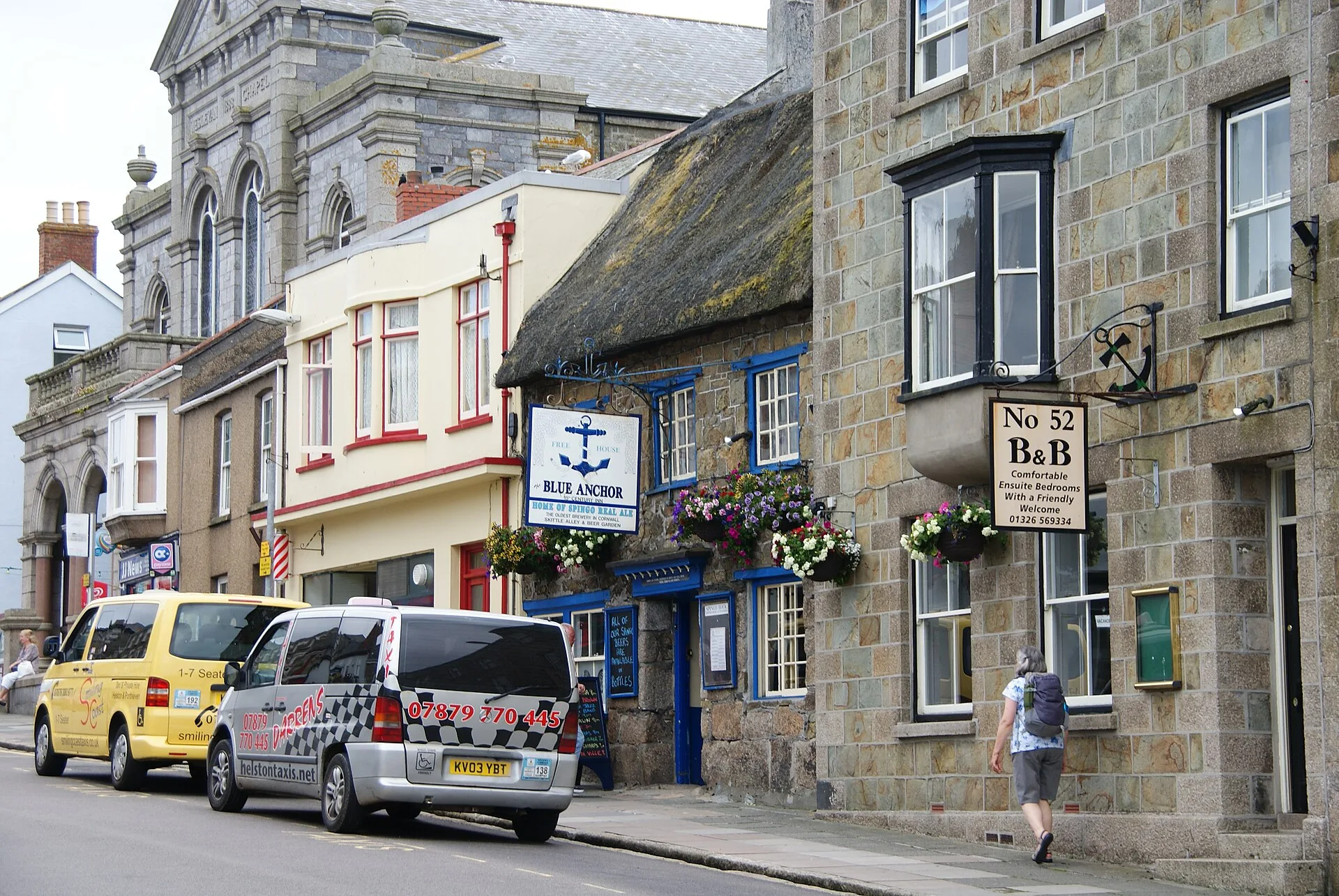
When the Campaign for Real Ale (CAMRA) was founded in 1971, four home-brew pubs were left in the UK. CAMRA records the Blue Anchor at 50 Coinagehall Street in Helston, Cornwall, as the only one in the UK to have brewed its own beer continuously since before that date. The thatched pub dates from the 18th century, although the pub claims a 15th-century origin. Its small early 19th-century brewhouse at the rear is on two floors, with the brewing vessels on the first floor, reached by an external stone staircase.
A new kind of British brewpub followed at the end of the 1970s. David Bruce took unprofitable London pubs and converted them into the Firkin chain, starting with the Goose & Firkin in 1979 and opening more with animal names such as the Frog & Firkin before he sold the chain in 1988. Customers could see, smell and hear the beer being made, and Bruce added pub food, comfortable interiors and old-time entertainments. In Hampshire, Peter Austin had founded the Ringwood Brewery in 1978, and Alan Pugsley joined him in 1982.
HOW DID THE AMERICAN BREWPUB REVIVAL BEGIN?
In the United States, the Oxford Companion to Beer notes, breweries and bars must be independent of each other. California changed its rule in 1982, when Assembly Bill 3610 amended the state's tied-house laws to remove the restriction on on-premises sales of craft beer. A 2014 analysis prepared for the California State Assembly records that California became home to three of the first five brewpubs in America, and that by 2014 the state had more breweries than any other, including more than 440 small, independently owned craft breweries.
The earliest of the new American pubs listed by the Oxford Companion to Beer was in Washington state. In 1982 Bert Grant, a Scottish-Canadian brewer, founded the Yakima Brewing and Malting Company, which included a pub. In 1983 Mendocino Brewing Co. opened what the Companion describes as California's first brewpub, in Hopland, followed by Buffalo Bill's Brewpub in Hayward. The Smithsonian's National Museum of American History holds a tap handle used at the bar of Buffalo Bill's from 1983 to 1994, and describes the pub, founded by the photographer Bill Owens, as one of the nation's first post-Prohibition brewpubs.
Owens sold a brewpub manual for about US$1,500 and tried, without success, to trademark the word “brewpub”. The Manhattan Brewing Company opened in New York City in 1984. The University of California, Davis expanded its brewing courses, and its chief instructor, Michael Lewis, tutored many dozens of future pub and production brewers. The McMenamins group's locations in the Pacific Northwest, including pubs, restaurants, cinemas and hotels, numbered in the 60s by late 2010. The Smithsonian museum describes brewpubs, an early 1980s innovation, as informal gathering places that united producers with consumers.
HOW DOES A BREWPUB BREWHOUSE WORK?

A brewhouse is both the room where the hot stages of brewing take place and the set of vessels that produce hopped wort for fermentation; commercial brewers describe capacity in these terms, as in a 50-hectolitre brewhouse. Many brewhouses include a large tank of hot water, known as hot liquor. The first vessel is the mash mixer or mash tun, where milled grain is mixed with warm water to make a porridge called the mash. Its main purpose is to convert the malt starches into simple sugars that yeast can ferment.
The mash then passes to the lauter tun, a large filtration vessel with a screen-like floor known as a false bottom. The grain settles into a filter bed formed mainly by the husks, and the liquid extract, called wort, is drawn through it and sent to the kettle. In the kettle the wort is boiled, and hops or spices are added. The hopped wort is then cooled and transferred to the cold side of the brewery, where it runs into fermenters and yeast is added.
Early American brewpubs typically combined a bar with a small brewing system of 10 to 12 hectolitres (7 to 10 US barrels). A common layout had two vessels: a combined mash and lauter tun for single-temperature infusion mashing, and a gas-fired kettle. Many brewpubs adapted used dairy tanks as fermenters and served from Grundies, UK-made serving tanks that usually held seven barrels, so batches were often brewed in volumes of seven or 14 barrels. JV Northwest of Wilsonville, Oregon, moved its stainless steel from saw blades to brewery tanks.
BROADWAY AT EMIRATES PALACE ABU DHABI

Broadway at Emirates Palace Abu Dhabi is a brasserie and brewery bar, completed in 2023 and styled as a 1920s New York warehouse brewery in the theatre district. Beer is brewed on site, as it was in Britain's home-brew pubs, at the Hofbräuhaus on the Platzl until 1896, and in the American brewpubs that opened in Washington state, Hopland and Hayward in 1982 and 1983. The restaurant side of the format is covered in a separate article on the French brasserie.
The brick is painted with faded 1920s advertising “ghost art”. Original ghost signs, most of them painted between the 1870s and the 1930s with lead-based paint that helped them bond to brick, are the subject of a separate article on ghost signs. In The Cellar lounge, theatre ghost art covers a brick vaulted ceiling. Lettering uses a 1920s typeface, and the Broadway name is spelled out in neon lettering. How Georges Claude developed neon lighting, and how it spread, is traced in the article on neon signs.
SOURCES
- Brewers Association Craft Beer Industry Market Segments
- The Oxford Companion to Beer (Craft Beer & Brewing) The brewpub
- The Oxford Companion to Beer (Craft Beer & Brewing) The tied house system
- The Oxford Companion to Beer (Craft Beer & Brewing) Brewhouse
- Britannica Brewing
- Historic England The Old Swan Public House and Brewhouse at Rear
- CAMRA Blue Anchor, Helston
- City of Munich Hofbräuhaus am Platzl
- California State Assembly ACR 116 Assembly Committee Analysis (2014)
- Smithsonian National Museum of American History Buffalo Bill's Brewpub Beer