COLD STORAGE, BAVARIAN CELLARS AND THE PALE BEER OF PLZEŇ
The question of lager vs pilsner has a short answer: every pilsner is a lager, but not every lager is a pilsner. Lager is the broad family of beers made with bottom-fermenting yeast and matured cold, a method that grew out of Bavarian brewers storing their beer through the warm months. Pilsner is one style within that family, the pale, highly hopped beer first brewed by the Bavarian brewer Josef Groll in the Bohemian town of Plzeň, or Pilsen, in 1842. Mechanical refrigeration, pure yeast cultures and the railways then turned a regional cellar beer into a style that, by the end of the 19th century, was taking root worldwide. Ales, the other main family, are fermented with top-fermenting yeast at warmer temperatures.
WHAT IS LAGER, AND WHAT MAKES IT DIFFERENT?
Lager takes its name from the German verb lagern, to store. Britannica explains that German brewers historically made beer during the cold months and kept it chilled through the summer with ice, and that the word now covers any beer brewed with bottom-fermenting yeast. In Britannica's account of traditional practice, lager wort was pitched with yeast at 7 to 12°C, fermented for three weeks or more, then stored at 0°C for up to three months, which allowed chill haze to settle. Modern breweries shorten primary fermentation to 7 to 10 days and use tannin, clarifying agents or enzymes to speed up maturation.
The yeast is what separates lager from other beer. Brewers traditionally called lager yeasts bottom strains, and Britannica notes that they were long classified as Saccharomyces carlsbergensis. The brewing writer Randy Mosher, in Craft Beer & Brewing, identifies lager yeast as Saccharomyces pastorianus, a species separate from ale yeast and a cold-tolerant hybrid between ale yeast and a recently identified cold-tolerant species found on beech and other trees in Patagonia. He divides lager yeasts into two groups: the Saaz type, isolated by Emil Christian Hansen in 1883 and used by Carlsberg in Denmark, and the Frohberg type, isolated at Heineken in 1886 by Hartog Elion, which is now the more common of the two.
HOW DID BAVARIAN CELLAR BREWING SHAPE LAGER?

Lager developed under rules about when beer could be brewed. Mosher cites a Bavarian edict of 1553 that allowed brewing only between St Michael's Day on 29 September and the feast of St George on 23 April. Beer for the summer therefore had to be brewed in the cold months and kept cool until it was drunk, and Mosher writes that lager, kept in its cellars, became immensely popular and spread to Bohemia and far beyond. Britannica lists two Munich beers tied to the brewing year: bock, a stronger, heavier beer brewed in winter for drinking in spring, and Märzbier, or March beer, a lighter brew produced in spring.
Bavaria also fixed what beer could contain. According to the German Brewers' Federation (Deutscher Brauer-Bund), the Reinheitsgebot was proclaimed on 23 April 1516 at the Neues Schloss in Ingolstadt by Duke Wilhelm IV and his brother Ludwig X. It limited beer to water, malt and hops. Yeast was not listed, because its role in brewing was not yet understood, and it was added to the rule later. The decree built on earlier ordinances, including one issued for Munich by Duke Albrecht IV on 30 November 1487 and a 1493 ordinance for Lower Bavaria issued at Landshut. Its aims were to keep prices down, reserve wheat for bread and keep additives such as soot and thornapple out of beer.
WHERE DID PILSNER COME FROM?
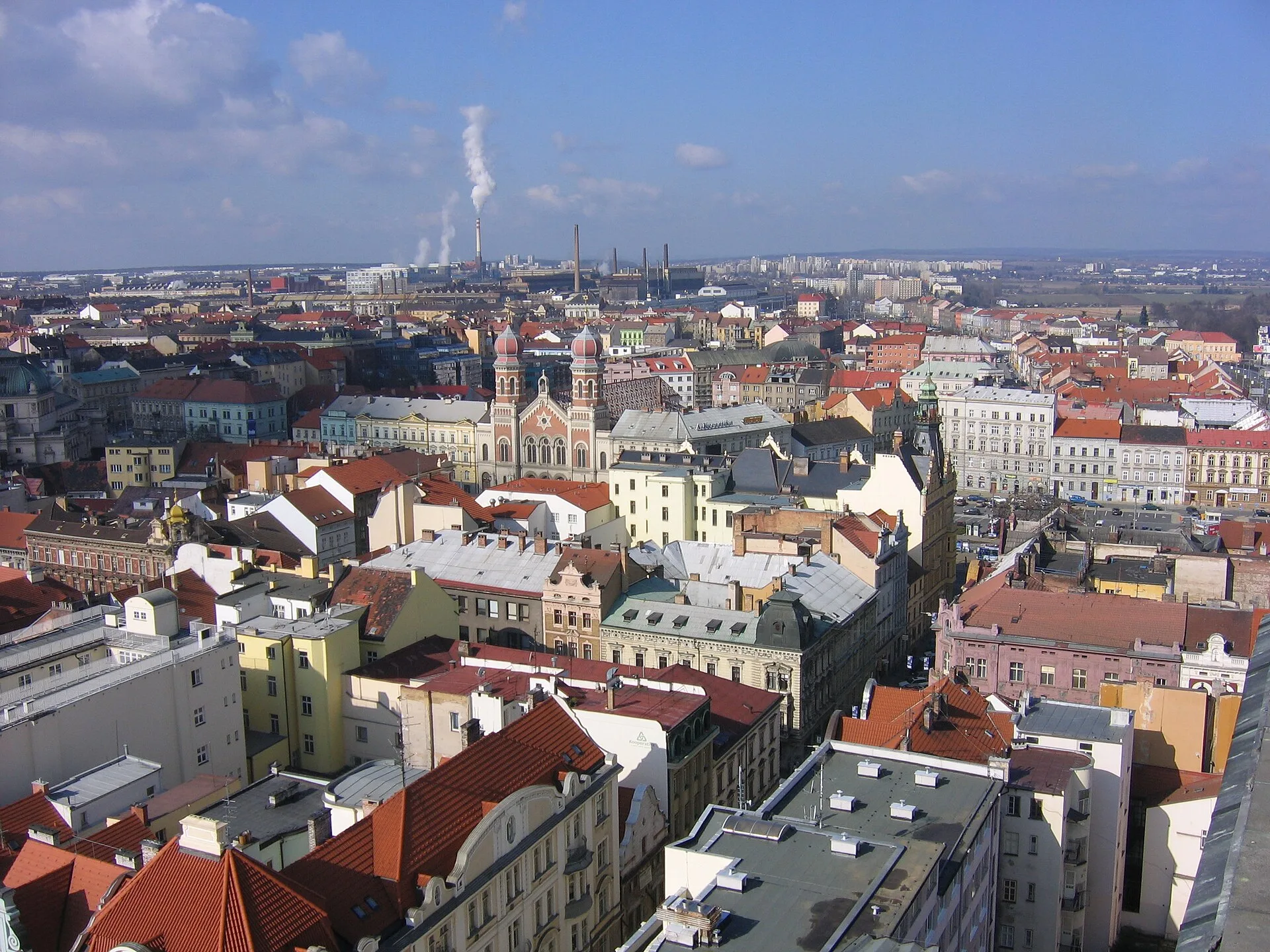
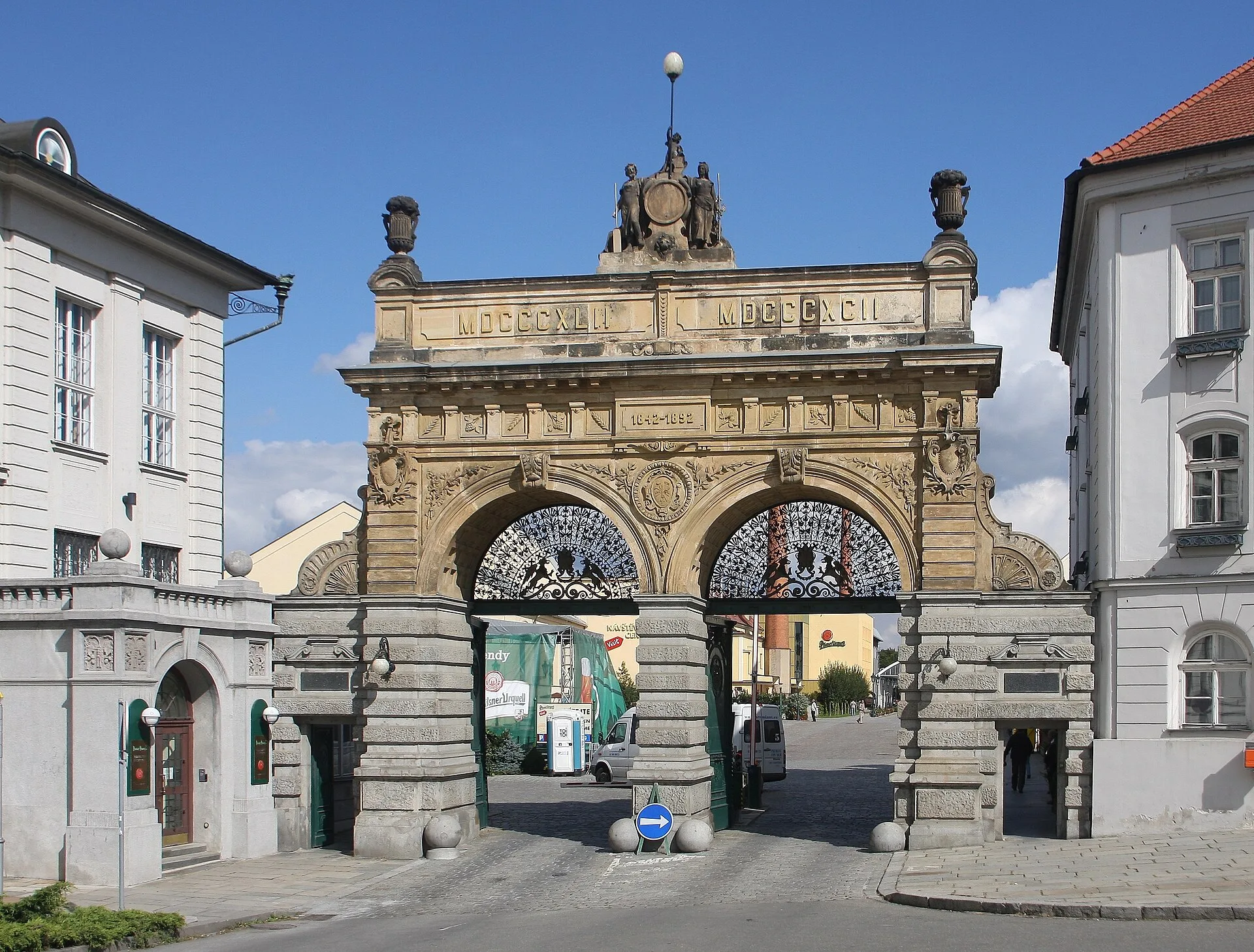
Plzeň had brewed beer since the town's foundation, which the city's tourism office dates to 1295, and King Wenceslas II granted its burghers the right to brew and to sell beer in their own houses. By the 1830s the quality of the town's top-fermented beer varied widely, and the tourism office records that in 1838, 36 barrels judged unfit to drink were poured out on the town square. Jeff Alworth, writing in Craft Beer & Brewing, explains that imported Bavarian lager was reaching western Bohemia at the time and impressing drinkers with its quality and keeping power. The burghers decided to fund a new brewery and make the same kind of lager at home.
The brewer they hired was Josef Groll, a Bavarian brewmaster who arrived in Plzeň in 1842. According to the tourism office, the first batch of Plzeň lager was brewed on 5 October 1842. Alworth records that Groll presented the beer at St Martin's Fair on 11 November 1842, during a stint of about three years at the brewery that later became Plzeňský Prazdroj. Groll was also a sladmistr, or malt master. Alworth calls the new Burghers' Brewery special because of its English-style kiln, which could make very pale malt, and Groll used it to create the grist the rest of the world came to call pilsner malt.
Britannica records that the brewers of Plzeň used the local soft water to produce Pilsner, which became the standard for pale, highly hopped, dry lagers. Czech pale lager is built on pale base malt and Saaz hops, which Alworth notes are grown around Žatec, about 50 miles north of Plzeň, and date back at least 500 years. The brewery's cellars remain in use: the tourism office describes a 9 km labyrinth of hand-hewn historic cellars where unfiltered, unpasteurised Pilsner Urquell is still served from oak barrels. The brewery now produces up to 11 million hectolitres a year and exports to more than 50 countries.
LAGER VS PILSNER: WHAT IS THE DIFFERENCE?
The difference between lager and pilsner is one of family and style. Lager describes the method: bottom-fermenting yeast, cool fermentation and cold maturation. Pilsner describes one beer made by that method, named after Plzeň, pale in colour and highly hopped. Britannica places Pilsner among the bottom-fermented lagers that originated in continental Europe, alongside Dortmunder, a pale lager of Germany, and the dark, strong, slightly sweet beers of Munich. A dark Munich lager, a bock and a pilsner are all lagers, and only the last is a pilsner. The Plzeň tourism office states that more than 70 per cent of the world's beers are named after the Plzeň original.
Czech brewers classify their lagers by strength, and the word for lager in Czech is ležák. Alworth explains that ležák is the mid-strength category, usually the beers exported, at around 5 per cent alcohol, and that Budvar lagers its standard světlý ležák, or pale lager, for three months. He adds that decoction mashing is now written into Czech law as a mandatory feature of any beer called České pivo, Czech beer, and credits it with the fullness of Czech lager.
VIENNA AND MUNICH: THE OTHER LAGER STYLES
Pilsner was not the only pale lager of the 1840s. Alworth describes Vienna lager as one of the world's first pale lagers. Its brewer, Anton Dreher, was the son of a brewer and had apprenticed at another brewery. He made a friend in Gabriel Sedlmayr of the Spaten Brewery in Munich, and the two spent most of 1833 in Britain. In London, Dreher found work at Barclay Perkins, and the pair befriended Michael Thomas Bass, owner of the Bass Brewery at Burton. They learned the English use of the saccharometer and the practice of malting barley with indirect heat, which produced paler malts free of smoke or roast. Dreher took over the family brewery in 1836.
In 1841 Dreher brewed the lager that became synonymous with Vienna, using a single malt: the pale malt that came to be called Vienna malt. Alworth notes that the style was remade first by immigrant German brewers and then by American and Mexican brewers in the industrial age, while the lager Austrians drink today is a crisp, golden märzen, close to a German helles. In 2016, on the 175th anniversary of Dreher's first brew, the Schwechat brewery reintroduced a Wiener Lager. Munich took a darker path: Britannica attributes the colour of its beers to highly roasted malt, with other characteristic flavours developed during decoction mashing.
HOW DID REFRIGERATION MAKE LAGER A WORLD BEER?
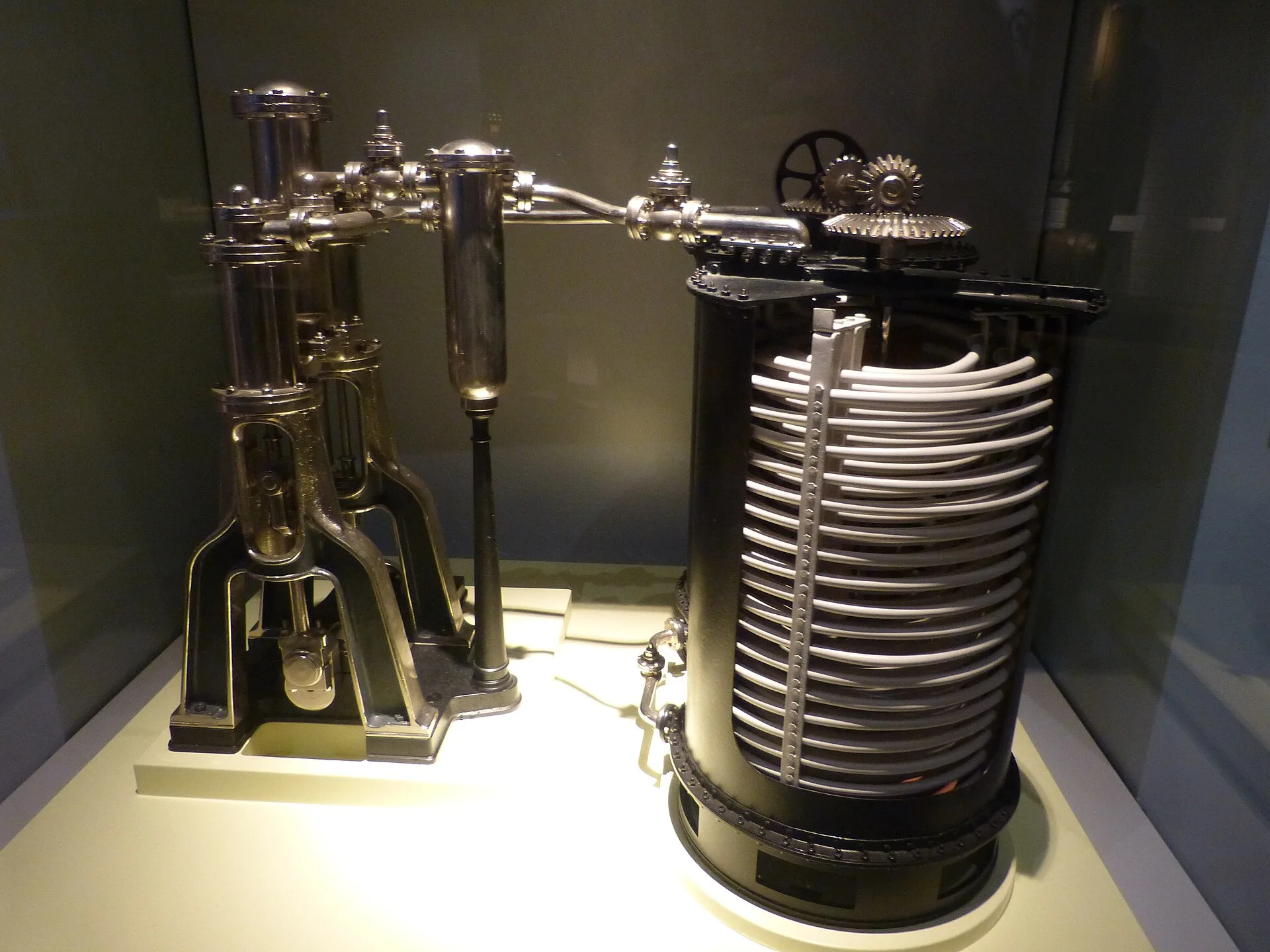
Cold storage tied lager to winter, ice and cellars until engineers found a way to make cold. Carl von Linde, born in Berndorf, Bavaria, in 1842, became an assistant professor of machine design at the newly established Technische Hochschule in Munich in 1868. Britannica records that he developed a methyl ether refrigerator in 1874 and an ammonia refrigerator in 1876, and that his machines were the first designed with precise efficiency calculations in mind. The German Brewers' Federation credits Linde's refrigeration machine, which produced artificial ice, with making brewers independent of the seasons and allowing bottom-fermented beer to be brewed all year round. Linde died in Munich in 1934.
Yeast science followed. The Brauer-Bund records that Louis Pasteur showed yeasts to be microorganisms and that in 1881 the Danish botanist Emil Christian Hansen isolated single yeast cells, which made fermentation predictable and gave beer a consistent taste and keeping quality. The Brauer-Bund also credits the railways with allowing beer to be shipped far from where it was brewed, citing daily deliveries to Paris. By the end of the 19th century, Alworth writes, pilsner was taking root worldwide, and it eventually displaced most local styles.
LAGER VS PILSNER VS ALE: HOW DO ALES DIFFER?
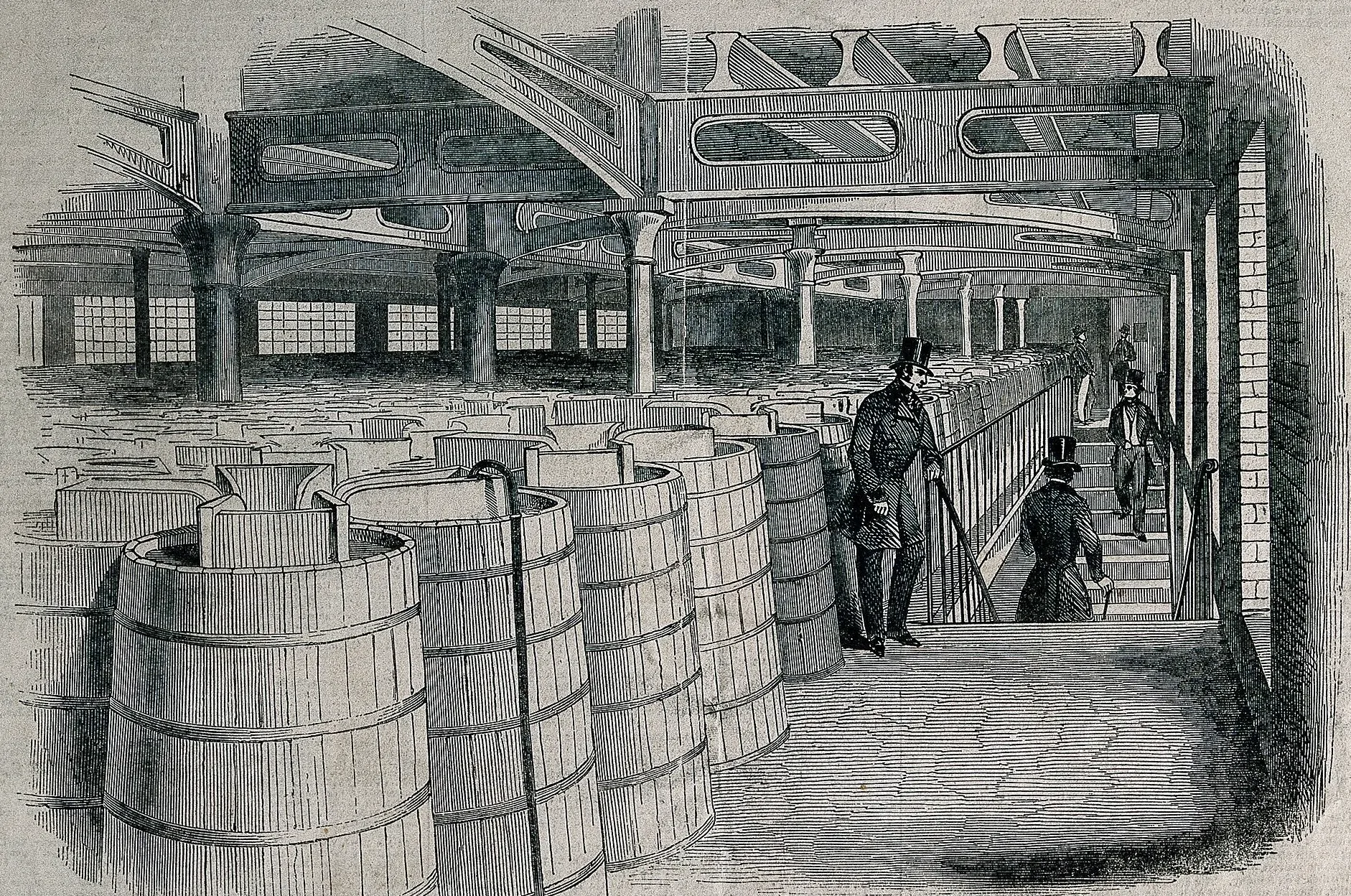
Ale differs from lager in its yeast and its temperatures. Ale is traditionally made with top strains of Saccharomyces cerevisiae, which in top fermentation rise to the surface of the vessel. Britannica gives traditional ale practice as pitching at 15 to 18°C and letting fermentation rise to 20 to 23°C for about seven days, then conditioning for about seven days at 15°C, against three weeks or more of fermentation and up to three months at 0°C for lager. Mosher notes that ale yeast produces more fruity esters at its warmer fermentation temperatures, while lager yeast produces fewer at cool temperatures, along with sulphur compounds that tend to fade during lagering.
Britannica traces the British ale tradition to top-fermented extracts of brown malt, followed in the 18th century by London porter, a strong, dark, highly hopped beer, and by the pale ales, or best bitters, of Burton upon Trent, brewed with the town's hard water. Mild ales are weaker, darker and sweeter than bitter. Cask ales are conditioned in the cask and sold at the point of sale. The line between the families is no longer fixed: many ales are now made by bottom fermentation with what were originally top strains. Britannica adds that the 20th century eroded regional distinctions, which in Britain encouraged support for small traditional ale breweries.
BROADWAY AT EMIRATES PALACE ABU DHABI

Broadway at Emirates Palace Abu Dhabi is a brasserie and brewery bar, completed in 2023. Its concept is a 1920s warehouse brewery in New York's theatre district, the area whose growth is traced in our article on Times Square and the making of Broadway's theatre district. Beer is brewed on site, the arrangement whose history is covered in our article on brewpubs and beer brewed where it is served. The 1920s setting comes a generation after the end of the 19th century, when pilsner was taking root worldwide following Linde's refrigeration machines and Hansen's yeast work.
The brick is painted with faded 1920s advertising "ghost art", the type of painted wall advertising covered in our article on ghost signs. The Cellar lounge has a brick vaulted ceiling and theatre ghost art. Lettering uses a 1920s typeface, and the Broadway name is spelled out in neon. In the history of lager, the cellar was the place of storage: the word comes from lagern, to store, and the Plzeň brewery still has a 9 km network of hand-hewn cellars.
SOURCES
- Britannica Is lager different from beer?
- Britannica Beer: Yeast
- Britannica Beer: Types of beer
- Britannica Carl von Linde
- Deutscher Brauer-Bund (German Brewers' Federation) Entstehung des Reinheitsgebots
- Deutscher Brauer-Bund (German Brewers' Federation) Geschichte des Bieres
- Visit Plzeň (Plzeň tourism) Plzeňský Prazdroj
- Craft Beer & Brewing (Jeff Alworth) Style School: Examining the Czech Pale Lager Tradition
- Craft Beer & Brewing (Jeff Alworth) Vienna Lager: Fire in the Glass
- Craft Beer & Brewing (Randy Mosher) Flavor Fever: The Elusive Flavor of Lager Yeast