PERU'S GRAPE BRANDY, FROM COASTAL VINEYARDS TO LIMA'S BARS
Pisco is a grape brandy distilled on Peru's coast, and the pisco sour is the cocktail most often made with it. Under Peruvian rules the spirit can only be made from eight grape varieties grown in the coastal zones of Lima, Ica, Arequipa, Moquegua and Tacna, and it goes into the bottle without added water, sugar or time in wood. Production dates back to the colonial vineyards of the Ica valley, where documents record copper stills and jars of brandy from the 1580s onwards. The spirit was shipped through the port of Pisco, which gave it its name. The pisco sour is usually traced to a bar in central Lima around 1920.
WHAT IS PISCO?
Peru's technical standard for the spirit, NTP 211.001, describes pisco as a brandy obtained exclusively by distilling the freshly fermented musts of "pisquera" grapes. The definition is cited by Lincoln Betalleluz Pallardel in a 2009 study published by the Universidad de Lima. According to the business daily Gestión, reporting guidance from INDECOPI, the national authority that administers denominations of origin, Pisco was recognised as a denomination of origin on 12 December 1990 and ratified by supreme decree on 16 January 1991. A denomination of origin is a sign built on a place name, used for products whose qualities come exclusively or essentially from the natural factors of an area and from human factors such as traditional methods.
INDECOPI defines pisco as a grape distillate produced exclusively in the coastal zone of Lima, Arequipa, Ica, Moquegua and Tacna, using only pisquera grapes and the traditional methods set out in the regulations. In Tacna the zone covers the Locumba, Sama and Caplina valleys. A label should carry the words "Denominación de Origen Pisco", the producer's authorisation certificate number, the name of the authorised user, the type of pisco, the grape variety, the valley and the harvest year. Pisco may not be sold in bulk, bottles must be sealed, and containers must be glass or ceramic rather than plastic. INDECOPI describes the finished spirit as clear, clean, bright and colourless.
WHICH GRAPES ARE USED TO MAKE PISCO?
Eight varieties are permitted: Quebranta, Negra Criolla, Mollar, Uvina, Italia, Torontel, Moscatel and Albilla. Difford's Guide divides them into two groups. Quebranta, Mollar, Uvina and Negra Criolla are non-aromatic. Italia, Moscatel, Torontel and Albilla are aromatic, and all four belong to the Muscat family or are derived from it. The Universidad de Lima study uses Quebranta as its example of a non-aromatic variety and Italia as its example of an aromatic one. According to Difford's Guide, pisco was first made from a black grape brought to Peru by the Spanish, which adapted to its new environment and became known as Quebranta.
A history of pisco published by PromPerú, Peru's export and tourism promotion board, cites the chronicler Garcilaso de la Vega, who described the first grape harvests in Peru and credited Francisco Caravantes, a conquistador from Toledo, with bringing a vine from Spain. The same history states that most of the early red grapes came from the Canary Islands. Ernesto Ramírez of the Universidad Le Cordon Bleu in Lima, writing in 2025, cites the researcher Guillermo Toro Lira, who dates the first wine produced in Peru to 1539 and credits it to Hernando de Montenegro.
HOW IS PISCO MADE?
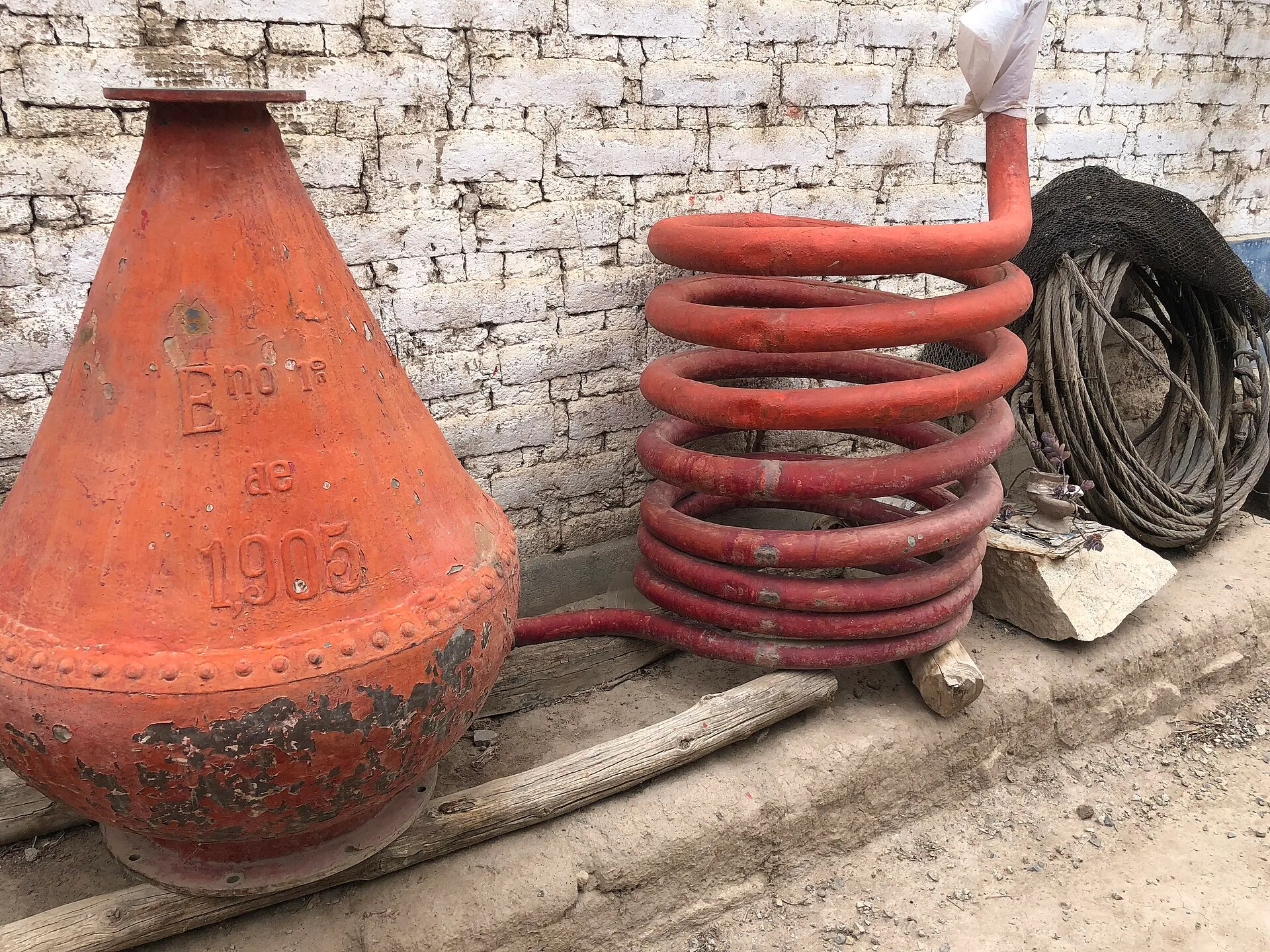
Production starts as winemaking. Difford's Guide puts fermentation at eight to 12 days, producing a wine of 11 to 14 percent alcohol by volume that is distilled immediately. Writing for PUNCH, Talia Baiocchi notes that the best piscos are made from first-press juice, while industrial producers may also use must that includes skins, seeds and stems. Distillation takes place in an alambique, a pot still in which the fermented must is heated and the alcohol vapour is condensed. In the process described by the Universidad de Lima study, the first fraction, the head (cabeza), is removed; the body (cuerpo) is kept as pisco, with distillation ending when the spirit reaches 42 degrees Gay-Lussac; and the tail (cola) is discarded.
According to Difford's Guide, only a single distillation is permitted and pisco is bottled at proof, the strength at which it leaves the still. No colouring, flavouring or water may be added, and PUNCH notes that the ban on additives covers both water and sugar. Oak ageing is not permitted. Pisco instead rests for at least three months in inert vessels such as ceramic, glass or stainless steel, and many producers rest it for up to a year. The Universidad de Lima study describes a three-month rest in stainless steel tanks, during which the spirit's aroma and flavour develop. The legal bottling strength is 38 to 48 percent alcohol by volume.
PISCO STYLES: PURO, AROMÁTICO, ACHOLADO AND MOSTO VERDE
Pisco is sold in types defined by the grapes and the state of the must, and the label must state the type. A pisco puro is made from a single variety, and Difford's Guide notes that it must use 100 percent of that grape. The Universidad de Lima study separates puro into two kinds: puro no aromático, made from a single non-aromatic variety such as Quebranta, and puro aromático, made from a single variety with a pronounced aroma, such as Italia. PUNCH describes the aromático label as applying when only aromatic grape varieties are used.
Acholado is a blend. The Universidad de Lima study defines it as a mixture of pisquera grapes, musts or piscos, and Difford's Guide describes it as made from a blend of musts from several varieties. Mosto verde is distilled from fresh must whose fermentation was interrupted, so the spirit keeps some of the grape's natural sugar. Because the yield is lower, Difford's Guide notes, mosto verde piscos can cost up to twice as much as puro. PUNCH described mosto verde as a newer category when it published its guide to the spirit in 2013.
WHERE DID PISCO COME FROM? THE VINEYARDS OF ICA AND THE PORT OF PISCO
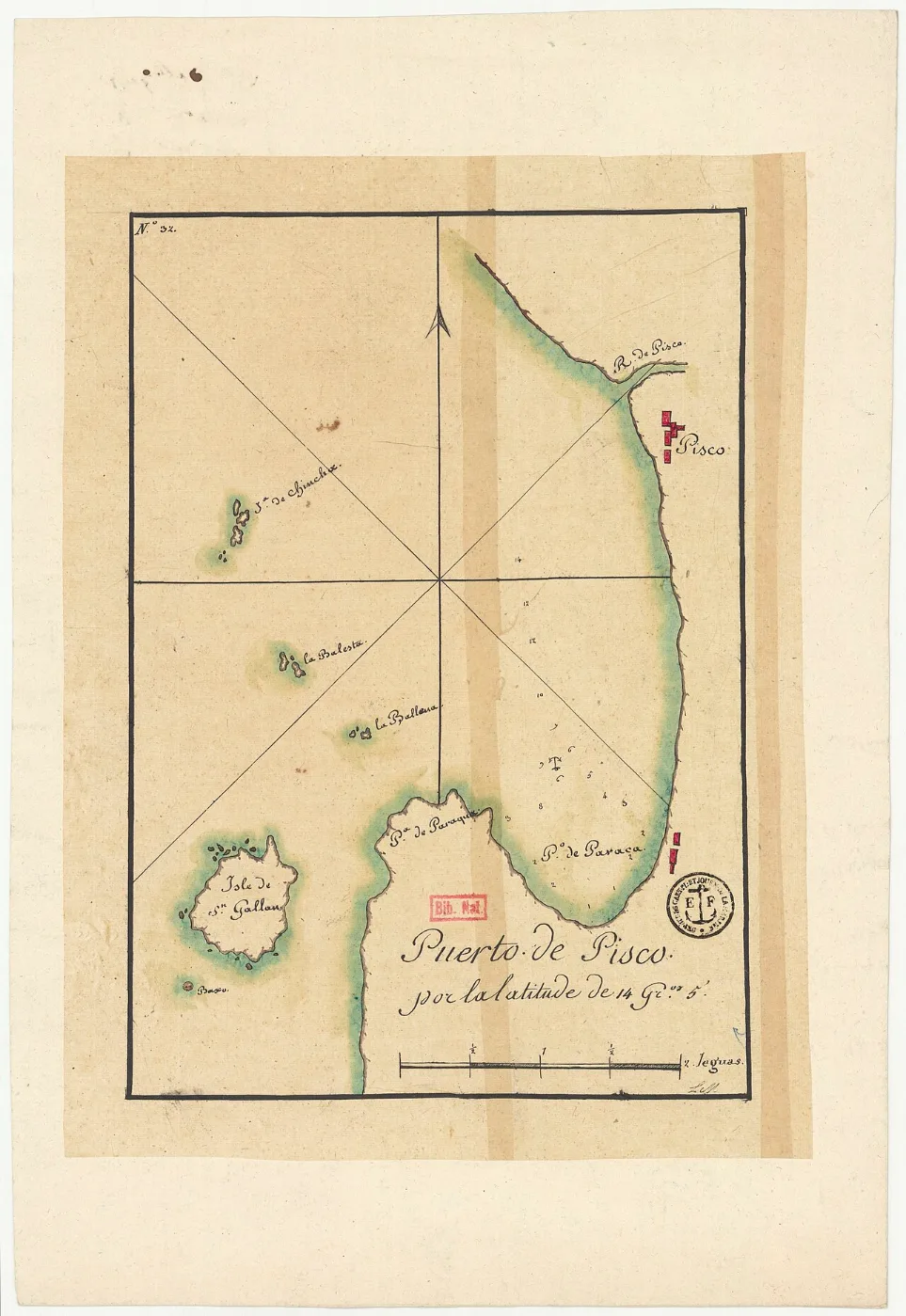
The earliest documents come from Ica. Ramírez identifies the oldest known Peruvian document about distillation as one dated 18 November 1587 in Valverde, Ica, which records a dispute over a copper still and the wine and brandy contributed to a partnership. The will of Pedro Manuel, known as "el Griego", of Ica, dated 1613, lists jars of brandy and a copper still. PromPerú's history adds that a public deed of 11 December 1633 names Alonso García de Zepeda of Ica as owner of the Quillohay vineyard, with a wine press and a large pan for making aguardiente.
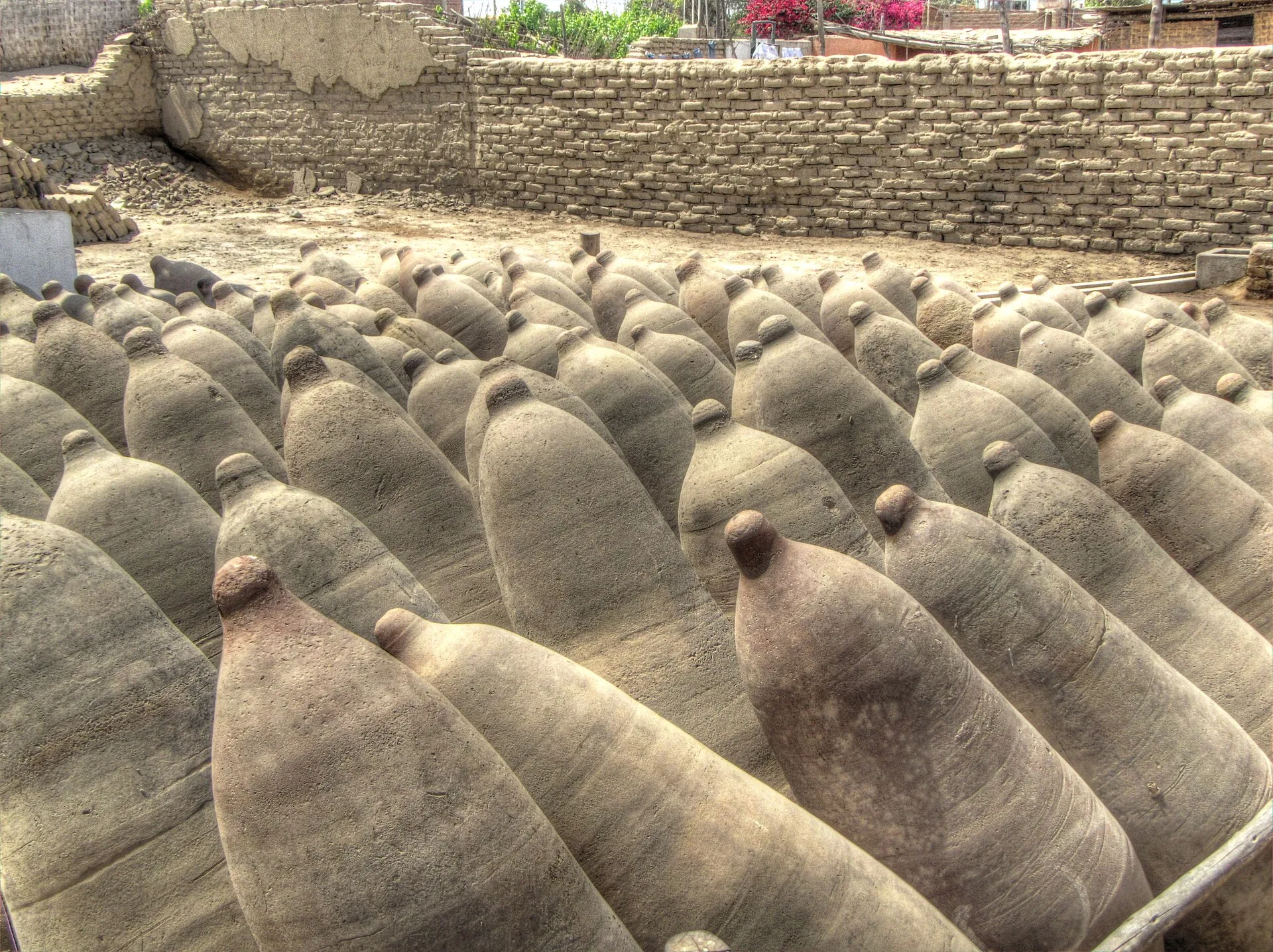
Pisco is a city and port at the mouth of the Pisco River on the Pacific. Britannica dates its founding to 1640 by Pedro Toledo y Leiva and gives the name as Quechua for "bird". PromPerú notes that the spirit was first produced in Ica and exported through the port, and that colonial brandies were named after their valleys, such as Majes, Vítor and Pisco. Ramírez states that the port gave its name to the liquor, and that the clay jars used to store it, first called peruleras, were renamed piscos by local potters. In 1814 the traveller William B. Stevenson wrote of the aguardiente "called pisco", and in 1824 Heinrich Witt recorded Pisco as the port from which the brandy of Ica was exported.
WHERE DID THE PISCO SOUR COME FROM?
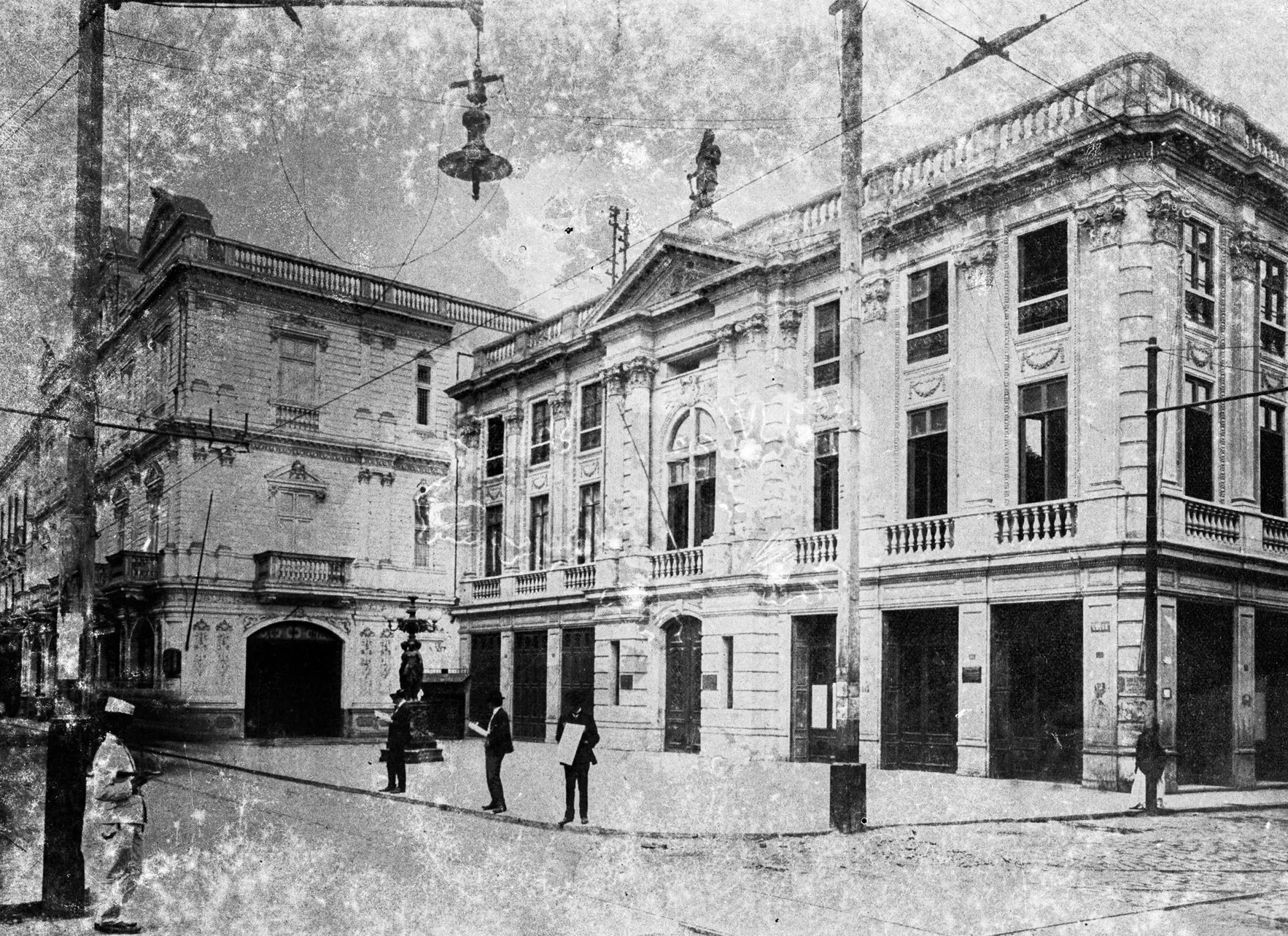
The usual attribution for the pisco sour is to Victor V. Morris and his bar in Lima. Atlas Obscura describes Morris as a former florist from Utah who joined A.W. McCune's Peruvian mining venture and arrived in Cerro de Pasco in 1902 to help build a railway, later settling in Lima. PUNCH also describes him as American-born. One story, reported by Atlas Obscura as disputed, has Morris improvising the drink at a railway celebration in 1904 after running out of whiskey for whiskey sours.
PromPerú cites César Coloma, a researcher at Peru's Ministry of Culture, who places the creation of the drink around 1920 at the Morris Bar on the old Calle Boza 847, on Jirón de la Unión. Atlas Obscura locates the bar one block from Plaza San Martín and names among its regulars the writers Abraham Valdelomar and José María Eguren and the anthropologist Alfred L. Kroeber. The first known written reference is in Cipriano A. Laos's 1927 book Lima, la ciudad de los virreyes, which advertised the bar as famous for its "pisco-sour" and "whisky-sour".
The Morris Bar closed in 1929, the year Morris died. The researcher Guillermo Toro Lira, cited by PromPerú, credits Mario Bruiget, a bartender from Chincha who had been Morris's apprentice, with taking the recipe to the Hotel Maury. Atlas Obscura writes that Bruiget probably added the egg white and bitters, and that the Grand Hotel Maury claims to be the original home of the modern pisco sour. From the Maury the drink moved to the hotel bars of the Bolívar and to the Country Club, where, according to PromPerú, the recipe used today was settled.
HOW IS A PISCO SOUR MADE?
The recipe published by PUNCH uses 2 ounces (about 60 ml) of pisco, three quarters of an ounce of fresh lemon juice, half an ounce of simple syrup made from equal parts sugar and water, and half a large egg white. All the ingredients are first shaken without ice, a step known as a dry shake. Ice is then added and the drink is shaken again, strained into a chilled coupe and finished with Angostura bitters. PromPerú lists the Peruvian version's ingredients as pisco, lime, syrup, ice, egg white and a drop of bitters.
Peru marks Pisco Sour Day on the first Saturday of February, and PromPerú states that the drink has been considered Cultural Heritage of the Nation since 2007. In 2021 Drinks International included the pisco sour among the 50 best-selling classic cocktails in the world. Atlas Obscura traces its spread beyond Peru, with the drink reaching San Francisco in the 1930s and becoming a popular oddity in New York City in the 1960s. PromPerú names John Wayne, Orson Welles, Walt Disney, Clark Gable and Ava Gardner among its famous admirers.
HENSHIN AT THE WESTIN JAKARTA

Henshin is a Nikkei restaurant and rooftop bar on floors 67 to 69 of The Westin Jakarta, and it opened in 2017. Its name, henshin, means transformation in Japanese. Its opening executive chef was Hajime Kasuga, a third-generation Japanese Peruvian. Peru is the country whose coastal departments of Lima, Ica, Arequipa, Moquegua and Tacna hold the denomination of origin for pisco, and whose capital, Lima, is where the Morris Bar on Jirón de la Unión is usually credited with the first pisco sour, around 1920.
Silverfox Studios designed all three floors of Henshin and its arrival tunnel. A large bingata pattern covers the ceiling on level 69, and translucent sake barrel forms are lit in blue. Barrels have no part in the making of Peruvian pisco: under the rules of its denomination of origin, as summarised by Difford's Guide, oak ageing is not permitted, and the spirit rests for at least three months in inert vessels of ceramic, glass or stainless steel before it is bottled in glass or ceramic.
SOURCES
- Gestión Indecopi: recomendaciones para comprar pisco autorizado
- Universidad de Lima, Ingeniería Industrial Mejora de la productividad en la elaboración de pisco puro no aromático (Betalleluz Pallardel, 2009)
- Difford's Guide Peruvian Pisco
- PUNCH Pisco
- PromPerú (Peru.info) Fascinating and captivating; this is the history of pisco
- Universidad Le Cordon Bleu, Revista Investigaciones ULCB Historia actualizada del pisco (Ramírez, 2025)
- Britannica Pisco, Peru
- Atlas Obscura The inventor of the pisco sour
- PromPerú (Peru.info) Pisco Sour Day: One hundred years bringing honour to Peru
- PUNCH Pisco Sour