THE MINHO'S DEMARCATED REGION, ITS GRAPES AND ITS HIGH-TRAINED VINES

Vinho verde is the wine of the Minho in north-west Portugal, and the name of a Denominação de Origem and demarcated region that the Portuguese government created in 1908. The Comissão de Viticultura da Região dos Vinhos Verdes (CVRVV), created in 1926, manages the designation, and the region is divided into nine sub-regions: Amarante, Ave, Baião, Basto, Cávado, Lima, Monção e Melgaço, Paiva and Sousa. The CVRVV lists six white grapes, Alvarinho, Loureiro, Arinto, Trajadura, Avesso and Azal, and its most used red is Vinhão. Its vines were traditionally trained high, up trees and over granite-posted pergolas at the edges of fields, so that they did not take land needed for food crops.
WHAT DOES VINHO VERDE MEAN?
The name translates literally as "green wine", but the reference site JancisRobinson.com notes that verde refers to the wine's youth rather than its colour. Both the white and the red versions are designed to be drunk young and fresh, and high acidity with more than a trace of fizz left after fermentation is the hallmark of the style. More commercial bottlings are deliberately sweetened and slightly carbonated, while some producers now make whites with more body and even some oak. The red, according to the same source, is slightly fizzy, very dry and very light; the locals drink twice as much red vinho verde as white, and hardly any of the red is exported.
The DO Vinho Verde certifies white, red and rosé wines and sparkling wines, as well as wine spirits, bagaceira marc spirits and wine vinegars. Certification requires more than production within the region: the grape varieties, the yield per hectare, the winemaking methods and quality terms such as Colheita Selecionada and Reserva are set by law, and each wine must pass laboratory analysis and a professional tasting panel. Wines from the same area made under different rules are sold as Vinho Regional Minho, a geographical indication created in 1993. That designation admits other Portuguese and international varieties, among them Touriga Nacional, Tinta Roriz, Chardonnay and Sauvignon Blanc.
WHERE IS THE VINHO VERDE REGION?
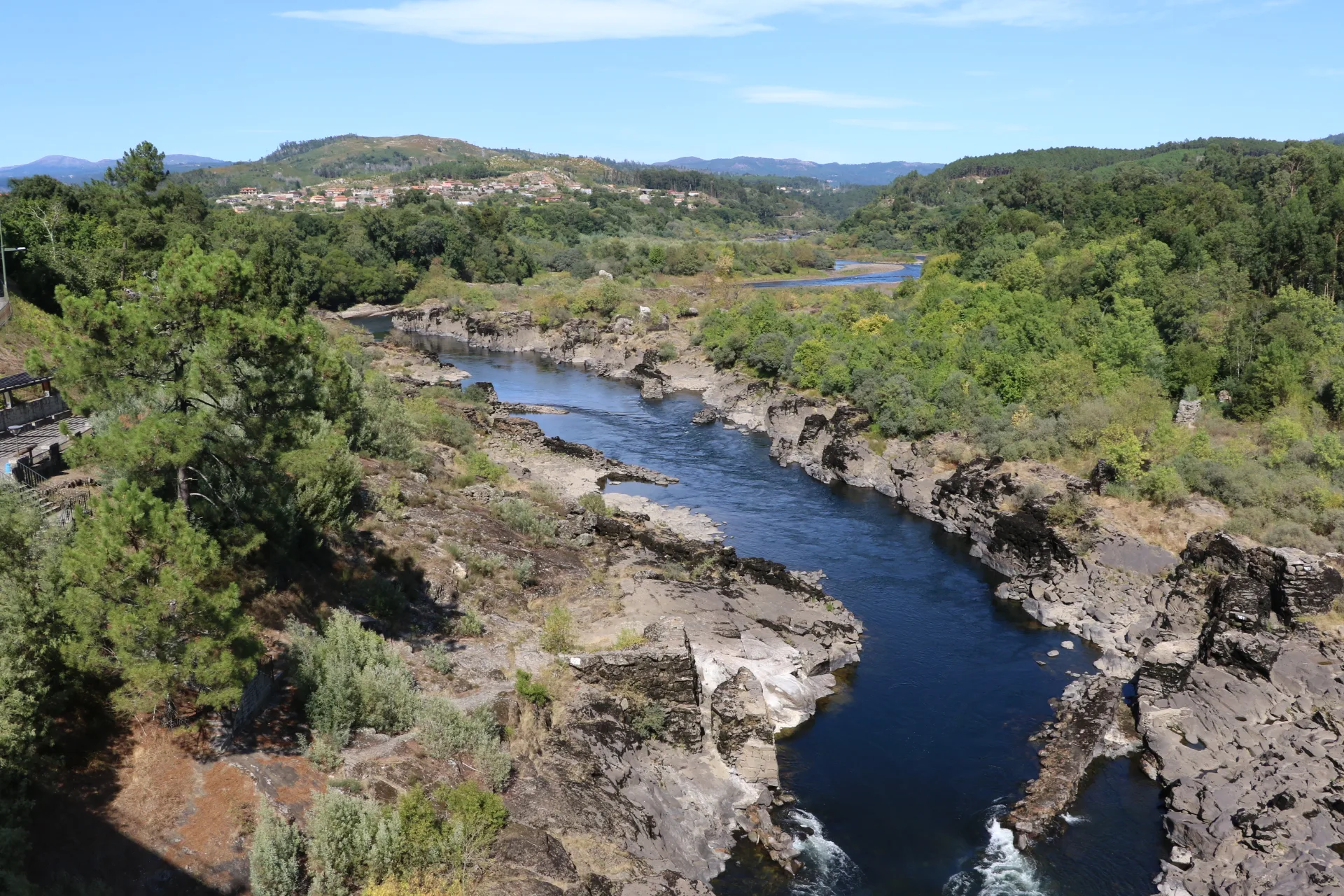
The region lies just south of the Minho river, which forms Portugal's border with Spain, and runs from the Atlantic coast inland. The CVRVV describes how the valleys of three major rivers, the Minho, the Lima and the Douro, together with the smaller Tâmega, Ave and Cávado, carry maritime winds deep into the interior. Rainfall is high and temperatures are usually mild, rarely extreme in summer or winter. During ripening, which falls in summer, the grapes mature slowly, gaining sugar in balance while keeping good acidity. The soils are almost entirely granitic, with patches of schist, clay and alluvium, and rounded pebbles in former riverbeds.
The Atlantic effect varies with distance from the sea and with relief. Monção and Melgaço, in the far north, are enclosed by a wall of mountains on both the Portuguese and the Spanish sides, which shelters them from sea winds and gives them colder winters and warmer summers than the rest of the region. The grapes follow these differences: according to the CVRVV, Loureiro prefers the sub-regions with stronger Atlantic influence and suffers in excessive heat, while Avesso and Azal grow best in warm, sheltered sites in the interior, away from the Atlantic winds.
HOW THE REGION WAS DEMARCATED IN 1908
Vine growing in the north-west of the Iberian Peninsula is more than two thousand years old, according to the CVRVV. The region coincides with the territory where Portugal began to take shape as a country from the 12th century, and the first Portuguese wines exported to several European destinations left from here in the 14th century. Red wines first brought the region its reputation. Only from the late 19th century did white wines made from local grape varieties gain ground, and their rise continued progressively through the second half of the 20th century. Research carried out from the 1960s and 1970s was decisive in moving viticulture from subsistence farming to professional production for national and export markets.
The region was demarcated on 18 September 1908, which made it one of the oldest demarcated wine regions in Portugal and in Europe. The CVRVV was created in 1926 to protect and control the designation. In 1949 the OIV, the international vine and wine body, approved the report on the DO Vinho Verde claim, and in 1959 the CVRVV began issuing a Seal of Origin. The World Intellectual Property Organization recognised the international registration of the designation in 1973, giving wines from the region exclusive use of the name.
THE NINE SUB-REGIONS AND THEIR MUNICIPALITIES

The sub-regions were set out in Portaria n.º 28/2001 of 16 January 2001, a ministerial order that built each from whole municipalities and some named parishes. Lima takes in Viana do Castelo, Ponte de Lima, Ponte da Barca and Arcos de Valdevez. Cávado covers Esposende, Barcelos, Braga, Vila Verde, Amares and Terras de Bouro, and Ave includes Guimarães, Vila Nova de Famalicão, Fafe and Santo Tirso. Sousa covers Paços de Ferreira, Paredes, Lousada, Felgueiras and Penafiel. Amarante pairs Amarante with Marco de Canaveses, Baião includes Baião and most of Resende and Cinfães, Paiva centres on Castelo de Paiva, and the sub-region then named Monção comprised Monção and Melgaço.
The same order listed the grapes permitted in each sub-region. In Lima, Cávado and Ave the white wines were to come from Arinto, Loureiro and Trajadura, while Monção used Alvarinho, Loureiro and Trajadura. Baião used Arinto, Avesso and Azal; Amarante added Trajadura to that trio; Basto included the old variety Batoca. Vinhão and Borraçal appeared among the red grapes of every sub-region, alongside local varieties such as Amaral, Espadeiro, Padeiro, Pedral and Alvarelhão. Under the current rules of the DO, the name of the sub-region may appear on the label next to the designation, but it is optional.
WHICH GRAPES ARE USED IN VINHO VERDE?
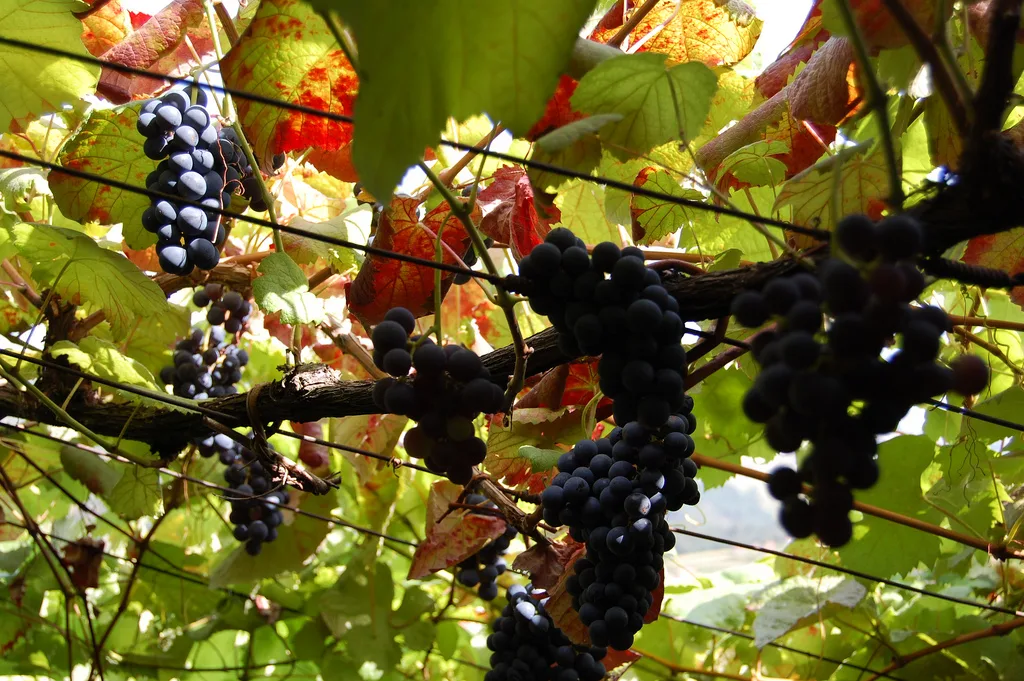
Loureiro is the most planted variety in the region and has been known since at least the 18th century. The CVRVV describes its wines as crisp, delicate and elegant, with lime, lemon and floral notes, and able to age well. Arinto, also called Pedernã, is grown across the whole region and is one of the oldest white varieties in Portugal, used for both still and sparkling wines. It has a solid acid structure and aromas of lemon and orange, sometimes apple and orange blossom. Trajadura, found in almost the whole region, is used mainly in blends, where it softens the more acidic varieties with full body, a smooth texture and notes of peach, pear, banana and ripe apple.
Avesso is the grape of Baião and the neighbouring Amarante, Paiva and Sousa, in the Douro valley area. The Douro is also the river of port, made in the Douro region of northern Portugal and covered in port wine and the Douro Valley. Avesso wines are very full-bodied and deep, with peach, orange, pineapple and an almond undertone, and age well. Azal, a late-ripening variety of the interior, has high natural acidity that the inland climate balances, with lemon peel, lime, grapefruit and green apple aromas. Among the reds, Vinhão is the most widely used variety and the basis of most of the region's red wines.
ALVARINHO IN MONÇÃO E MELGAÇO

Alvarinho was born in the Minho river valley, where it benefits from a local microclimate that is warmer and drier in summer, and the CVRVV calls it the backbone of the Monção e Melgaço sub-region. Its wines are well structured, with excellent acidity and strong ageing potential, and aromas that run from orange, tangerine and grapefruit to mango, pineapple and passion fruit. It is now increasingly used in other sub-regions. JancisRobinson.com notes that it is the same white grape used for the Rías Baixas wines made just over the river in Galicia, and that it is the most admired variety of the Minho.
The singular character of the wines of Monção and Melgaço has been recognised by professionals and consumers since the 1930s, and Monção e Melgaço was the first of the nine sub-regions to gain a distinct status, expressed in its own guarantee seal. The 2001 order reserved the names "Vinho Verde Alvarinho" and "Vinho Verde Alvarinho Espumante" for wines made only from Alvarinho grown and vinified in the Monção sub-region, and set a minimum alcoholic strength of 11.5% by volume for Alvarinho against 9% for the other wines. Writing in The World of Fine Wine in 2024, Sarah Ahmed listed an Alvarinho from a Melgaço vineyard at 200 metres and one from Vale dos Ares grown at 250 metres on poor granite soils in Monção.
ENFORCADO, RAMADA AND THE MINHO LANDSCAPE

The CVRVV records that vines here were first grown low and later raised so that they would not take space from the cereals and vegetables needed for food. Maize, brought to the region in the 17th century by Portuguese transoceanic voyages, increased the pressure on arable land and pushed vines to the edges of fields and the verges of roads. There they climbed trees planted around the fields, in a system called uveira or enforcado. A little later came the ramada, also called latada: horizontal structures of iron or wood resting on granite posts, set over paths or along field edges, which gave high yields of grapes without using land that grew food.
From the 1970s viticulture in the region changed from one crop among many into an intensive, specialised profession, and most vineyards are now planted continuously on land selected for vines. Post-and-wire systems followed, first bardo and cruzeta and then, above all from the end of the 1980s, the single or double cordão, which brought the vines closer to the ground. A few of the centuries-old models, the enforcado and the ramada, still survive. Even in modern vineyards a vinho verde vine is trained a little higher than elsewhere in Portugal, at about 1.5 to 2 metres from the ground, because the region's humid climate calls for it.
Ponte de Lima, in the Lima valley, has about a thousand years of history and is known for its half Roman, half medieval bridge, a Romanesque church, wayside shrines called alminhas and large granite crosses. Viana do Castelo sits where the Lima meets the Atlantic beaches. Nearby, the monastery of Refóios do Lima, founded in the 12th century by the nobleman D. Afonso Ansemondes, now houses the School of Agriculture of the Polytechnic Institute of Viana do Castelo, renovated by the architect Fernando Távora. On the Minho, the border towns of Monção and Melgaço keep strong ties with neighbouring Galicia.
TASCA AT MANDARIN ORIENTAL JUMEIRA, DUBAI
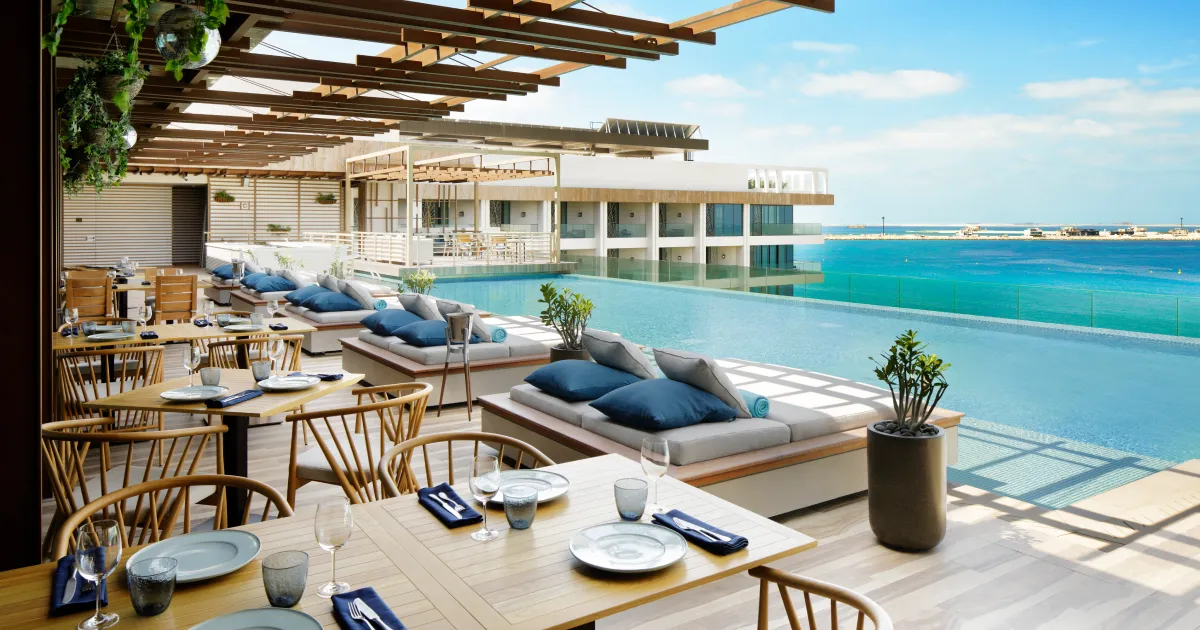
Tasca is a contemporary Portuguese restaurant by chef José Avillez at Mandarin Oriental Jumeira, Dubai, with a terrace and a bar, and Silverfox Studios completed the interior design of the project in 2019. The chef's path from Lisbon to Dubai is set out in José Avillez: from Belcanto in Lisbon to Tasca in Dubai. The restaurant holds One MICHELIN Star. Its rooftop terrace looks out over the Arabian Gulf, while vinho verde comes from the Atlantic north-west of Portugal, a region demarcated on 18 September 1908 and divided into nine sub-regions.
The interior is furnished with timber tables under a slatted ceiling, and the bar has marble counters. Turquoise glassware and blue cushions supply the colour, and illuminated shelving displays ceramics. In the Minho, granite is the material of the soils, of the posts that carry the ramada pergolas and of the large crosses of Ponte de Lima; at Tasca the stone is marble, used for the bar counters, and timber is used for the tables and the slatted ceiling overhead.
SOURCES
- Comissão de Viticultura da Região dos Vinhos Verdes História da Região
- Comissão de Viticultura da Região dos Vinhos Verdes Denominação de Origem Vinho Verde
- Comissão de Viticultura da Região dos Vinhos Verdes Indicação Geográfica Minho
- Comissão de Viticultura da Região dos Vinhos Verdes Solos e Climas
- Comissão de Viticultura da Região dos Vinhos Verdes Vinha
- Comissão de Viticultura da Região dos Vinhos Verdes Castas brancas
- Comissão de Viticultura da Região dos Vinhos Verdes Cities and towns
- Diário da República, via FAOLEX Portaria n.º 28/2001, de 16 de Janeiro
- JancisRobinson.com Vinho Verde
- The World of Fine Wine The finest wines of Vinho Verde