CAMBRIAN AND ORDOVICIAN SLATE FROM THE QUARRIES OF GWYNEDD

Welsh slate is a cleaved mudstone quarried in the mountains of Gwynedd, in north-west Wales. UNESCO records that slate has been quarried there since Roman times, and that sustained large-scale production from the late 18th to the early 20th century came to dominate the world market for roofing slate. By the late 19th century, according to the evaluation prepared for UNESCO by ICOMOS, the International Council on Monuments and Sites, the region produced about a third of the world output of roofing slates. The quarries and mines of Bethesda, Llanberis, Nantlle and Blaenau Ffestiniog, the narrow-gauge railways that carried their slate to the coast and the purpose-built harbours that shipped it were inscribed on the World Heritage List in 2021 as The Slate Landscape of Northwest Wales.
HOW WELSH SLATE FORMED IN CAMBRIAN AND ORDOVICIAN MUDSTONE
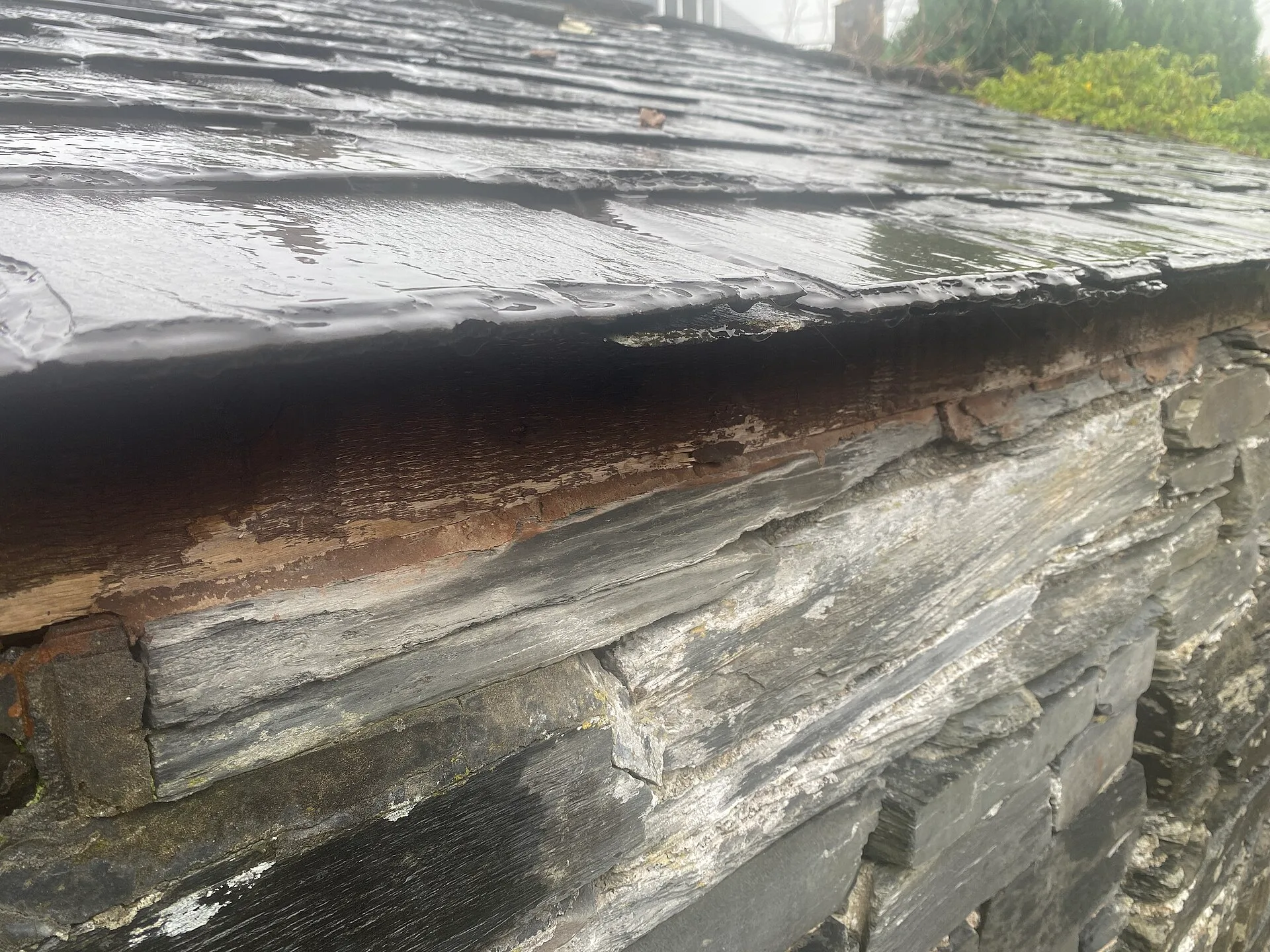
The ICOMOS evaluation divides the slate landscape between two geological ages: three of its six areas lie on one Cambrian slate vein and the other three on three Ordovician slate veins. The Cambrian slate of Bethesda, Llanberis and Nantlle comes from the Llanberis Slates formation, which the British Geological Survey (BGS) describes as mainly blue-grey and purple silty mudstone, worked in those places for over 200 years. Trilobites, including Pseudatops viola, found in green slates near the top of the formation in Penrhyn Quarry place it in the Lower Cambrian. The green bands and spots in the rock come from the reduction of iron, and the BGS notes that the green spotting has been used to estimate how much the slate belt was strained.
The mudstone became slate through deformation. In the BGS account of the geology of Wales, these rocks underwent low-grade regional metamorphism during the end-Caledonian orogeny, and the main influence on the development of cleavage came in early to mid Devonian times, during the Acadian phase. The BGS considers it likely that compression and the geothermal gradient caused the single penetrative cleavage to develop progressively, and that cleavage is more closely spaced and more pervasive in mudstones than in neighbouring sandstones. The BGS states that it is the cleavage in the mudstones that resulted in the development of the slate industry, and it names the Lower Cambrian rocks of Bethesda and Nantlle and the Lower Ordovician at Blaenau Ffestiniog among the units quarried. The best slates probably came from beds with no bedding planes or other contrasts to interrupt the cleavage.
PENRHYN QUARRY, BETHESDA AND PORT PENRHYN
Penrhyn Quarry at Bethesda lies in an area that was almost entirely owned by the Pennant family, later the Dawkins-Pennants and then the Douglas-Pennants. Llechi Cymru, the website of the World Heritage Site, describes it as the largest quarry in the world at one time. It was worked in more than 20 galleries, or terraces, climbing the slopes of Y Fronllwyd, and by the middle of the 19th century about 3,000 men worked there. Bethesda grew up around its chapel, which opened in 1820 beside Thomas Telford's mail road from London to Holyhead, and the World Heritage component for the area follows the Ogwen Valley down to Port Penrhyn.
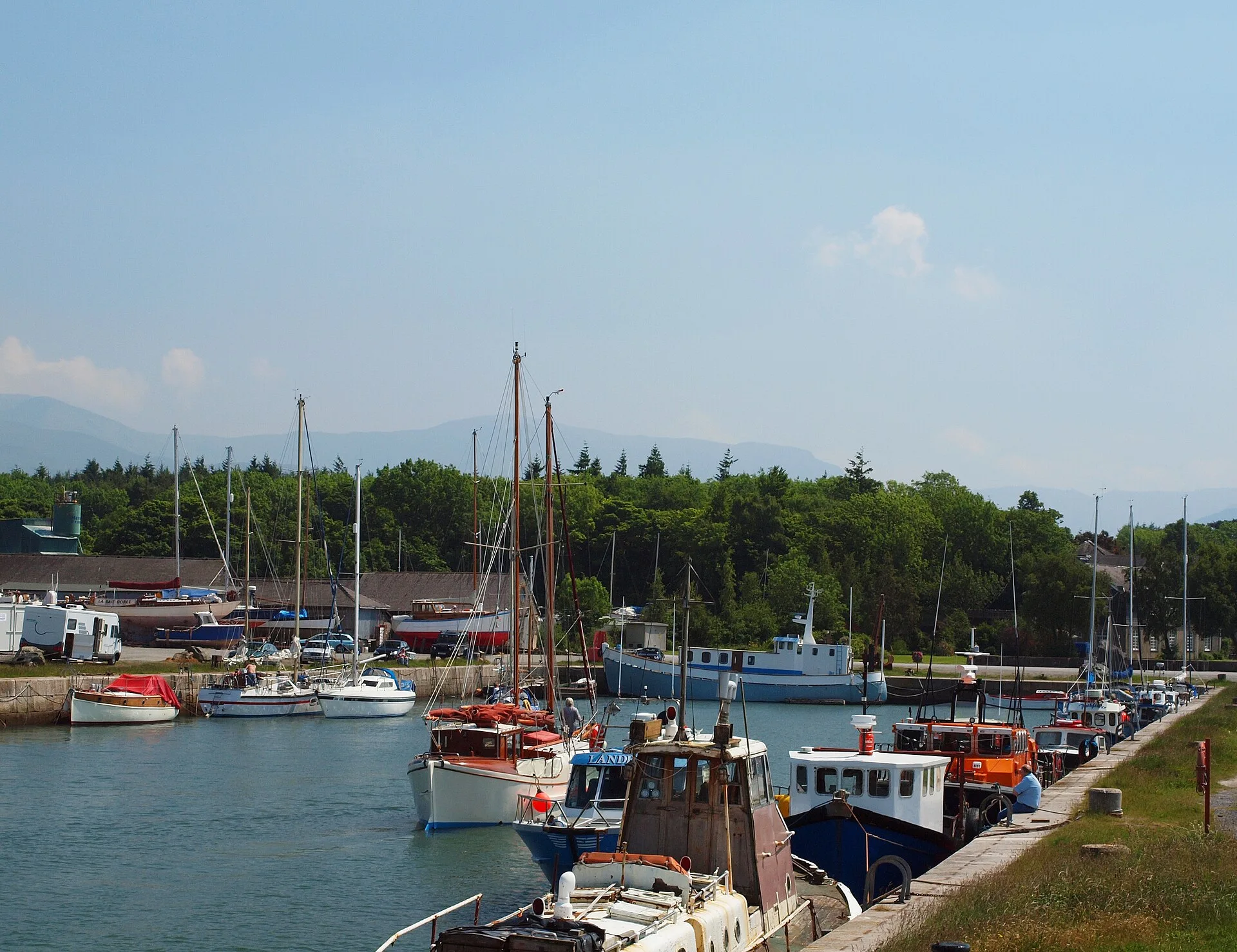
Transport and processing were developed early. The first quay at Port Penrhyn was built in 1790, and the port went on developing until 1855. In 1801 a narrow-gauge tramway, with horses hauling wagons on iron rails, linked the quarry to the port. According to Llechi Cymru, the first workshops at Felin Fawr had the world's first circular stone-cutting saws, installed in 1802. The quarry produced roofing slate, slate slabs cut at Felin Fawr and slate aggregate, and commercial ships still carry Penrhyn aggregate from Port Penrhyn. The Pennant family's neo-Norman Penrhyn Castle, completed in 1837, is now cared for by the National Trust.
DINORWIG QUARRY AT LLANBERIS

Dinorwig Quarry at Llanberis was worked from 1787 to 1969. Its development was funded by the Assheton Smith, later Duff, family of the Faenol estate, who were granted rights to the land in 1806 through influential friends at Westminster. Llechi Cymru ranks Dinorwig as the second largest quarry in the world in its time, while the European Route of Industrial Heritage (ERIH) calls it once the largest slate quarry in the world. It was worked in more than 30 galleries, each linked to a rubble tip and to an inclined railway. After the quarry closed, the site was bought by a company that developed a hydro-electric scheme there, and almost all of its structures survived.
Dinorwig's first railroad opened in 1825, inspired by Penrhyn's tramway of 1801, and in the 1840s its railway along the shore of Llyn Padarn became the first of the slate quarry railways to use steam locomotives. The quarry hospital, built above the lake, treated injured quarrymen with new techniques such as x-ray equipment. The workshops at Gilfach Ddu were built in 1870 together with a waterwheel that ERIH describes as the largest working waterwheel in mainland Britain. Three years after the quarry closed, in 1972, the workshops reopened as a branch of the National Museum of Wales, where ERIH lists slate-splitting demonstrations by traditional hand-craftsmen among the displays.
BLAENAU FFESTINIOG AND THE RAILWAY TO PORTHMADOG
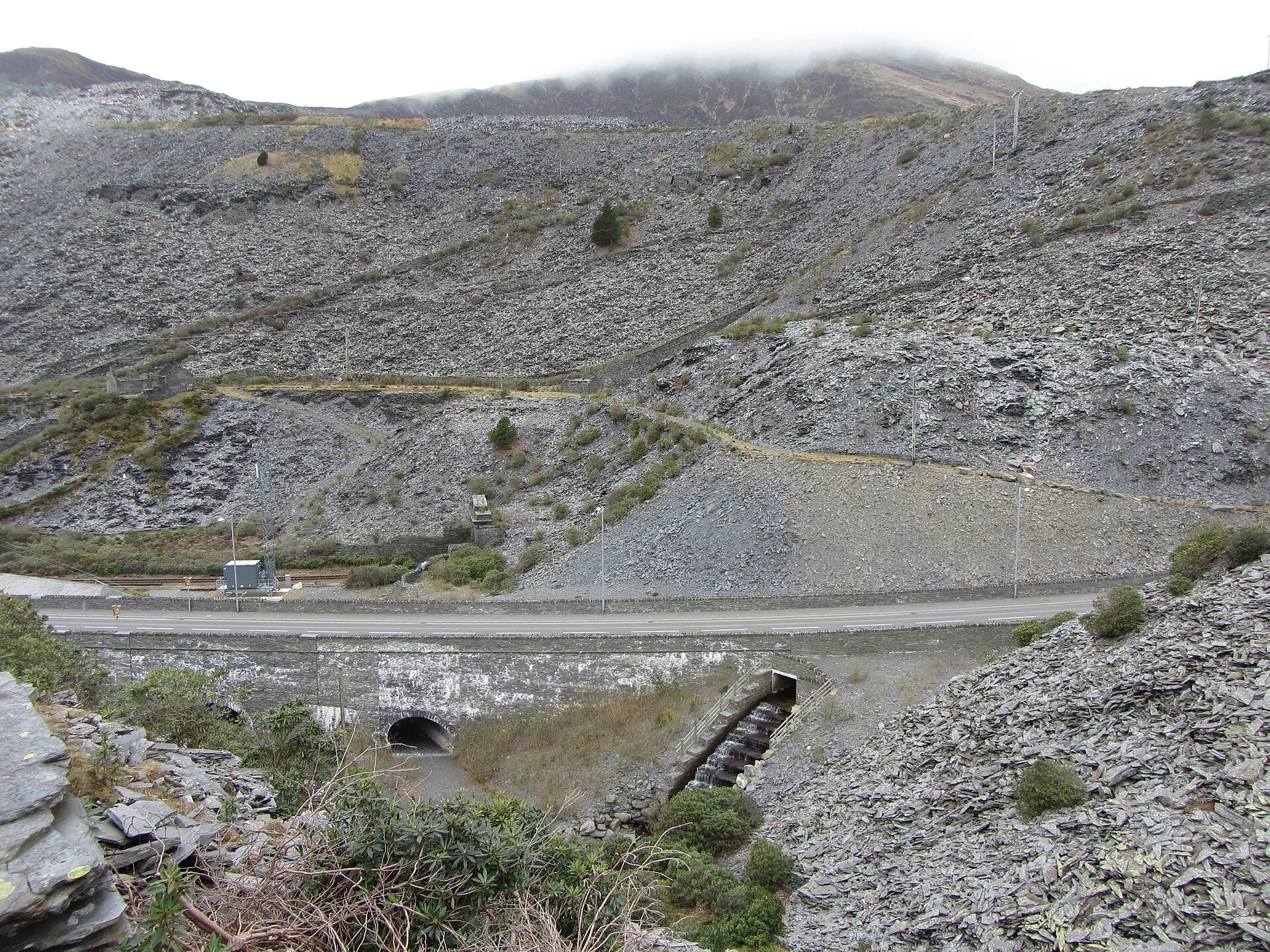
Blaenau Ffestiniog, on the Ordovician slate, was worked in mines as well as quarries. People came to live and work there from 1820, almost 12,000 lived there by the 1880s, and in 1873 the town was called dinas y llechi, the city of slates, a name that the World Heritage component for the area still carries. Quarrying developed more than 100 km of levels and tunnels and hundreds of underground chambers, and up to 90 per cent of the rock extracted was usually classed as waste. The town had more than 40 chapels, a market hall and a reading room, and the Pant yr Afon hydro station, opened in 1904, generated power for Llechwedd Quarry.
The Ffestiniog Railway, opened in 1836, took the slate to the harbour at Porthmadog. Loaded wagons were lowered from Blaenau Ffestiniog using horse power combined with gravity, and steam locomotives were introduced in the 1860s. At Porthmadog, sailing ships built and crewed locally carried slate around the world. From the 1840s Germany was a principal customer, importing thousands of tons a year through Hamburg. The Ffestiniog line is one of several narrow-gauge railways in the inscribed landscape; another, the Talyllyn Railway, belongs to the component that also takes in Bryneglwys Quarry and the village of Abergynolwyn.
HOW WELSH SLATE WAS SPLIT, DRESSED AND SIZED BY HAND
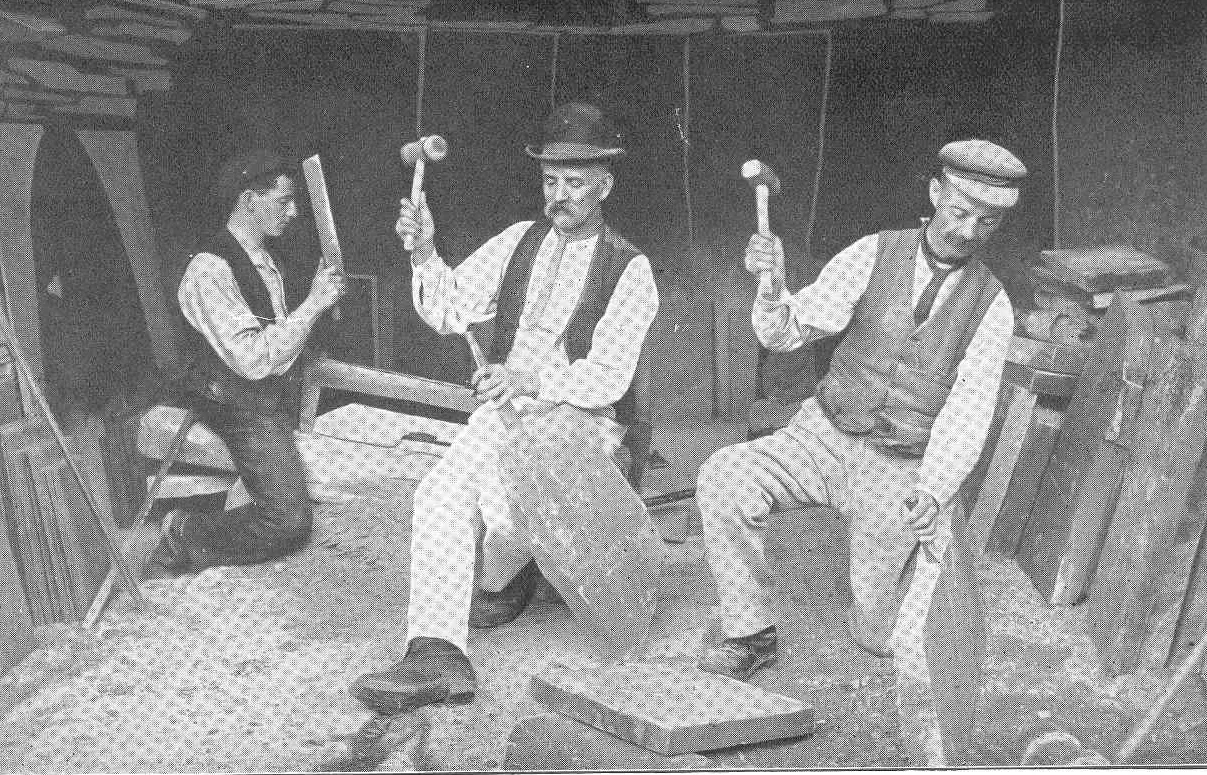
Turning a block of rock into roofing slates depended on the quarryman's craft, which ICOMOS describes as including a detailed understanding of geology and the use of hand-splitting tools. Once split, each slate was marked out and trimmed to a standard size. Amgueddfa Cymru, Museum Wales, holds the measuring sticks used for this. One, associated with Dyffryn Nantlle, is a serrated wooden stick 752 mm long with a nail at one end, used for marking out a roofing slate for trimming. It has 17 serrations: eleven about an inch apart near the nail and six about two inches apart. It could mark slates from the Single Ladies, 10 inches and above, up to the Empresses, 26 inches long.
Those names come from a system that, according to Museum Wales, was standardised in 1738 by General Hugh Warburton, then a joint owner of the Penrhyn estate, who devised the "female nobility" names for slates of different sizes. Sizes varied somewhat over time and between areas. In December 1893 the Welsh periodical Bye-Gones quoted a writer in Notes and Queries who gave indicative sizes: ladies 16 by 10 inches, viscountesses 18 by 9, countesses 20 by 10, marchionesses 22 by 11, duchesses 24 by 12, princesses 24 by 14, and queens 28 to 36 inches long in various widths. The writer supposed the names had been given about 120 years earlier by General Warburton, then owner of the Penrhyn quarries, and explained that llech or llechen, the Welsh word for slate, is a feminine noun, so quarrymen called a slate "she".
WHERE WELSH SLATE WAS SHIPPED AND USED
UNESCO dates the period in which the industry of north-west Wales dominated world production of roofing slates to 1780 to 1940. ICOMOS records the expansion of Welsh slate production and export to England, Ireland and France, and states that its use in terraced houses, factories, warehouses and elite architecture contributed to rapid global urbanisation. By the late 19th century, UNESCO notes, the region supplied about a third of world output of roofing slates and architectural slabs. The trade also carried people and methods: UNESCO treats the landscape as internationally significant not only for the export of slates but also for the export of technology and skilled workers, from the 1780s to the early 20th century.
Slate was also used close to the quarries. ICOMOS notes that the end use of slate is still visible in the historic settlements and in the slate-pillar fencing known as crawiau, and ERIH describes Llanberis as a place where the hills, the roofs, the houses and the whole town are made of slate. The workers' settlements, UNESCO records, had chapels, churches, band-rooms, schools and libraries, while the leading industrialists built grand country houses nearby. ERIH adds that waterwheels drove most slate factories into the 20th century, partly because the area had plenty of rain and coal was costly, and that the region was one of the first to generate electricity from hydraulic power.
THE SLATE LANDSCAPE OF NORTHWEST WALES ON THE WORLD HERITAGE LIST
An ICOMOS technical evaluation mission visited the property from 27 September to 3 October 2020, and the evaluation approved on 18 March 2021 recommended that it be inscribed on the World Heritage List as a cultural landscape on the basis of criteria (ii) and (iv). UNESCO announced the inscription on 28 July 2021. The six components cover 3,259.01 hectares: Penrhyn Slate Quarry and Bethesda, and the Ogwen Valley to Port Penrhyn; the Dinorwig Slate Quarry Mountain Landscape; the Nantlle Valley Slate Quarry Landscape; the Gorseddau and Prince of Wales Slate Quarries, Railways and Mill; Ffestiniog, with its slate mines and quarries, the city of slates and the railway to Porthmadog; and Bryneglwys Slate Quarry, Abergynolwyn Village and the Talyllyn Railway.
UNESCO's description of the site covers each stage of the industry. It calls the quarries and mines monumental in scale, with stepped hillside workings, deep pits and underground chambers, and it notes that transport systems linked the quarries and processing sites with purpose-built coastal export harbours and main-line railways. The narrow-gauge railways, it states, served as the model for successive systems elsewhere and remain in operation under steam today. ERIH places the museum in the former Dinorwig quarry workshops at Gilfach Ddu within the World Heritage Site.
MARBLE, BRICK AND TIMBER AT THE BAY, MANDARIN ORIENTAL JUMEIRA

The interior design of The Bay at Mandarin Oriental Jumeira, Dubai, was completed in 2019. It has a marble buffet counter and white marble stations with chalkboard menus. White brick sits over a geometric tiled floor, and a timber-topped bread and pastry island stands under pendants. In the slate quarries of north-west Wales, slate slab was cut at mills such as Felin Fawr at Penrhyn, where Llechi Cymru records circular stone-cutting saws in 1802; at The Bay, the buffet counter and the stations are marble.
The Bay also has green banquettes and steel-framed glazing, and a marble-fronted bar faces the beach terrace and the sea. The slate split by hand at Penrhyn, Dinorwig and Blaenau Ffestiniog went above all to roofs: graded in sizes from ladies to duchesses on measuring sticks like those held by Museum Wales, it was shipped from Port Penrhyn and Porthmadog to England, Ireland, France and Germany, and laid on terraced houses, factories, warehouses and elite architecture. Overhead at The Bay is a beamed timber ceiling.
SOURCES
- UNESCO World Heritage Centre The Slate Landscape of Northwest Wales
- ICOMOS / UNESCO World Heritage Centre ICOMOS evaluation: The Slate Landscape of Northwest Wales (United Kingdom), 2021
- British Geological Survey Comley Series, Cambrian, Wales
- British Geological Survey Caledonian orogeny, Silurian, Wales
- Amgueddfa Cymru, Museum Wales Measuring stick (Collections Online)
- National Library of Wales, Welsh Journals Bye-Gones, 6 December 1893
- Llechi Cymru Ogwen Valley
- Llechi Cymru Dinorwig Quarry
- Llechi Cymru Ffestiniog and Porthmadog
- European Route of Industrial Heritage National Slate Museum