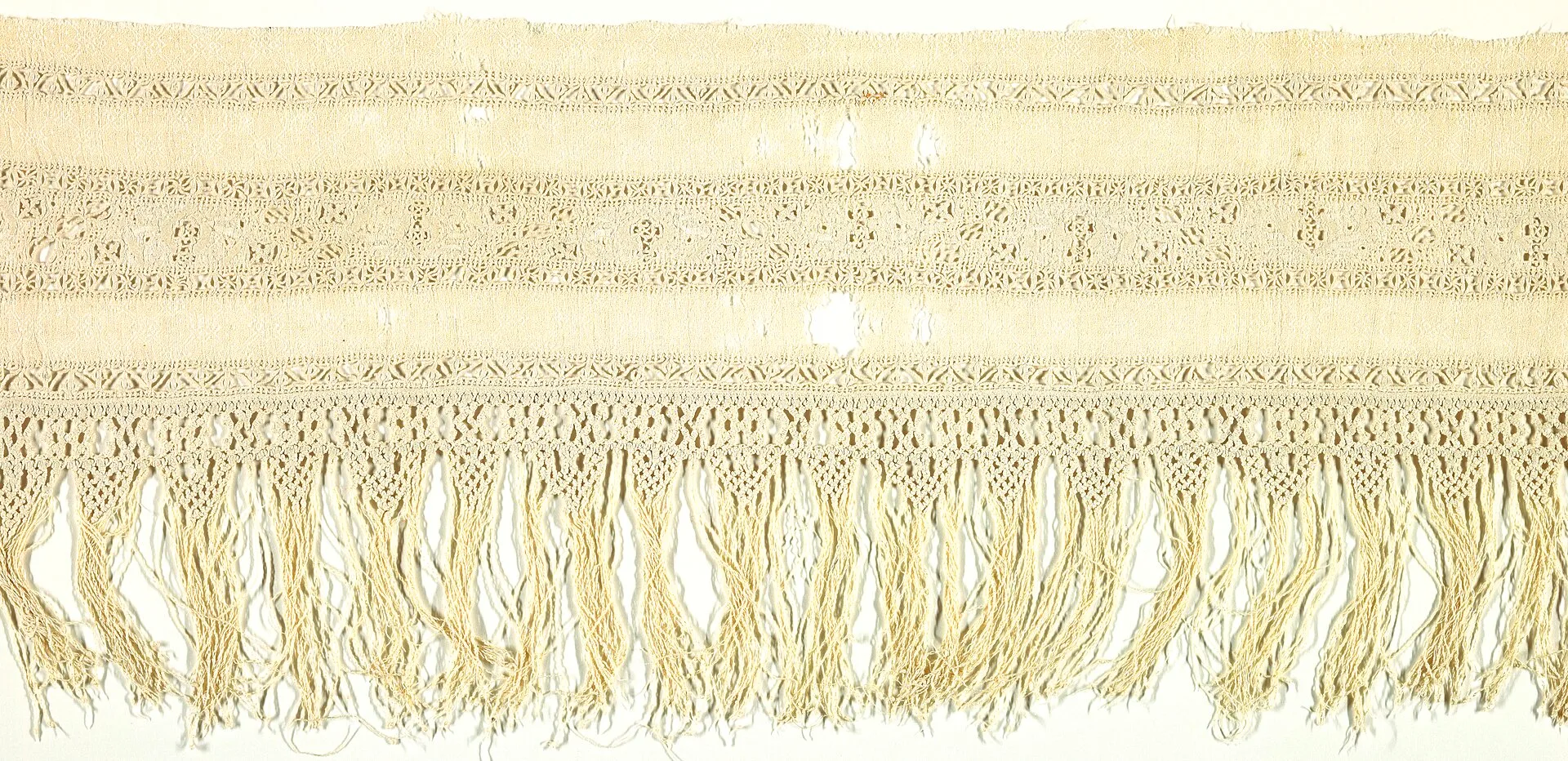
TUFTING GUNS, LATEX BACKINGS AND INDIA'S CARPET BELT
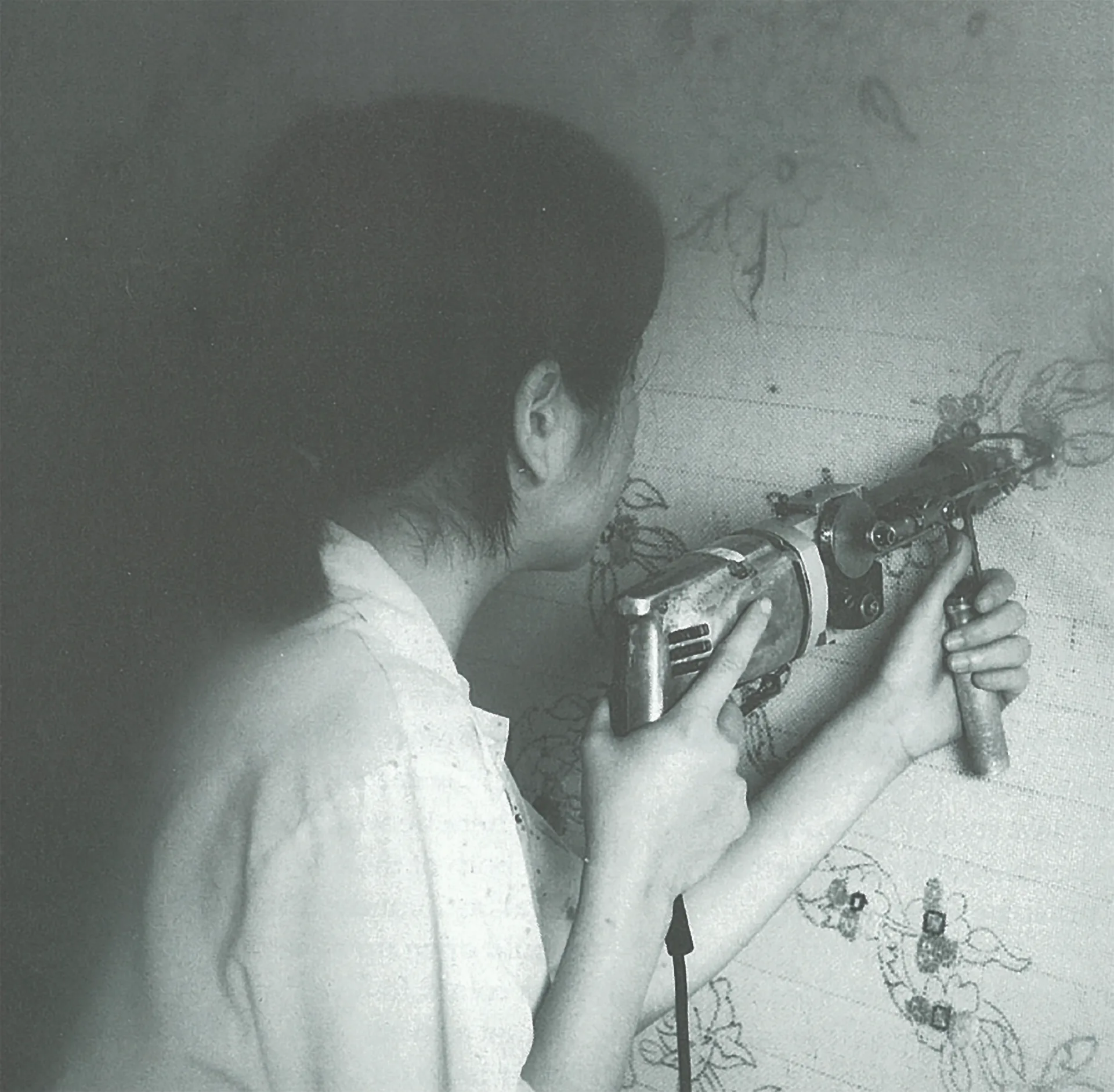
Hand-tufted rugs are pile rugs in which yarn is shot through a stretched cloth with a handheld tufting gun and then fixed in place with latex and backing cloths, instead of being tied knot by knot onto a loom. India's Carpet Export Promotion Council (CEPC), set up by the Ministry of Textiles, lists hand tufting as one of the three main methods of carpet making in India, alongside hand knotting and hand weaving. Tufting itself was revived as a handcraft in Georgia in the United States in the 1890s. In India, hand-tufted carpets are one of the specialities of the Bhadohi and Mirzapur region of Uttar Pradesh, the area that the Wool Research Association credits with 90 per cent of the country's carpet production.
WHAT ARE HAND-TUFTED RUGS?
The CEPC groups handmade carpets by method. Hand knotting ties each tuft of pile individually onto the warp threads of a loom. Hand weaving is a broad category that, in the council's definition, covers both hand-knotted carpets and flat-woven carpets, and their quality is judged by the tightness of the weave and the density of the knots. Hand tufting is the third method. Its pile is not knotted at all: the council describes a tufted carpet as one whose pile is injected into a backing material with the help of a tufting gun, and notes that it can be produced with either loop pile or cut pile.
Obeetee, a carpet maker headquartered in Mirzapur that dates itself to 1920, presents hand tufting on its website as a more contemporary technique than knotting. In its description, artisans use a handheld tufting gun to push wool or silk through a canvas stretched on a frame, building up the pattern as they work. The American design magazine Metropolis, reporting in March 2021, described the same tool as a common carpet-industry tool: the handheld electric tufting machine, otherwise known as the tufting gun. Its report noted that a newcomer could finish a 24 by 24 inch tufted piece by the end of a six-hour workshop.
HOW ARE HAND-TUFTED RUGS MADE?
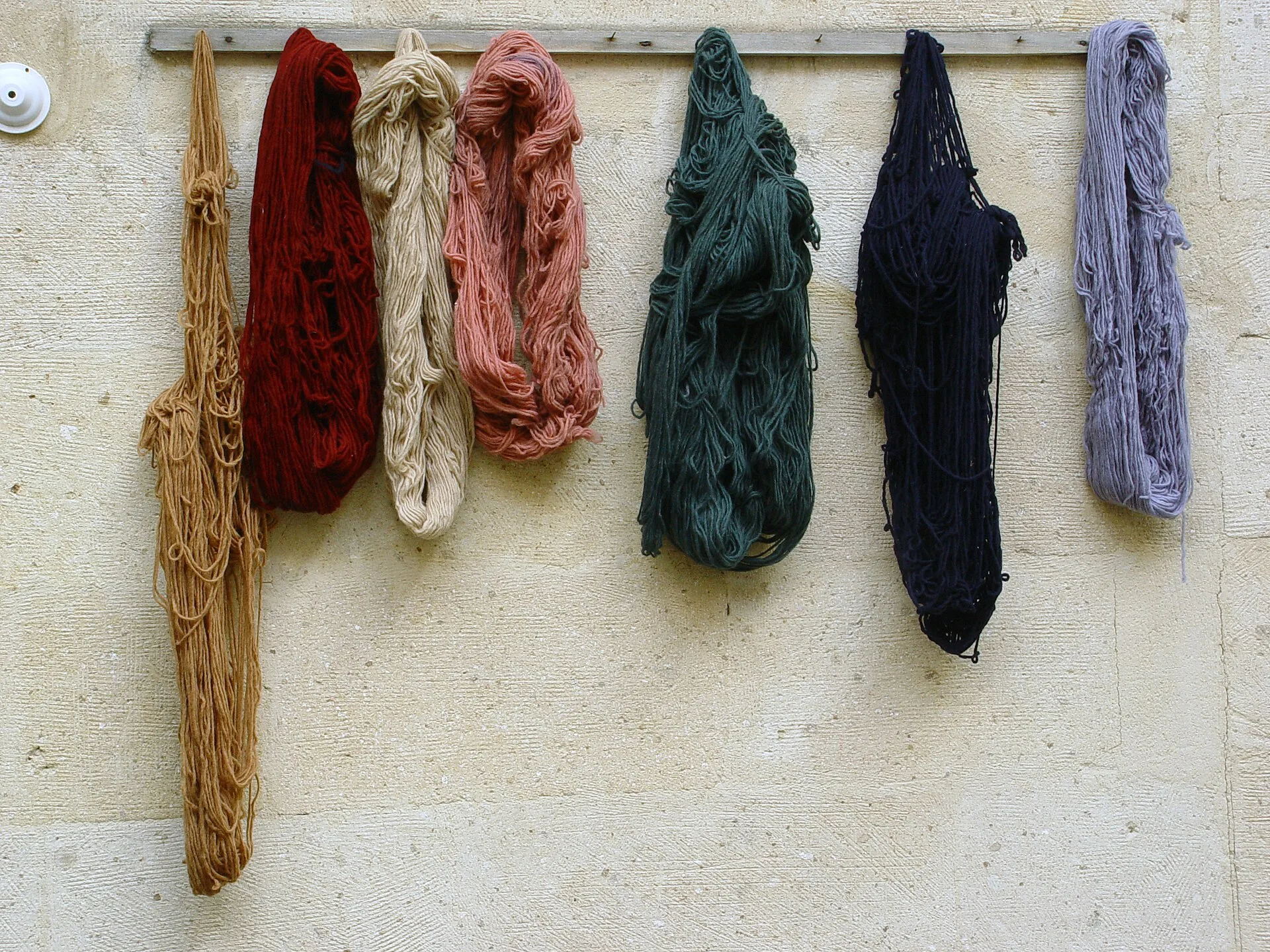
Production starts with the yarn. The CEPC's account of Indian carpet making describes raw wool being sorted to remove unwanted particles, washed to remove dust and grease, and dried in the sun for two to three days. It is then scoured with caustic to remove suint, carded and spun into yarn on a charkha or spinning wheel; carpets generally use three-ply yarn. Machine dyeing in closed chambers has largely replaced pot dyeing, and the dyed yarn is dried in sunlight for one to three days.
The tufting itself takes place on a frame. In Obeetee's account, the base is a canvas stretched on the frame, and artisans use the handheld gun to push wool or silk through it, shaping the pattern as they go. The CEPC sets out what follows. The backing material into which the pile has been injected is bonded to a secondary backing cloth with a latex solution, which gives the carpet its stability, and a third backing cloth is then used before the carpet is finished. Beyond the gun, the Metropolis report lists the supplies a tufted piece needs as frames, yarn, fabric and adhesive.
The CEPC's account of carpet production closes with the finishing stages. A raw wash removes dust, dirt and stains; the pile is then cut to level it to the same height, a stage called shearing; and embossing, in the council's definition, cuts the borders of each motif to give it detail. The sides are bound with a thick, often doubled thread, protruding fibres on the back are burnt off in singeing, and a final wash gives the carpet its lustre before drying, stretching to straighten curved edges and final clipping. Shearing and embossing are the stages that work the pile itself, the first levelling it and the second carving around the motifs. With the choice of loop or cut pile the council describes for tufted carpets, they shape the finished surface.
WHERE DID TUFTING COME FROM?

The New Georgia Encyclopedia traces the modern tufting industry to Catherine Evans Whitener, a native of Whitfield County, Georgia, who revived the handcraft of tufting in the 1890s. By the 1920s, tufting had become a thriving cottage industry producing tufted bedspreads, centred in north Georgia, the Carolinas and Tennessee. In the 1930s, mechanics adapted surplus industrial-grade Singer sewing machines from the New York garment trades to do the work. Dalton became the centre of production for the new industry. Around 1950, firms began using tufting machines to cover the entire surface of a room-sized piece of backing material with raised tufts of yarn, extending the technique from bedspreads to carpet.
By 1970, according to the encyclopedia, tufted carpets represented 90 per cent of total industry volume in the American carpet trade. Metropolis describes Dalton as the place where the first mechanised tufting machine was invented and as home to more than 150 carpet plants. Its 2021 report on what it called the tufted rug renaissance names Tim Eads, a Philadelphia artist and educator, as the founder of TuftingGun.com and the Tuft the World online community, and Caroline Kaufman, a tufter whose clients included Brooklyn's Ace Hotel, where, the magazine reported, 25 of her asymmetric pieces hang in guest suites.
HAND-TUFTED VS HAND-KNOTTED RUGS: HOW DO THEY DIFFER?
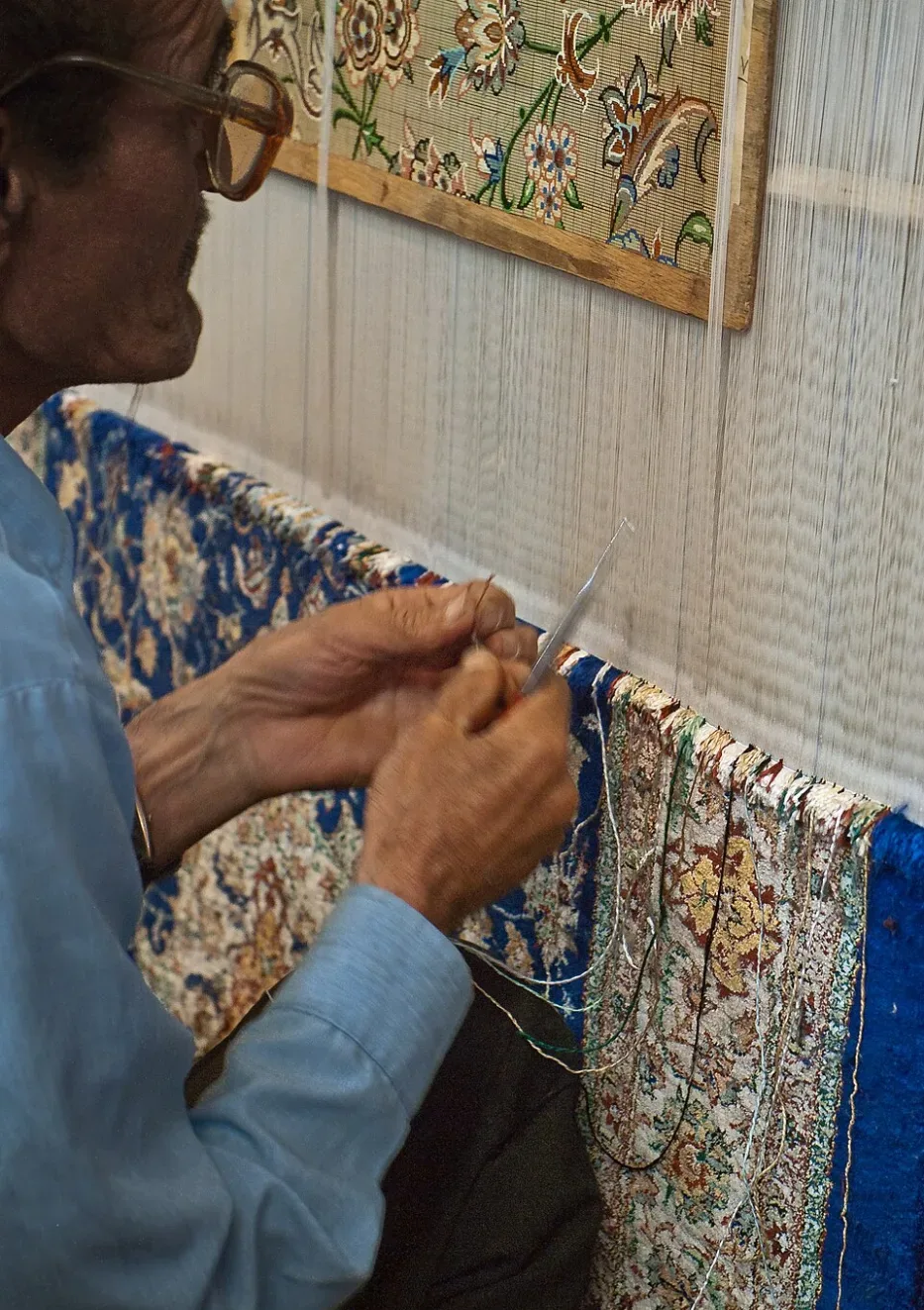
A hand-knotted carpet is built on a loom rather than on a ready-made cloth. The Encyclopaedia Iranica entry on knotted-pile techniques, written by Annette Ittig, explains that warps run the length of the carpet and wefts pass alternately over and under them to form the foundation. Supplementary yarns, the knots, are wrapped around the warps between the foundation wefts and cut, and the cut ends project to form the pile and the design. After each row of knots, one or more passes of weft lock them in place, and the rows are compacted with a comb beater. After weaving, an experienced finisher clips the pile with offset scissors and a trimming knife, and the carpet is washed.
The CEPC describes the knots used in India. In the Turkish, or symmetrical, knot the yarn loops around both of a pair of warps. In the Persian, or asymmetrical, knot it loops around one warp and passes loosely under the other, which allows a higher knot density. The Tibetan knot is formed over a temporary rod and the loops are cut after each row, while the jufti knot, which Ittig defines as a knot tied over more than two warps, saves time and material at the cost of density. Ittig notes that the older names are misleading, since both main knots are used across the Near and Middle East.
Knot density, which has no equivalent in a tufted rug, is the measure of a knotted carpet's fineness. In the West, Ittig notes, it is expressed in knots per square inch or per square decimetre. The Wool Research Association, in a paper by Mayur Basuk, gives 60 to 80 knots per square inch for medium-quality Bhadohi and Mirzapur carpets and 324 to 600 for pure silk carpets from Kashmir. Obeetee states that a single large knotted carpet can take several months or even years to complete, and that some of its weavers tie up to 9,000 knots a day, cutting them evenly with a metal blade called a chura. Flat-woven rugs, by contrast, share the warp and weft of a knotted carpet but have no pile at all. Obeetee describes its flat weaves as made without knots, with the weft yarns tightly interwoven through the warp, producing rugs that are lightweight and reversible.
WOOL, SILK AND VISCOSE: WHICH FIBRES ARE USED?
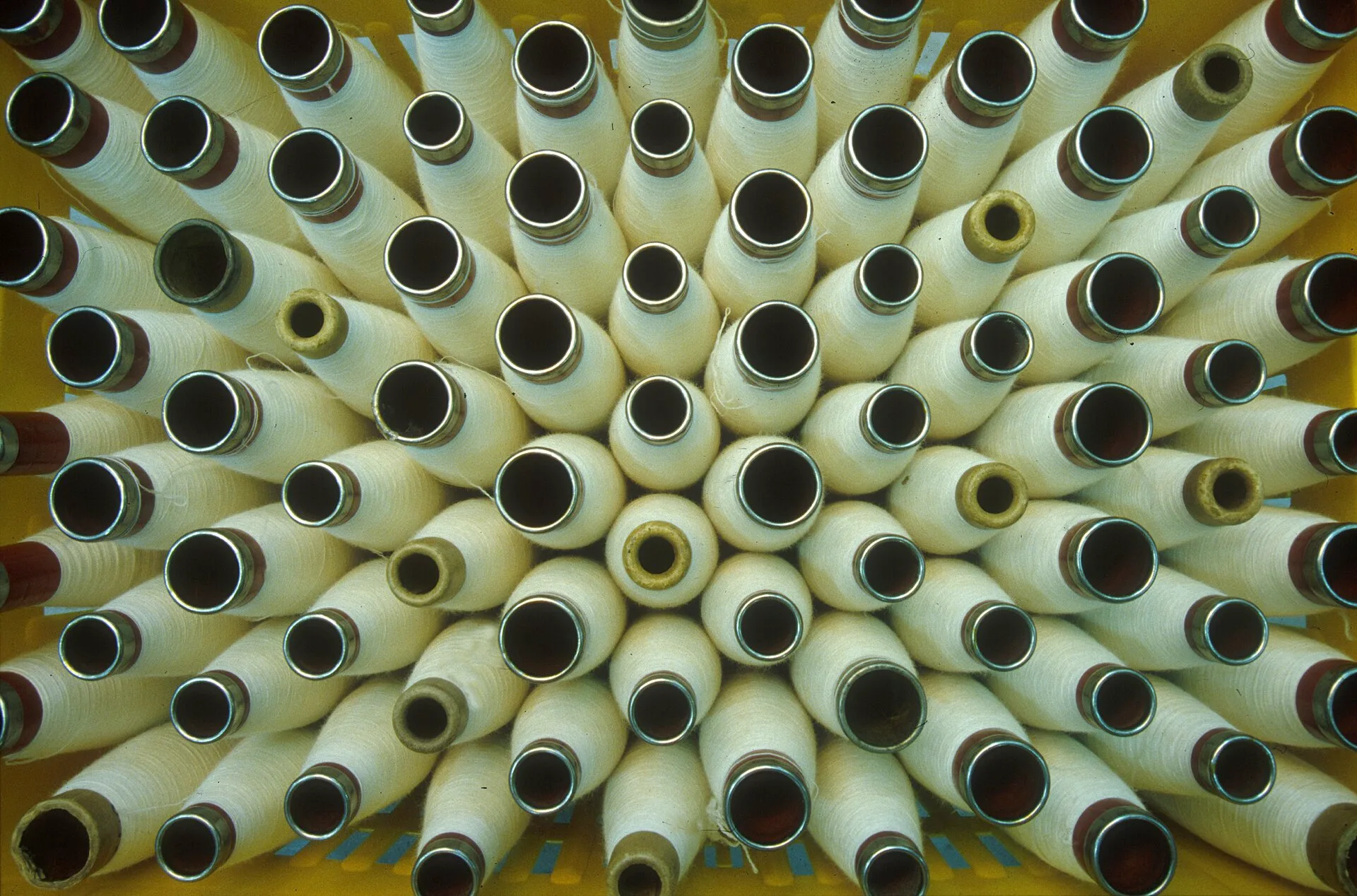
The CEPC describes wool as the most favoured pile material for oriental rugs: it takes dye easily, piles well and suits rough, heavy-use areas, and the council states that wool carpets can be used in high-moisture areas and offer the best durability. The council assigns cotton to the foundation of a carpet rather than to its pile, noting that a cotton foundation provides better strength. Obeetee's description of its own hand-tufting names wool and silk as the yarns its artisans push through the canvas.
Silk is the luxury fibre. The CEPC describes it as a natural lustrous fibre with high tensile strength, prized for its sheen, which weavers sometimes use within a pattern; it appears in oriental carpets and as highlights in woollen carpets. The council also lists wool and silk blends, used to give variety of texture and appearance, and notes that synthetic fibres such as nylon, polyester, olefin and acrylic are used mostly in machine-made carpets. The Wool Research Association's list of carpet types produced in India includes viscose carpets alongside wool, nylon, polypropylene and acrylic.
BHADOHI AND MIRZAPUR: WHERE ARE INDIA'S CARPETS MADE?
The Bhadohi and Mirzapur region of Uttar Pradesh is the centre of Indian carpet production. The district administration of Varanasi records that "Hand made Carpet of Bhadohi" received its Geographical Indication certificate on 3 September 2010. According to that record, Bhadohi carpets are made on a vertical wooden loom with thick cotton and woollen yarns for the warp and wool in the width, and their motifs include flowers, animals, gardens, trees and trellises. The Indian Embassy in Rabat lists the country's carpet-producing areas as Bhadohi, Mirzapur, Varanasi, Agra, Jaipur, Panipat and Srinagar, and states that Bhadohi is known as the "Carpet City" and was awarded the title of "Town of Excellence" by the Government of India.
The Wool Research Association paper attributes 90 per cent of India's carpet production to the Bhadohi and Mirzapur region and identifies it with fashion-oriented, hand-tufted and Indo-Tibetan carpets. It states that low-end carpets such as hand-tufted ones are currently driving the growth of the industry. The region is also the trade's marketplace. The CEPC's flagship India Carpet Expo, which the embassy describes as Asia's largest handmade carpet fair, started in 2000 and is held twice a year; its 45th edition took place in October 2023 at the Bhadohi Carpet Expo Mart.
Obeetee states that Mirzapur and Bhadohi district are the oldest hub of carpet weaving in India, that it has been making carpets since 1920, and that its looms are spread across seven villages. Both the CEPC and the Wool Research Association trace hand-knotted carpet making in India to the Mughals, with early patterns that were Turkish and Persian and were gradually Indianised. Obeetee presents hand tufting as the more contemporary technique, and Basuk's paper states that hand-tufted carpets have been gaining importance in India over the last few decades.
HYATT CENTRIC CITY CENTRE KUALA LUMPUR

Silverfox Studios designed the whole tower of Hyatt Centric City Centre Kuala Lumpur, a repurposed 22-storey building completed in 2024. As the conversion of an existing building into a hotel, the project is a work of adaptive reuse. The design draws on three influences: graffiti, batik and tin mining. Of the three, batik is the one that informs pattern, print, colour and layered finishes, connecting the scheme to the wax and dye tradition of Malaysian batik. Graffiti and tin mining are the other two influences on the design of the tower.
The interiors include leaf-patterned carpets and hand-tufted rugs, the latter designed to evoke reflected water. Hand tufting, as the CEPC describes it, is the method in which pile is injected into a backing material with a tufting gun and fixed with latex and backing cloths rather than knotted onto a loom, and it can produce loop pile, cut pile or both. At the hotel, that technique is used for rugs whose design evokes reflected water, and the carpets that accompany them in the scheme are patterned with leaves.
SOURCES
- Carpet Export Promotion Council Carpet types: method
- Carpet Export Promotion Council Carpet production process
- Carpet Export Promotion Council Carpet types: fibre
- Encyclopaedia Iranica Carpets iii. Knotted-pile carpets: techniques and structures
- New Georgia Encyclopedia Carpet industry
- Metropolis Meet the makers behind the tufted rug renaissance
- District Varanasi, Government of Uttar Pradesh Hand made Carpet of Bhadohi
- Embassy of India, Rabat India Carpet Expo
- Wool Research Association (via Fibre2Fashion) New opportunities and future prospects for Indian hand made carpet industry
- Obeetee Craftsmanship