

TEA DANCES, DANCE BANDS, CABARET ROOMS AND THE LOBBY PIANO

Hotel live music became an organised part of the grand hotel in the 1890s, when hotels in London and New York began employing musicians for their public rooms. Small orchestras played through afternoon tea and dinner, hotels laid dance floors when the tango reached Paris and London in 1912, and from 1923 the resident dance bands of the Savoy in London were broadcast on BBC radio. In New York, hotels added cabaret rooms and residencies, among them Bobby Short's engagement of more than 35 years at the Café Carlyle. The tradition continues in the pianists, harpists, trios and jazz ensembles that play through afternoon tea in hotels such as the Ritz in London and the Peninsula in Hong Kong.
WHERE DID HOTEL LIVE MUSIC BEGIN?
At the Savoy in London, music in the public rooms dates from 1890, the year César Ritz arrived as the hotel's first famous general manager. According to the Savoy's own history, one of Ritz's first edicts was that there should always be music in the public areas, which he said covered awkward gaps in conversation. In New York, the Hotel Waldorf, opened by William Waldorf Astor in March 1893, began with a benefit concert for a children's hospital. When John Jacob Astor IV opened the Astoria next door later in the decade, the two buildings were united as the Waldorf-Astoria and joined by Peacock Alley, a marble promenade where members of society walked and met.
The light music played in these rooms became known as palm court music. A history published by the Faculty of Music at the University of Oxford dates the genre to the 1890s, when it supplied music for high teas and dinner dances in hotels, in the pavilions of spa towns and aboard ocean liners. The rooms where it was played were usually decorated with palms and aspidistras, which gave the style its name. Its repertoire ran from salon pieces by Elgar and Kreisler to Viennese waltzes, Lehár operettas and, later, dance numbers by Gershwin, Porter and Rodgers and Hart. Composers including Eric Coates, Robert Farnon, Leroy Anderson, Vivian Ellis and Albert W. Ketèlbey wrote for the format as it grew.
WHAT WAS A TEA DANCE?
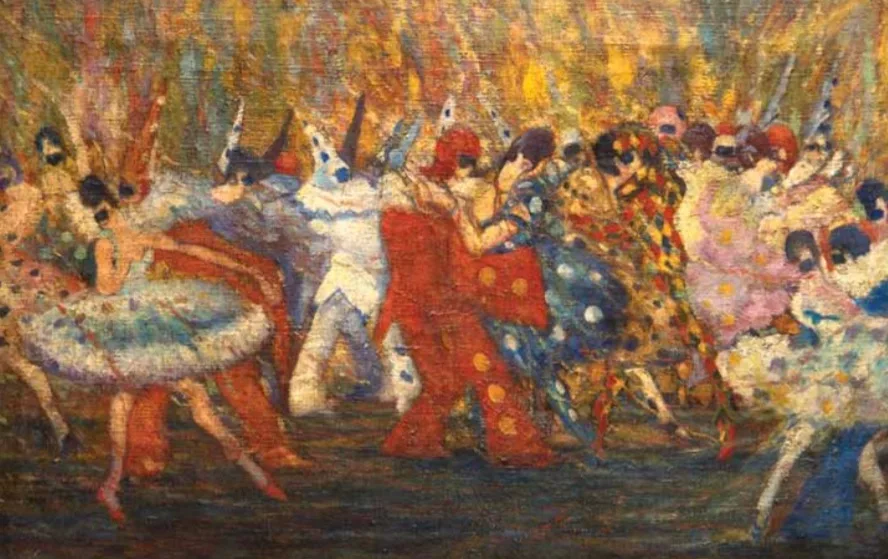
The tea dance, or thé dansant, turned the hotel tea room into a dance floor. The Wiener Museum of Decorative Arts in Florida, which has published a history of the form, traces the tango craze to the Paris thés dansants of 1912, where guests drank tea between dances. Londoners first saw the tango that same year in the musical comedy The Sunshine Girl at the Gaiety Theatre, and restaurants and hotels quickly made space for dancing, with live orchestras playing Latin music. The museum notes that tea dances allowed women to attend afternoon dances without a chaperone at hotels such as the London Waldorf, and that the foxtrot and the Charleston followed the tango in the 1920s.
The Savoy's history records the change in its own rooms. In 1912 a couple got up to dance in the gap between the tables, and the hotel laid a dance floor in the centre of the Thames Foyer, in time for the enthusiasm for the tango in 1913. The Waldorf Hotel on Aldwych, which opened in 1908 with about 400 guest rooms, held regular dance parties in its Palm Court ballroom. Historic Hotels Worldwide records that the tango was performed in the Palm Court in 1913 and that by the 1920s the hotel was holding special Tango Teas in its restaurant. Its resident orchestra, the Waldorfians, was led by the bandleader Howard Godfrey, who recorded a series of live records at the hotel with the singer Al Bowlly.
HOW DID HOTEL LIVE MUSIC REACH THE RADIO?
In the years that followed, the Savoy hired William de Mornys as its head of entertainment. He brought a Latin ensemble from New York, which was renamed in London as the Savoy Havana Band, and set up a second dance orchestra, the Savoy Orpheans, led by Debroy Somers, a former army bandmaster. The Discography of American Historical Recordings at the University of California, Santa Barbara, dates the Orpheans to 1923 and lists their recordings for Columbia in Britain from around 1924. The British Broadcasting Company, founded in 1922, opened its first studios on Savoy Hill, across the road from the hotel, and according to the Savoy the hotel's bands were on the air by October 1923.
The same discography records that on 15 June 1925 Somers conducted the Orpheans and the Savoy Havana Band in the first British performance of George Gershwin's Rhapsody in Blue, with Gershwin at the piano, and that the BBC broadcast it live. It cites the hotel's owner describing the original Orpheans as probably among the best-known bands in Europe. That line-up ended when de Mornys's contract with the hotel expired on 31 December 1927, after which the bandleader Reg Batten led a group called the Savoy Orpheans (1928).
Hotels outside London also went on the air. The Grand Hotel in Eastbourne, built on the seafront in 1875 with views of Beachy Head, records that its Grand Hotel Orchestra broadcast live on the BBC from the hotel's Great Hall every Sunday night from 1924 to 1939, in a programme named Grand Hotel. The Oxford history gives the same dates for the Eastbourne broadcasts. The hotel's history also states that Claude Debussy completed La Mer in its Suite 200 in 1905.
WHO LED THE HOTEL DANCE BANDS?
The American pianist Carroll Gibbons arrived at the Savoy in 1924 hoping to join the Orpheans, and in 1928 wrote his theme tune, "Garden in the Rain", with lyrics by James Dyrenforth. According to the UCSB discography, he returned from MGM in Hollywood in 1931 and, with the saxophonist Howard Jacobs, formed a new band, the Savoy Hotel Orpheans, which the music writer Brian Rust described as "a purely straight, typically smooth supper-club band". Gibbons led it until 1950 and was then the hotel's Director of Entertainments until his death in 1954. In 1962 Frank Sinatra, a regular Savoy guest, came to London to record Sinatra Sings Great Songs From Great Britain, which includes "Garden in the Rain".
The BBC's Grand Hotel programme outlived its Eastbourne setting. The Oxford history records that in 1943 the violinist Albert Sandler, then leader of the Palm Court Orchestra, became the series' first host, with the broadcasts now made from the concert hall at Broadcasting House rather than from a hotel. The violinist Tom Jenkins succeeded Sandler and took the audience to 15 million in the 1950s, followed by Reginald Leopold and Max Jaffa, who became a household name through the broadcasts and later led the Scarborough Spa Orchestra. The series ended in 1973, with a short-lived revival in the 1980s.
COLE PORTER'S PIANO AND THE HOTEL LOBBY

In New York, the original Waldorf-Astoria was sold in 1929 and demolished the following year to make way for the Empire State Building, and the present Waldorf-Astoria opened on Park Avenue in 1931, with President Herbert Hoover giving a radio speech from Washington for the occasion. National Geographic reports that Cole Porter lived at the hotel for 30 years until his death in 1964 and wrote many of his works there. He was given a custom-built Steinway & Sons piano, which remains on view in Peacock Alley, now a lounge bar and all-day restaurant.
In London, the Ritz opened on 25 May 1906 under César Ritz, the hotelier who had set the rule on music at the Savoy. The hotel's history states that Noël Coward wrote songs there, including "Children of the Ritz", and that the favourite song of Queen Elizabeth the Queen Mother to be played on its piano was "A Nightingale Sang in Berkeley Square". In Hong Kong, music is played in the hotel lobby itself. The Peninsula serves afternoon tea, which it describes as a tradition of many decades, in The Lobby, a double-height space with colonnades, to the accompaniment of live jazz.
HOW DID HOTEL CABARET ROOMS DEVELOP?

At the Savoy, the evening programme combined dinner, dancing and cabaret. By 1970 the headline acts were more likely to be pop stars, among them Cilla Black, Sandie Shaw and the New Seekers, who appeared in Cabaret at the hotel that year. The Savoy's traditional evening of dinner, dancing and cabaret came to an end in 1980, after more than six decades of dancing at the hotel since the dance floor of 1912. The hotel's history states that its tradition of live music in the public areas continued after that date and continues today.
In New York, the cabaret room of the Carlyle hotel hosted a residency of more than three decades. Bobby Short first played the Café Carlyle in 1968, and that year signed an agreement to perform six nights a week for eight months of the year. He sang from the Great American Songbook, including the songs of Duke Ellington, George Gershwin, Rodgers and Hart and Cole Porter. CBS News reported that he was a fixture at the Café Carlyle for more than 35 years and celebrated his 35th anniversary there in 2003. He died in New York on 21 March 2005, at the age of 80.
HOTEL LIVE MUSIC TODAY
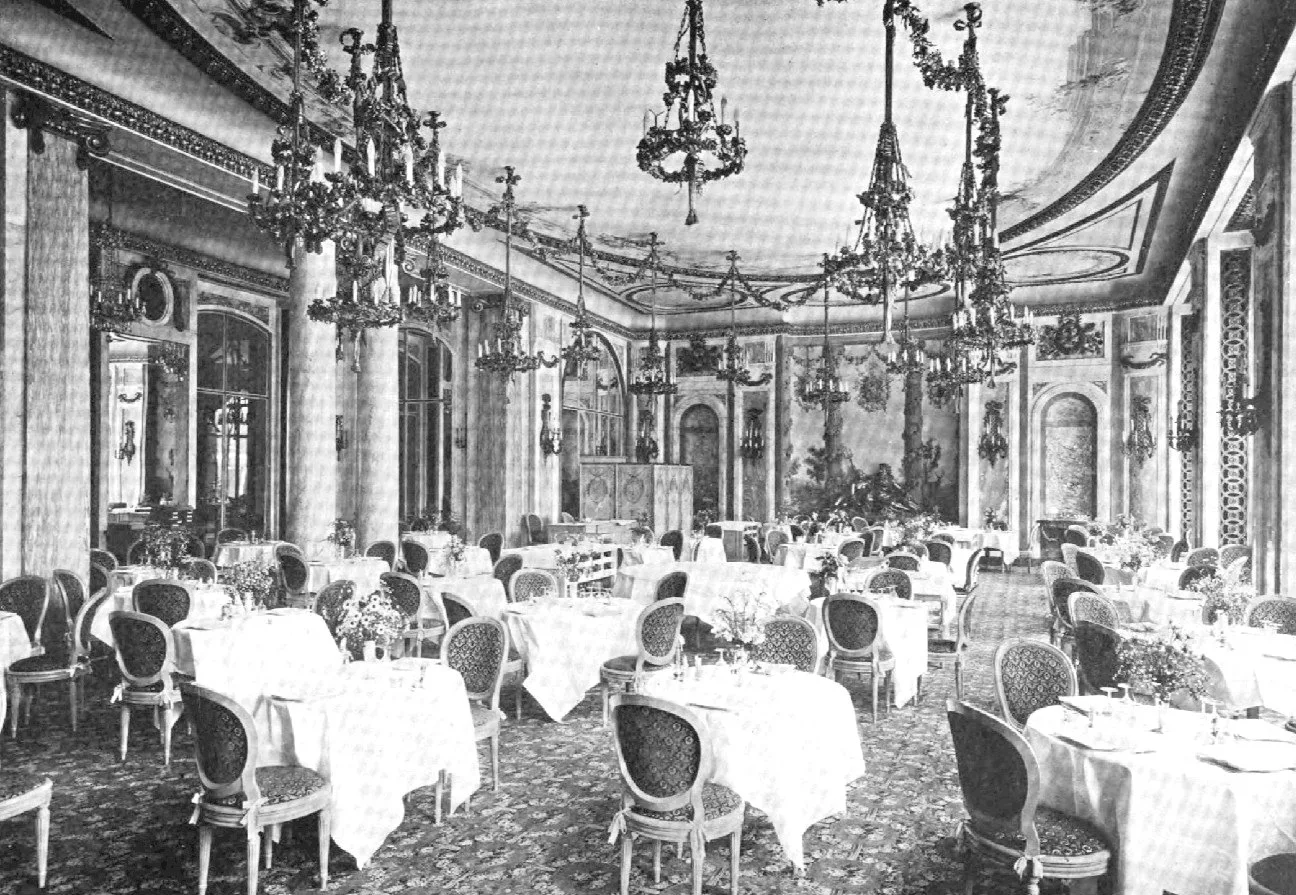
At the Ritz in London, the hotel's current listings describe a live musical ensemble accompanying afternoon tea, which is served in five daily sittings at 11.30 am, 1.30 pm, 3.30 pm, 5.30 pm and 7.30 pm. Pianists play in the Queen Elizabeth, Wimborne and William Kent Rooms from 11.30 am to 7 pm, and a harpist plays in the Music Room from 11.30 am to 9 pm. In the evening, a trio of piano, cello and violin plays from 7.30 pm to 9 pm on weekdays, and a solo pianist takes the same hours at weekends.
The dance band names of the 1920s have also returned. In April 2022 the Savoy revived the name of the Savoy Orpheans and appointed Alex Mendham as its bandleader and musical director. The name had first belonged to the band that Debroy Somers formed in 1923, and then to the Savoy Hotel Orpheans that Carroll Gibbons and Howard Jacobs formed in 1931 and that Gibbons led until 1950. At the Waldorf Astoria in New York, which reopened in July 2025 after an eight-year renovation, Cole Porter's piano remains among the signature elements kept from the hotel's past, according to National Geographic.
HYATT CENTRIC OCEANFRONT XIAMEN

Silverfox Studios completed the interior design of Hyatt Centric Oceanfront Xiamen in 2025, with responsibility for the full scope of the project. The hotel stands on the Xiamen coast, beside Zengcuo'an Food Street. Its design draws on the street scenes and lanes of the area, on kiln-fired local bricks and on local craft, and the hotel is designed as a series of connected "houses". The hotels in this history placed their music in named rooms: the dance floor in the Thames Foyer at the Savoy, dance parties in the Palm Court at the Waldorf on Aldwych, broadcasts from the Great Hall of the Grand Hotel in Eastbourne and Cole Porter's piano in Peacock Alley at the Waldorf Astoria.
Music culture is central to the hotel's ground floor, and its focal point is the House of Music, which hosts live music in the evenings. In London and New York, evening music in hotels took the form of the dinner dance and cabaret, which ran at the Savoy until 1980, and the cabaret residency, such as the one Bobby Short began at the Café Carlyle in 1968. At the Ritz in London, a trio of piano, cello and violin plays on weekday evenings from 7.30 pm.
SOURCES
- The Savoy Face the music and dance
- University of Oxford, Faculty of Music Alumna Rebecca Smith launches own orchestra
- Wiener Museum of Decorative Arts Tango teas
- Historic Hotels Worldwide History of The Waldorf Hilton, London
- University of California, Santa Barbara, Discography of American Historical Recordings Savoy Orpheans
- The Grand Hotel Eastbourne Our history
- National Geographic New York's iconic Waldorf Astoria is ready for its next chapter
- The Ritz London History of The Ritz London; Afternoon Tea at The Ritz
- CBS News Cabaret singer Bobby Short dies
- The Peninsula Hong Kong The Lobby


