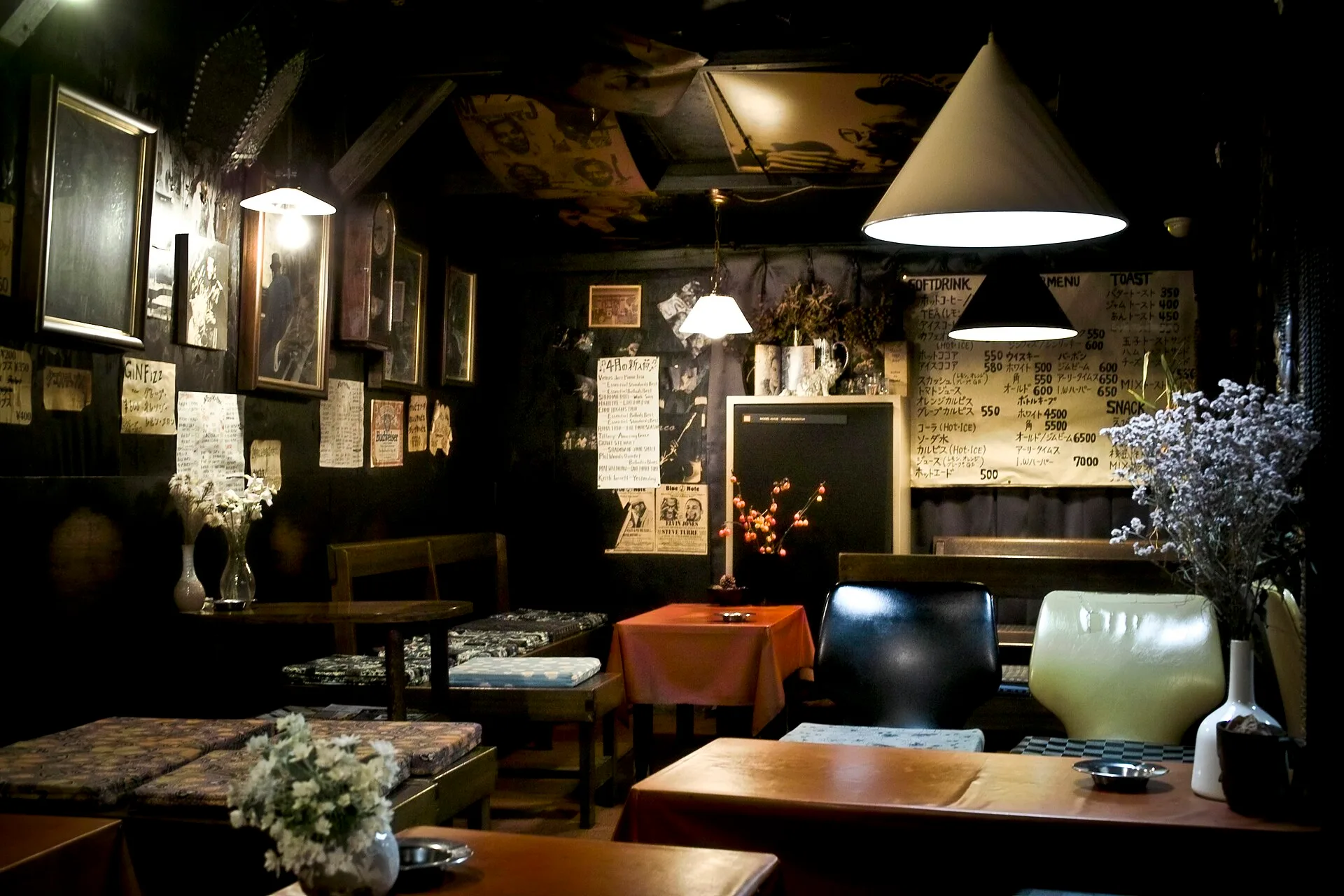
THE WORD, THE TEA ROOM, THE INN AND THE COUNTER

Omotenashi is the Japanese word for hospitality, defined by the Japan National Tourism Organization (JNTO) as "meaning to wholeheartedly look after guests". The tourism board traces the culture to sado, the tea ceremony, and names the ryokan inn and the kaiseki banquet among the places where visitors meet it. The word has no fixed kanji and several competing explanations of its origin. It is used for practices as different as the greeting called out in a shop doorway, the room attendant at a hot spring inn, the hand towel placed in front of a seated diner and the attendant who walks the floors of a department store. In September 2013 a presentation to the International Olympic Committee spread the word across Japan, and in December it was named one of the country's words of the year.
WHAT DOES OMOTENASHI MEAN?
JNTO describes omotenashi as "the Japanese mindset of hospitality centring around care rather than expectation" and says it goes beyond the idea that the customer is always right. Its guide to luxury travel adds that the word is "slightly tricky to translate" and describes it as anticipating and fulfilling guests' needs before they are even aware of them. Yohei Noguchi, an associate professor of hospitality and tourism at Kyorin University in Tokyo, gave The Japan Times a similar definition: serving customers by anticipating their needs without waiting for them to ask. He added a second element, preparing more than is needed so that service never runs short, summed up in his phrase "you prepare 150 when your customer needs 100".
The origin of the word is less settled. Writing in the Tokyo magazine Tokyo Weekender in 2020, Lisandra Moor set out several explanations. In one, omotenashi is simply motenashi with the polite prefix o. In another, motenashi is a shortening of the phrase mono o motte nashi togeru, loosely meaning to receive and serve guests with great compassion. A third links the word to the phrase written 表裏なし, which the magazine glosses as "having no public face", implying complete transparency in serving a guest. Because no kanji is designated for it, the word is usually written in hiragana. Noguchi's account in The Japan Times also describes the origin as unclear, while noting that it is often said the term was born in chanoyu, the tea ceremony, which began in the Muromachi era (1336 to 1573).
HOW IS OMOTENASHI ROOTED IN THE TEA CEREMONY?

In JNTO's account, the guest is at the centre of every chakai, or tea gathering, and the host considers the guest in every movement and gesture. The tea master Sen no Rikyu (1522 to 1591) set out seven rules for the Way of Tea, as listed in the magazine NIPPONIA in 2006: make a satisfying bowl of tea; lay the charcoal so that it heats the water well; arrange the flowers as if they were growing in a field; in summer suggest coolness and in winter warmth; be ready ahead of time; prepare for rain just in case; and be considerate of other guests. Rikyu also summed up the essence of tea in four characters, wa kei sei jaku: harmony, respect, purity and tranquillity. The rooms in which these gatherings took place are the subject of the Japanese tea house and its crawl-through nijiriguchi door.
The phrase most often attached to tea hospitality is ichigo ichie. Its best-known written statement is in Chanoyu ichi-e shu, a booklet by Ii Naosuke completed around 1857 after numerous revisions and now an Important Cultural Property catalogued by Hikone Castle Museum. The museum describes the phrase as urging hosts and guests to "treasure every tea gathering as a once-in-a-lifetime experience". The same text sets out dokuza kannen, the idea that after the guests have left, the host should sit alone for a time before the hearth. Randy Channell, a Kyoto-based associate professor of the Urasenke tradition, explained the phrase to NIPPONIA in practical terms: "the moment will never happen again", so he looks for every way to help guests feel at ease. He also noted that the welcome begins when the host first decides to hold a gathering.
THE RYOKAN, THE OKAMI AND KAISEKI SERVICE

JNTO describes ryokan as traditional inns found most commonly in hot spring areas, with tatami floors, futon bedding and "local, seasonal kaiseki cuisine served in your room". The inn is run by the okami, its landlady. In 2006 NIPPONIA described the routine at Kagaya, an inn at Wakura Onsen on the Noto Peninsula with 245 guest rooms in four buildings. Check-in started at 2 p.m., and the landlady and room maids, in kimono, waited at the main door to bow and call out a welcome. One maid was in charge of each room and brought matcha and something sweet soon after guests arrived. Yukata came in lengths with only 5 cm between sizes, and the maid judged each guest's size by sight at the greeting. The colour of the obi sash showed which of the four buildings a guest was staying in.
Dinner at Kagaya consisted of eight or nine dishes of local, seasonal food served one at a time over 90 to 120 minutes, with an automated lift carrying food from the kitchen to each floor. During supper the landlady visited guests in their rooms to check on their stay, a custom NIPPONIA reports is said to have started with a former Kagaya landlady and is now common at ryokan across Japan. The landlady summed up good ryokan service as age-zen sue-zen: serving tasty meals and taking away the empty dishes without guests having to say anything. Outside the inn, JNTO notes that kaiseki, a succession of small dishes, is usually served in private rooms at specialist restaurants and top-class hotels.
BOWS, GREETINGS AND DEPARTMENT STORE SERVICE
The most common form of omotenashi for a visitor is the greeting irasshaimase, called out when a customer enters a shop or restaurant. JNTO notes that a polite nod or smile in return is enough and that no reciprocation is expected. The same guide cites the cleaners on the shinkansen, who bow to passengers as they board. JNTO presents these gestures as part of an understanding that no task is menial if it creates a good experience for the guest. The guide's other examples of where omotenashi can be felt include the ryokan, the kaiseki banquet and the tea ceremony, where the host prepares a bowl of tea, in the board's words, "from their heart".
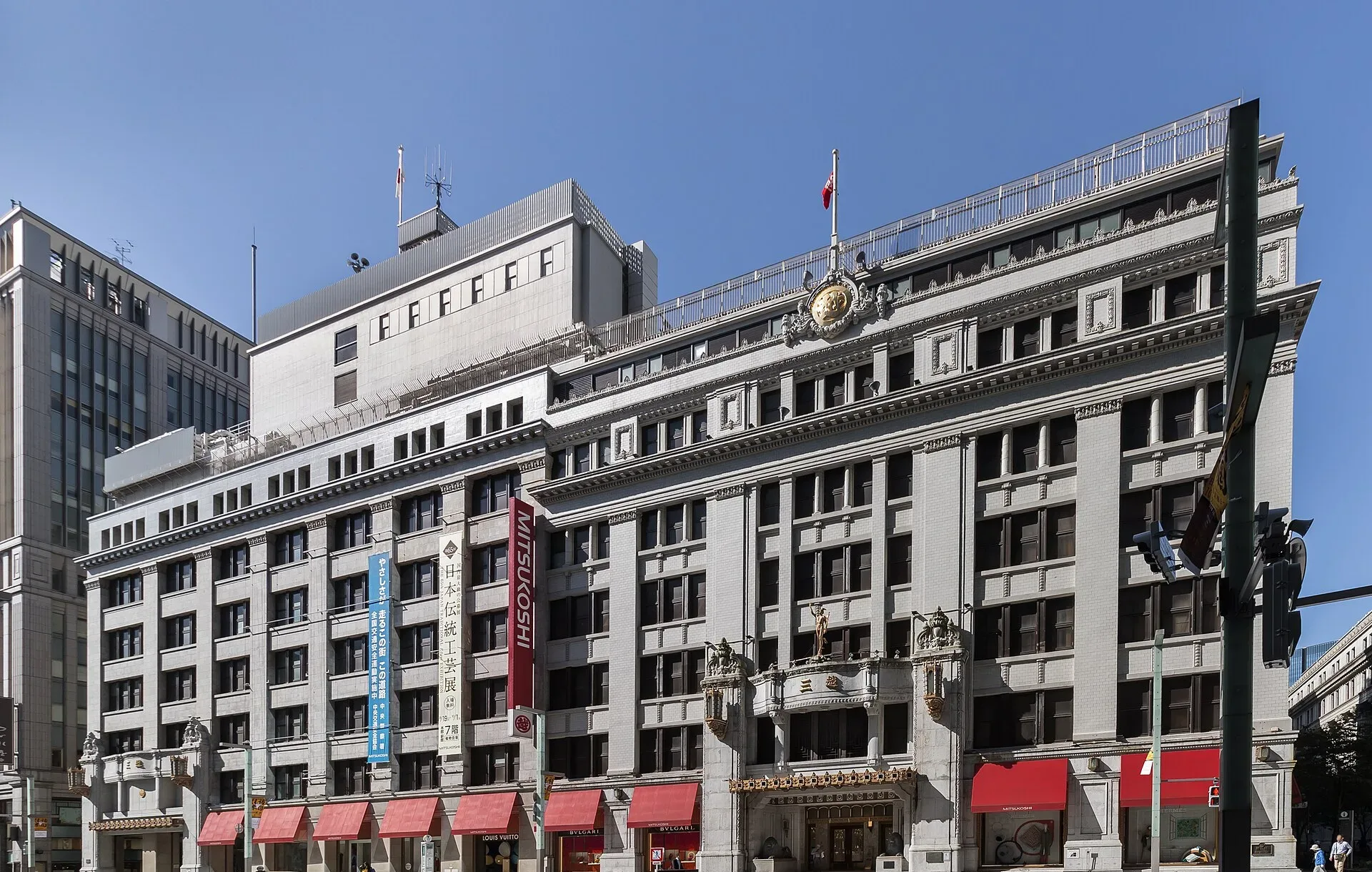
Department stores give the idea a commercial history. NIPPONIA's 2006 profile of Mitsukoshi records that the company's roots go back to 1673 and that its founder, Mitsui Takatoshi, coined the phrase magokoro no seishin, translated as "dedication founded on sincerity". Shimizu Rieko, a service attendant at the Nihonbashi main store in central Tokyo, linked the phrase to the principle that the customer comes first. Mitsukoshi created a staff position called service attendant. Unlike receptionists and elevator operators stationed in one place, service attendants move around the store, guiding customers to products, helping carry large purchases to the main entrance, observing conditions, checking products and reporting problems to reception and elevator staff.
HOW OMOTENASHI BECAME A NATIONAL WORD IN 2013
On 7 September 2013, the television announcer Christel Takigawa used the word in her presentation for Tokyo's bid to host the 2020 Olympic and Paralympic Games at the IOC Session in Buenos Aires. Nippon.com reports that the speech was in French, with a Japanese simultaneous interpretation track, and that her drawn-out delivery of the word, which it writes as "o-mo-te-na-shi", had "much of Japan mimicking her in classrooms and offices for days to come". Tokyo Weekender credits the presentation with bringing the term to foreign media and describes Takigawa as having spelled it out as the core attribute of Japanese hospitality. Tokyo was awarded the Games at the same session.
On 2 December 2013, omotenashi was announced as one of four winners of Jiyu Kokumin Sha's Word of the Year for 2013, and Nippon.com glossed it as a word that "signifies a sense of warm hospitality". Noguchi, speaking to The Japan Times before the Tokyo Games, said visitors' positive experiences at the 2019 Rugby World Cup in Japan suggested that omotenashi had been warmly received by sports fans. He expected the Games to help Japan provide "even better omotenashi" by teaching citizens more about foreign cultures and customs.
OMOTENASHI IN JAPANESE RESTAURANTS: THE OSHIBORI AND THE COUNTER

The oshibori is a moist hand towel. NIPPONIA's 2006 survey of everyday courtesies describes cafés, restaurants and bars giving seated guests a small damp towel with their water or green tea. The towel is for wiping the hands and even the face, and it is served hot in winter and cold in summer. The same survey placed the oshibori alongside other small courtesies that visitors notice in Japan, such as the rear taxi door that opens automatically and is closed by the driver with a lever, electronic boards showing train arrival times and the paper covers that bookshop clerks wrap around purchased books to keep them clean and private.
Restaurants offer two settings for this service. JNTO describes kaiseki as usually served in private rooms, and kappo ryori as "a more casual version of kaiseki in which diners are seated close to the chef". The counter is also the setting for the sushi tradition covered in omakase dining, in which the guest leaves the choice of dishes to the chef. JNTO's guide places both formats among the dining experiences of luxury travel in Japan, alongside the ryokan stay with seasonal kaiseki served in the guest's own room.
RIN AT MANDARIN ORIENTAL SHENZHEN
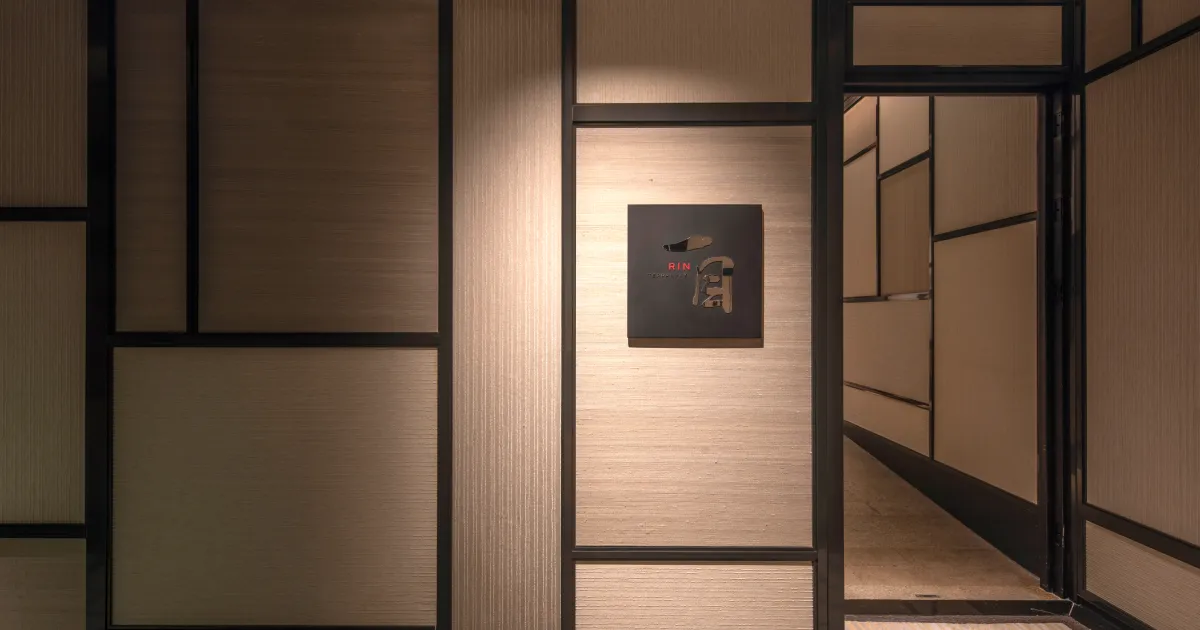
RIN is the signature Japanese restaurant at Mandarin Oriental Shenzhen, completed in 2022, where the chef is Masanobu Hoshina. The restaurant is reservation only and every room is private. Guests reach the rooms from a Sake Lounge, passing through low doors, and the three rooms are named Corten Steel, Pine and Concrete; the history of the first material is covered in Corten steel and its weathering patina. JNTO notes that in Japan kaiseki is usually served in private rooms at specialist restaurants and top-class hotels.
RIN serves teppanyaki, and the ingredients are prepared raw in front of guests. The cooking equipment sits under the counter, and the sightline runs past the chef to the city. JNTO distinguishes kaiseki, usually served in private rooms, from kappo ryori, in which diners are seated close to the chef. At RIN, guests who have booked ahead are served in private rooms named for steel, pine and concrete, and the chef prepares the teppanyaki ingredients raw in front of them, with the equipment kept below the line of the counter.
SOURCES
- Japan National Tourism Organization Omotenashi
- Japan National Tourism Organization Luxury Travel in Japan
- The Japan Times Tokyo 2020: Seasonal Guide, The Best of Japan, Vol. 11
- Nippon.com 2013: The Winning Words
- Tokyo Weekender Japanese Words We Can't Translate: Is Omotenashi Really Japanese Hospitality?
- Hikone Castle Museum Chanoyu ichi-e shu (The Spirit of Ichi-e in Chanoyu)
- NIPPONIA No. 39, Web Japan The Spirit of Japanese Hospitality
- NIPPONIA No. 39, Web Japan Traditional Hospitality in Japan: Kagaya
- NIPPONIA No. 39, Web Japan Hospitality Pros
- NIPPONIA No. 39, Web Japan Things Offering the Red Carpet Treatment