HOW OSAKA MOVED THE JAPANESE KITCHEN TO THE COUNTER

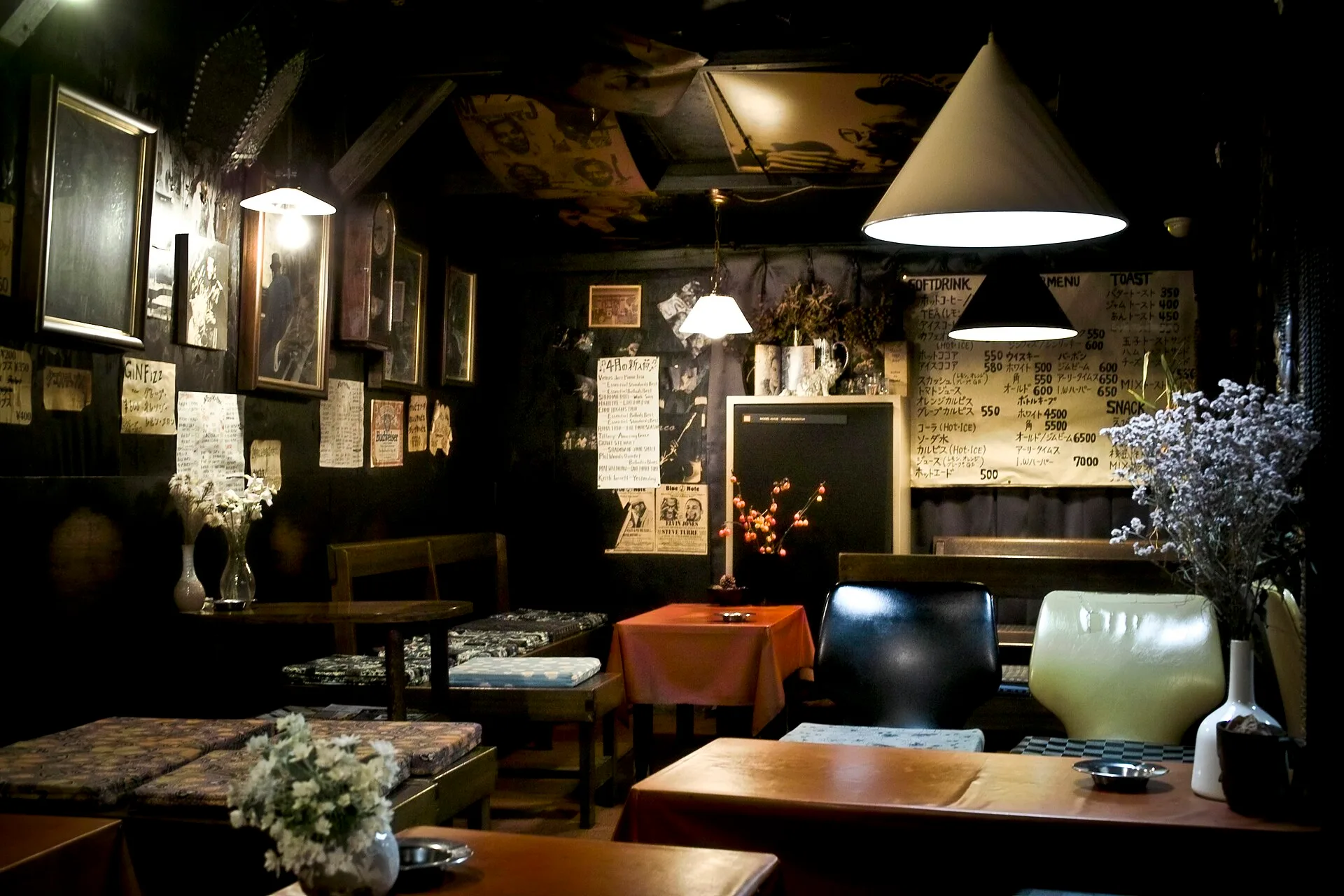
Kappo is a style of Japanese restaurant in which the cook prepares food at a counter in front of the diners, who order as the meal goes on and talk with the chef about what to eat. The word combines two characters, one for cutting and one for cooking, and has long served in Japanese as a general term for preparing food. As the name of a dining format, it is younger. Osaka Gastronomy and Culture, a project documenting the city's food on Google Arts & Culture, says kappo became an established style of Japanese cuisine in the late 1910s and is said to have originated in Osaka. The Osaka Convention & Tourism Bureau places the same change in the middle of the Taisho period. Kappo changed where Japanese restaurant food was made: the kitchen, previously out of sight, came out to the counter.
WHAT DOES KAPPO MEAN?
Kappo is written 割烹. Shogakukan's Digital Daijisen dictionary explains it as cutting meat and simmering it, and so preparing food, usually Japanese cuisine; its second sense is a restaurant that serves Japanese food. The Osaka Convention & Tourism Bureau gives the restaurant reading in plain terms: katsu means to cut and po means to cook. The first half stands for knife work on raw ingredients and the second for cooking with heat. Shogakukan's Nihon Kokugo Daijiten gives the same pairing, with 割 for cutting and 烹 for boiling, and lists the word both as cooking in general and as another word for kappo-ten, a Japanese restaurant.
The term itself is far older. Heibonsha's Sekai Daihyakka Jiten notes that it appears in the Rites of Zhou, the Chinese classic, for cutting ingredients and simmering them together, and the Jitsu character dictionary cites a passage of Mencius in which Yi Yin serves King Tang through his skill in cooking. The Nipponica encyclopedia entry by Tada Tetsunosuke says the word reached Japan from China and appears in early Japanese texts, where the Nihon Shoki reads it as namasu tsukuru, making namasu. In the Meiji and Taisho periods kappo-ten was a common name for restaurants and cookery schools carried the word; it also survives in kappogi, a women's cooking overall, with kappofuku for the men's version. Nipponica adds that the word is now used less than ryori, partly because 烹 is not among the standard joyo characters.
RYOTEI, RYORI-CHAYA AND THE HIDDEN KITCHEN
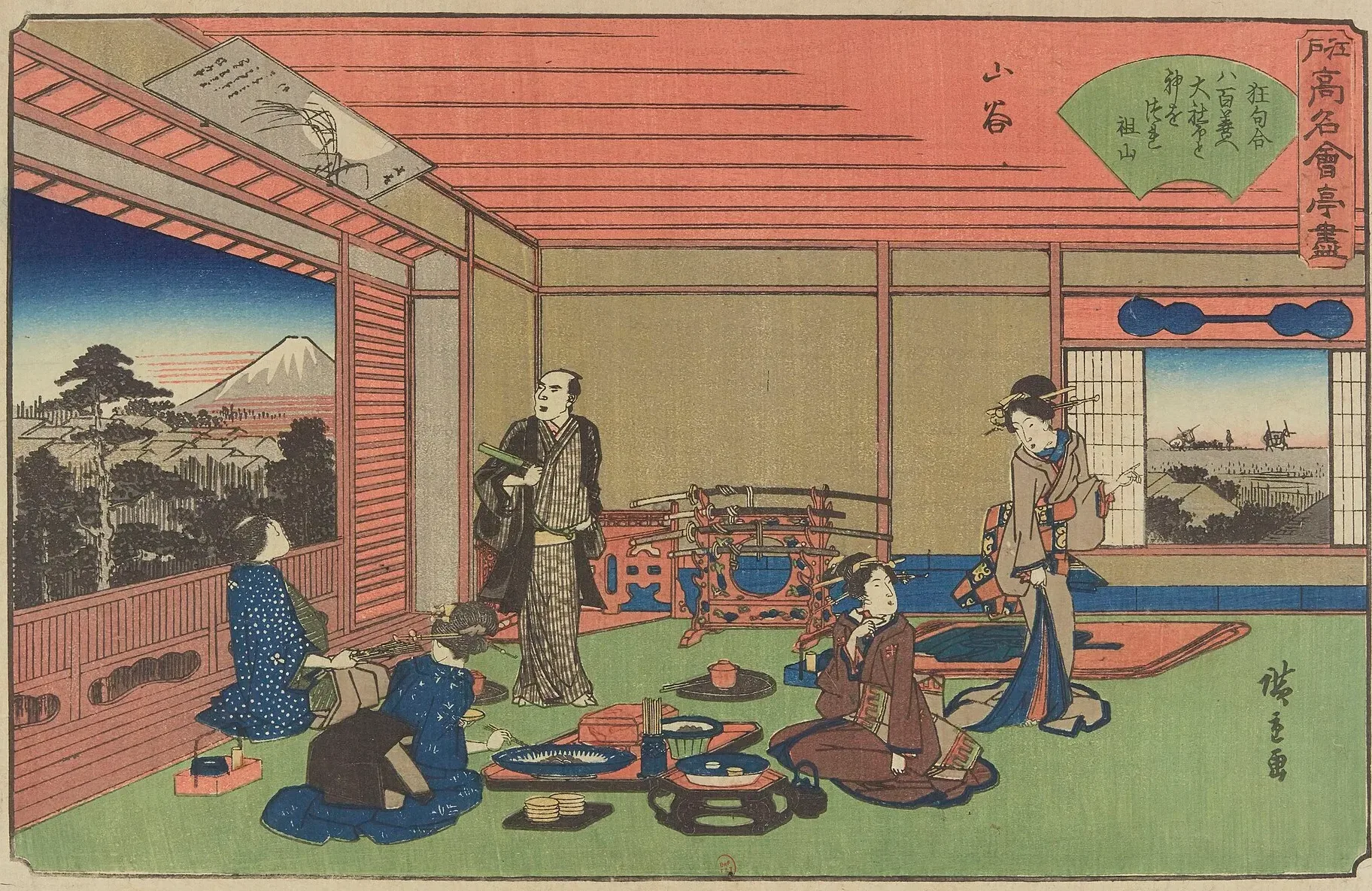
Kappo grew up alongside an older restaurant tradition. Heibonsha's encyclopedia traces these restaurants to tea shops of the Muromachi period, which sold tea for one coin a cup and gradually turned into ryori-chaya, establishments where customers went to enjoy fine food. The same entry notes that ryori-chaya was an Edo-period term, and that such places are now called ryoriya, kappo-ten or ryotei. In Edo, high-end restaurants opened in numbers during the Tanuma era and served wealthy townspeople among others, while eel and sushi shops fed the wider public. Shogakukan defines a ryotei as a high-class restaurant serving mainly Japanese food, and its earliest recorded use of the word comes from the magazine Fuzoku Gaho in 1897.
Osaka had its own version. In the Edo period it was a trading city known as the Nation's Kitchen, and Yoshitaka Sasai, representative director of the Naniwa Gyosai-no Kai association, describes Tokyo as a city of samurai, Kyoto as a city of aristocrats and Osaka as a city of merchants. Osaka's formal cuisine was kaiseki written 会席, a banquet meal used to entertain business partners, for which preparations were made many days in advance. In these older establishments the kitchen was hidden and the food was carried to guests by staff. Osaka Gastronomy and Culture notes the drawback: dishes made ahead of time could be past their best by the time the customers arrived.
WHERE DID KAPPO COME FROM?
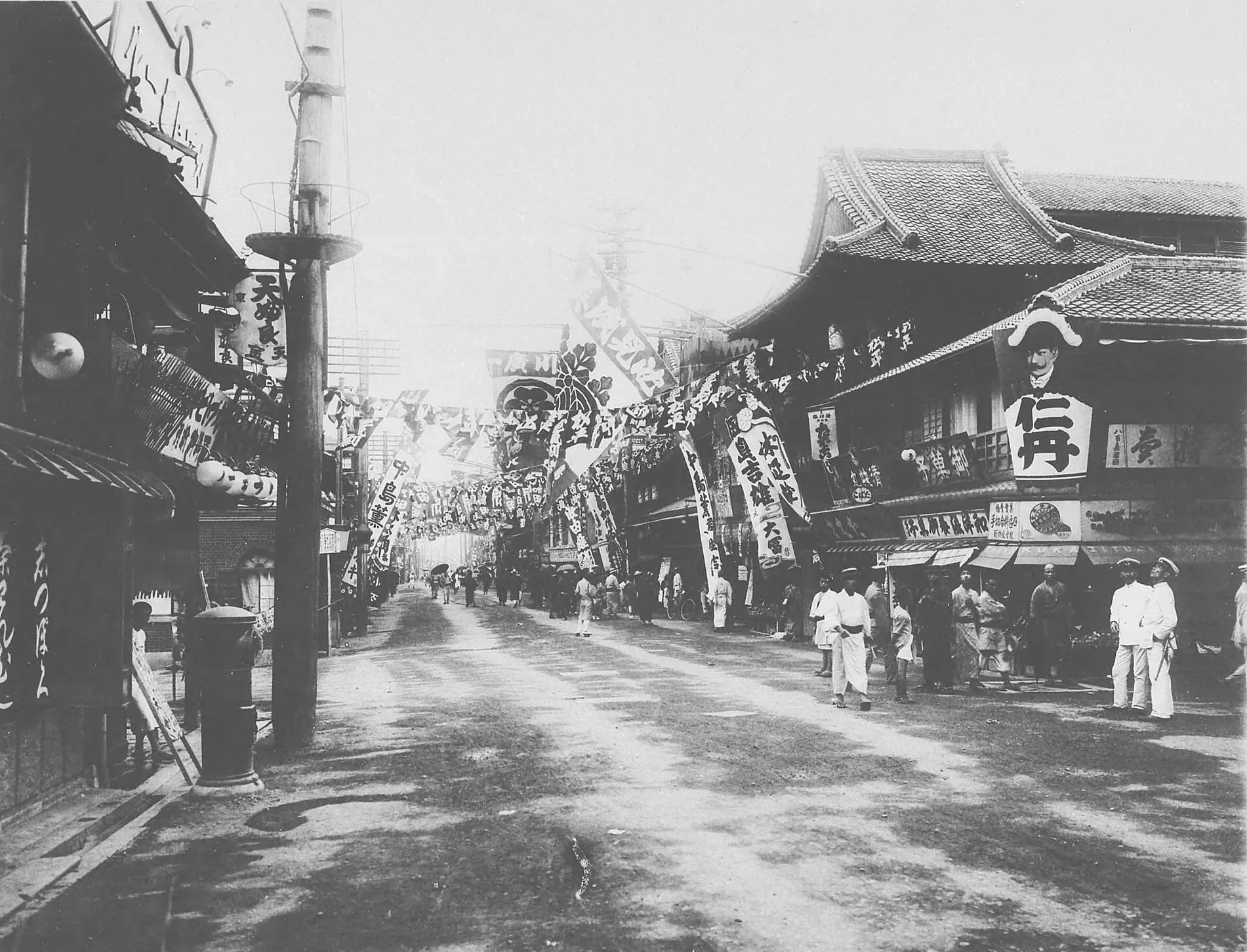
According to the Osaka Convention & Tourism Bureau, kappo took shape as the traditional restaurants that had flourished in the Edo period began to fall into disuse and diners looked for more casual places to eat. Osaka Gastronomy and Culture describes the same shift: as the old high-end restaurants began to disappear, chefs started cooking in front of customers at a counter, so that food reached the diner freshly made. Kappo, it says, was much loved by Osakans as a symbol of a new era. The project describes kappo as a style developed from Osaka's banquet kaiseki, detached from business entertaining and built on the idea of eating when one wants to eat.
Cooking in view of the customer had appeared in Osaka earlier. Sasai shows a cooking guidebook published in 1897, illustrated with paint-coloured photographs, in which a chef fillets sea bream in front of customers. He notes that such a scene was not seen in Kyoto, even though the two cities are often grouped together as the west of Japan. He links Osaka's knife culture to geography: unlike Kyoto, a city associated with mountains, Osaka has many rivers flowing into Osaka Bay, and its cooks developed ways of making use of fish as fully as possible.
One early kappo restaurant with a recorded founding date is Hamasaku. The restaurant's own history states that it was founded in 1924, the 13th year of the Taisho period, in Shinmachi, Osaka, and that it opened in Ginza in 1928. Hamasaku describes its Ginza restaurant as the Kansai kappo that first introduced counter cooking in front of guests to Tokyo. At its counter, the restaurant says, guests may order whatever dishes they like, in whatever quantity, made from seasonal ingredients.
HOW DOES A KAPPO COUNTER WORK?
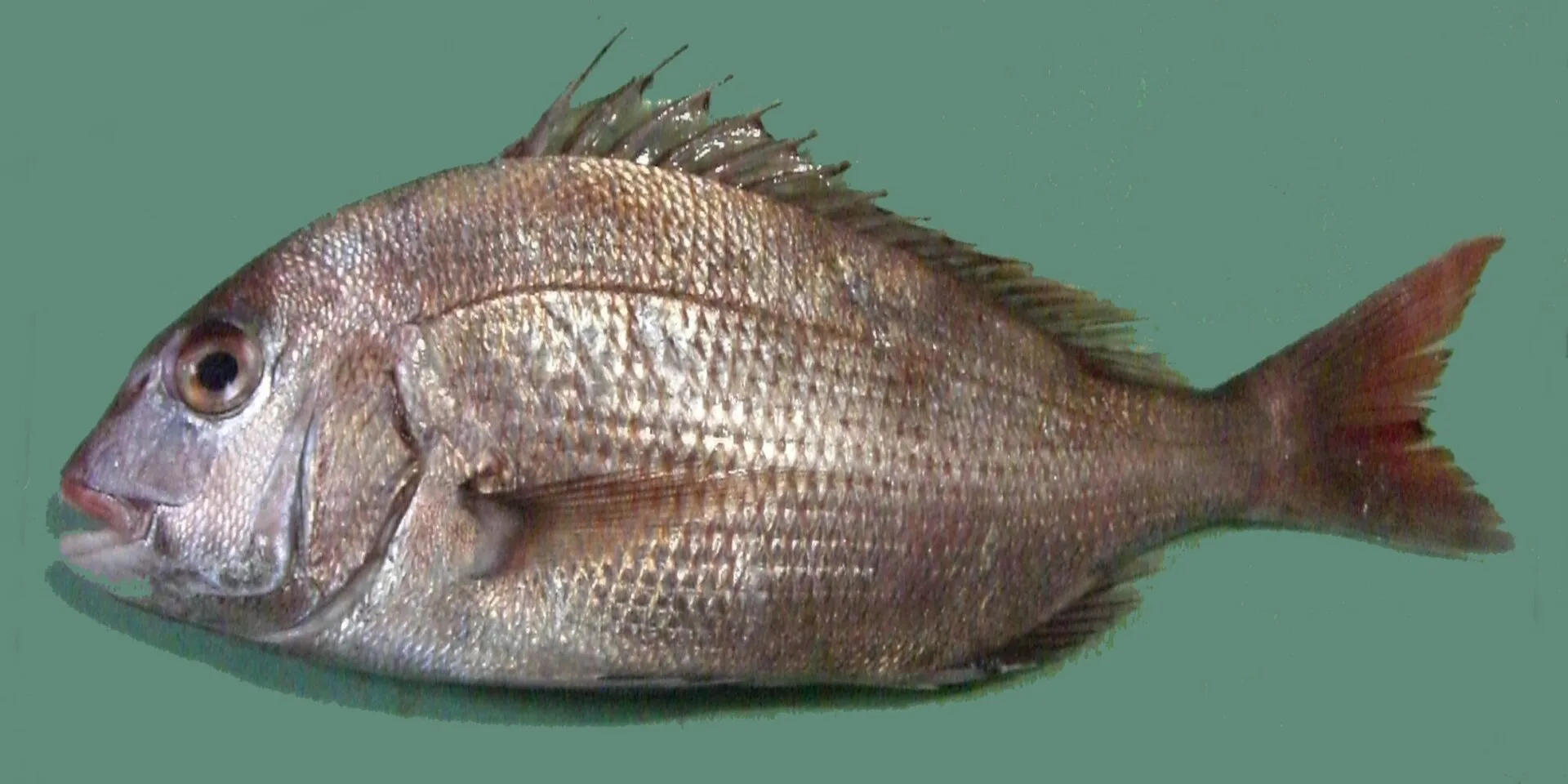
The Osaka Convention & Tourism Bureau describes the layout: counter seats are arranged around the chef, who stands in front of the cutting board. Customers can order what they want on the spot and have it cooked in front of them, rather than receiving dishes prepared earlier. Ordering is a conversation. The bureau's example is a chef pointing out good sea bream that day and offering to cook the head as well. Osaka Gastronomy and Culture adds that a kappo chef's skill came to be judged partly by the ability to tell, from that conversation, what a diner wanted, and to turn the request into a dish suited to that guest.
Osamu Ueno of Naniwa Kappo Kigawa, in Hozenji Yokocho in Osaka, told the same project that he was not used to cooking while talking with customers when he started, and that he still changes the seasoning to suit each guest. In the past, he says, the names of the day's ingredients were written on a shingle board, a thin strip of wood used in place of paper. Ueno also follows shimatsu no ryori, the Osaka principle of using an ingredient in full. A sea bream can be cooked with rice, served raw as sashimi, and have its scales and gills fried, with the rest used for stock.
KAPPO VS KAISEKI AND OMAKASE
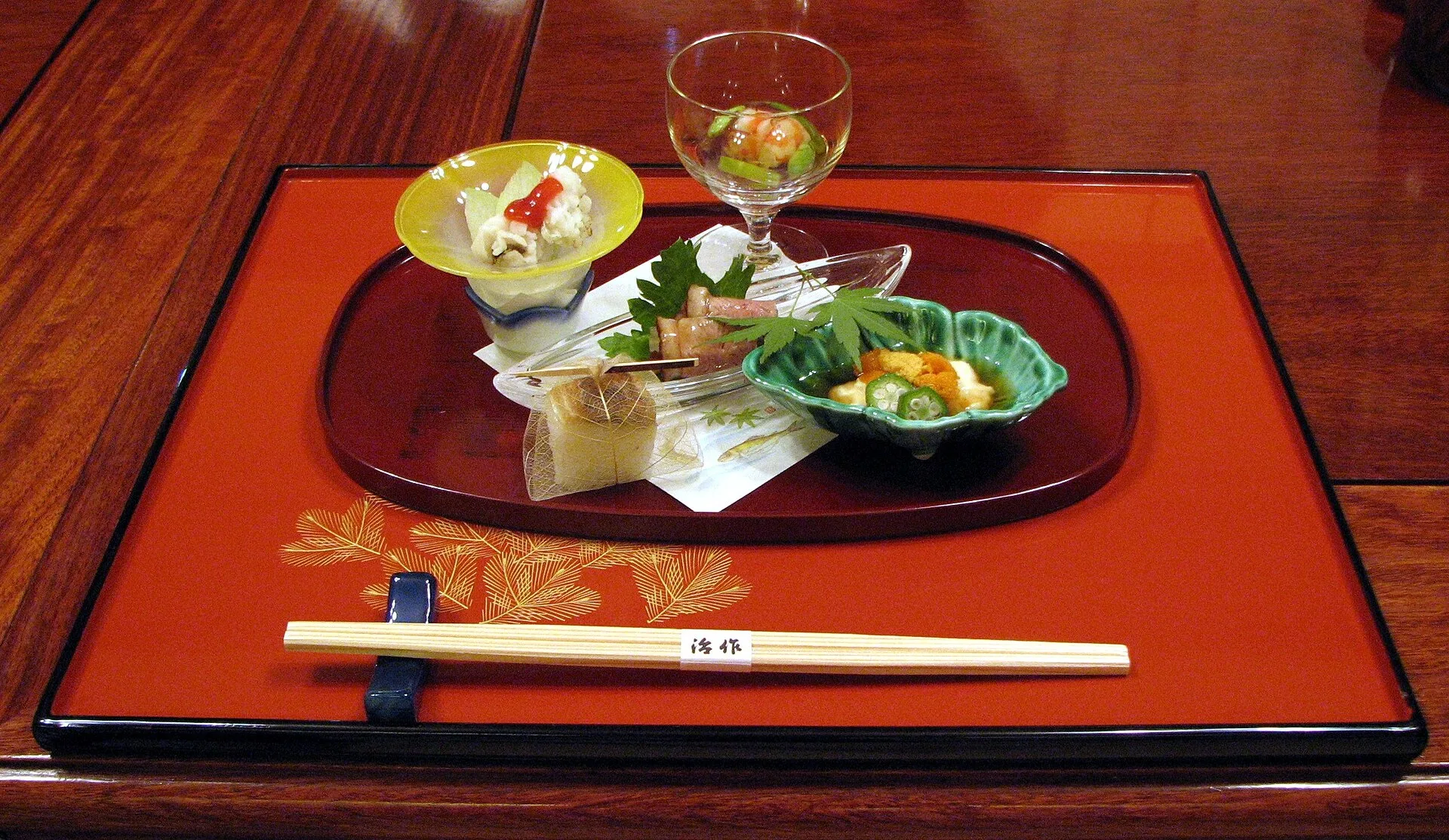
The comparison with kaiseki depends on which kaiseki is meant. Osaka Gastronomy and Culture separates Osaka's 会席, the banquet cuisine prepared days ahead for business entertaining, from 懐石, the kaiseki that grew out of tea culture in Kyoto. In Osaka's banquet form, dishes were prepared in advance, out of sight of the guests. Kappo differs in format: food is cut and cooked at the counter, the guest decides what to eat during the meal, and the chef adjusts each dish to the person in front of him.
Kappo is also distinct from omakase, in which the guest leaves the choice of dishes to the chef. Traditional kappo is ordered item by item: Hamasaku invites guests to order any dish in any quantity, and at Kappo Takohachi in Kyoto the MICHELIN Guide reports that the menu lists only ingredients, such as sea bream, squid and octopus, with the chef's recommendation part of the experience. The two formats now overlap. Osaka Gastronomy and Culture notes that kappo restaurants in Osaka now offer sit-down course meals in addition to counter seating, and that regular customers can eat menus a chef has prepared for them.
KAPPO RESTAURANTS IN KYOTO AND OSAKA TODAY

The MICHELIN Guide Kyoto Osaka includes kappo restaurants at several levels. In the 2026 edition, announced by Michelin on 24 April 2026, Muromachi Yui in Kyoto received two stars and is described as a kappo restaurant "dedicated to singular experiences through its cuisine and space". Sokkon Fujimoto, also in Kyoto, was promoted to one star as a kappo restaurant where meticulous attention is paid to every detail. The guide also lists Kappo Takohachi on Takoyakushi Street, which its inspectors say keeps the feel of mid-20th-century Japan. Its cooking is a legacy from the chef's father, and guests sit shoulder to shoulder at the counter while the owner couple work together behind it.
In Osaka the MICHELIN Guide lists Konishi, a counter-style kappo that operates inconspicuously at the back of a multi-tenant building. The inspectors describe the chef as devoted to his menu, and note that the counter, made of cypress and cherrywood, was built by the chef's elder brother, a carpenter. The chef comes from Ishikawa Prefecture, and the guide recommends sake from the same prefecture. A signature dish is finely chopped salted bell pepper heaped with katsuobushi, and tekkamaki, raw tuna and vinegared rice wrapped in seaweed, is a popular way to finish.
KAPPO AND COUNTER DINING OUTSIDE JAPAN
Both the Osaka Convention & Tourism Bureau and Osaka Gastronomy and Culture note that kappo restaurants can now be found overseas as well as in Japan. One example covered by the MICHELIN Guide is Esora on Mohamed Sultan Road in Singapore, which opened in August 2018 and was described by the guide as a modern kappo-style restaurant. It seated 26, nine of them at the chef's counter, in a space designed by Takenouchi Webb with a skywell covered in washi paper. Its chef-owner, Shigeru Koizumi from Tochigi, had worked for five years at Nihonryori RyuGin in Tokyo under Seiji Yamamoto before moving to Singapore in 2015.
Koizumi's menu followed the course format rather than item-by-item ordering. Diners received seven or nine courses chosen by the chef, always including a sashimi course and ending with a donabe claypot dish. The MICHELIN Guide's 2018 profile also records techniques such as kinmedai basted in oil at 62°C and finished on a charcoal grill, and desserts made with a Pacojet and liquid nitrogen. Koizumi described his approach as modernising Japanese cuisine while respecting tradition. He wanted closer contact with diners, sharing where his ingredients came from and the techniques he used.
STRAWFIRE AT EMIRATES PALACE MANDARIN ORIENTAL, ABU DHABI
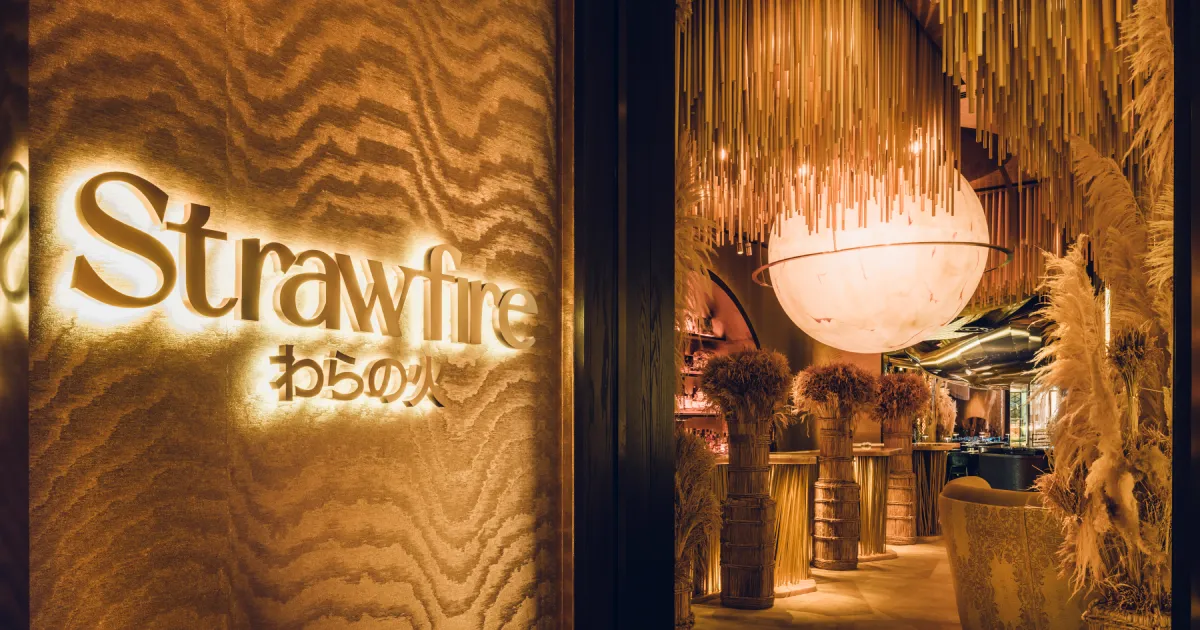
Strawfire is a Japanese restaurant by chef Ross Shonhan at Emirates Palace Mandarin Oriental in Abu Dhabi, and was completed in 2024. Its interior design is built around two subjects, one material and one cooking method: rice straw, known in Japanese as wara, and warayaki grilling. The colour palette follows the same pairing. Straw tones of cream, gold and mustard are set against fire tones of orange, gold and rust. In the booths, bales of straw stand up to 2 m high.
The restaurant has a warayaki counter set under a hand-beaten brass hood, which is fronted with faceted gold tiles. A back-lit kumiko screen shows the shadows of the chefs. Kappo, as it developed in Osaka from the late 1910s, moved the cook out of a hidden kitchen and onto a counter in front of the guest, and at Konishi in Osaka that counter is cypress and cherrywood made by a carpenter. At Strawfire the materials around the warayaki counter are brass and faceted gold tile, and the chefs are also visible in shadow on the back-lit kumiko screen.
SOURCES
- Osaka Convention & Tourism Bureau Kappo cuisine
- Google Arts & Culture / Osaka Gastronomy and Culture Kappō cuisine
- Google Arts & Culture / Osaka Gastronomy and Culture How Food Embodies the City: The "Naniwa" spirit in "Kappo" Cuisines
- Kotobank (Shogakukan, Heibonsha) 割烹 (kappo)
- Kotobank (Shogakukan, Heibonsha) 料亭 (ryotei)
- Honten Hamasaku Honten Hamasaku, Ginza
- Michelin MICHELIN Guide Kyoto Osaka 2026
- MICHELIN Guide Kappo Takohachi
- MICHELIN Guide Konishi
- MICHELIN Guide Chef Spotlight: Shigeru Koizumi of Esora