

RECORDS, SPEAKERS AND SILENCE IN JAPAN'S JAZZ CAFÉS
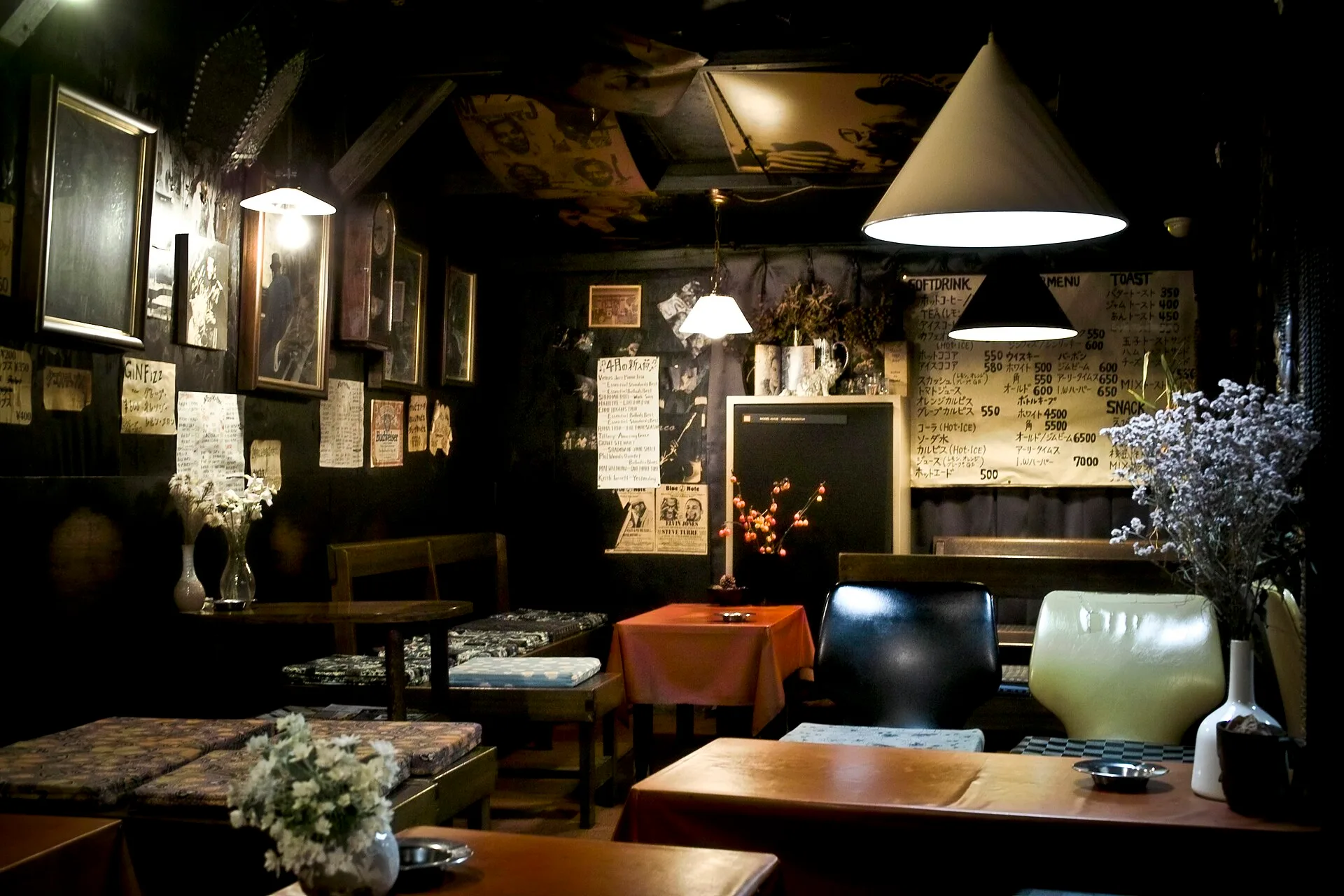
A jazz kissa is a Japanese café built around an extensive collection of jazz records and the high-end audio equipment used to play them, as The Japan News defines it. Customers come to listen, usually to records chosen by the owner and often in silence. Jazz kissa first appeared in Tokyo around 1929 and reached their peak in the 1960s and 1970s. In 2022 Harper's Magazine reported that around six hundred were still operating in Japan, a figure counted by the photographer Katsumasa Kusunose and a few other enthusiasts. Since about 2010 the format has been copied abroad under the name listening bar, with examples in New York, Berlin, Bielefeld and Buenos Aires.
WHAT IS A JAZZ KISSA?
Kissa is short for kissaten, the Japanese word for a tea or coffee shop. A jazz kissa serves coffee and often whisky, and some also serve cocktails, but the drinks come second to the records. David Novak, writing in the journal Popular Music in 2008, describes the master, or masutaa, who "usually owns and manages the kissa, and is often the sole employee". The master chooses the records, runs the equipment and serves the drinks. According to Stereophile, customers generally do not make requests, and Novak notes that requests tend to come only from valued long-term regulars.
The rooms are usually small. Novak quotes Yoshihide Otomo, who described a typical 1970s jazz kissa as a space of 2.5 by 6 metres, for which a pair of large JBL or Altec speakers, a couple of hundred jazz records and a bar counter were all that was needed. Harper's Magazine compares the average jazz café to a living room, notes that a few hold around fifty people, and describes dim lighting, a great deal of wood and older-looking audio equipment. Customers keep their voices low and drink coffee or alcohol, and some read books or comics while the records play.
WHERE DID JAZZ KISSA COME FROM?
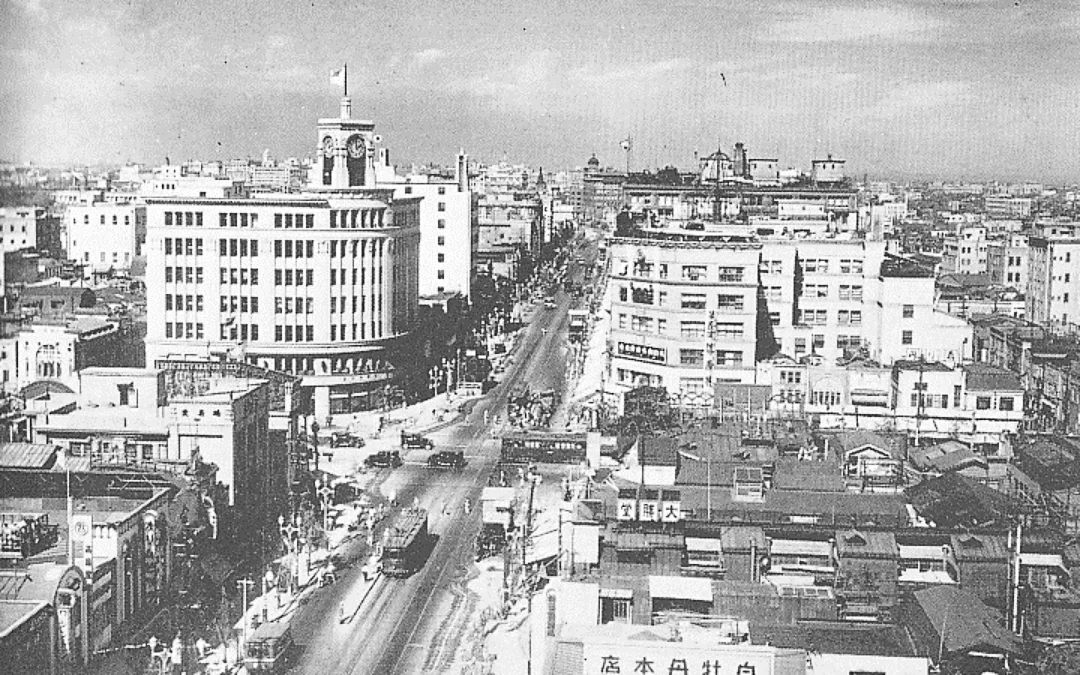
Japan's music cafés began in the 1920s with the meikyoku kissaten, where, Novak writes, customers listened to Western classical music in the company of female hostesses. Stereophile notes that one of the earliest literary appearances of such cafés is in Jun'ichirō Tanizaki's novel Naomi, which depicts cafés in Ginza, and that early establishments often opened near university campuses and served educated, Westernised young people. By the mid-1930s, according to Novak, there were 40,000 cafés across the country, and jazz had become the default music of the urban kissa.
VOA dates Japanese coffee shops catering to jazz fans to the late 1920s, and The Japan News places the first jazz kissa in Tokyo around 1929. The oldest is in Yokohama. Chigusa was opened in 1933 in the city's Noge district by Mamoru Yoshida, who was 20 at the time and, Time Out Tokyo reports, wanted the café to be a place for musicians. The Japan Times calls it Japan's oldest jazz café and explains that the name, meaning "autumn grasses", was already the name of the business on the property when Yoshida acquired it.
THE POST-WAR BOOM IN TOKYO
Jazz kissa became a fixture of post-war city life because records were hard to come by. In the 1950s and early 1960s, Novak writes, foreign jazz records were scarce, and listening collectively at a kissa was "the only affordable way" to keep up with new releases. VOA reports that an imported jazz album cost about one tenth of an average professional's monthly salary. Some owners wrote directly to dealers in the United States and had new releases sent to them by airmail. Live jazz from abroad was also rare: The Japan News notes that it was still difficult to bring jazz musicians to Japan from the US, so fans went to the kissa to hear recordings instead.
Two Tokyo survivors date from the 1960s. New Dug in Shinjuku, owned by the jazz photographer Hozumi Nakadaira, opened in 1961 under the name Dig. Stereophile notes that Haruki Murakami's 1987 novel Norwegian Wood, set in late-1960s Tokyo, includes a scene at Dug, and that Murakami worked at Old Blind Cat, a jazz kissa nearby, in the late 1970s. Eagle opened in 1967 in Yotsuya, near Sophia University, started by its owner, Goto, while he was a university student. Michael Molasky of Hitotsubashi University told VOA that knowledge of jazz was once "a rite of passage" among intellectuals and writers.
LISTENING RULES: SILENCE, SURCHARGES AND FULL LP SIDES
The rules of a jazz kissa were set by the master and the records. "Silence is often mandatory," Novak writes, as listeners sit over their blend coffees and whiskies. A substantial surcharge on drinks ensured that the few seats in these small rooms were not taken casually, and customers who had paid stayed as long as they could. It was standard practice to play one entire side of an LP at a time, so an evening's listening progressed in 20-minute "lessons".
Eagle's owner told VOA, "You are not allowed to talk," and described the café as a library of music. Stereophile, visiting more recently, reports that Eagle allows no talking until 6pm, and that in most kissa the hushed atmosphere means quiet rarely has to be enforced. At New Dug, Nakadaira recalled to VOA, customers could once stay as long as three hours on a single cup of coffee. Stereophile also describes regulars forming a community beyond the room, meeting to see live jazz and attending talks by critics and music experts.
SPEAKERS, VACUUM TUBES AND JAPANESE AUDIO CULTURE

The equipment in many jazz kissa came out of Japan's cinemas. Harper's Magazine reports that, faced with a weak post-war economy, music lovers in Japan preferred to repurpose equipment rather than buy it new. In the late 1950s and early 1960s, Japanese movie houses gradually upgraded to locally made professional audio, and the older equipment passed through surplus shops into listening rooms and jazz cafés. Japanese magazines such as MJ began to document this community of horn speakers and valve amplifiers, publishing schematics and photographs. The older cinema technology was American: Western Electric designed the Vitaphone sound system in 1926, using a compression driver called the Western Electric 555, and its speaker division later became Altec.
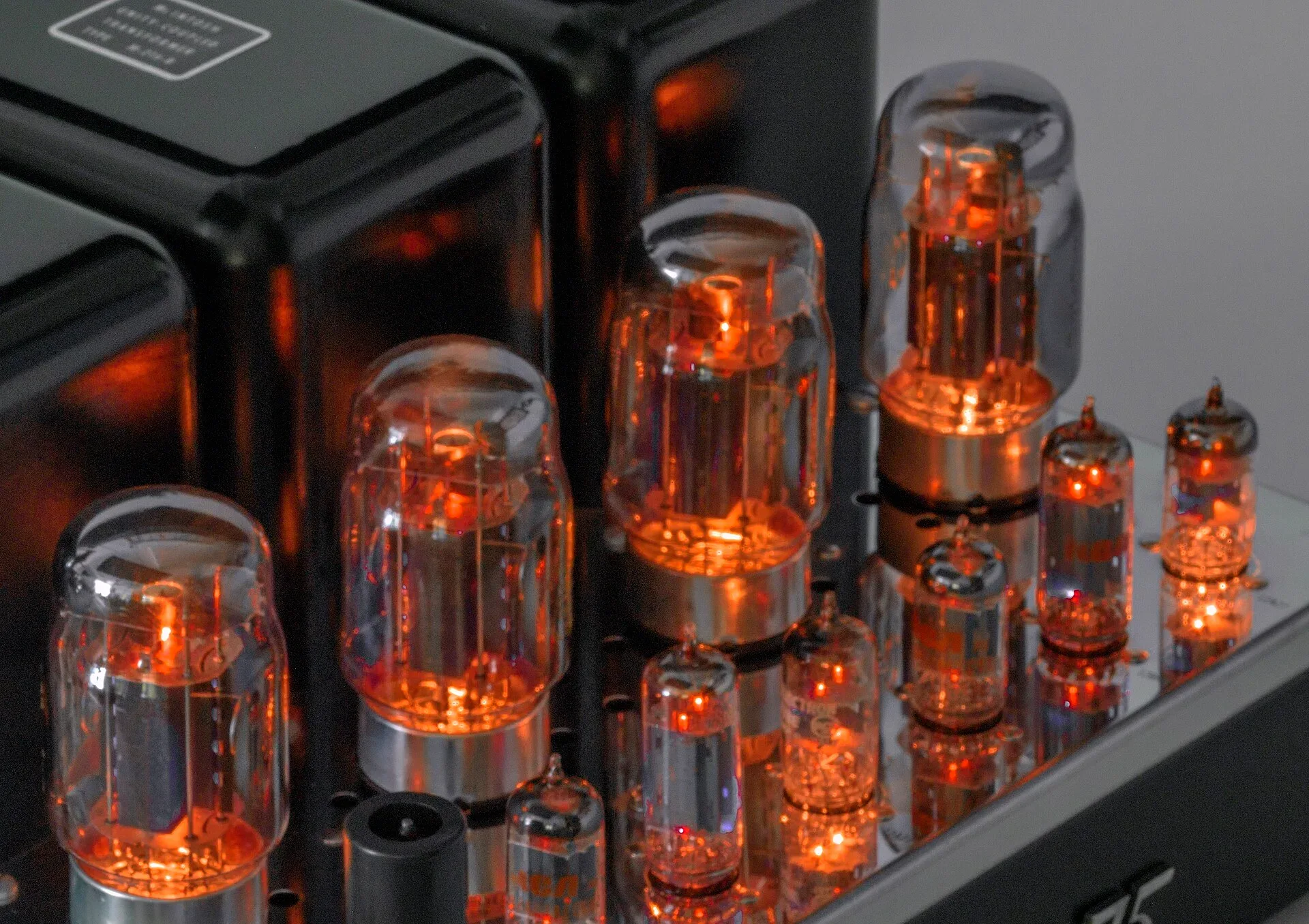
Horn speakers are efficient, moving air with very little movement of the diaphragm, which in a compression driver is a thin sheet of metal. Harper's describes them being driven by low-powered amplifiers using single-ended triode vacuum tubes, "the oldest and simplest of their kind". VOA notes that 1970s jazz magazines advertised kissa by their collections of 5,000 to 10,000 LPs and by the exact woofers and tweeters installed. Eagle's current system, as listed by Stereophile, includes wall-mounted JBL 4344 MKII monitors, an Accuphase C-280V preamplifier, a Mark Levinson No.23.5L power amplifier and two Yamaha GT-2000 turntables with Denon 103 cartridges.
CHIGUSA IN YOKOHAMA AND BASIE IN ICHINOSEKI

Chigusa's later history shows how the oldest jazz kissa have been kept open. After Mamoru Yoshida died in 1994, aged 81, his sister Takako took over the business. In 2007 she sold the café to land developers and it closed. Its regulars, together with the Yokohama Jazz Association, applied for a subsidy and reopened Chigusa in 2012 near its original site, with about 3,000 jazz records. In March 2022 Time Out Tokyo reported that the café would close on 10 April for renovation and was expected to reopen in 2023 as a two-storey museum and live music venue, displaying rare vinyl alongside the same tables, chairs and posters the café had used for decades.
Basie, in Ichinoseki, Iwate Prefecture, was opened in 1970 by Sugawara, a Waseda University graduate where he had played in a big band called the High Society Orchestra. According to Nippon.com, he converted an earthen warehouse on the grounds of his family home into the café and named it after the bandleader Count Basie (1904 to 1984). Basie himself was drawn by rumours of the venue's sound and gave Sugawara the nickname "Swifty". The room is dominated by JBL speakers in custom cases, part of an audio system Sugawara has put together over the years. The café has passed 50 years in business, and Tetsuya Hoshino's 104-minute documentary about it features the conductor Seiji Ozawa, the saxophonist Sadao Watanabe and the architect Tadao Ando.
FROM JAZZ KISSA TO THE GLOBAL LISTENING BAR
In Japan many jazz kissa gradually became listening bars that play other genres as well. The Japan News reported in 2022 that the overseas listening bar movement began around 2010, when foreign musicians touring Japan visited such bars and discussed them on social media. Katsumasa Kusunose, an editor who has photographed jazz kissa since 2014, estimated that at least 50 had opened worldwide in the previous decade. They include Eavesdrop in New York, whose owner, Dan Wissinger, learned about jazz kissa on YouTube, and owls bar in Bielefeld, Germany, opened by Laurin Joel Schafhausen in July 2021. Overseas venues tend to be larger than Japanese ones, with substantial investment in equipment and interiors.
Monocle, describing the Tokyo model as one where "vinyl comes first and conversation second", reported in 2019 that the success of audiophile clubs from London's Spiritland to Hong Kong's Potato Head had encouraged entrepreneurs to export it. Black Forest, which Monocle called the first listening bar in Argentina, opened in 2018 in Buenos Aires, sharing space with the Falena bookshop in Chacarita, with Altec Lansing speakers and McIntosh amplifiers sourced from an analogue equipment restorer. Rhinoçéros in Berlin plays from a collection of 800 jazz records on two wooden Bowers & Wilkins speakers from 1976, a 1981 Micro Seiki turntable and an early 1970s Quad amplifier. Public Records in New York occupies a red-brick building of 1912 opposite the Gowanus Canal pumphouse.
NETSU AT MANDARIN ORIENTAL JUMEIRA, DUBAI

A jazz kissa is organised around listening: a small room, a pair of large speakers and a master choosing the records. Netsu, a Japanese robata restaurant by chef Ross Shonhan at Mandarin Oriental Jumeira, Dubai, is organised around watching. Silverfox Studios completed its interior in 2019 on the concept of a double-height kabuki theatre. The robata grill is the central stage, and guests watch from several levels. A raised walkway leading from the back kitchen recalls the hanamichi of the kabuki theatre.
The theatre references continue on the surfaces and outside. Graphics in the style of 1950s kabuki posters are applied to the columns and to a wall. On the exterior, horizontal recessed lighting references the tiered seating of a theatre. Where Otomo's typical jazz kissa was a single room of 2.5 by 6 metres, Netsu is a double-height space, with the robata grill at its centre, guests watching from several levels, and an upper level that holds a bar and a DJ lounge.
SOURCES
- Popular Music (Cambridge University Press), via eScholarship David Novak, "2.5 x 6 metres of space: Japanese music coffeehouses and experimental practices of listening" (2008)
- The Japan News (Yomiuri), via Honolulu Star-Advertiser Listening bars around the world influenced by jazz kissa culture
- Harper's Magazine Corner, club, cathedral, cocoon: audiophilia and its discontents
- VOA Digital Age Survivors, Japan's Jazz Cafés Still Attract Fans
- Stereophile Brilliant Corners #23: Japanese Kissaten
- The Japan Times Legendary Chigusa jazz cafe reborn
- Time Out Tokyo Japan's oldest jazz café is closing soon and becoming a museum
- Nippon.com Jazz Café Basie: The Ballad of Swifty
- Monocle High fidelity


