HAINANESE COFFEE SHOPS, BUTTER-ROASTED KOPI AND THE NANYANG BREAKFAST

A kopitiam is a traditional coffee shop of Singapore and Malaysia, and the word joins two languages: kopi is Malay for coffee and tiam is Hokkien for shop. Its standard order is what Singapore's National Heritage Board records as the traditional breakfast of kaya and kopi: kaya, an egg jam made with coconut milk and sugar, on charcoal-grilled toast, served with two soft-boiled eggs and Hainanese-style coffee or tea. The board added the breakfast to its intangible cultural heritage inventory in March 2019 and notes that it is also called the "Nanyang" breakfast, from the Mandarin term for the "South Sea" often used for Southeast Asia. Many of the coffee shops that serve it were traditionally run by people of Hainanese descent.
WHO WERE THE HAINANESE BEHIND THE KOPITIAM?

Traders from Hainan were in Singapore as early as 1821, trading goods such as wax, tiles and umbrellas, according to the National Library Board's Infopedia. The community's main association and its Tin Hou Kong temple were built at 6 Malabar Street in 1857 and moved to Beach Road in 1878. Large-scale emigration came later, because Hainan opened late to foreign trade and its seafaring grew only after Hankou became a treaty port in 1870. The Hainanese therefore arrived after the Hokkien, Teochew and Cantonese, who were already established in agriculture, commerce and trade. As a small group without business contacts or a dialect the others understood, they settled in enclaves around Middle Road and Beach Road, Bukit Timah and Tanglin Road, and Changi and Nee Soon.
Their opening was the service sector. Infopedia lists work as cook boys, waiters and servants in hotels, restaurants, bakeries and bars, as cooks and domestic servants in wealthy European and Peranakan households, and as seamen and shipboard chefs. A 2010 BiblioAsia study of Chinese dialect occupations by the National Library librarian Jaclyn Teo describes how a British family might hire a Hainanese couple, with the husband as cook and butler and the wife as housekeeper, and says this work gave the community skills in Western food and Nyonya cuisine. The same niche produced one of Singapore's best-known drinks: Ngiam Tong Boon, a Hainanese bartender at the Raffles Hotel, is credited with creating the Singapore Sling in 1915.
HOW HAINANESE COFFEE STALLS BECAME THE KOPITIAM
Teo records that the Hainanese ran coffee stalls and coffee shops around Beach Road and Seah Street and dominated the trade until the 1930s, drawn by low start-up costs: a stall needed only a few pieces of furniture by the roadside. When shophouse rents fell during the Depression, they moved indoors into shophouses. Their dominance then waned, and from the 1930s the Foochows took over the coffee shop trade. Teo, citing earlier research, attributes the Foochow success to bigger ventures, closer cooperation and a greater willingness to take bank loans. The National Museum of Singapore's catalogue dates the Hainanese-owned kopitiam to the 1930s and describes it as a place dominated by men, where Chinese bachelors gathered for breakfast, often still in their pyjamas.
The menu was simple: toast, eggs and a choice of coffee, tea or soft drinks. Low Sze Wee, chief executive of the Singapore Chinese Cultural Centre, writes in BiblioAsia that after 1945 some Hainanese who had lost these jobs started kopitiams serving food and drink similar to that of their former employers' homes, such as eggs with toast and coffee or tea. The Heritage Board places the period in which the Hainanese built their niche, expanded their businesses and popularised kopitiam culture between the 1920s and the 1950s, and notes that people of other ethnicities and dialect groups entered the trade over time.
HOW IS KOPI MADE? BUTTER, MARGARINE AND THE COFFEE SOCK

The National Museum's catalogue describes kopitiam beans roasted with large amounts of butter and sugar in a big cylindrical drum, turned mechanically over a wood fire. The Heritage Board gives a traditional ratio of 8 parts beans to 2 parts sugar and margarine, roasted for 25 minutes at 180°C, with salt added midway and sugar added at the end for a caramelised finish and less bitterness. It links this roasting style to Portugal and Spain and notes that methods vary between coffee shops. The MICHELIN Guide describes traditional Nanyang kopi as Robusta beans roasted with sugar, margarine and a hint of salt. At Ah Seng (Hai Nam) Coffee, founded by Wong Lu Shen, the Heritage Board records that coffee is still roasted for the shop, though no longer on site.
Brewing relies on a cloth filter. The Heritage Board describes kopi or tea powder poured through a muslin bag and stirred with a stick or long chopsticks, after which the brew is poured back and forth between two large enamel jugs with long spouts to aerate and cool it. The MICHELIN Guide calls the filter a sock and the method hand-pulling. Tea, usually Ceylon tea, is prepared the same way and is as much a staple of the Nanyang breakfast as kopi. The Hainanese are generally considered to brew the best coffee in Southeast Asian kopitiams, according to Infopedia.
KOPI-O, KOPI-C AND KOPI PENG: HOW TO ORDER IN A KOPITIAM
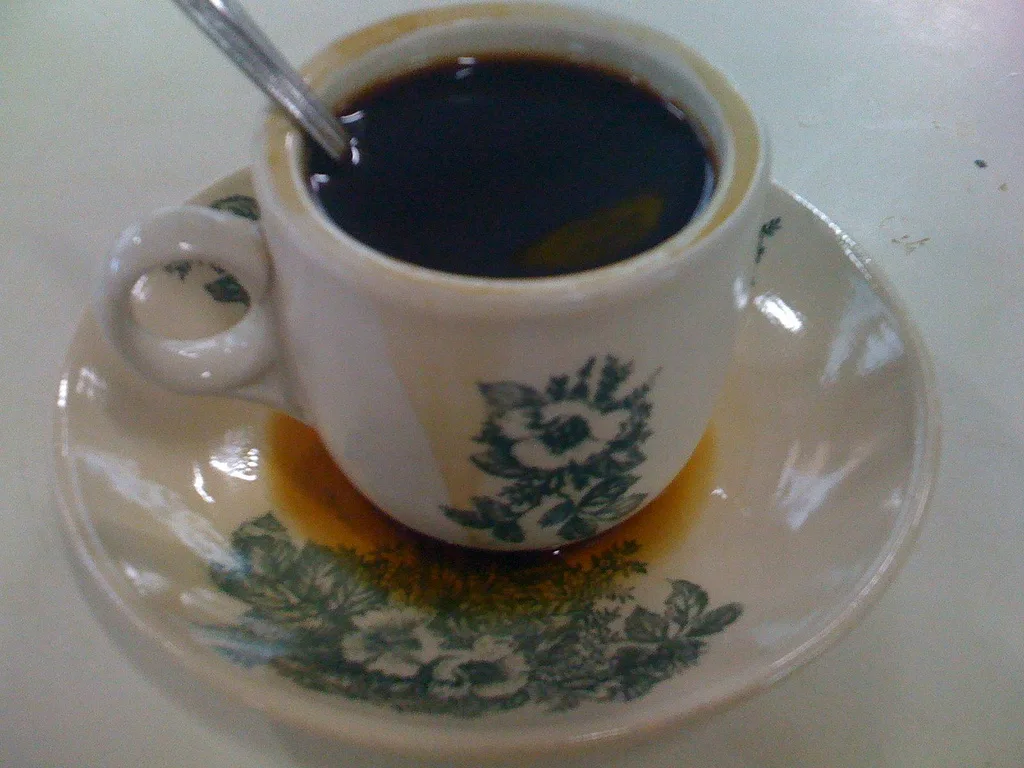
Coffee and tea in the early kopitiam were sweetened with sugar and condensed milk, and orders still use a short vocabulary to change that mix. Kopi-O is black coffee. Kopi-C is made with evaporated milk instead of condensed milk, and the MICHELIN Guide links the letter C to the Carnation brand. Siu dai asks for less sugar and kosong for none, while peng means iced, so kopi peng is iced kopi. Kopi gu you is coffee with butter. Tea follows the same pattern: teh is milk tea and teh-O is black tea.
The National Museum of Singapore holds a 1960s kopitiam cup and saucer decorated with the words "Selamat Menom", which its catalogue translates as happy drinking. Drinks were served in thick porcelain cups and saucers, some with floral prints and others with the logos of tea and coffee suppliers, and some saucers carried a supplier's telephone number. Customers often poured hot coffee into the saucer to cool it and drank from there, and the museum notes that a spittoon stood under every table. The Heritage Board records that many kopitiams have since replaced ceramic cups with glass ones, and that the preparation of food and drinks has changed since the 1980s.
WHAT IS KAYA TOAST? COCONUT JAM, CHARCOAL AND SOFT-BOILED EGGS
Kaya is a coconut jam made from coconut cream, sugar and eggs. The food historian Khir Johari, quoted by the MICHELIN Guide, places its origin in Malay cuisine, within serikaya, a wider family of egg-based coconut cream confections. Two styles are common. Nyonya, or Peranakan, kaya is green from pandan leaves, while Hainanese kaya is brown from caramelised sugar. Low writes that because strawberries for jam were not readily available, the Hainanese, like the Peranakan Chinese, made kaya with coconut milk, eggs and pandan leaves, and that kaya toast was served in Hainanese-run kopitiams in early Singapore and remains a breakfast staple today.
The Heritage Board describes locally made bread with the crusts removed, toasted over charcoal and spread with margarine and kaya, though many stalls now use electric grills. The MICHELIN Guide describes thin white bread toasted on a grill and sandwiched with butter and Hainanese kaya at The 1950s Coffee in Chinatown Complex Market & Food Centre. The eggs are soft-boiled, with tender whites and runny yolks. Low notes that the Hainanese drizzled dark soy sauce over them instead of using salt and pepper. Diners now season the eggs with white pepper and dark soy sauce, crack them open themselves and dip the toast into them.
OLD KOPITIAMS IN SINGAPORE: MARBLE-TOPPED TABLES AND CHARCOAL KAYA

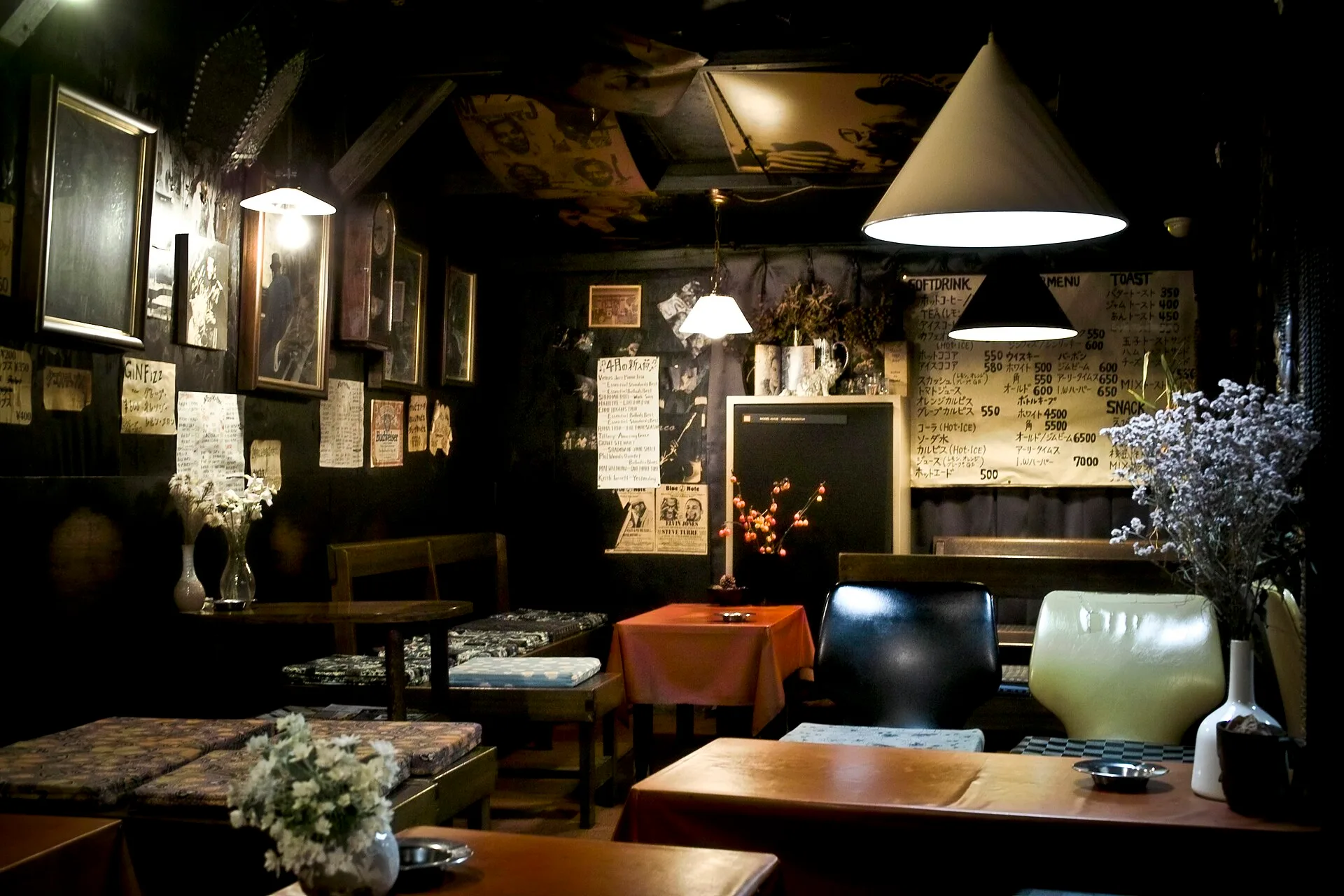
Infopedia's entry on Chin Mee Chin Confectionery at 204 East Coast Road in Katong, with information valid as of January 2018, records that the shop opened in 1925 after starting as a bread delivery business run by Tan Hui Dong. His eldest son, Tan Joon Ling, bought the premises from their original Peranakan owners in the early 1950s. The entry describes ceiling fans and marble-top tables typical of 1950s coffee shops, green floor tiles, bread baked on the premises, kaya made over slow-burning charcoal, and coffee beans the shop once roasted itself. The Heritage Board notes that some kopitiams keep this traditional look of marble-topped tables and antique wooden chairs, while others use plastic tables and chairs.
Killiney Kopitiam traces its history to Kheng Hoe Heng Coffeeshop, opened in late 1919 at 67 Killiney Road by the Hainanese Foo family. In 1992 the former broker Woon Tek Seng bought the shop for S$800,000 and renamed it Killiney Kopitiam, and three key Hainanese staff from the original shop stayed on to assist him. The Killiney Road branch was listed in the Singapore Book of Records 2008 as the oldest existing Hainanese coffee shop, and its kaya is made daily from eggs, coconut milk, sugar and pandan leaves. Killiney opened its first overseas branch in Kuala Lumpur in 2001. Ya Kun Kaya Toast, founded by Loi Ah Koon in 1944, also grew into a franchise.
KOPITIAM HISTORY IN KUALA LUMPUR AND IPOH

Malaysia's kopitiams share these roots. A 2024 report by the online publication RADII traces them to Chinese immigrants of the late 19th and early 20th centuries, many of whom worked in tin mines, on rubber plantations or as traders before opening small businesses. The Hainanese, who arrived mainly in the late 1800s and early 1900s, worked as cooks or helpers in British households before starting their own. By the early 1960s, kopitiams were gathering places where an affordable meal was soft-boiled eggs, toast and black coffee. In Kuala Lumpur, Yut Kee, a Hainanese kopitiam founded downtown in 1928, is known for roti babi and Hainanese chicken chop.
Ipoh, the capital of Perak and once a tin-mining hub, gave its name to white coffee. Going Places, the Malaysia Airlines magazine, reports that in the early 20th century Hainanese migrants roasted robusta beans with margarine to soften the bitterness and added condensed milk for creaminess and a lighter colour. Kedai Kopi Sin Yoon Loong at 15A Jalan Bandar Timah was founded in 1937 by the brothers Wong Poh Chew and Wong Poh Ting, and Wong Shin Ee, of the fourth generation, says the shop roasts Arabica and Liberica with sugar and margarine. Kedai Makanan Nam Heong, at 2 Jalan Bandar Timah, has been run by the Goh family for 67 years. OldTown, launched in 1999 by four friends, turned white coffee into powdered mixes exported to more than 25 international markets.
HYATT CENTRIC CITY CENTRE KUALA LUMPUR

Kuala Lumpur's kopitiam history includes Yut Kee, the Hainanese coffee shop founded in the city in 1928, and the first overseas branch of Singapore's Killiney Kopitiam, which opened there in 2001. In the same city, Hyatt Centric City Centre Kuala Lumpur was completed in 2024 in a repurposed 22-storey building, and Silverfox Studios designed the interiors of the whole tower. The project's design influences are graffiti, batik and tin mining. Tin mining is also the industry of Ipoh, the former tin-mining hub where Hainanese migrants of the early 20th century roasted robusta with margarine and added condensed milk to make white coffee.
In the hotel, batik informs pattern, print, colour and layered finishes, and the floors carry leaf-patterned carpets and hand-tufted rugs that evoke reflected water. The materials of the older coffee shops described earlier were marble-topped tables, antique wooden chairs, ceiling fans, green floor tiles and thick porcelain cups printed with flowers or with the logos of coffee and tea suppliers. Graffiti, batik and tin mining are the three influences named for the Kuala Lumpur tower, which Silverfox Studios designed in full.
SOURCES
- Roots, National Heritage Board Singapore Traditional Breakfast of Kaya and Kopi
- Roots, National Heritage Board Singapore Kopitiam cup and saucer, National Museum of Singapore collection
- Singapore Infopedia, National Library Board Hainanese community
- BiblioAsia, National Library Board Chinese Dialect Groups and Their Occupations in 19th- and Early 20th-Century Singapore
- BiblioAsia, National Library Board We Are What We Eat: The Evolution of Chinese Food in Singapore
- MICHELIN Guide The Anatomy of the Quintessential Singaporean Breakfast: Kaya Toast, Eggs, and Kopi
- Singapore Infopedia, National Library Board Chin Mee Chin Confectionery
- Singapore Infopedia, National Library Board Killiney Kopitiam
- RADII Malaysia's Traditional Coffee Shops Are Modernizing
- Going Places, Malaysia Airlines Malaysia icon: Ipoh white coffee