THE BABA AND NYONYA HOUSEHOLD FROM PINTU PAGAR TO BEADED SLIPPERS
Peranakan style is the material culture of the Peranakan Chinese, also called Straits Chinese, whose households in Singapore, Penang and Malacca combined Chinese, Malay and European elements. In wealthy homes around the turn of the 20th century it ran through the whole house: carved and gilded half doors at the entrance, floor-to-ceiling gilt-edged screens, blackwood furniture inlaid with mother-of-pearl and made to order in China, and enamelled porcelain on pink and green grounds from Jingdezhen, known as nyonyaware. Dress added the embroidered kebaya pinned with the kerosang, a set of three linked brooches, and slippers beaded by hand. Collections and restored houses can be seen at the Peranakan Museum on Armenian Street and NUS Baba House at 157 Neil Road in Singapore, and at the Pinang Peranakan Mansion in George Town, Penang.
WHO ARE THE PERANAKAN CHINESE?
In Indonesian and Malay, peranakan refers to the womb, or to someone born of a mixed marriage between a local and a foreigner, and the National Library Board's Infopedia notes that not all Peranakans are of Chinese descent. Peranakan men are called baba and women nonya or nyonya. Many Singapore Peranakans trace their origins to 15th-century Malacca, where their ancestors are thought to have been Chinese traders who married local women. Infopedia adds that the community's precise origins are hard to pin down, and that such marriages took place only up to the mid-19th century, a period when women in China did not migrate overseas.
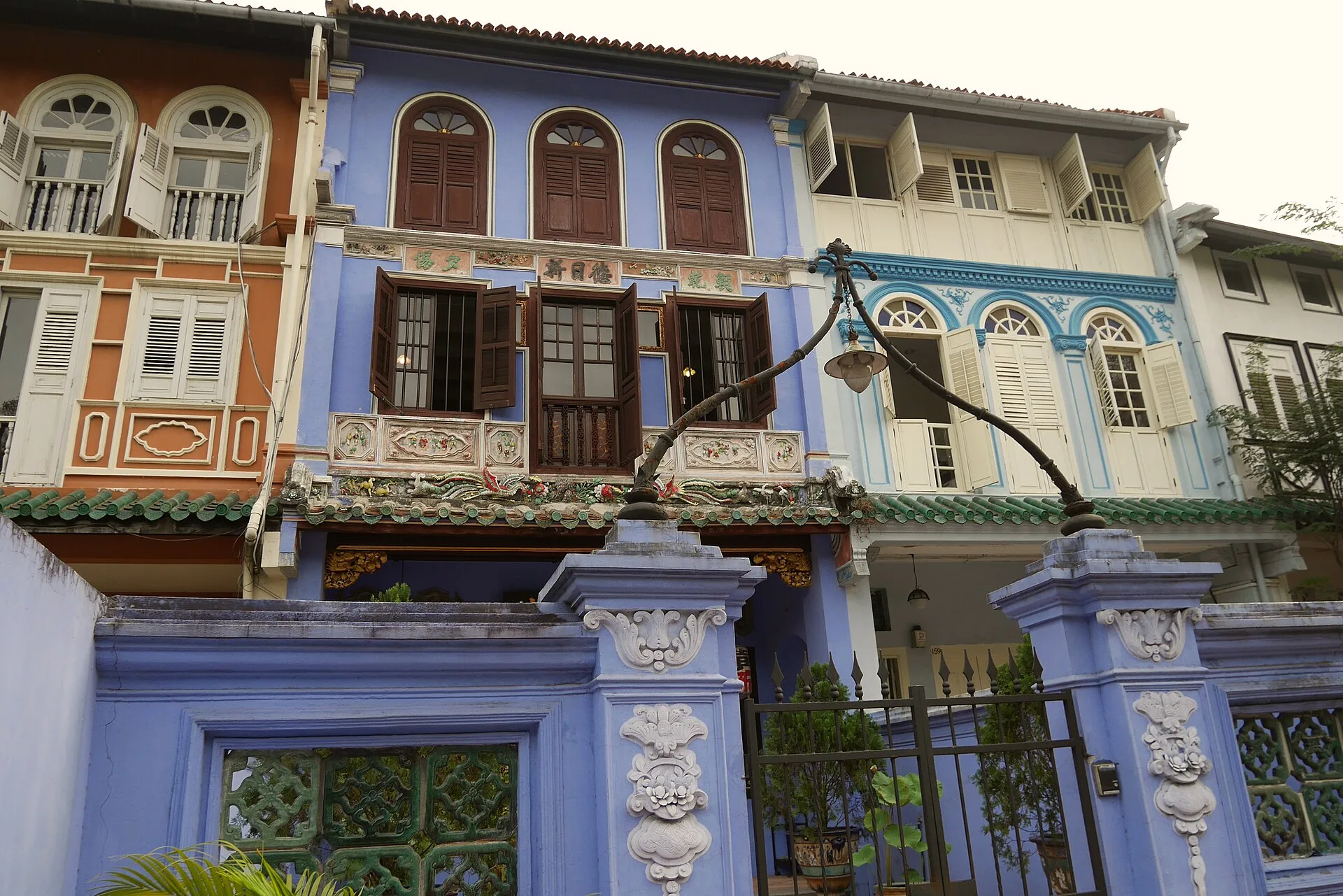
From the second half of the 19th century to the mid-20th century, Peranakans were also known as Straits Chinese, because most were born in the Straits Settlements of Singapore, Penang and Malacca, which became a Crown colony in 1867. They spoke baba Malay, a patois of Malay with many Hokkien words and phrases, alongside English. In Singapore, many wealthy families lived around Neil Road and Tanjong Pagar until the 1920s and 1930s, when a number of them moved east to Katong and Joo Chiat; Peranakan influence shows in the house facades of Koon Seng Road there. Others settled on Emerald Hill around the turn of the 20th century, in an area now part of the conservation area known as Peranakan Place.
WHAT IS PERANAKAN STYLE IN THE SHOPHOUSE HOME?

SIIINGAPORE magazine, published by the Singapore International Foundation, describes NUS Baba House at 157 Neil Road as one of the last preserved traditional Peranakan houses. It was built in the 1890s as a three-storey townhouse for the descendants of Wee Bin, a Straits Chinese shipping owner whose fleet of 20 vessels served the Chinese and Dutch Indies trade. The house stands in the Blair Plain conservation area, gazetted by the Urban Redevelopment Authority in 1991. Its entrance carries intricate friezes, a ceramic appliqué phoenix, a re-gilded dragon-head bracket and a pair of pintu pagar, the ornamental wooden half doors of the Peranakan home.
A pintu pagar in the Peranakan Museum, made in Singapore in the late 19th or early 20th century from teak and glass, is carved and gilded on both sides with a mix of Chinese and European motifs. The museum explains that the half-height door provided ventilation, security and privacy, and that finely carved gates signalled a family's wealth. Inside Baba House, floor-to-ceiling gilt-edged screens and partitions divide the foyer and the hall has finely carved lintel frames; guides point out the placing of mirrors and pathways, which are said to confuse evil spirits.
Baba House is one of the few remaining terrace houses in Singapore with a high degree of Chinese-style plaster relief, huisu, and porcelain ornament, qianci, on its facade, and its cantilevered roofs are laid with Chinese roof tiles, a southern Chinese feature. The Ancestral Hall has Art Nouveau Peranakan tiles with floral motifs from England and Japan. The Peranakan Museum notes that Peranakan homes ranged from attap houses and shophouses to villas and HDB flats, and that their furnishings were mostly bought in the markets of port cities.
BLACKWOOD, MOTHER-OF-PEARL AND THE ANCESTRAL ALTAR

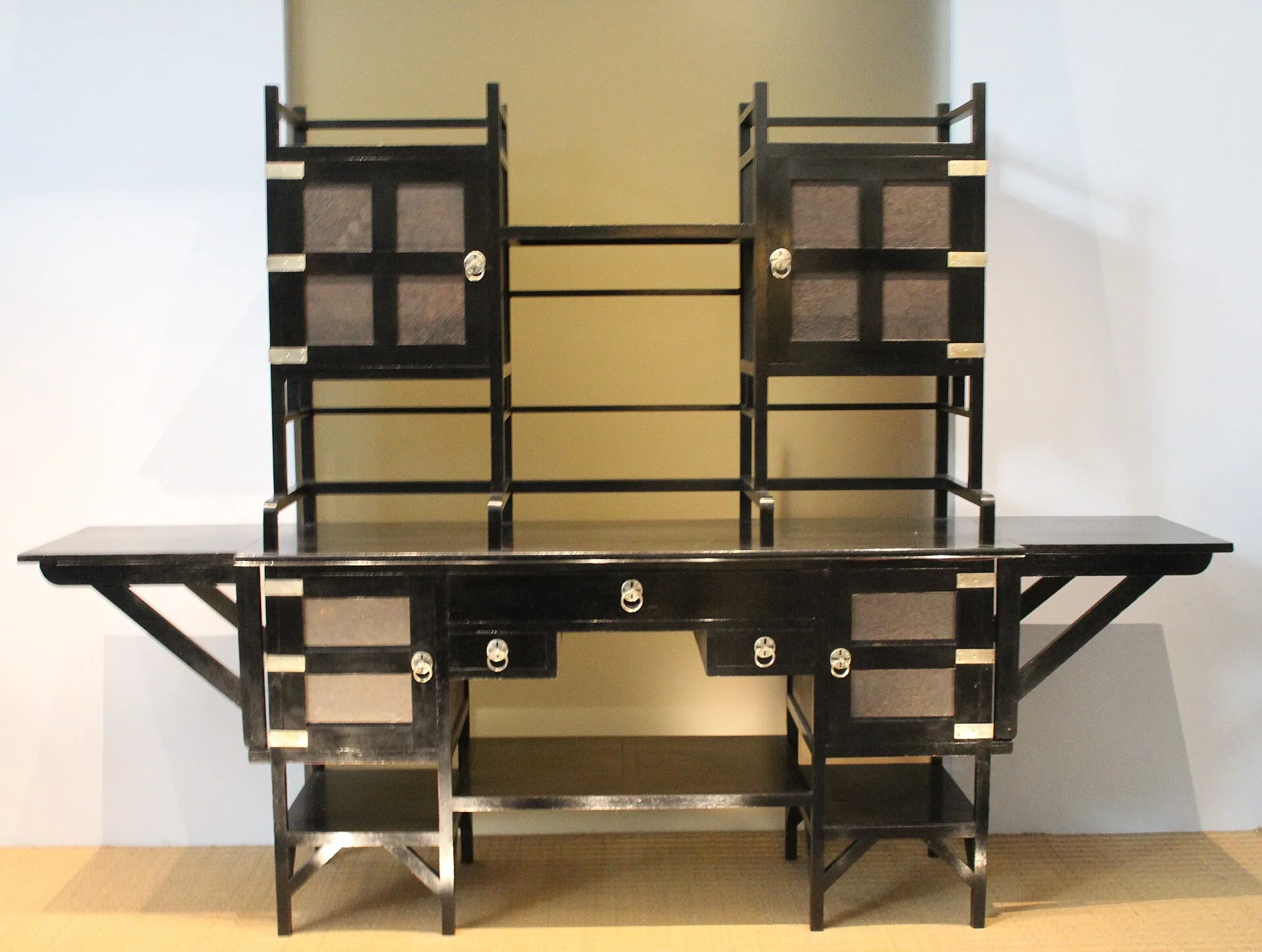
A blackwood bench in the Asian Civilisations Museum, 189 centimetres wide and 107.5 centimetres high and decorated with inlaid mother-of-pearl, is catalogued as the kind of furniture found in the homes of wealthy Peranakans in Penang around 1900. The museum records that, although the bench reflects Peranakan taste, it was specially made to order in China. Furniture in the Peranakan Museum also came from closer to home: a teak sideboard made in Malacca in the early 20th century stood in Rosedale, 148 Killiney Road, the Singapore house of Tan Jin Hoe, a tennis and music pioneer and agent of the Mercantile Bank of India.
Peranakan homes kept ancestral and deity altars. A pair of fluted offering dishes in the Peranakan Museum was most likely used on such altars, where food offerings were made at least four times a year and bowls, dishes and spoons were set out as if serving a meal to the ancestors. The dishes belonged to Wee Bee Neo, a prominent sang khek umm, the mistress of wedding ceremonies, who was responsible for the bride's hair and jewellery and guided her through the proper rituals.
WHAT IS NYONYAWARE AND WHERE WAS IT MADE?
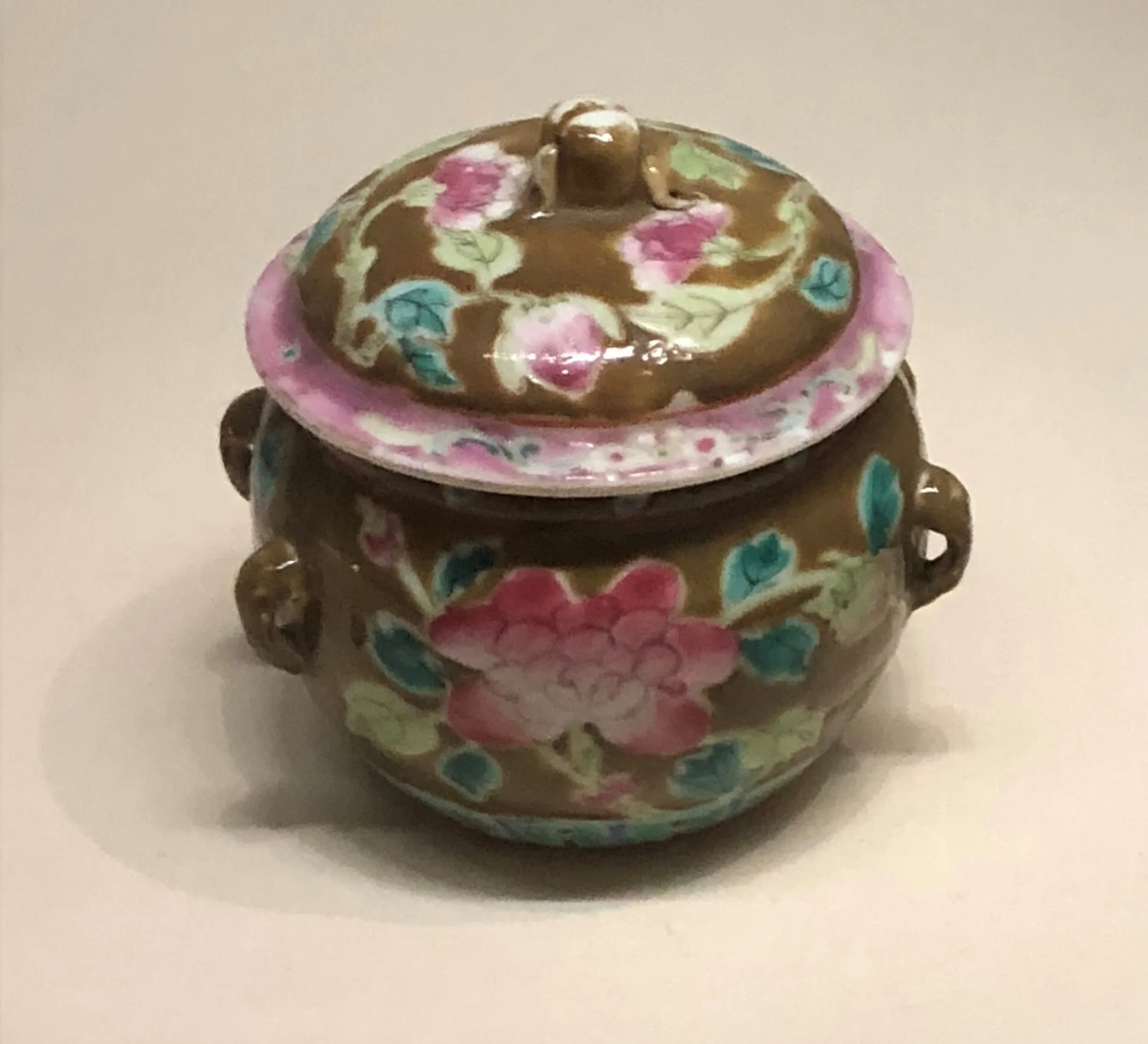
The National Heritage Board's collection records define nyonyaware as overglazed, polychrome, enamelled porcelain made in China, probably at Jingdezhen, for Peranakan Chinese communities in Singapore, Malaysia and Indonesia. It is recognised by bright, contrasting colours, elaborate designs and traditional Chinese auspicious motifs. The Antiques Trade Gazette, reporting on the Singapore market, dates the export of this Straits porcelain from Jingdezhen to between 1856 and 1945, and notes that it resembles late Chinese porcelain but has its own colour combinations, motifs and shapes, among them the lidded kamcheng.
The fluted offering dishes owned by Wee Bee Neo show the vocabulary: a phoenix, the traditional emblem of the empress, and peonies, a symbol of prosperity, on a mustard green ground, with the shopmark Jing Zhen Xu Shun Chang Zao on the base. The Gazette also cites famille rose wares on pink grounds. Blue-and-white wares held everyday food and pickles, while polychrome festive pieces marked auspicious occasions and were often bought as wedding sets, used to carry food and sweets to the bridal room during 12 days of celebrations.
The Gazette describes Peranakan material culture as a lively market. In its September 2024 edition it reported that a late 19th-century famille rose basin, 41 centimetres across, painted with a phoenix, a dragon and peonies on a pink ground and commissioned for a wedding chamber, sold at the Singapore auction house Hotlotz for S$89,000 against an estimate of S$15,000 to S$25,000, after 61 bids; its exact pair is on display at the Peranakan Museum. The previous record at the same house was S$74,000 for a pink-ground kamcheng of the Guangxu period, sold in January 2023.
BEADWORK, EMBROIDERY AND THE KEROSANG
Embroidery and beadwork are, in Infopedia's description, the distinctive features of Peranakan fashion. From the 1920s the nonya kebaya, a shorter, tighter and sheer blouse often decorated with sulam embroidery, began to replace the baju panjang. The kebaya is secured with a kerosang, spelt kerongsang in Malay, a set of three interlinked brooches, and is worn with a batik sarong and kasut manek, slippers beaded by hand. Beads also reached the furniture: a pair of early 20th-century footstools from Singapore or Malacca in the Peranakan Museum combines gilded wood with velvet, cotton, brass and glass beads.
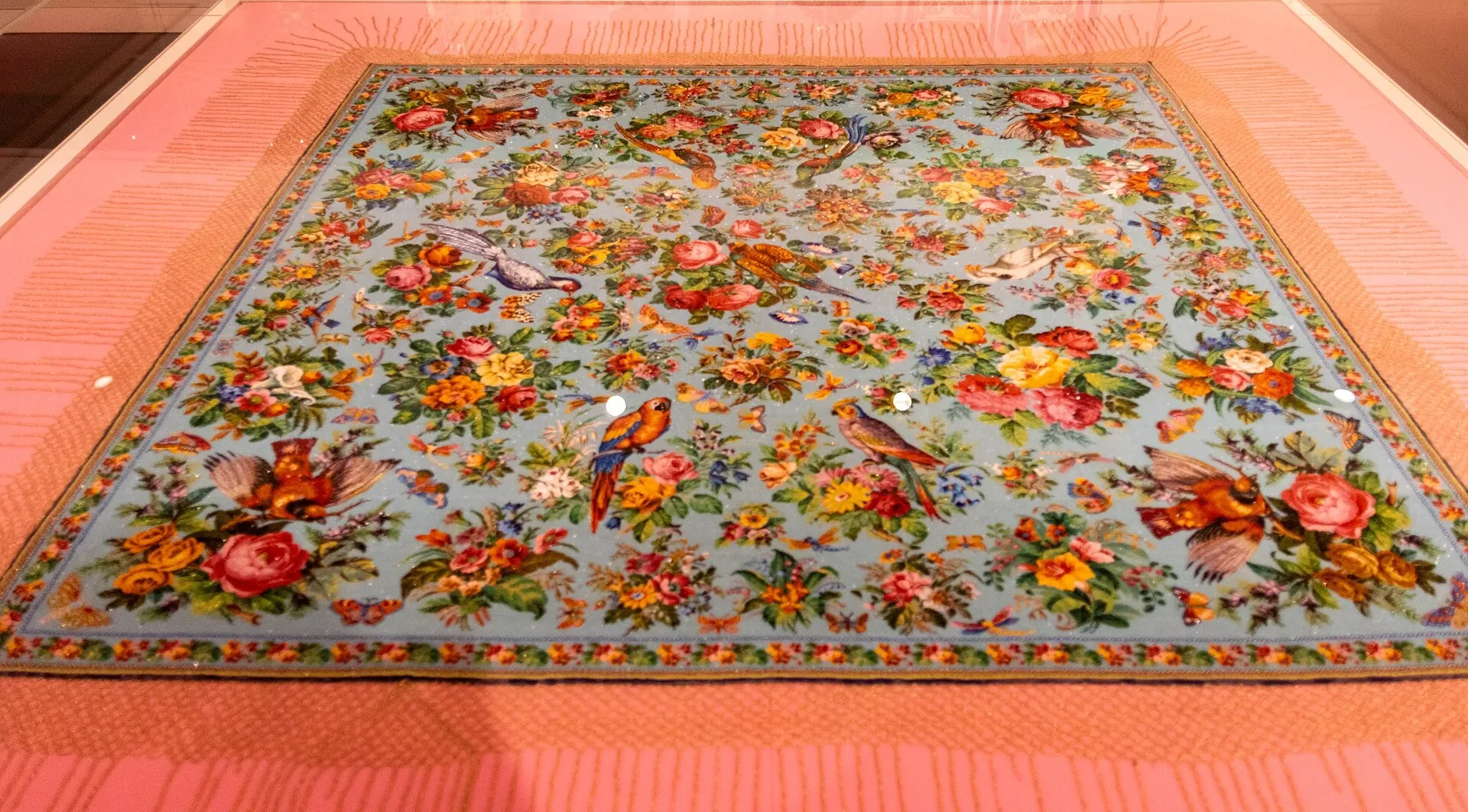
The museum describes Peranakan needlework as ranging from slippers to bed curtains, made as gifts, dress accessories and, most prominently, decorative textiles for celebrations, above all weddings, to which some of the most elaborate surviving pieces are connected. A table cover made in Penang around 1920 uses more than a million small European glass seed beads, some faceted, to set birds, insects and flowers on a turquoise ground, a colour popular in Penang needlework. It covered a choon tok table in the wedding chamber, where the bride and groom ate their first meal together, with silver and porcelain displayed on top.
WHERE TO SEE PERANAKAN STYLE: MUSEUMS AND MANSIONS
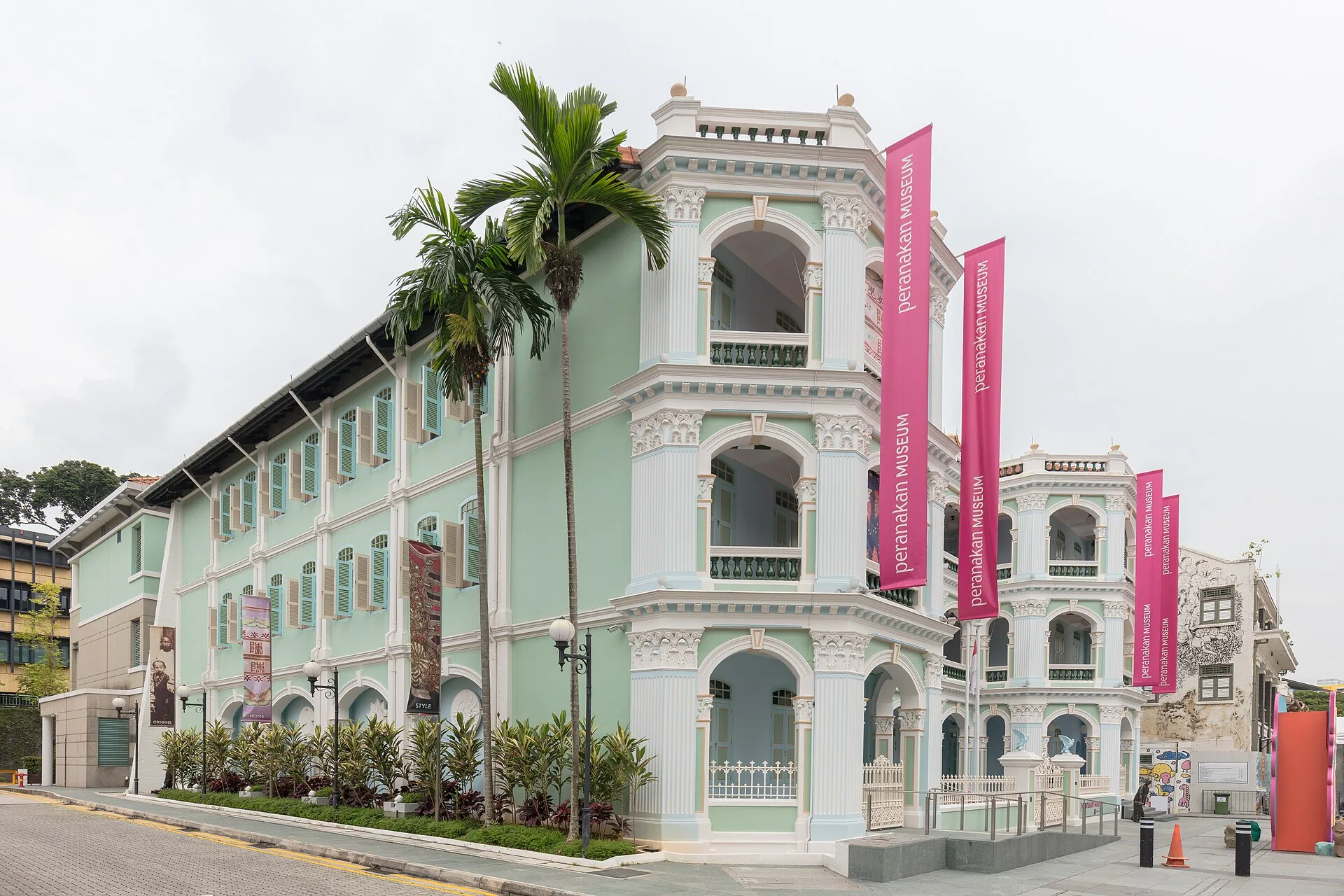
The Peranakan Museum occupies the former Tao Nan School at 39 Armenian Street, completed in March 1912. The building housed the Asian Civilisations Museum, which opened there in 1997, and was redeveloped as the Peranakan Museum, which opened in 2008. It closed in April 2019 for renovation and reopened on 17 February 2023 with three galleries, Origins, Home and Style, showing more than 800 objects across three floors. In the Home gallery, the Family and Community Life section combines three former galleries to reunite furniture, portraits and furnishings, some of which once belonged to the same home.
NUS Baba House was acquired by the National University of Singapore in 2006 with a S$4 million gift from Agnes Tan. It was restored by NUS researchers, the Urban Redevelopment Authority and the Peranakan Association of Singapore using archival drawings, and opened as a museum in 2008. The interior was reconstructed to reflect the Wee family's living quarters in the early 20th century, and the house holds more than 2,000 antiques and objects, the Straits Chinese Collection. Besides its role as a museum, the house functions as a living research centre.
In Penang, the Pinang Peranakan Mansion on Church Street, George Town, was built for Chung Keng Kwee, who died in 1901. In 2011 The Edge Financial Daily described its mix of Chinese carvings, Italian marble statues, Burmese timber, French windows, Venetian mirrors and solid iron railings and pillars from Glasgow, with antique furniture mostly inlaid with mother-of-pearl; its photographs show the airwell on the ground floor. The Peranakan architect Peter Soon bought the house in 2000, restored it and opened it to the public in 2004.
EMBU AT MANDARIN ORIENTAL, SINGAPORE

Embu is the all-day dining restaurant on level 3 of Mandarin Oriental, Singapore, with its interior design completed by Silverfox Studios in September 2023. The project team was led by Susan Heng and Patrick Waring of the studio. The restaurant takes its name from the Tembusu, a tree known for its fragrant flowers and sturdy wood. The design draws on the themes of Singapore as a Garden City: canopy, botanical planting, pavilions and greenhouses. Curved, louvred timber canopies and framing echo the perpendicular branching of the Tembusu.
The design also uses open-weave rattan, and the floor is laid with Peranakan black-and-white porcelain tiles. These are a different kind of object from those in the Peranakan homes of Singapore and Penang described above, which used carved and gilded teak pintu pagar, gilt-edged screens, blackwood inlaid with mother-of-pearl, polychrome nyonyaware enamelled in China and beaded covers for wedding-chamber tables. At Embu the tiles are a two-colour porcelain floor set within a scheme of timber canopies, rattan and botanical planting.
SOURCES
- National Library Board, Singapore (Infopedia) Peranakan (Straits Chinese) community
- SIIINGAPORE magazine, Singapore International Foundation Where Culture Dwells
- SG101, Government of Singapore Baba House
- Peranakan Museum, National Heritage Board About Peranakan Museum
- Peranakan Museum, National Heritage Board Family and Community Life
- Peranakan Museum, National Heritage Board Decorative Textiles
- Roots, National Heritage Board Pair of fluted offering dishes
- Roots, National Heritage Board Bench
- Antiques Trade Gazette Straits Settlement basin
- The Edge Malaysia A mansion with a story to tell