SINGLE-EDGED BLADES, LAMINATED STEEL AND THE KNIFE TOWNS OF JAPAN

Japanese knife types number more than 20, according to Web Japan, the culture site of the Ministry of Foreign Affairs of Japan, and its three principal types are each shaped for one task: taking a fish apart, slicing sashimi or cutting vegetables. Kitchen knives are called hocho, and the Japan National Tourism Organization (JNTO) traces Japanese kitchen blades to two forging traditions: sword-making and the making of tools for farmers, craftsmen and gardeners. Production is concentrated in a few towns. Sakai in Osaka Prefecture and Echizen in Fukui Prefecture are both listed by the Association for the Promotion of Traditional Craft Industries (Densan) as nationally designated traditional crafts for forged blades, or uchihamono. Seki in Gifu Prefecture, a blade-making town since the Kamakura period, accounts for about half of all Japanese cutlery exports.
WHAT ARE THE MAIN JAPANESE KNIFE TYPES?

Web Japan names three knives as the core of a Japanese kitchen. The deba has the widest, thickest and heaviest blade of the three and is used on fish, including removing heads and cutting through hard bones. The yanagiba is long, narrow and thin, and is used to slice sashimi by drawing the blade towards the body. The usuba has a wide blade with a relatively thin edge and is used for chopping, peeling and slicing vegetables, such as the daikon radish cut into fine strands for the tsuma garnish that is served with sashimi. According to Densan, most Japanese cooks are said to own at least one knife made in Sakai, and all three appear in the knife list of the Sakai cutlery federation.
Specialist knives follow particular ingredients. The fuguhiki has an even thinner blade than the yanagiba and slices pufferfish into very thin pieces. The hamokiri has a thick, heavy blade for cutting through the many small bones of hamo, or pike conger, while leaving the layer of skin intact, a preparation used for hamo no otoshi and tempura. The list kept by the Federation of Sakai Cutlery Commerce and Industry Associations adds the minioroshi, thinner and narrower than a deba, for filleting; the sushi-kiri for cutting pressed Osaka sushi such as battera and rolled sushi; the men bocho, whose own weight does the cutting of udon and soba; and the kashi bocho, a confectionery knife also called a yokan knife.
KANSAI AND KANTO: REGIONAL JAPANESE KNIFE TYPES
Several Japanese knife types come in a Kansai form, from the Osaka and Kyoto region, and a Kanto form, from the Tokyo region. The Sakai federation describes the yanagiba as the sashimi knife used mainly in Kansai, also called shobu, with edge angles so acute that it should not be used on bones. Its Kanto counterpart is the takohiki. The usuba is made as the kamagata, the Kansai type, and the kakugata, the square Kanto type; both have a wide blade with a sharp angle designed for vegetables. The eel knife, unagi-saki, is listed in four regional patterns: Osaka, Kyoto, Edo and Nagoya or Ise. The deba, by contrast, appears in the federation's list in a single form, next to the narrower minioroshi.
Alongside these sit general-purpose knives. JNTO's survey of Japanese metalwork lists the santoku, a name it translates as the knife of three virtues; the rectangular nakiri, which chops vegetables; and the curved gyuto, used to cut meat. The Sakai federation's catalogue includes a lightweight all-purpose knife, the hanyo bocho, for fish, meat and vegetables alike, and the petty knife, used for peeling vegetables and fruit, for fine detail work and for garnishes. JNTO notes that some of the smiths now known for kitchen knives built their names forging carpentry nails in Echigo, Niigata Prefecture, or sickles in Tosa, Kochi Prefecture.
SINGLE-EDGED BLADES AND LAMINATED STEEL
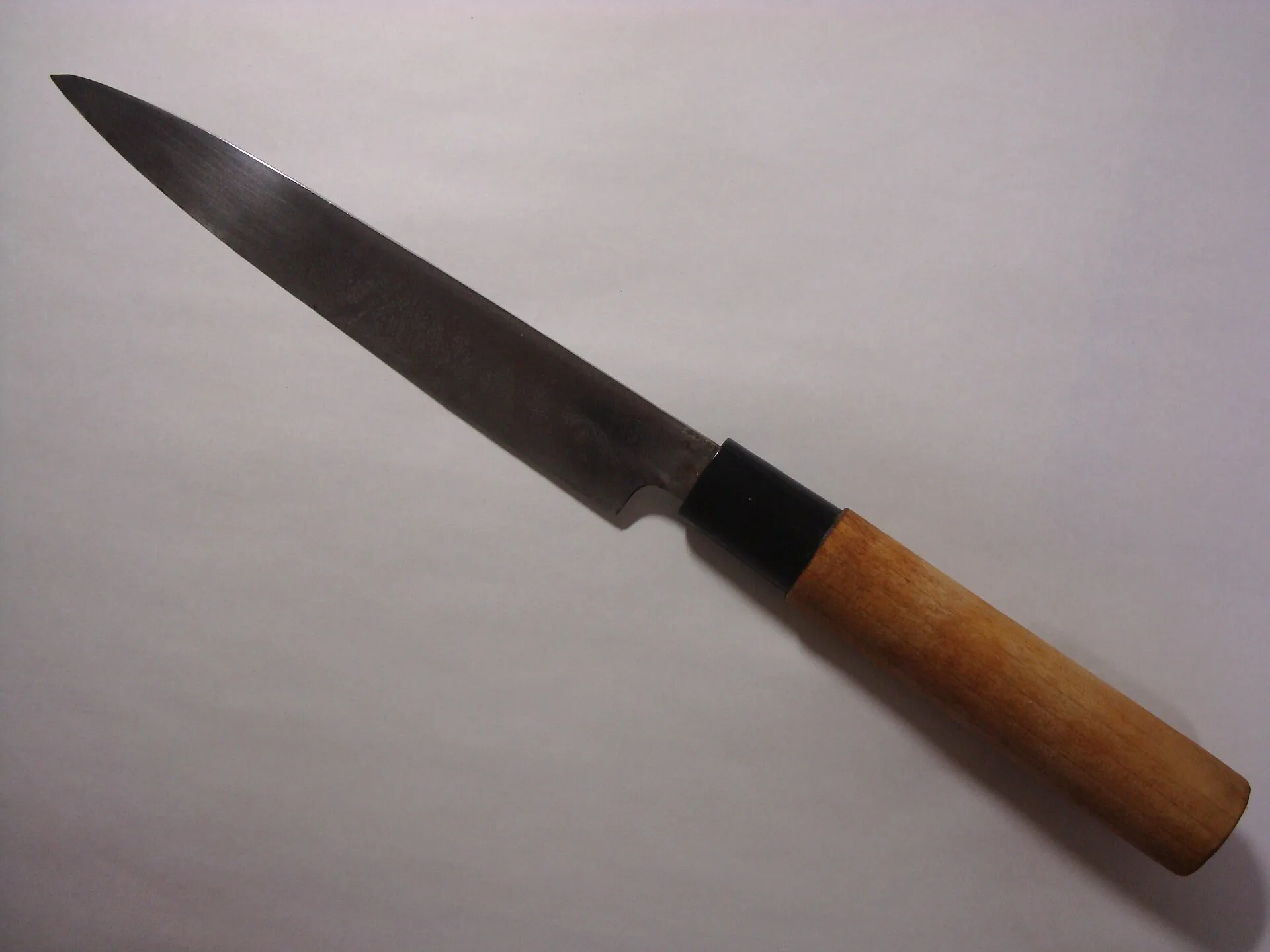
Web Japan describes traditional Japanese knives as single-edged, sharpened on one side only, in contrast with double-edged Western knives. They are made of steel, formed with techniques passed down over centuries, and sharpened on whetstones. The Sakai federation gives the yanagiba edge angles acute enough that it should be kept away from bones, while its deba entry, a thick and heavy blade, covers chopping and filleting fish and cutting chicken, with the heel of the blade used on bones. Densan notes that the blades of Sakai knives are characterised by a finely ground edge and point.
Sakai knives are laminated rather than made from a single piece of steel. Densan explains that Sakai forged blades are made by welding together a soft metal, jigane, which is mostly iron, and a harder steel, hagane, which contains a great amount of carbon and is hardened by tempering. The combination lets the knife cut well without bending or breaking. Sakai City describes the first forging step: steel treated with a powder containing boric acid is laid on top of iron heated in a hearth burning coke at about 2,000°C, and the blade is then heated to about 900°C and hammered until the two metals bond.
WHAT ARE SHIROGAMI AND AOGAMI STEELS?
Knife steels sold as shirogami and aogami, which translate as white paper and blue paper, carry names owned by one company. Proterial, Ltd. lists aogami, shirogami and kigami (yellow paper) as its registered trademarks, together with ATS, ZDP, YSS and YSS Yasuki Hagane, on its page for YSS high-class cutlery steels. The company presents those cutlery steels in two families, carbon steel and stainless steel, and states that they are made by blending carefully selected high-purity raw materials to carry on the tradition of blade-making.
The company's own history traces the Yasugi steel business to Unpaku Steel, founded in 1899, which came under Tobata Casting in 1925. Tobata Casting, founded in June 1910, absorbed the Yasugi steelworks company, the direct predecessor of the Yasugi works, in February 1934. Hitachi Metals Industry was established in April 1956 as a wholly owned company of Hitachi, Ltd., and the merged company took the name Hitachi Metals in January 1967. In January 2023 Hitachi Metals changed its name to Proterial, Ltd., the name under which the white paper and blue paper trademarks are now registered.
SAKAI: TOBACCO KNIVES AND A DIVISION OF LABOUR
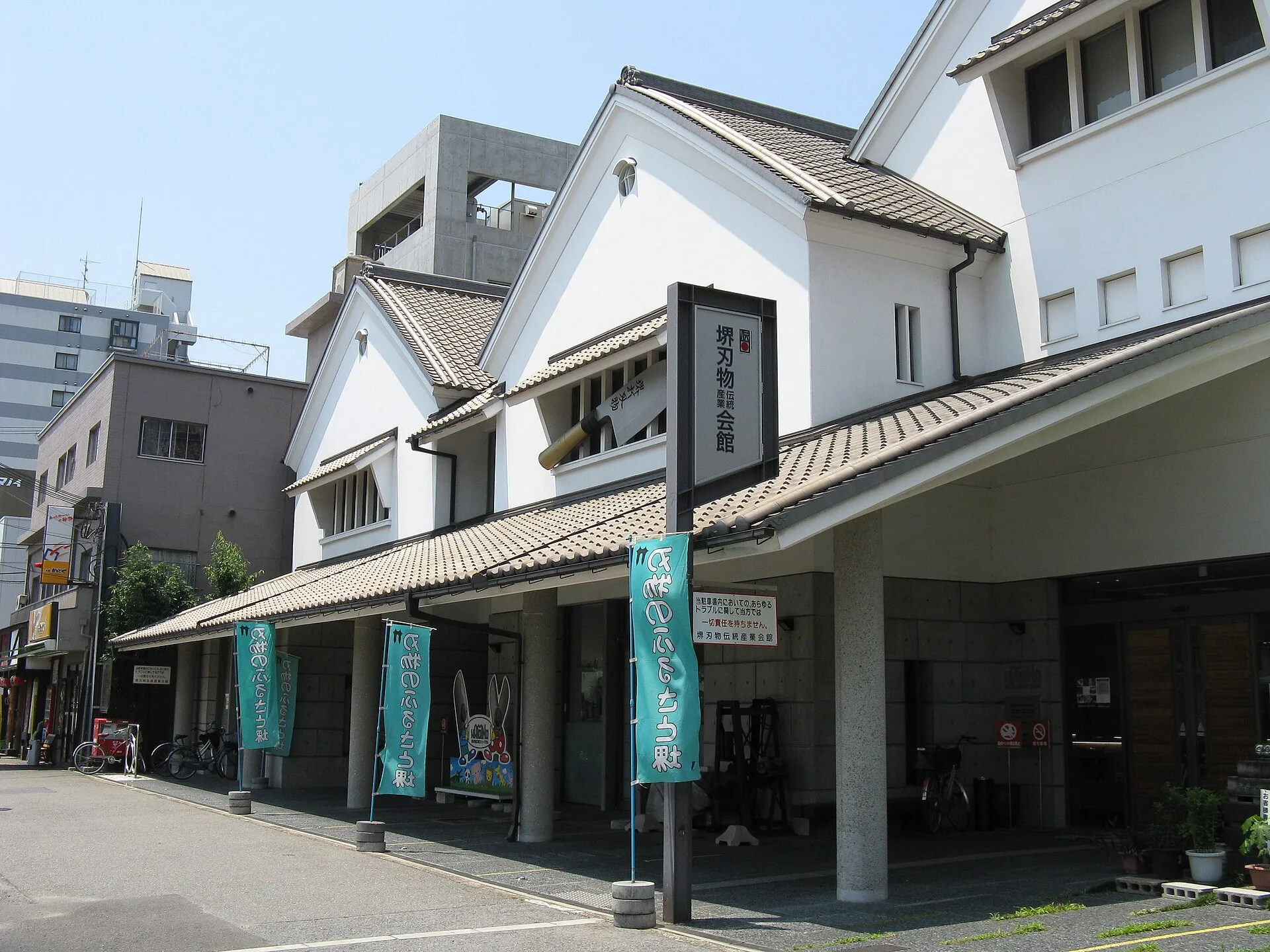
Sakai City traces the town's forging base to the fifth century, when local smiths made tools for building its tumulus burial mounds. In the second half of the sixteenth century, tobacco brought from Portugal created demand for knives that could cut the leaves, and Sakai became the first area to produce tobacco knives. Densan records that the Tokugawa shogunate gave Sakai's forgers an official seal of approval and exclusive selling rights; Sakai City names this the Sakaikiwame brand, a government monopoly that spread the town's reputation across Japan. In the mid Edo period (1600 to 1868 in Densan's dating) the deba appeared, followed by many other knife types, most of them for preparing food.
Sakai City describes the trade as a division of labour among several workshops. Smith forging, hizukuri, heats and hammers the metal into a blade. Sharpening and honing, hazuke or togi, gives it an edge. Hafting, ezuke, fits a handle of rot-resistant magnolia wood with a wooden mallet and stamps it with the maker's brand. The full process has ten steps. The blade is shaped at 600°C to 800°C, annealed at about 740°C and left to cool, coated with layers of moist clay, hardened at 750°C to 800°C and quenched in water, then tempered at 180°C to 200°C. Knives are made to a length and thickness the customer specifies within several millimetres.
SEKI: FROM SMITHS' TOWN TO CUTLERY CITY
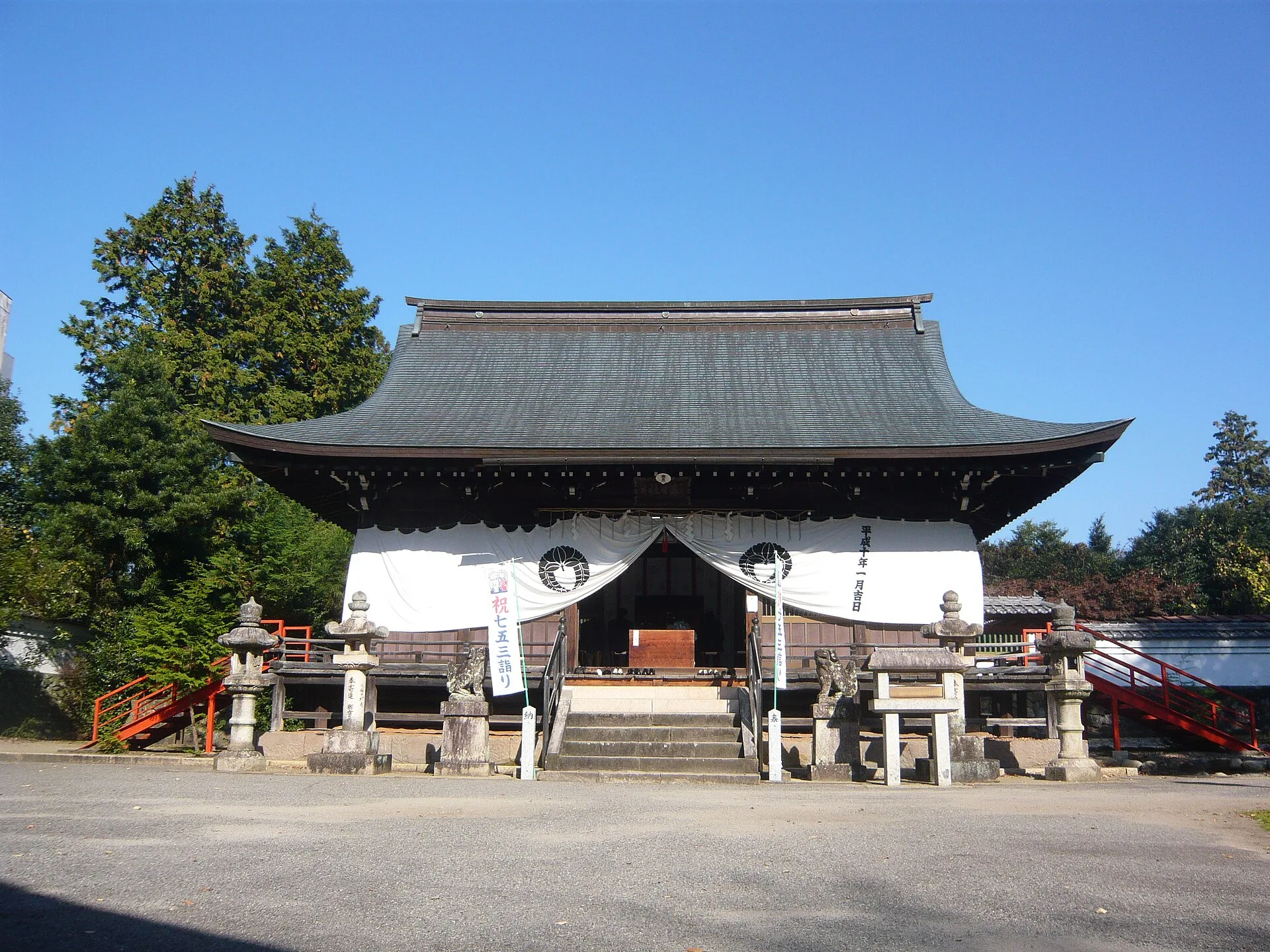
Nippon.com dates Seki's blade-making to about 800 years ago, in the Kamakura period (1185 to 1333), when a smith from Yamato Province, present-day Nara Prefecture, moved to the town. The location supplied what forging needed. The Nagara and Tsubo rivers provided clear water for cooling red-hot steel, pine forests provided fuel for the furnaces, and the local red clay suited the making of yakibatsuchi, the clay coating applied before hardening. Kasuga Shrine, founded in 1288 as a sub-branch of the main shrine in Yamato Province, is dedicated to the guardian deity of blacksmiths. When the Edo period began in 1603, many of Seki's smiths became nokaji, producing everyday necessities such as kitchen knives, razors and farming tools.
Seki is now home to around 300 businesses in the cutlery trade, and nippon.com ranks it alongside Solingen in Germany and Sheffield in England as one of the world's three major cutlery producing areas. The cutlery maker Kai started in 1908 as a manufacturer of pocketknives and now sells two major kitchen knife brands, Seki Magoroku and Shun. Its Seki Magoroku Kaname knife, released in November 2022, passes through around 30 steps at the factory, and the thickness of the cutting edge is measured by hand in units of 0.1 millimetre. The knife is made at the Yamato Tsurugi factory in Gujo, and its handle is cypress.
ECHIZEN: BLADES MADE FROM START TO FINISH
Densan dates blade forging in Echizen to the start of the Muromachi era. Its account has a smith from Kyoto arriving in search of raw materials and meeting a local farmer who asked him to make sickles. During the Edo period the Fukui clan supported Echizen blades, which were sold throughout the country, and Web Japan's Japan Up Close series reports that towards the end of the feudal period Echizen was Japan's largest producer of farming sickles; lacquer harvesters who used Echizen blades to cut lacquer trees helped spread the name. In 1980 Echizen became the first forged blade production centre to receive the national Traditional Craft Product designation.
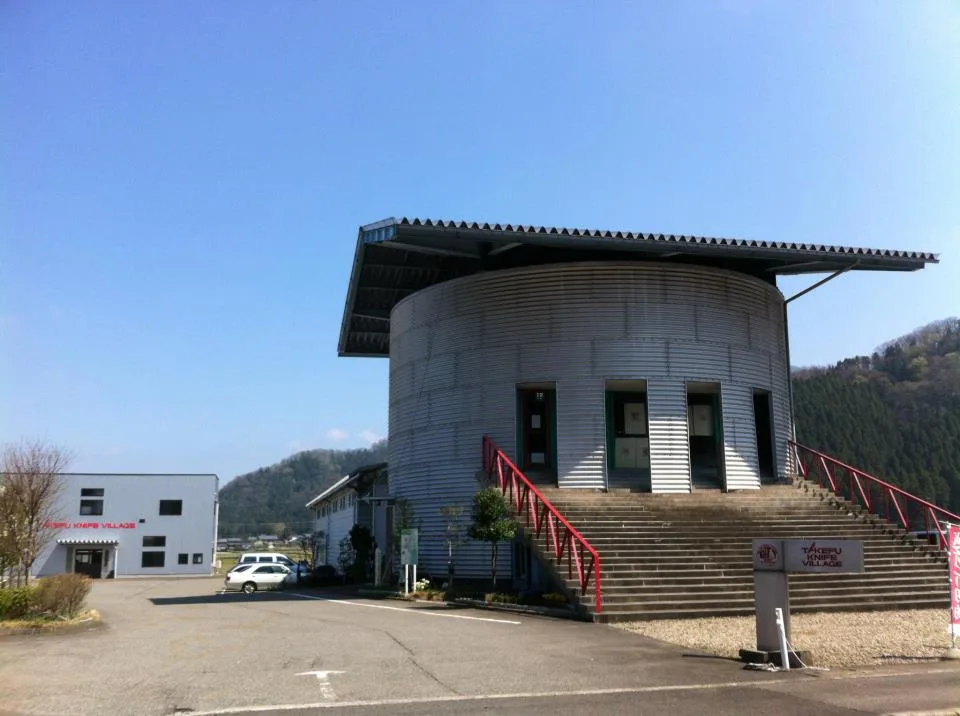
Densan names two forging methods characteristic of the area: mawashi haganetsuke, which compresses the piece diagonally from a corner into a diamond shape, and nimai hiroge, which hammers two stacked blades quickly on both sides so they thin evenly. Unlike Sakai, Echizen blacksmiths make their knives from start to finish, with no part delegated or outsourced. At Takefu Knife Village, a shared forge on the outskirts of Echizen City set among rice fields because of the noise of its machinery, several smiths work under the common Echizen Hamono brand while keeping their own names. Japan Up Close was told that becoming a master sharpener takes at least ten years.
RAW PREPARATION AT THE COUNTER: RIN, MANDARIN ORIENTAL SHENZHEN
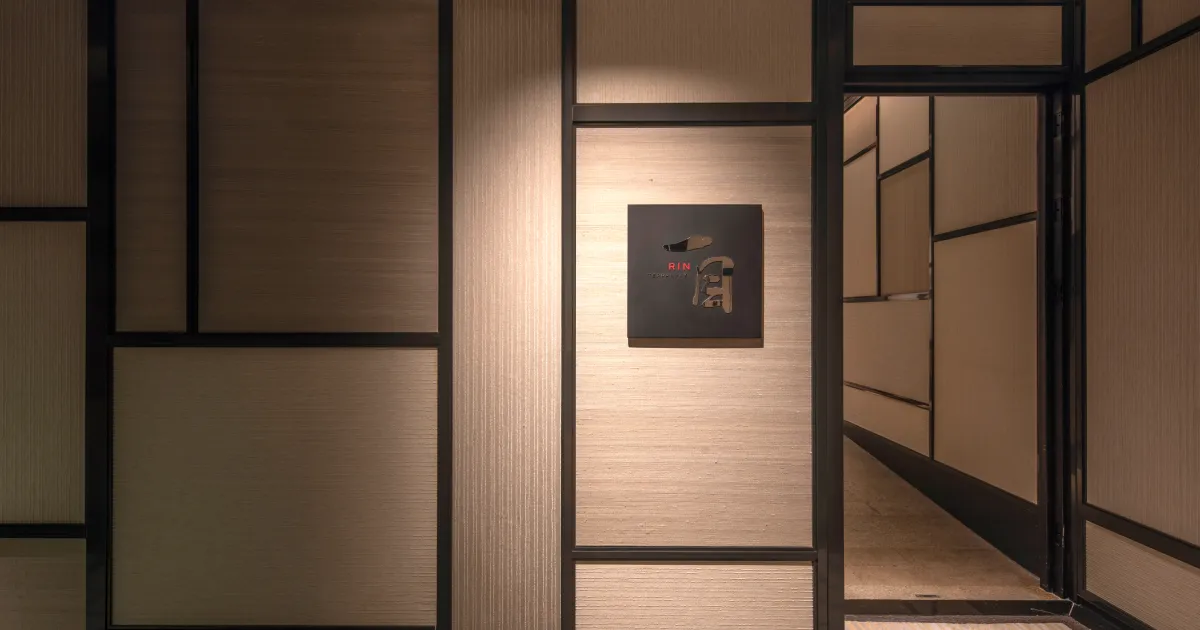
RIN is the signature Japanese restaurant of Mandarin Oriental Shenzhen, an interior design project completed in 2022 with chef Masanobu Hoshina. It is reservation-only, and every one of its rooms is private. The cooking is teppanyaki, and ingredients are prepared raw in front of guests. The equipment is set under the counter, so the sightline runs past the chef to the city beyond. In Japanese kitchens, the raw preparation of fish and vegetables is the work for which the deba, yanagiba and usuba are each shaped.
Guests reach the private rooms from a Sake Lounge, entering each one through a low door. The three rooms are the Corten Steel, Pine and Concrete rooms. Two of those materials also run through the knife trade. Corten steel gives its name to the first room, and steel is also the material of Japanese knives, which in Sakai are laminated from soft jigane and hard hagane. Pine forests, according to nippon.com, supplied the fuel for the furnaces of Seki's smiths.
SOURCES
- Web Japan, Ministry of Foreign Affairs of Japan Japanese Kitchen Knives: An Essential Part of Japanese Cuisine
- Federation of Sakai Cutlery Commerce and Industry Associations Types of knives
- JNTO Métal: lames du Japon
- Densan (Japan Traditional Crafts) SAKAI Uchihamono (Forged Blades)
- Densan (Japan Traditional Crafts) ECHIZEN Uchihamono (Forged Blades)
- Sakai City Cutlery
- Proterial High-class cutlery steels
- Proterial Company history
- Nippon.com Seki: Gifu's Traditional Center of Swordsmiths
- Web Japan, Japan Up Close Echizen, the city of artisans and traditional crafts