

TEA MEALS, SAKE BANQUETS AND THE PRIVATE ROOMS OF KYOTO
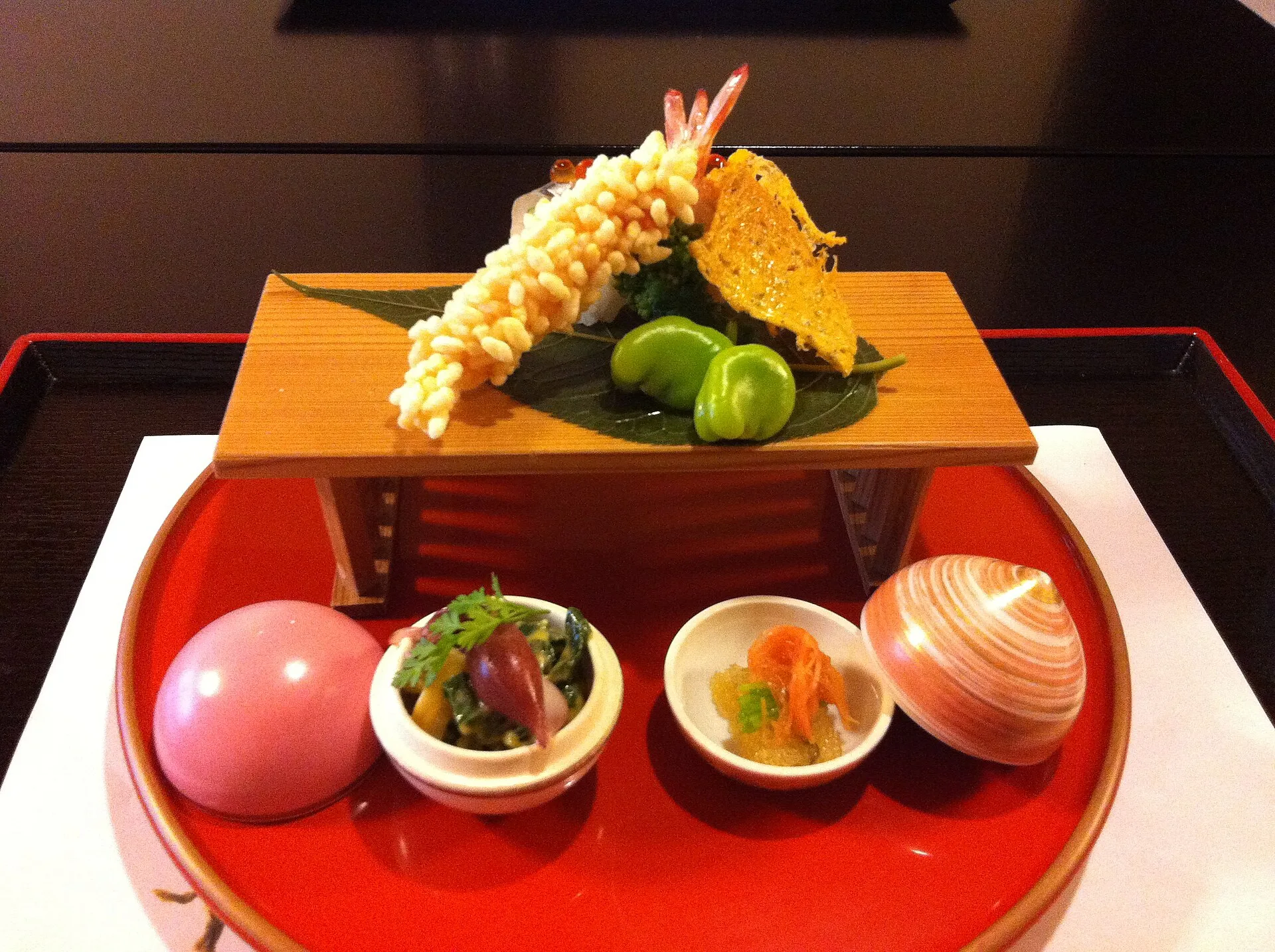
Kaiseki is the Japanese multicourse meal that the MICHELIN Guide calls "often described as Japan's haute cuisine", served in a precise order with ingredients, tableware and presentation chosen to reflect the season at its peak. Its traditional setting is the ryotei, a high-end restaurant of private tatami rooms and gardens. The meal has two branches that share one name: the light meal served before tea at a tea gathering, and the banquet cuisine served with sake that took its present form in the early 19th century. The banquet sequence runs from a first bite called sakizuke to rice, pickles and fruit.
WHAT IS A RYOTEI?

Web Japan's factsheet on Japanese food culture describes ryotei as "first-class Japanese restaurants", the places, along with traditional inns, where kaiseki is still served. Writing in Japan Inc magazine in June 2000, William Hall described ryotei as "a constant feature of Japanese society since the early 19th century" and noted their high walls and modest entrances. Some ryotei, he reported, were now taking reservations from people they had never been introduced to, accepting credit cards on the spot instead of discreetly billing customers at month's end, and publishing set budget courses with prices clearly marked.
Inside, a ryotei is a series of closed rooms rather than a dining hall. The MICHELIN Guide's 2025 survey of Kyoto ryotei describes kimono-clad proprietresses overseeing every detail of service. Kikunoi Honten offers private dining rooms with seasonal decoration and garden views. Kodaiji Jugyuan, built by a master of sukiya architecture, has recessed seating on tatami and a first-floor room, Fuji no Ma, the Wisteria Room, that looks out on Yasaka Pagoda. Kodaiji Wakuden, close to Kodaiji Temple at the base of Mount Higashi, has sunken hearths and private rooms with counters facing the kitchen.
Ryotei were also where geisha worked. A nippon.com history of the geisha by Iwashita Hisafumi states that "at least until the 1960s, every town, large or small, had traditional restaurants called ryōtei", used for banquets and as venues for business networking. Ryotei could hire geisha only within the geisha districts, the kagai or hanamachi, and geisha were hired to assist the host in entertaining his guests. In Kansai, geisha had performed dances at banquets since the 17th century. Change began after the 1970s: by the 1980s hotels and nightclubs had increasingly become the venues of choice for banquets and parties, and the geisha districts began to decline.
WHERE DID KAISEKI COME FROM?
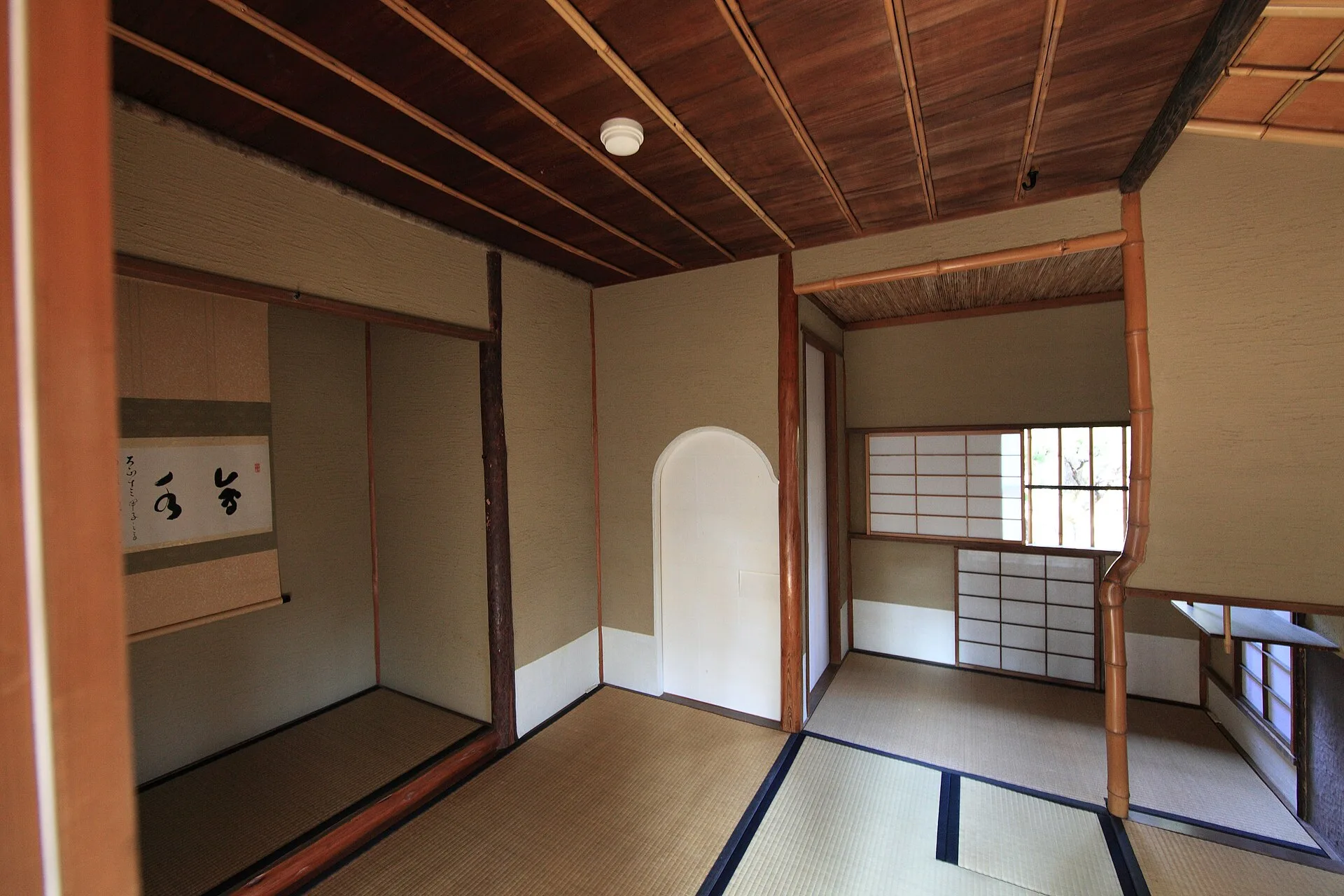
Kaiseki began with the tea ceremony. According to the MICHELIN Guide, kaiseki cuisine has its roots in the 16th-century Japanese tea ceremony, when simple meals were served to accompany the tea; Web Japan calls it "a light meal taken to curb an empty stomach before having tea". The kanji are said to mean "bosom-pocket stone", which the Guide explains as the warm stones Zen monks placed in the folds of their robes to ward off hunger. The Guide also traces Kyoto's ryotei culture to wabi-sabi, which it defines as a reverence for imperfection and impermanence, as shaped by the tea master Sen no Rikyu in the late 16th century.
Web Japan's food culture factsheet describes honzen ryori as an elaborate style of banquet cooking derived from the cuisine of the court aristocracy and served on legged trays called honzen; in its words, "the tea meal married the formalities of honzen ryori to the spirit and frugality of Zen". The base of the tea meal was ichiju-sansai, one soup and three side dishes with rice. Web Japan's Kyoto guide names the parts: mukozuke, a side dish that may feature sashimi; nimono, fish or vegetables simmered in stock; yakimono, usually a salted and grilled fish such as ayu, or sweetfish; hashiarai, a plain, lightly salted broth; and hassun, a mixture of ingredients from the sea and mountains.
THE TEA MEAL AND THE SAKE BANQUET
Two sets of characters are read as kaiseki. Beside the tea meal, chakaiseki, the second form, 会席, refers to a social gathering, kai, with seating, seki: a more elaborate meal accompanied by sake and ending with a simple tea service. In a 2016 MICHELIN Guide article, chef Yoshiyuki Kashiwabara of Kaiseki Yoshiyuki in Singapore explained that at a tea ceremony the chef may prepare three guests' food on one shared platter, while in sake-kaiseki each guest receives an individual portion on a separate plate. There are no fixed rules for which form a restaurant serves; a setting designed after a tea house with tatami mats points to chakaiseki, a more modern interior to sake-kaiseki.
Web Japan's factsheet dates kaiseki ryori in its present form to the early 19th century, and the MICHELIN Guide traces its contemporary form to the Edo period, drawing on ryotei dining, tea ceremony ritual and samurai banquet traditions. Because people in Japan do not generally eat rice while drinking sake, the factsheet explains, rice is served at the end. Appetisers, sashimi, clear soup and grilled, steamed, simmered and dressed dishes come first, followed by miso soup, pickles, rice, Japanese sweets and fruit, with tea to conclude the meal. The factsheet adds that the types and order of foods served in kaiseki ryori are the basis for the contemporary full-course Japanese meal.
WHAT ARE THE COURSES OF A KAISEKI MEAL?
A kaiseki meal runs from as few as five to 15 or more courses, according to the MICHELIN Guide. The sequence opens with sakizuke, the first bite of the meal, sometimes called shinogi. Wanmono follow, named for the bowls they are served in and often taking the form of suimono, a dashi broth with seasonal ingredients. The Guide calls the wanmono "the most important course in a kaiseki sequence and the mark of a chef's ability". Hassun marks the seasonality of the meal by combining several small elements. Tsukuri, the sashimi course, is also called mukozuke, and yakimono is the grilled course, for which straw, charcoal and robata grilling are all classical styles.
Later courses include aemono, a chilled, vegetable-forward dish with a thick sauce, often of sesame or tofu; mushimono, a steamed dish; agemono, a fried dish; and takiawase, a simmered dish of vegetables mixed with meat. Shokuji, also called shime, is the rice course, served with miso soup and pickles. Mizugashi or mizumono, a fruit course, and amami, a dessert that is usually wagashi, close the meal. Much of the sequence depends on dashi, made from kombu and katsuobushi: the first extraction, ichiban dashi, is usually drunk as soup, while niban dashi is the base for marinades and sauces. Kaiseki is a prescribed set of courses, whereas in omakase diners leave the selection of dishes to the chef.
VESSELS, PLATTERS AND THE SEASONS

Vessels give several courses their names. Wanmono are named for the shape of the bowl, and hassun is named for the eight-inch wooden platters on which it is served. In traditional chakaiseki the hassun comprised just two elements, representing the mountain and the sea; a modern platter may carry four to six items. The arrangement is meant to draw the eye from the left side of the platter to the right. Soup comes in covered bowls, and some chefs spritz water over the lids before serving, which the 2016 MICHELIN Guide article describes as a tradition from the samurai era, meant to show whether a bowl had been reopened between kitchen and table.
Seasonality governs the ingredients, the tableware and the presentation. Chefs may follow Japan's 72 microseasons or the four traditional seasons. In a 2018 report from Kyoto, the MICHELIN Guide described how a spring visit to a kaiseki restaurant might yield tea scented with cherry blossoms, with utensils in spring colours and motifs, and how chefs plan so finely that the difference can come down to days or the time of day. Kyoto's own vegetables carry place names: Web Japan lists kamo-nasu, a plump, round aubergine about 15 cm in diameter from the Kamo area, and kujo-negi, a sweet green onion.
LONG-ESTABLISHED RYOTEI IN KYOTO AND KANAZAWA
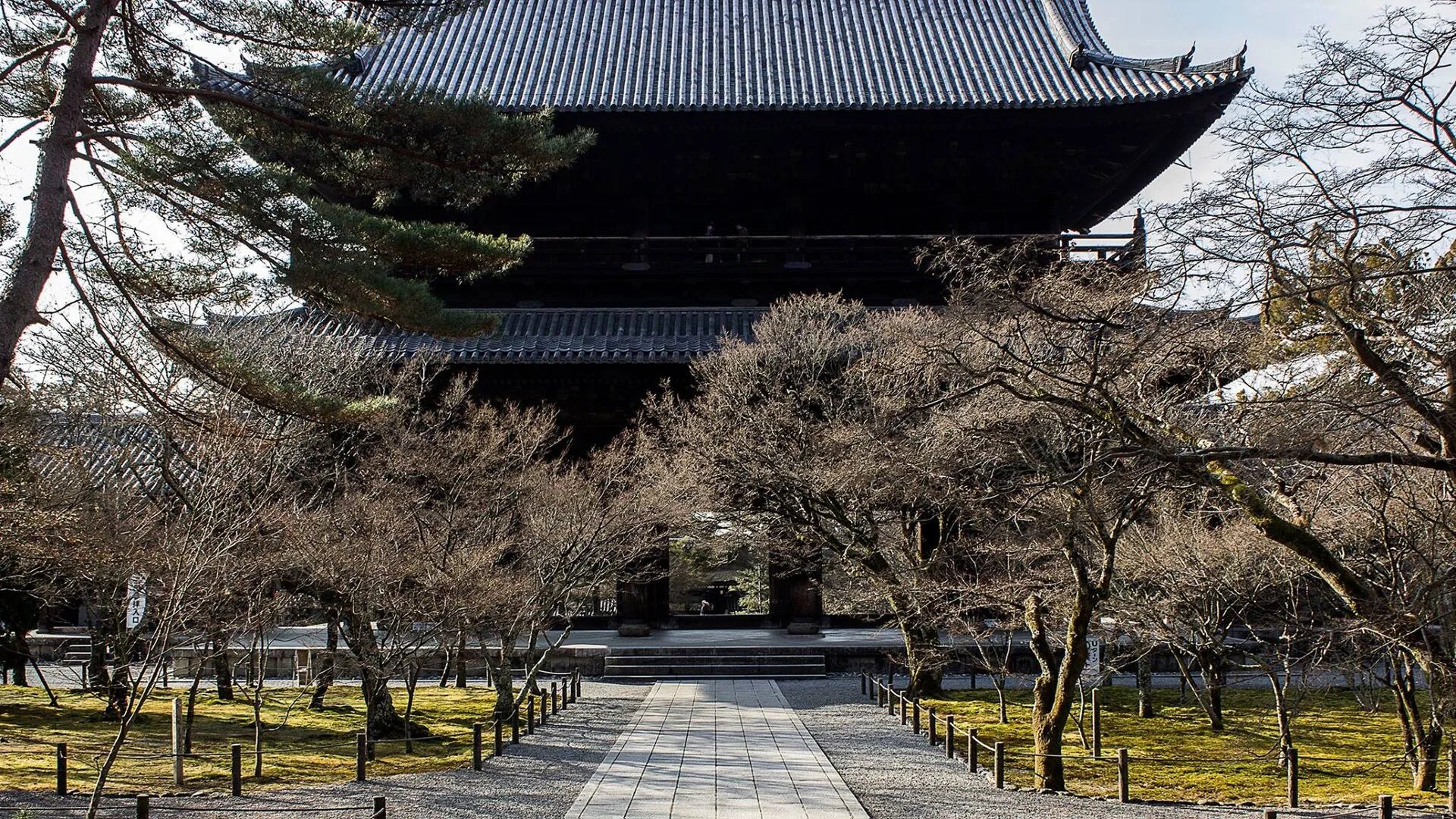
Hyotei, near Nanzen-ji temple in eastern Kyoto, is the house the MICHELIN Guide most closely associates with the codification of kaiseki. The Guide dates its origins to a simple arbor where pilgrims could rest and drink tea; its 2025 survey puts that at 450 years ago, while other Guide articles give a history of more than 400 years. The Guide lists relics of the early days, including a shingled roof, folding stools and straw sandals, and a courtyard pond fed by water from Lake Biwa. Its chef, Yoshihiro Takahashi, holds three MICHELIN stars. Kikunoi Honten was founded as a restaurant in 1912, and its chef, Murata, is training international chefs to carry its discipline forward.
Yusokuryori Mankamero, in Kyoto's Nishijin district, originated in 1722 as a tea house operated by a sake brewery and bases its menu on imperial court banquet cuisine and the meals served before tea. In Kanazawa, Tsubajin describes itself as the city's oldest ryotei. Its own account traces the family to a sword-guard maker who entered Kanazawa in 1583 as a craftsman retained by Maeda Toshiie; the third-generation head, Jinbee, ran a small eatery called Tsubaya alongside his sword-guard work, which the house treats as its beginning, and it counts some 350 years as a restaurant. Tsubajin serves seasonal Kaga cuisine as kaiseki, and its menus include jibu-ni, a Kanazawa simmered dish.
HOW KAISEKI SPREAD BEYOND JAPAN
In 2013 UNESCO added washoku, the term for all types of Japanese food, to its Intangible Cultural Heritage list. The MICHELIN Guide reported in 2018 that there had been only 56,000 Japanese restaurants in the world before the listing, and about 123,000 by then, with more foreign chefs going to Japan to learn the craft. The same year, the chefs of the eight restaurants awarded three stars in the 2018 Kyoto-Osaka guide were to cook a joint kaiseki dinner at Nijo Castle, with dance and music by Kyoto geisha, to mark the tenth edition of the guide.
In 2016 the MICHELIN Guide described Kaiseki Yoshiyuki as one of Singapore's "rare few kaiseki restaurants". In Los Angeles, n/naka builds its menu on chef Niki Nakayama's interpretation of kaiseki, a tasting menu drawing on seafood, meat and produce sourced mostly from Japan and California. The menu changes often and pairs light, aromatic broths with richer dishes such as grilled Miyazaki wagyu and scallops; the one dish that stays is spaghetti with abalone, pickled cod roe and black truffle. The restaurant holds one MICHELIN star in the 2026 guide.
PRIVATE ROOMS AT RIN, MANDARIN ORIENTAL SHENZHEN
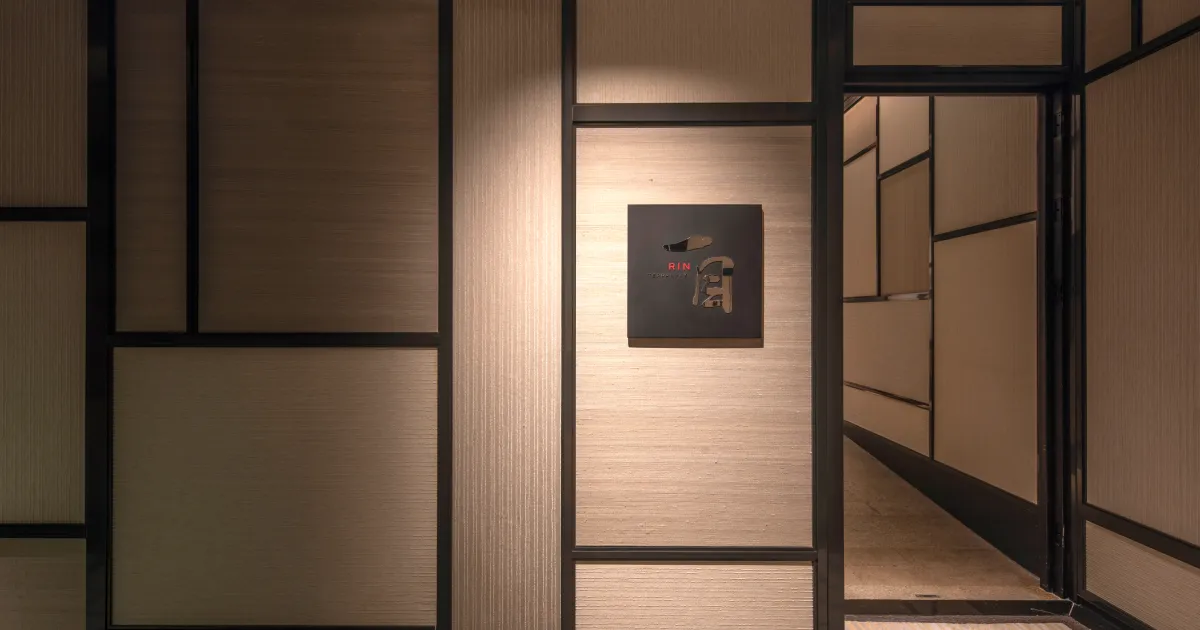
RIN is the signature Japanese restaurant at Mandarin Oriental Shenzhen, an interior design project completed in 2022, with chef Masanobu Hoshina. The ryotei described above were organised as closed rooms rather than open dining halls, and their new customers traditionally came through introductions. RIN is reservation-only, and every room in it is private. Guests arrive first in a Sake Lounge and pass from it through low doors into three rooms: the Corten Steel room, the Pine room and the Concrete room. In Kyoto, Hyotei still keeps relics of its early days, among them a shingled roof, folding stools and straw sandals.
The cooking at RIN is teppanyaki. Ingredients are prepared raw in front of guests, and the cooking equipment is set under the counter, so that the sightline runs past the chef to the city. In the kaiseki sequence described above, courses such as wanmono and hassun take their names from the bowls and platters that carry them from the kitchen, and a covered soup bowl may be spritzed with water before it reaches the table. At RIN, the preparation itself takes place at the counter, in front of the guests.
SOURCES
- MICHELIN Guide Kaiseki vs. Omakase: What's the Difference?
- MICHELIN Guide Kaiseki 懐石 or kaiseki 会席?
- MICHELIN Guide What Is a Ryotei? Discover Kyoto's Best Traditional Restaurants
- MICHELIN Guide Experiencing The Beauty Of Kaiseki In Kyoto
- MICHELIN Guide n/naka
- Web Japan Kyoto, Spiritual Home of Japanese Cuisine
- Web Japan Japanese Food Culture
- Nippon.com History of the Geisha
- Japan Inc The Traditional Ryotei Are in Danger
- Tsubajin Tsubajin, Kanazawa


