FROM BARLEY AND WATER TO A CONDITIONED, PACKAGED BEER
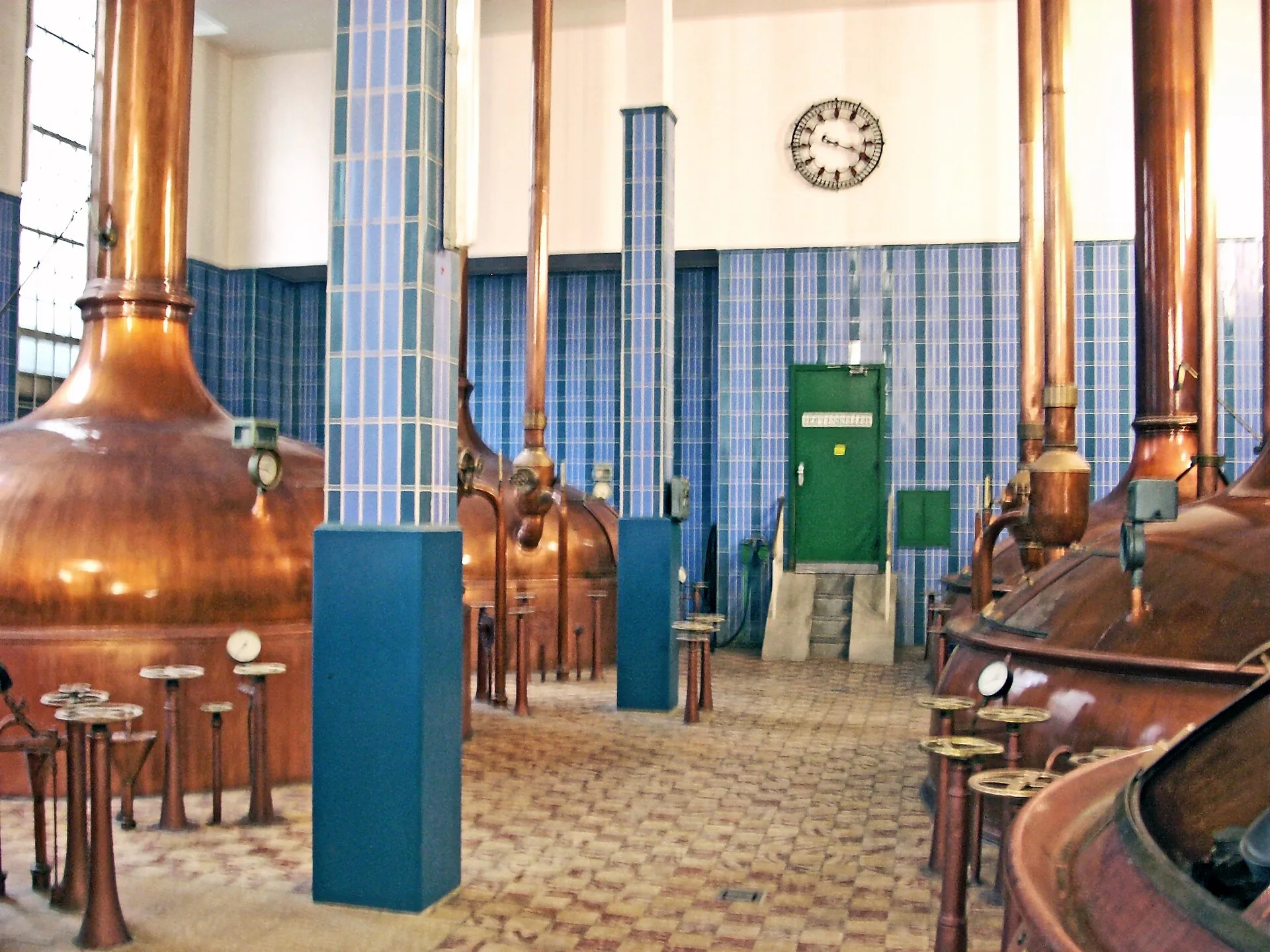
How beer is brewed comes down to four ingredients, water, malt, hops and yeast, and a fixed order of stages. Britannica defines beer as an alcoholic drink made by extracting raw materials with water, boiling the extract, usually with hops, and fermenting it. Its process diagram runs from barley through malting, milling, mashing, brewing with hops, fermentation, maturation, filtration and pasteurisation to bottles, cans and kegs. Water is the largest ingredient by volume, and some beers are nearly 90 per cent water, according to the glossary of CraftBeer.com, published by the US Brewers Association. Its chemistry also shaped regional styles, most famously at Burton-on-Trent, and in Bavaria a law of 1516 fixed which ingredients brewers could use.
HOW IS BARLEY MALTED FOR BEER?
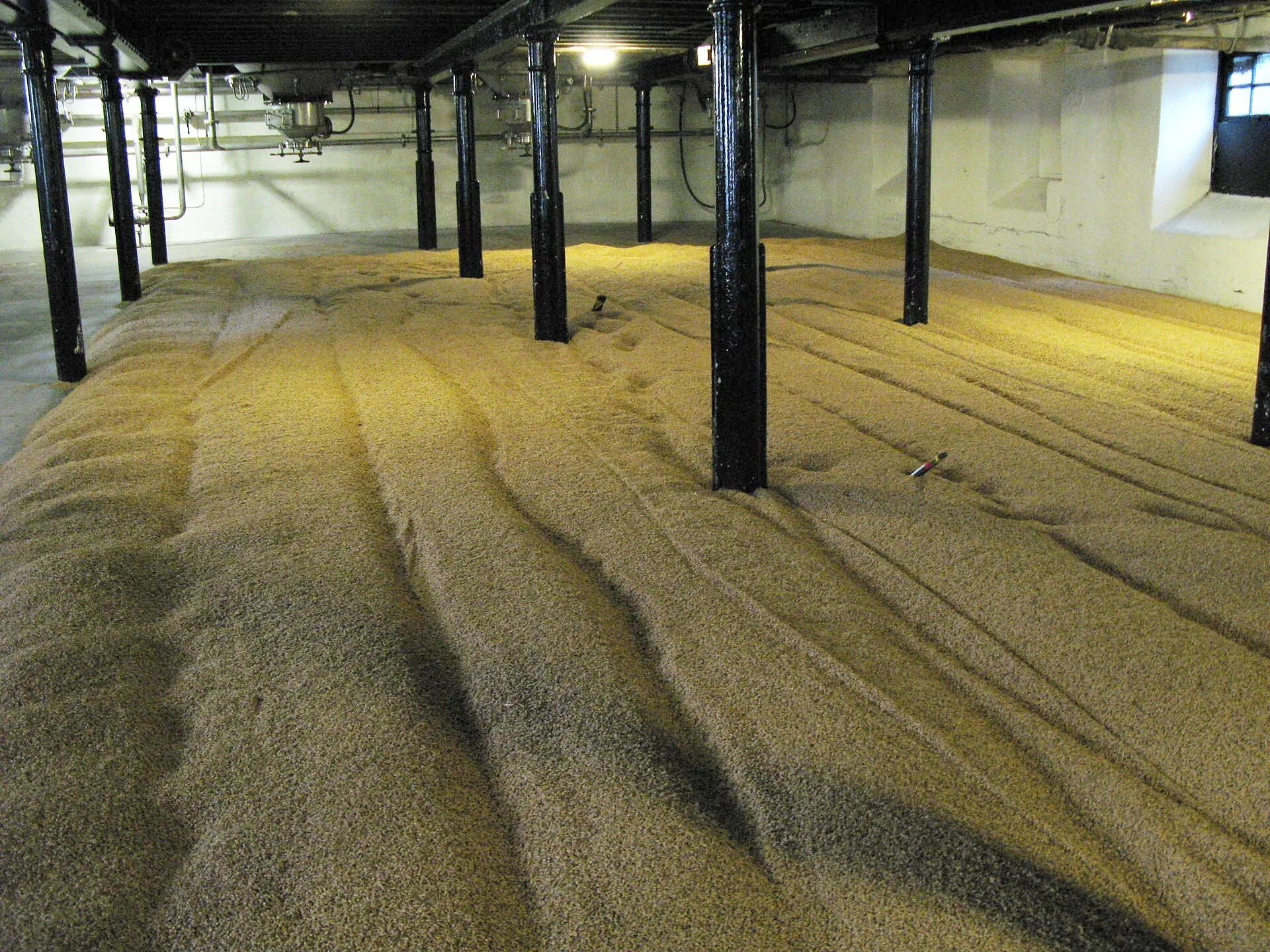
Malt is barley that has been steeped in water, germinated on malting floors or in germination boxes or drums, and then dried in a kiln. The first stage, steeping, is described by Tara McHugh in the Institute of Food Technologists' Food Technology magazine in 2017: the grain soaks in cold water until it is saturated, with the water changed daily over 40 to 72 hours. Germination follows in shallow tanks, where the grain is aerated and stirred for up to six days. Each grain grows a rootlet and a shoot called the acrospire, and as it sprouts it develops diastatic enzymes, including malt diastase, which convert its starch into sugars that yeast can ferment.
Kilning stops germination. The malt is heat-dried or roasted, with the temperature raised gradually over several hours, and the result is a dry grain that mills easily. McHugh notes that germination conditions and roasting times and temperatures strongly influence the flavour and colour of the finished beer. Britannica's article on beer, written by Thomas W. Young, a senior lecturer in biochemistry at the University of Birmingham, divides malting into the same three stages of steeping, germination and kilning, followed by a section on the modernisation of the process.
HOW BEER IS BREWED IN THE MASH TUN AND LAUTER TUN
In the brewhouse the malt is first milled into grist. Roller mills and hammer mills are both used, and some modern plants hydrate the grain before milling. The crush is a balance: too coarse and the starch stays out of reach, too fine and the husks that later filter the liquid are destroyed. Hammer mills give a finer grist and are often paired with mash filters. The grist then goes into the mash tun, the vessel in which it is soaked in hot water and heated so that the malt's enzymes convert starch to sugar. This step, saccharification, yields mainly maltose, and mashing typically lasts one to two hours.
Temperature shapes the result. Lower mash temperatures produce more fermentable sugars and drier beers, while higher temperatures give sweeter, fuller-bodied beers. Brewers reach their targets in different ways. An infusion mash adds heated water at set points, and a step infusion raises the temperature with very hot water before the mash is stirred and held at each step. A decoction mash removes a portion of the mash, boils it and returns it to the mash tun, sometimes repeating the process within one mash programme. Before the liquid is separated, the mash is raised to about 75°C.
Lautering separates the sweet wort from the spent grain. It takes place in a lauter tun, a large vessel fitted with a false slotted bottom that works like a colander, and a drain spigot. The husks left intact by careful milling form the filter bed. Sparging then sprays the spent grain with hot water to recover the remaining malt sugar. McHugh notes that sparging should not run too long, or it draws bitter tannins into the wort. Mash filters, which do not rely on the grain bed, are the alternative to the lauter tun in plants that mill finely.
WHY IS WORT BOILED WITH HOPS?
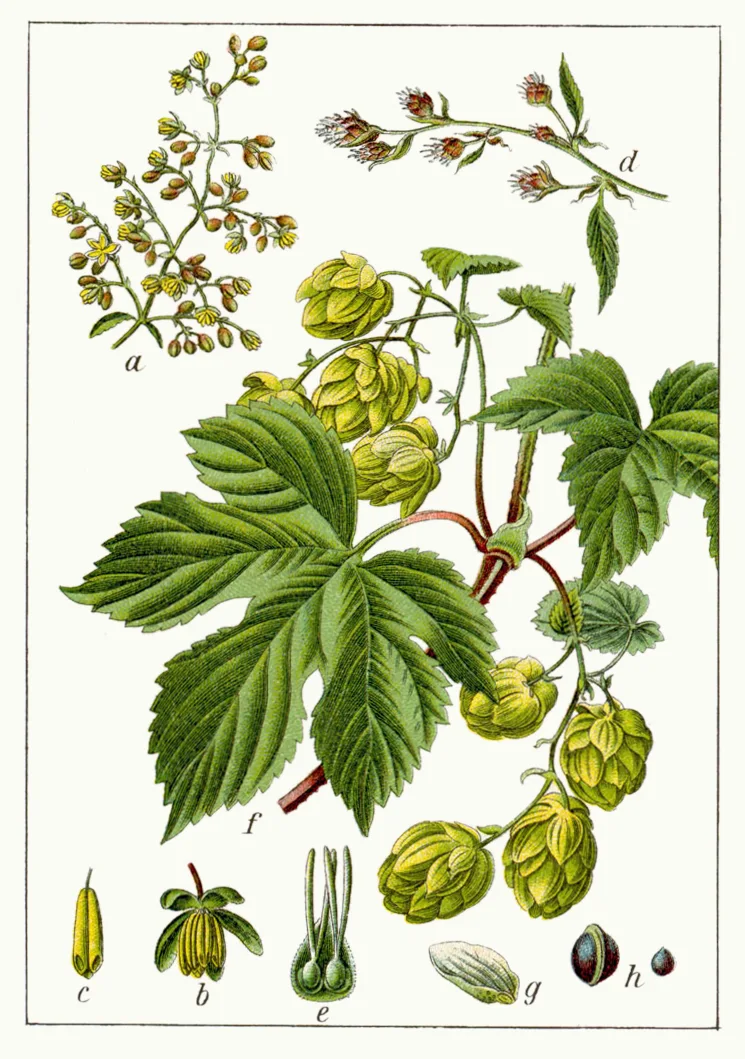
The wort is boiled for one to two hours in the brew kettle, and copper kettles are valued for their heat transfer. Boiling sterilises the wort and isomerises the acids in the hops, which is what creates bitterness. Hops are the female flowers of Humulus lupulus, a perennial climbing bine, and their bittering comes from alpha acids, one of the two main soft resins in the hop alongside beta acids. Hops added during the boil give bitterness, while hops added late contribute flavour and aroma instead, and brewers also add them as dry hops. Hops inhibit bacterial growth, and the bitterness they leave is measured in International Bitterness Units.
During the boil, proteins and tannins flocculate in what brewers call the hot break, and the precipitated proteins, hop oils and tannins form a sediment known as trub. The whirlpool removes it. The wort is stirred until a vortex forms, and the hop matter and coagulated proteins collect in the centre while the clear wort is drawn off. Some breweries do this in the kettle, others in a separate whirlpool vessel. The wort is then cooled quickly, typically through a plate heat exchanger, to prevent oxidation and off-flavours, and further proteins and tannins flocculate as it cools in the cold break.
HOW BEER IS BREWED WITH ALE AND LAGER YEASTS
Cooled wort goes to the fermenter, where yeast is added. Brewing has two basic fermentation methods, distinguished by where the yeast collects. Ales are fermented with top-fermenting yeast, whose cells tend to rise to the surface; McHugh identifies it as Saccharomyces cerevisiae, working at 15 to 20°C, with ale ready within about three weeks. Lagers use bottom-fermenting yeast, Saccharomyces pastorianus, whose cells tend to sink. Lager fermentation starts at around 10°C and continues near freezing during lagering, which can take several weeks to months. Cool fermentation is said to give lager its cleaner flavour, and lagers are traditionally fermented and served colder than ales.
The spread of bottom-fermented beer is a separate story, told in the history of lager and pilsner. A third method uses no added yeast at all. In spontaneous fermentation, the wild microbiota living in oak barrels ferment the wort, and the process can last up to two years. Whatever the method, fermentation turns the sugars produced in the mash into alcohol and carbon dioxide. Some breweries recover the carbon dioxide released in the fermenter and return it to the beer at packaging, which McHugh notes can improve aroma.
WHAT HAPPENS AFTER FERMENTATION?
After primary fermentation, beer is conditioned, or matured. During this stage the yeast absorbs off-flavours, which takes about one week for ales and several months for lagers. Lagering is the storage of bottom-fermented beer in cold cellars at near-freezing temperatures for weeks or even years, so that yeast and proteins settle and the flavour improves. Some lager brewers use krausening, a method of conditioning in which a small quantity of unfermented or still-fermenting wort is added to fully fermented beer to restart fermentation.
Filtration removes dormant yeast mechanically or with filter aids such as sheets or diatomaceous earth, which stabilises flavour and clarity. Pasteurisation then kills any remaining yeast and stops further alcohol production. McHugh notes that genuine draught beers are not pasteurised and must be kept refrigerated instead. The beer is packaged in cans, bottles or kegs, and carbon dioxide may be added during bottling. Bottle-conditioned beers follow a different route: yeast, sugar or wort is added at packaging, and a secondary fermentation in the bottle carbonates the beer and adds depth of flavour.
WHY DOES WATER MATTER IN HOW BEER IS BREWED?
Local water chemistry shaped regional styles, and the CraftBeer.com glossary cites Burton's bitters, Edinburgh's pale ales and Pilsner Urquell from Plzeň. Burton-on-Trent in Staffordshire is the classic case. According to The Oxford Companion to Beer (2012), its water rises through a sandstone aquifer rich in calcium sulphate, or gypsum, and reached sulphate levels of up to 800 ppm. Calcium sulphate is known as permanent hardness because heat does not precipitate it. In the mash, adequate calcium lowers pH, preserves enzymes and raises extract yield, and in fermentation it improves yeast growth and flocculation. The sulphate ion is generally thought to give a drier, more bitter beer.
The Oxford Companion records a Benedictine abbey at Burton founded in 1004 by Wulfric Spot, a date it calls disputed because the document is unsigned and undated; the town marked 1,000 years of brewing in 2002. The abbey brewhouse is first referred to in 1295. Burton's hard, gypseous water promoted protein coagulation in the boil, allowed high hop rates and suited pale ales, and Historic England records that the town's India Pale Ales became highly fashionable in the 1830s and 1840s. By 1834 nine Burton brewers made IPA. Bass built its New Brewery in 1858, and by the mid-1870s it was the largest brewing company in the world, producing around 980,000 barrels a year.
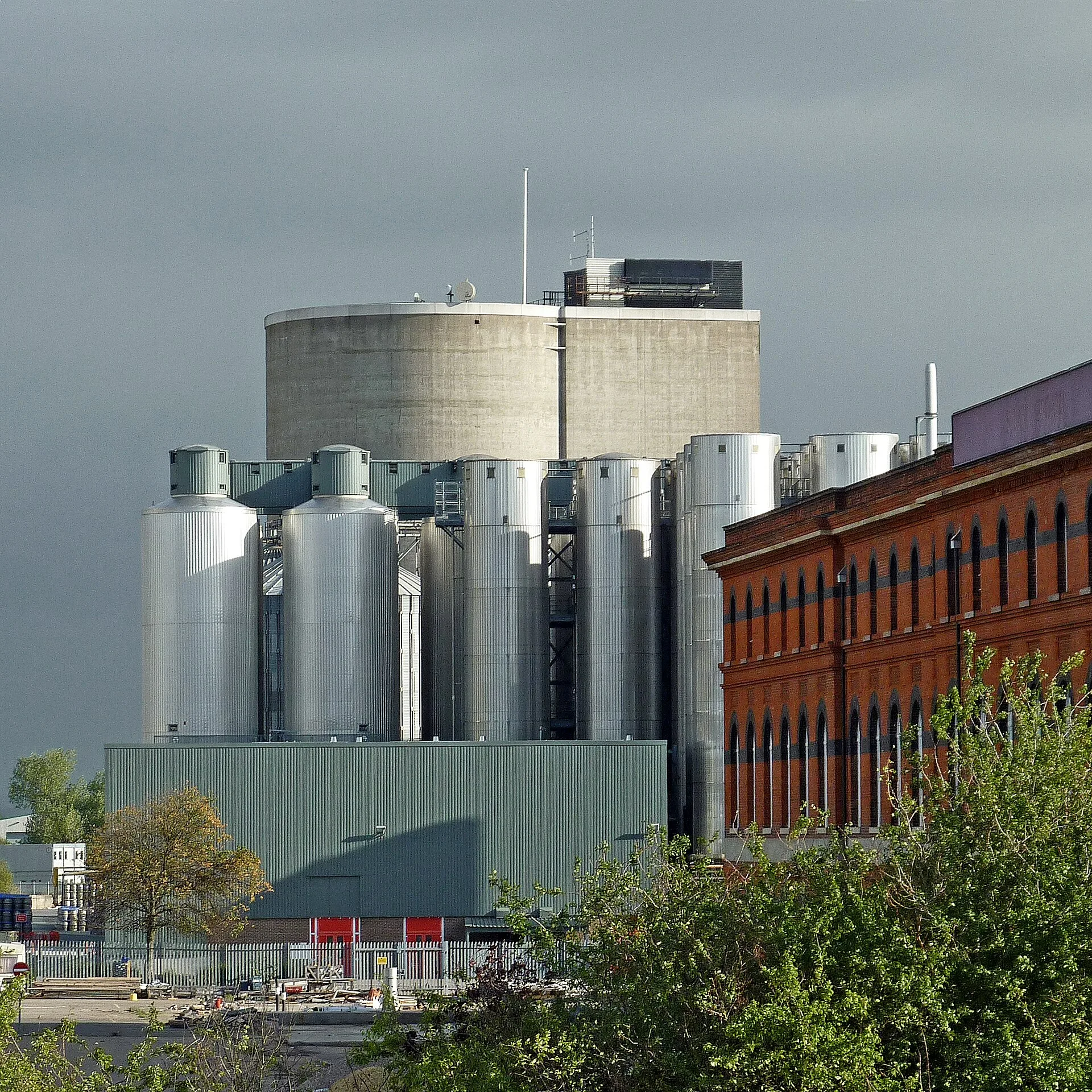
London's water, hardened instead by calcium carbonate, suited porter. In the late 19th century London brewers learned to Burtonise their water, adding salts to raise its sulphate hardness, and the practice spread across the British Isles and then worldwide; it remains common for pale ales and IPAs. Brewers rarely add enough salt to reproduce the Burton snatch, a sulphurous smell on freshly poured Burton beers, which the Oxford Companion still finds in Marston's Pedigree, brewed in the town. By the end of the 1880s Burton had 32 brewers operating 36 breweries, and the Bass water tower of 1866 survives there as a Grade II listed building.
WHAT WAS THE REINHEITSGEBOT OF 1516?
The Reinheitsgebot, the Bavarian purity law, was issued at Ingolstadt on 23 April 1516 by Wilhelm IV, Duke of Bavaria, of the Wittelsbach dynasty. It allowed only water, barley and hops in beer. An edict of 1487 had already set the same rule, but only for the brewers of Munich. The 1516 order also capped prices by season: from Michaelmas on 29 September to Georgi, St George's Day, on 23 April, a Mass of beer could cost no more than one Munich pfennig, and from Georgi to Michaelmas no more than two. Brewers who knowingly broke the order had their beer confiscated.
Restricting brewers to barley reduced competition for wheat and rye and kept bread prices low, according to The Drinks Business, while History Today notes that wheat was a staple of bread in medieval Germany. The same rule left the Wittelsbach dukes with the exclusive right to brew wheat beer, which they sold profitably. Wheat beer production revived in the 19th century as the rules eased, and German wheat beers fully returned to the market in the 1950s. Yeast is absent from the 1516 text; it was added to the permitted ingredients later, once its role in alcoholic fermentation, identified by Louis Pasteur, was understood.
BROADWAY AT EMIRATES PALACE ABU DHABI

Broadway is a brasserie and brewery bar at Emirates Palace in Abu Dhabi, with its interior design completed in 2023. Its design concept is a 1920s New York theatre-district warehouse brewery, and its beer is brewed on site. Beer made on the premises where it is poured has its own history, traced in the story of brewpubs. The 1920s setting is carried by the surfaces and signs: brick painted with faded 1920s advertising ghost art, and Broadway lettering in a 1920s typeface and neon.
The Cellar is Broadway's lounge, with a brick vaulted ceiling and theatre ghost art. In brewing, the cellar is also a working term: lagering is the storage of bottom-fermented beer in cold cellars at near-freezing temperatures, where yeast and proteins settle over weeks or longer before the beer is filtered and packaged. At Broadway, the theatre ghost art in The Cellar and the neon Broadway lettering correspond to the theatre-district half of the concept, and the beer brewed on site to the warehouse brewery half.
SOURCES
- Institute of Food Technologists, Food Technology How Beer Is Processed
- Encyclopaedia Britannica Beer
- CraftBeer.com (Brewers Association) Beer Glossary
- The Oxford Companion to Beer (Craft Beer & Brewing) Burton-on-Trent
- The Oxford Companion to Beer (Craft Beer & Brewing) Calcium sulfate
- The Oxford Companion to Beer (Craft Beer & Brewing) Burton snatch
- Historic England Burton upon Trent: The Beer Capital of England
- The Drinks Business 500th anniversary of Reinheitsgebot
- History Today The Bavarian Beer Purity Law