

MIGRANTS FROM YAZD, CORNER SITES AND THE BOMBAY BREAKFAST

An Irani café in Mumbai is a tea room, bakery and eating house opened by migrants from Iran, most of whom came from the central Iranian cities of Yazd and Kerman and settled in Bombay in the 19th and 20th centuries. The cafés spread from the late 19th century and catered principally to workers in the city's mills and factories. They are known for corner sites, European bentwood chairs, marble-topped tables and mirrored walls, for boards of house rules, and for a short menu built on buttered bread, sweet milky tea and kheema pav. Gateway House counts 350 Irani cafés on a list compiled in 1947 and 35 in 2019. The survivors include Kyani & Co., opened in 1904, and Britannia & Co., opened in 1923.
WHO OPENED THE IRANI CAFÉS OF MUMBAI
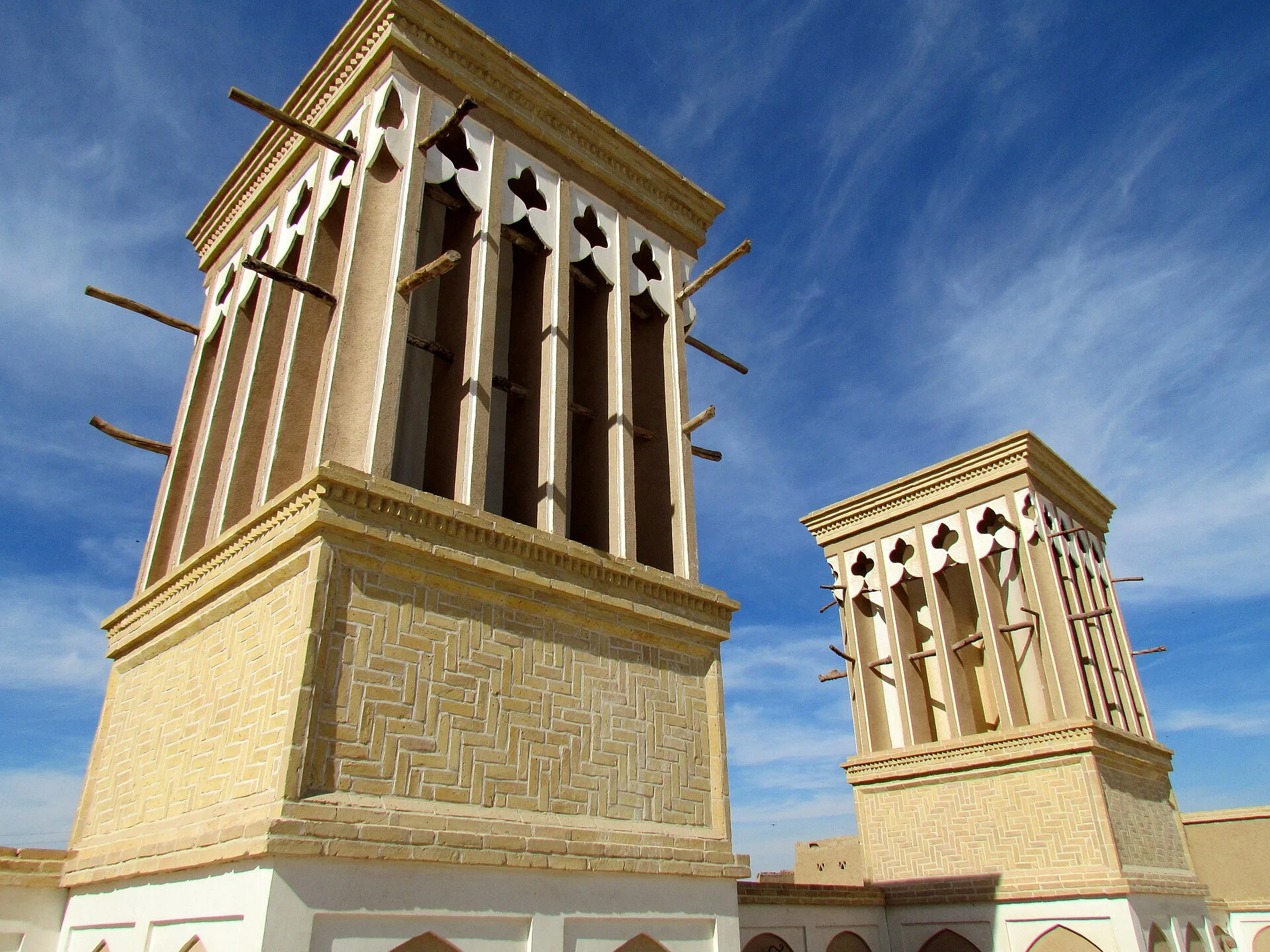
Iranian settlement in Bombay came in two stages, according to Sifra Lentin, Bombay History Fellow at Gateway House, writing in 2019. The earliest settlers were Shia merchants from Shiraz, Bushire and Isfahan, who arrived in the first half of the 19th century. The later immigrants, both Zoroastrian and Shia, came from the provinces of Yazd and Kerman. The architect and photographer Aakriti Chandervanshi, in a photo essay for the Indian heritage portal Sahapedia, writes that migration continued until 1947, with some migrants travelling by land through Baluchistan, Sindh and Gujarat and others arriving by sea. One journey recorded by Lentin is that of Haji Mohammed Showghi Yezdi, grandfather of the film-maker Mansoor Showghi Yezdi, who walked to Bombay from Khairabad in Yazd at the age of 16.
The newcomers reached a city that was expanding quickly. Chandervanshi lists the milestones: the railway in 1853, the first cotton mill in 1854, the opening of the Suez Canal in 1869, Sassoon Dock in 1875, wet docks in 1880 and 1888, and Victoria Terminus in 1888, which brought migrant labourers into the city. Factory, railway and dock workers, and the naval officers and military personnel stationed in Bombay, became the core customers. The Iranis arrived with little capital, and Chandervanshi notes that Yazd was known for confectionery, a skill suited to bakeries and tea rooms. Biscuits, bread and tea were sold cheaply to labourers, while European, Anglo-Indian, Indian Christian, Parsi and Jewish customers ordered cakes and pastries for Christmas, Nowruz, birthday parties and weddings.
WHY MUMBAI'S IRANI CAFÉS STAND ON STREET CORNERS
The corner site is the most repeated story about the Irani café in Mumbai, and it rests on a local belief about property. Lentin writes that Hindu merchants considered corner premises inauspicious and let them out cheaply to the Irun, the local name for the Iranian owners. Such corners were called waghmukh, likened to an open tiger's mouth, and were thought to bring poor returns. Gaumukh premises, compared to a cow's mouth that is never fully opened, were considered auspicious and cost more. Chandervanshi gives the same account, writing that Indian businessmen regarded corner plots as inauspicious and that they were available at much lower prices, which is why many of the old cafés sit at street intersections.
From the late 19th century the cafés multiplied, in Lentin's words, "literally on every street corner". Chandervanshi writes that at a time when public eating in Bombay was highly segregated, the Iranian cafés welcomed everyone. Names announced the owners' origins: Lentin cites Sassanian Boulangerie, Light of Persia, Café de la Paix and Iran Like Restaurant. Al Jazeera reported in 2014 that Sassanian Boulangerie, established in 1913, is named after the Sassanid Empire, which ruled Iran for more than 400 years, and that its walls carry photographs of historical Iranian monuments. Chandervanshi records newspaper cuttings, flags, family photographs and vintage photographs of Persepolis on café walls, and Al Jazeera noted the Iranian and British flags displayed at Britannia & Co.
BENTWOOD CHAIRS, MARBLE TABLES AND MIRRORED WALLS
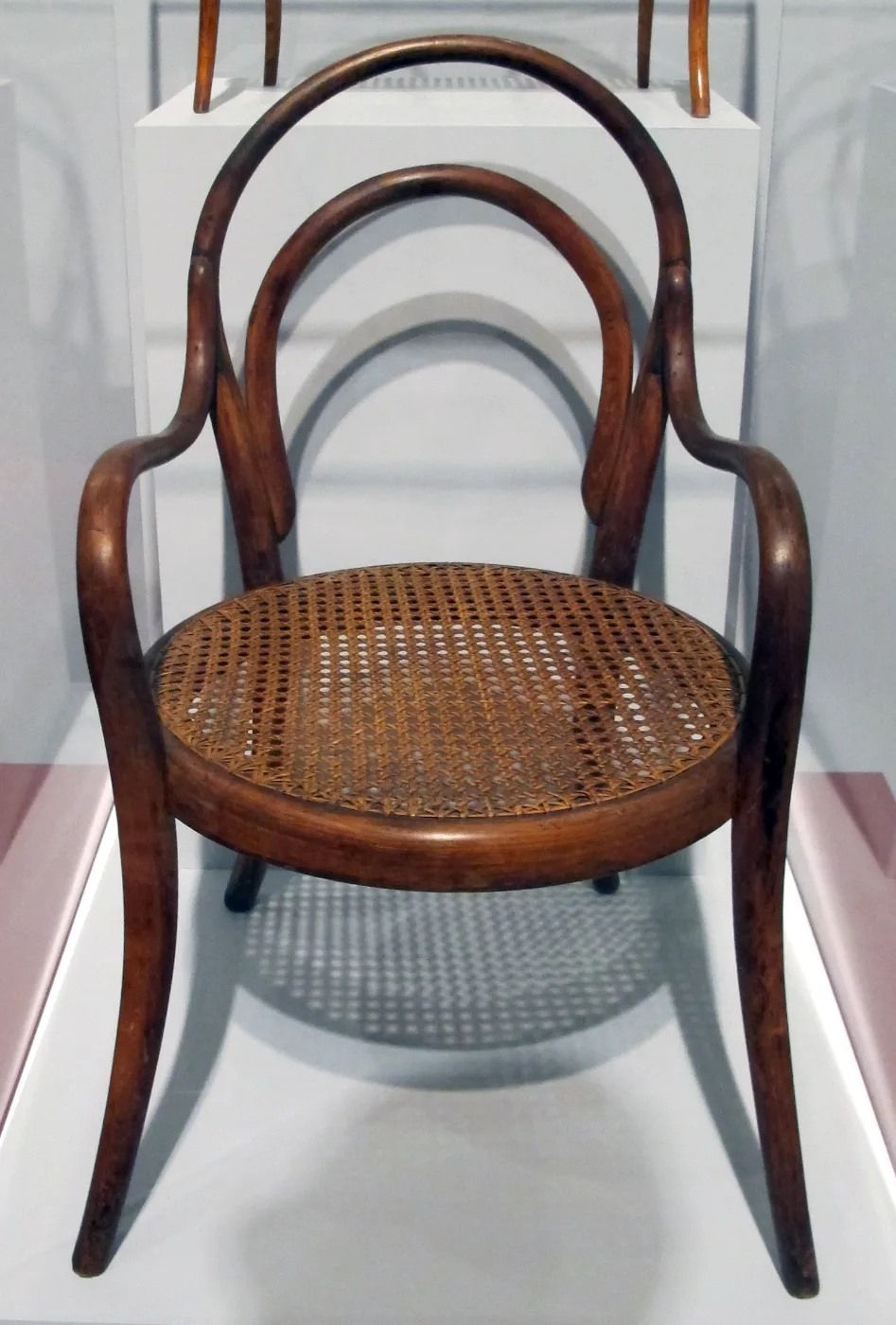
The furnishing of a traditional café varies little from one to the next. Lentin lists mirrored walls, which owners jokingly call "closed circuit TVs", European bentwood chairs, marble-topped tables and chequered flooring. Ornella D'Souza, writing in DNA India in 2018, describes the interior of Kyani & Co.: Burmese teak tables with Italian marble tops, Belgian bentwood chairs, a mosaic floor, mirror-panelled walls and pillars and a grandfather clock. Sarosh Irani of B. Merwan & Co. told her of the café's 114-year-old Minton tiles, and the journalist and film critic Rafique Baghdadi said the Irani cafés were the first to get the jukebox. At Britannia & Co., the authors of the Dishoom cookbook describe bentwood chairs from Europe, high ceilings and slowly turning fans.
The bentwood chair came from Central Europe. Britannica records that the German-born cabinetmaker Michael Thonet (1796 to 1871) first steam-bent veneers and glued several together to make light, curved chairs, and by 1856 had perfected a method of bending heated solid beechwood into curvilinear shapes, which made mass production possible. His Model No. 14 chair dates from 1859. By 1870 the firm in Vienna was producing some 400,000 pieces a year. Factories followed in Hungary and Moravia and salons opened across Europe and in New York and Chicago.
THE HOUSE RULES BOARD
Many cafés displayed a board of prohibitions. Mrityunjay Bose of the Deccan Herald quotes a version attributed to the poet Nissim Ezekiel, which lists 20 prohibitions and ends with the words "By order". It opens with no talking to the cashier, no smoking, no fighting and no credit. Others forbid outside food, sitting for a long time, loud talk, spitting, bargaining, giving water to outsiders, making change, phone use, matchsticks, discussing gambling, newspapers, combing hair, putting a leg on a chair, hard liquor and asking for addresses.
D'Souza credits Bastani, a rival of Kyani's that had closed more than a decade before her 2018 report, with originating a set of house rules it called the "No commandments", including no combing, no address enquiries and no putting a leg on the chair. The historian Deepak Rao told her that a board reading "no sitting for a long time" meant the opposite in practice: customers could sit as long as they liked. DNA India also records other fixtures of the cafés, including free newspapers in Gujarati, Hindi and English on every table and the galla, or cash counter. She reports that the cafés typically open from 7 am to about 6 pm.
WHAT IS SERVED IN AN IRANI CAFÉ: BUN MASKA, CHAI AND KHEEMA PAV
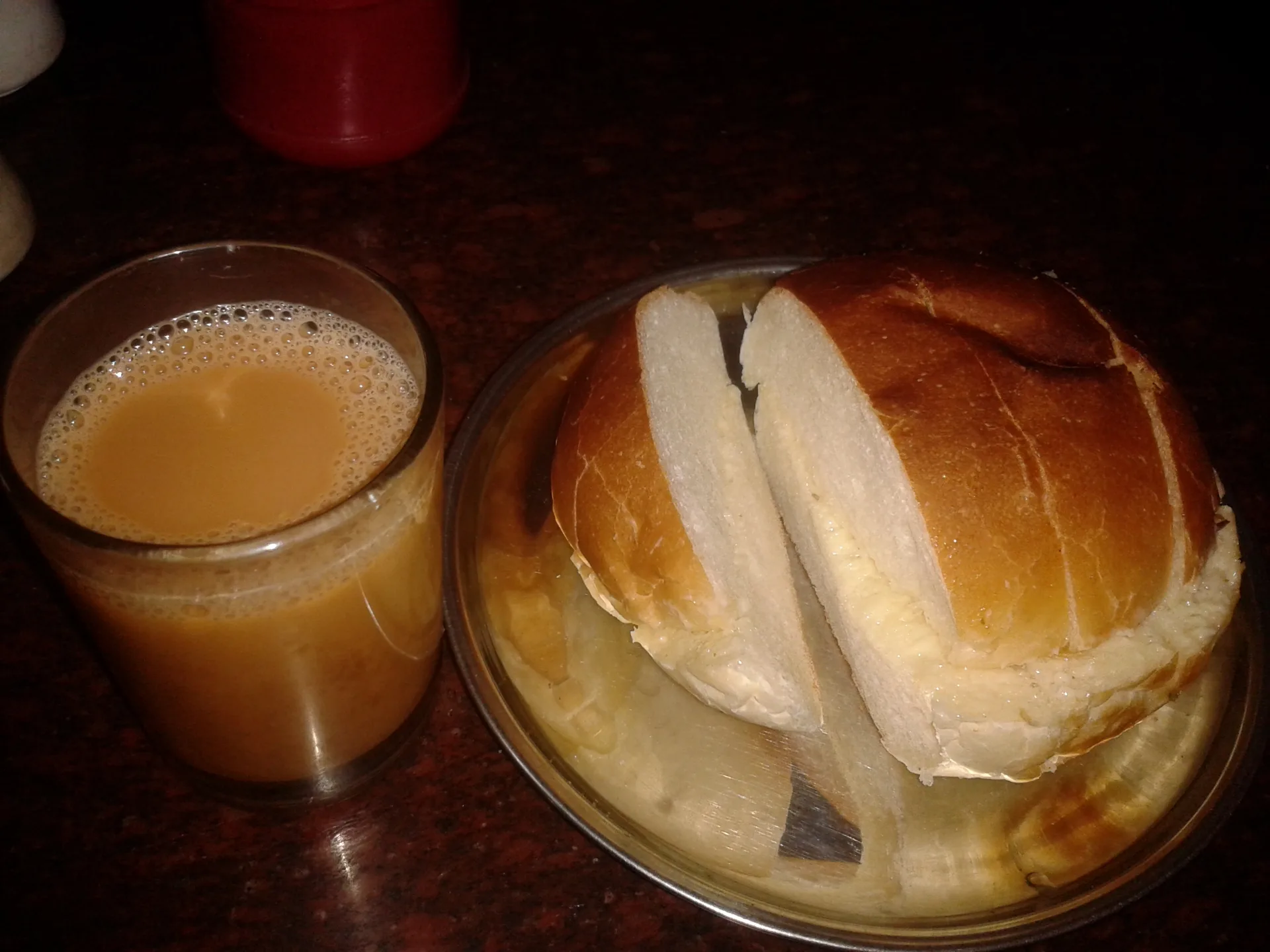
The core of the menu is bread and tea. Lentin describes crusty brun, sweet buns or soft pao, served buttered with milky, sweet tea. Buttered, the bun becomes bun maska and the brun becomes brun maska, and Rashid Irani told Lentin that from the 1940s to the 1960s workers stopped for chai and brun maska before going to work or before heading home. Breakfast added kheema pao, minced meat with bread, and omelettes. Bose lists the counter staples as bun maska, paani kam chai, mutton samosas, kheema pav, akuri and vegetable puffs, with khari biscuits, nan-khatai, Madeira cake and coconut jam biscuits. Al Jazeera photographed biscuits, confectionery, bread and cake sold from glass jars and shelves.
The menu widened over the 20th century. Lentin records the introduction of Mughlai and Parsi food, with early dishes such as ghosht, chops, khara ghosht, kheema, dal and vegetables, and later paya, bheja and zabaan. The Iranian ab ghosht was not adopted, being too bland for local tastes. Bose lists berry pulao, dhansak, biryani and cherry cream custard among the dishes on Irani café menus, and the Dishoom authors list the bottled drinks at Britannia & Co.: Sosyo, Pallonji's raspberry soda, ginger soda and fresh lime soda.
KYANI, BRITANNIA, CAFE MILITARY, B. MERWAN AND YAZDANI

Kyani & Co., spelt Kayani in Lentin's account, was established in 1904 by Khodadad and Khodamorad Shukriye of Yazd and moved to its present premises in the Jer Mahal building at Dhobi Talao in 1913. Al Jazeera described it in 2014 as the oldest operating Irani café in Mumbai. B. Merwan & Co. opened outside Grant Road station in 1914, and D'Souza reported in 2018 that it made about 6,000 mawa cakes a day. Yazdani Bakery in Fort opened in 1953, according to Al Jazeera, in a building that D'Souza says once housed a Japanese bank. Cafe Military in Fort started in 1933, according to Bose, who lists the writers Salman Rushdie, Arun Kolhatkar and Kiran Nagarkar and the cricketer Dilip Vengsarkar among its patrons.
Britannia & Co. was opened in 1923 in Ballard Estate, South Mumbai, by the father of Boman Kohinoor, who was born the same year. The Dishoom authors Shamil Thakrar, Kavi Thakrar and Naved Nasir, in an excerpt published by Scroll.in, write that the café occupies the ground floor of an early 1920s building by the Scottish architect George Wittet, who also designed the Gateway of India, and that the chicken berry pulao was created by Kohinoor's wife in 1982, after the family returned from Iran. NPR describes the dish as rice pilaf with chicken stewed in a fragrant tomato sauce and topped with sour barberries. D'Souza reported that it made up about half of the café's sales. Boman Kohinoor died in September 2019, aged 97.
WHY ARE MUMBAI'S IRANI CAFÉS CLOSING
Counts vary by source. Lentin cites a list of 350 Irani cafés in Bombay compiled in 1947 by Deepak Rao and Bruce Carter, mostly Zoroastrian-run, with about 15 per cent run by Shia owners; D'Souza cites about 350 in a 1950 directory. NPR put the earlier peak at about 400 and the 2019 figure at fewer than 40. Al Jazeera counted no more than 25 survivors in 2014, Bose about 30 genuine ones, and Lentin 35 in 2019. Losses include Brabourne at Dhobi Talao, which closed in 2008, and New Empire, replaced in 1998 by one of Mumbai's first McDonald's.
The reasons given are consistent across accounts. Lentin cites unprofitability, rising electricity and food costs, and competition from Udupi restaurants since the 1960s and later from American franchise chains. Younger family members have often emigrated, with Toronto a favoured destination, and few want to work the cash counter from 6 am to 11 pm. NPR reported that Romin Kohinoor, who had worked Britannia's register for about four decades, ran the café mainly to keep it going for his father. Some survivors have reinvented themselves as permit rooms, vegetarian eateries or upscale restaurants, while newer cafés such as Cafe Irani Chaii in Mahim, opened in 2015, have revived the format.
TRIDENT, NARIMAN POINT ON MARINE DRIVE

Trident, Nariman Point stands on Marine Drive in South Mumbai, facing the Arabian Sea, in the same part of the city as Britannia & Co. in Ballard Estate. The hotel rises 35 storeys and opened on 7 April 1973 as the Oberoi-Sheraton, 50 years after Britannia & Co. was opened and 69 years after Kyani & Co. was established. Of the cafés named above, Kyani & Co., B. Merwan & Co., Britannia & Co., Cafe Military and Yazdani Bakery all opened between 1904 and 1953. The hotel was renamed Trident in 2008 under The Oberoi Group.
Silverfox refurbished the interiors of the hotel's arrival reception, lobby lounge, Ness Bar, ballroom and event spaces under a "Luxury Lifestyle" concept, with the work completed in 2025. Ness Bar is on L1 and has views over Marine Drive and the sea; the development of that seafront is described in Marine Drive: how Mumbai built its Art Deco seafront. In the chronology of the Irani cafés, the hotel's 1973 opening falls after the rise of Udupi restaurants in the 1960s that Lentin records, and before New Empire's replacement by McDonald's in 1998 and the closure of Brabourne at Dhobi Talao in 2008, the year the hotel took the Trident name.
SOURCES
- Gateway House Bombay's Irani cafes
- Sahapedia Maska Bun and Migration: Irani Cafes of Bombay
- Al Jazeera In pictures: Mumbai's dying Irani cafes
- DNA India Here's how Irani cafe's are adapting to the times while maintaining old-school culture
- Deccan Herald Dwindling Irani cafes of Mumbai
- Scroll.in For Boman Kohinoor of Mumbai's Britannia & Co, there was no love greater than the love of eating
- NPR Parsi Cafes, A Centuries-Old Tradition In India, Are Vanishing
- Encyclopaedia Britannica Michael Thonet


