THE CREOLE HOME COOKING OF MACAU'S MACANESE FAMILIES
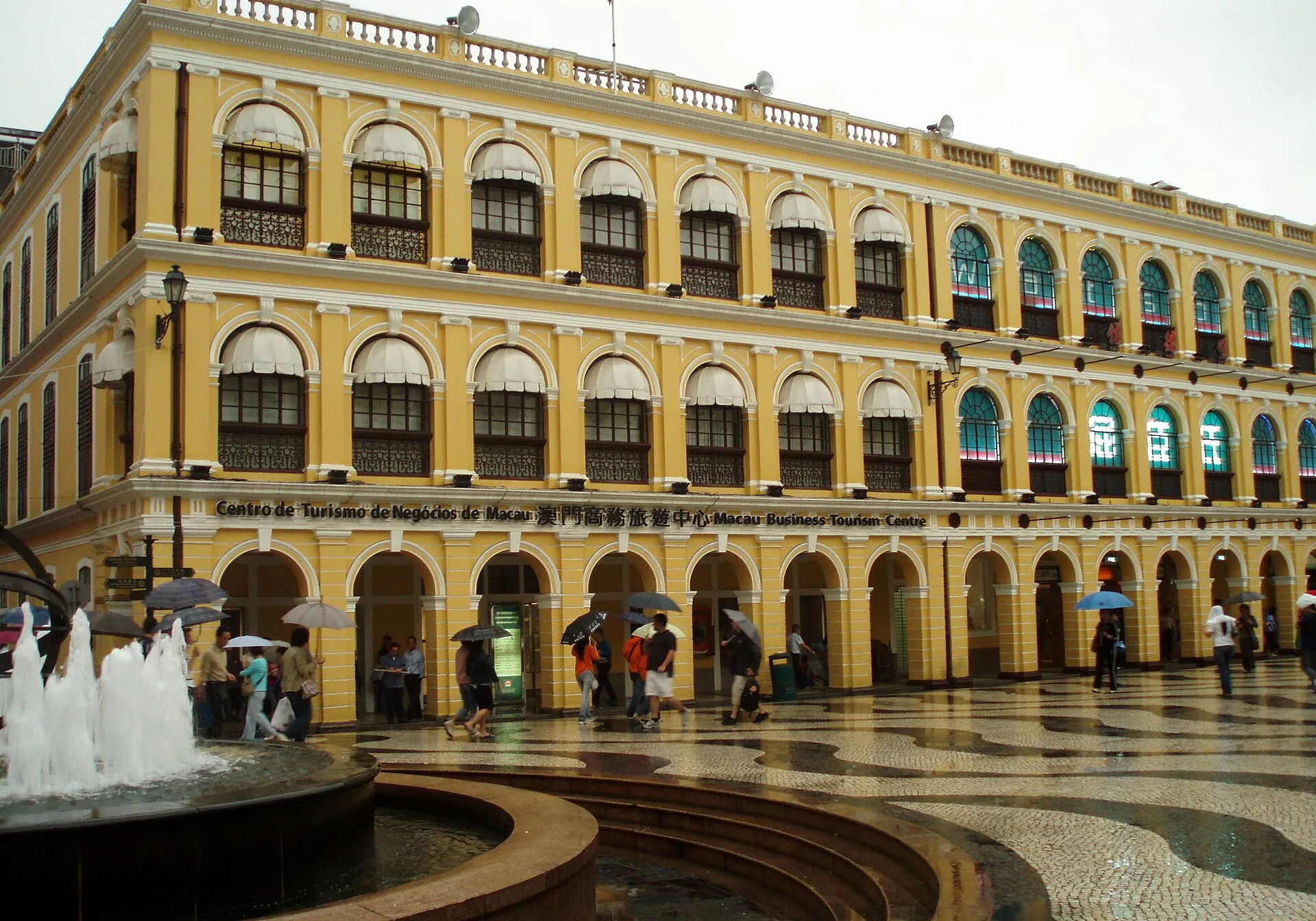
Macanese food is the cooking of Macau's Macanese families, developed over more than 400 years from Portuguese recipes and the ingredients met along Portuguese trade routes in Asia and Africa. The Macao Government Tourism Office (MGTO) describes it as a food culture based on Portuguese cooking methods, blended with ingredients and techniques from Africa, India, Malaysia and the local Chinese population. Macanese gastronomy has been on Macao's Intangible Cultural Heritage list since 2012, and on 31 October 2017 Macao joined the UNESCO Creative Cities Network in the field of gastronomy. Its best-known dishes include minchi, galinha à africana, tacho, diabo, porco balichão tamarindo and the dessert serradura.
WHAT IS MACANESE FOOD?
Writers on the cuisine stress its separate identity. In "The Creole Cuisine of Macao", published in the Cultural Institute's Review of Culture in 1994, the researcher Graça Pacheco Jorge described it as a cuisine of its own, with Portuguese roots and some "grafts" from Goa, Malacca or Timor. She traced it to Portuguese travellers adapting their dishes to local ingredients in India, Ceylon, Malacca and Timor. MGTO's gastronomy website adds the Chinese element: many Portuguese in Macao married local Chinese, and their families folded foreign ingredients and cooking styles into traditional Portuguese dishes. The result, in MGTO's account, is Portuguese cooking built on curry, coconut milk, cloves and cinnamon and prepared with Chinese techniques.
For most of its history Macanese food was cooked at home. Macao Magazine, published by the Government Information Bureau of the Macao SAR, notes that recipes were passed down through families, some as closely guarded secrets, and that restaurants have only more recently begun to promote the cuisine. Rice is the base of most main courses and gravy plays a large part, according to António M. Jorge da Silva, writing in the same magazine in 2017. Some dish names come from Patuá, a Portuguese-based creole with Cantonese, Sinhalese and Malay influences: pato baffasá, a braised and baked duck, joins bafa (braised) and asá (roast).
HOW PORTUGUESE TRADE ROUTES SHAPED MACANESE FOOD
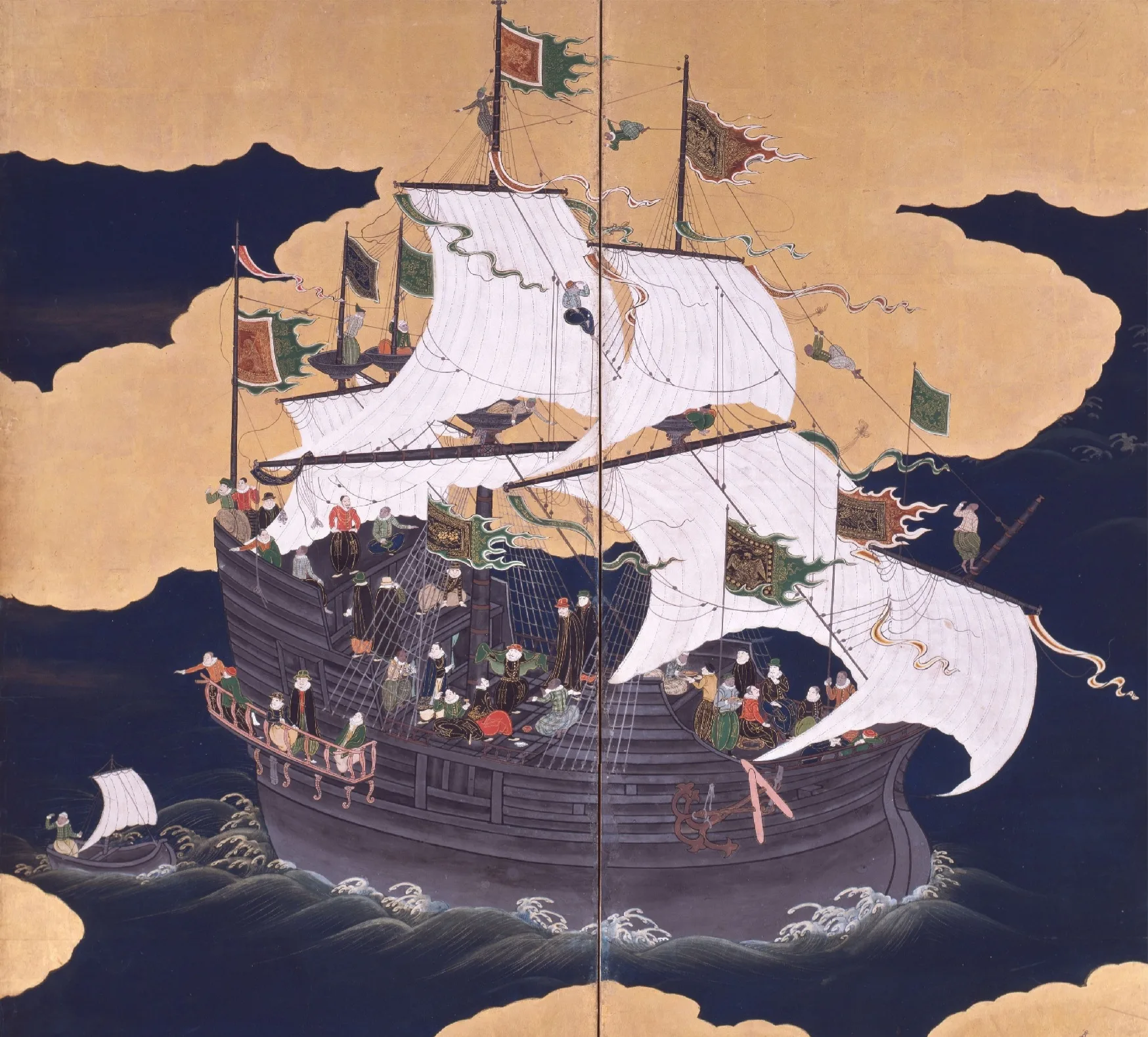
Da Silva sets the cuisine against the reach of Portuguese trade, which extended to Africa, Brazil, the Malabar coast of India, the Moluccas, Malacca, China and Japan, with Portuguese merchants brokering trade between China and Japan. Macao was settled by the Portuguese in 1557 with the permission of the Chinese authorities. Its first settlers were casados, married men who had left Crown service to trade, and their households included African, Indian and Malay women and, later, Japanese women. In da Silva's account, a Portuguese base was seasoned first with Goan, Malaccan and some Timorese spices, and Chinese influence followed.
Individual dishes carry these routes in their names. Da Silva links porco vinho d'alho, pork vindaloo, to India and limão de Timor, a preserved lemon, to Timor. He places galinha africana, prawns piri-piri and peixe esmargal among the African-derived dishes, and porco tamarinho, pork in a tamarind and shrimp paste sauce, among the Malayan ones. From Portugal came pastéis de bacalhau, the salt cod cakes he describes as very popular in Macao, alongside iscas (liver) and rins (kidney) à moda de Macau.
MINCHI: THE EVERYDAY MACANESE DISH
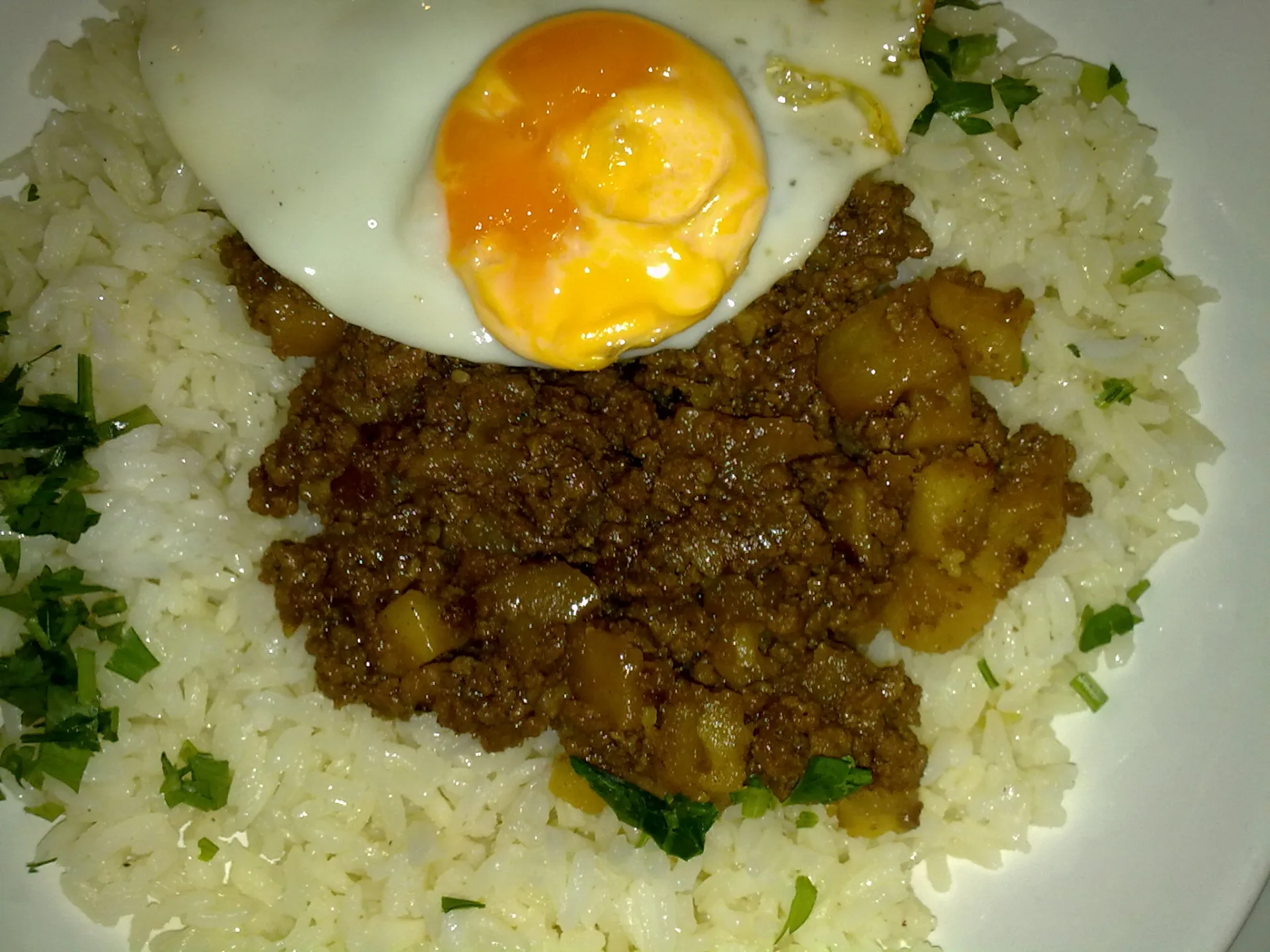
Minchi is minced beef or pork, or both, stir-fried with fried potato cubes, onion, garlic and soy sauce, served on rice and usually topped with a fried egg, according to Macao Magazine; a 2019 article in the same magazine by Sam Sinha adds molasses. Pacheco Jorge called minchi the ex-libris of Macanese cuisine. She suggested that the name is probably an adaptation of the English "minced meat", and wrote that the dish was improved in Hong Kong after the first influx of Macanese from Macao to Hong Kong in 1840. Da Silva likewise credits the Macanese community of Hong Kong with introducing minchi and cheese toast.
No single version exists. The South China Morning Post, writing on journalist Cecília Jorge's 2004 book Macanese Cooking: A Journey Across Generations, described minchi as a classic that every family in Macau cooks its own way. Pacheco Jorge's 1994 recipe cooks minced beef and pork with soy sauce and serves it either with rice and deep-fried potatoes or with vermicelli and seaweed. Macao Magazine suggests a possible influence from Goan beef mince, which uses green peas and is wetter. Manuel António de Jesus, son of Aida de Jesus, known as the "Godmother of Macanese Cuisine", told the magazine in 2022 that minchi has no season and is "our everyday food".
AFRICAN CHICKEN AND GALINHA À PORTUGUESA
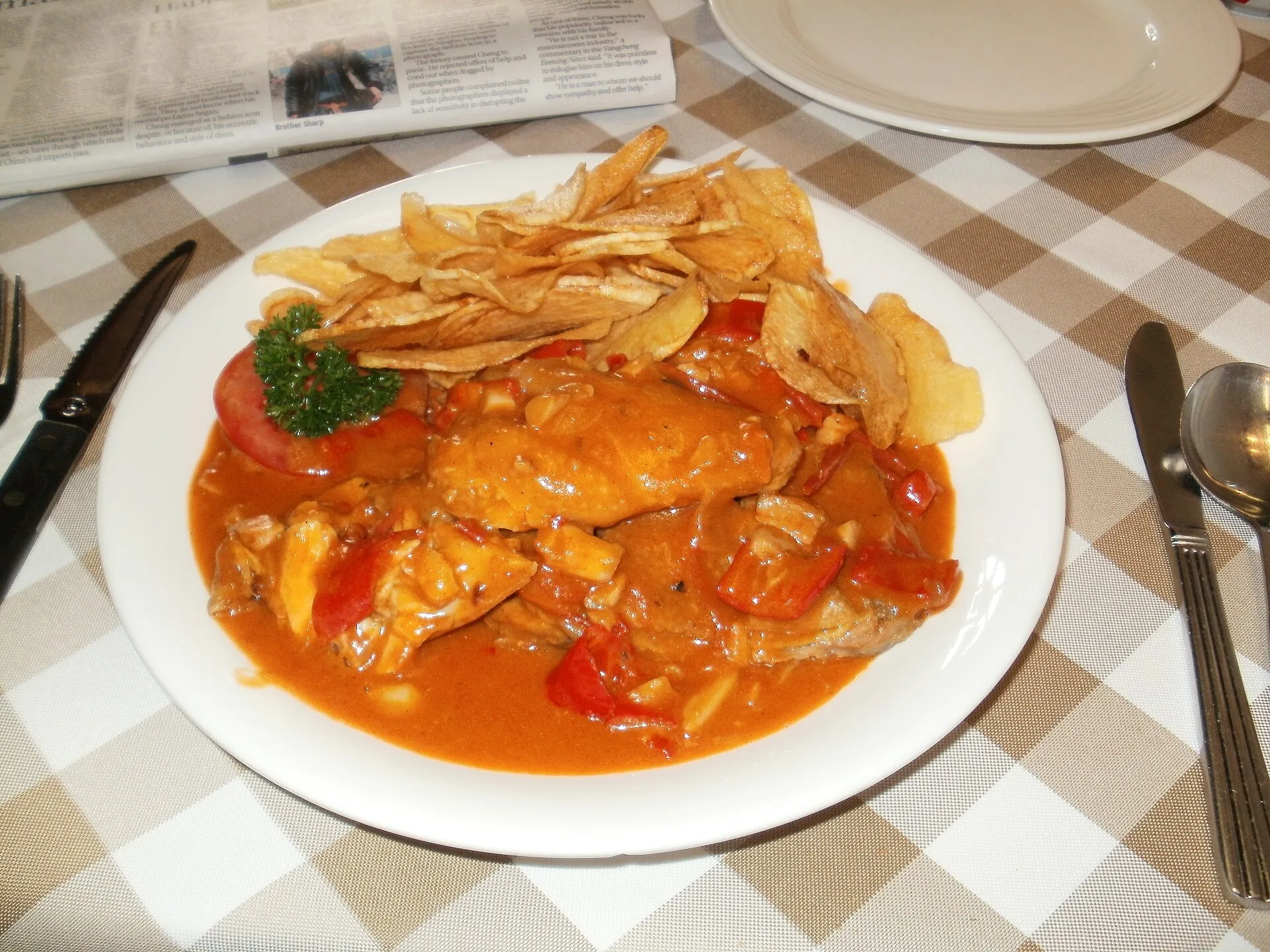
Galinha à africana, or African chicken, is barbecued chicken glazed with piri-piri and served with a sauce that, in the version described by Macao Magazine, combines African spices with garlic, peanut butter, coconut milk, tomato, peppers and wine. Writing in the American Historical Association's Perspectives on History in 2023, Isaac Boqiao Yan noted that there is no standard recipe: versions range from simple salt-and-chilli barbecue to grilled chicken with coconut sauce and a curry-like stew. He traced the sauce's flavours to Portugal (olive oil, bay leaves), southern China (oyster sauce, five-spice powder), Southeast Asia (coconut milk) and India (turmeric). Macao Magazine lists galinha à portuguesa as Portuguese chicken curry.
The origin of African chicken is disputed. Yan records accounts that it was a family dish handed down for centuries, and others that it was developed in restaurants in the first half of the 20th century. Local culinary circles credit the hotel chef Américo Ângelo, said to have been inspired by a trip to Mozambique in the 1940s, and name the Pousada de Macau, a now-demolished waterfront hotel, as the first place to serve it; Ângelo died in 1979 without fully revealing his recipe. Macao Magazine dates his sauce to the 1970s. Manuela Sales da Silva Ferreira, who learned the sauce from Ângelo at Hotel Lisboa's Portas do Sol at 17, served it when she opened Restaurante Litoral in 1995.
TACHO, DIABO AND BALICHÃO
Tacho, also called chau-chau pele, is a variant of the Portuguese cozido à portuguesa. Recipes described by Macao Magazine typically combine pork ribs or knuckle, pig skin, Chinese ham, lap cheong sausage, chicken, daikon, cabbage, beans, carrots and potatoes, and take two to three days to prepare. It is a winter and celebration dish, historically eaten by wealthy families, and rarely appears on menus because of its cost; another version uses fish maw, pork rind, pig's trotters and balichão. Moon Tong, manager of the restaurant Riquexó, told the magazine in 2022 that tacho and minchi were among its best sellers.
Diabo is a spicy stew of leftover meat and poultry cooked with mustard and spices, according to Sinha. Cecília Jorge's recipe, as reported by the South China Morning Post, gives only one measurement, a tablespoon of chopped pickles, and leaves the amounts of onion, shallot, chilli and turmeric to the cook. Da Silva lists Bosco Correa's diabo, made with beer, among the newer recipes based on Macao tastes. Balichão is a shrimp sauce used across Macanese cooking. Pato baffasá is marinated overnight, braised for about two hours with onion, garlic, turmeric and balichão and then baked for a golden crust, according to Macao Magazine. Porco balichão tamarindo braises pork in a sticky tamarind and dried shrimp sauce, which Sinha describes as an acquired taste. In 2017 da Silva wrote that balichão would almost certainly not be made by future generations, and that Malay and Filipino substitutes do not taste the same.
CHÁ GORDO, SERRADURA AND MACANESE SWEETS
The chá gordo, literally "fat tea", was in Pacheco Jorge's words the typical meal of the Macanese and the occasion for each family to show its culinary talents. She described the food as a social agent, "promoting the sociability of the house around the table". Other Macanese dishes include capela, a round meatloaf of pork, beef and chorizo wrapped in bacon and topped with cheese, described by Sinha, and casquinha, a stuffed and baked crab. Restaurante Litoral's casquinha follows a recipe from the owner's grandmother, who worked at the Pousada de Macau in the 1940s.
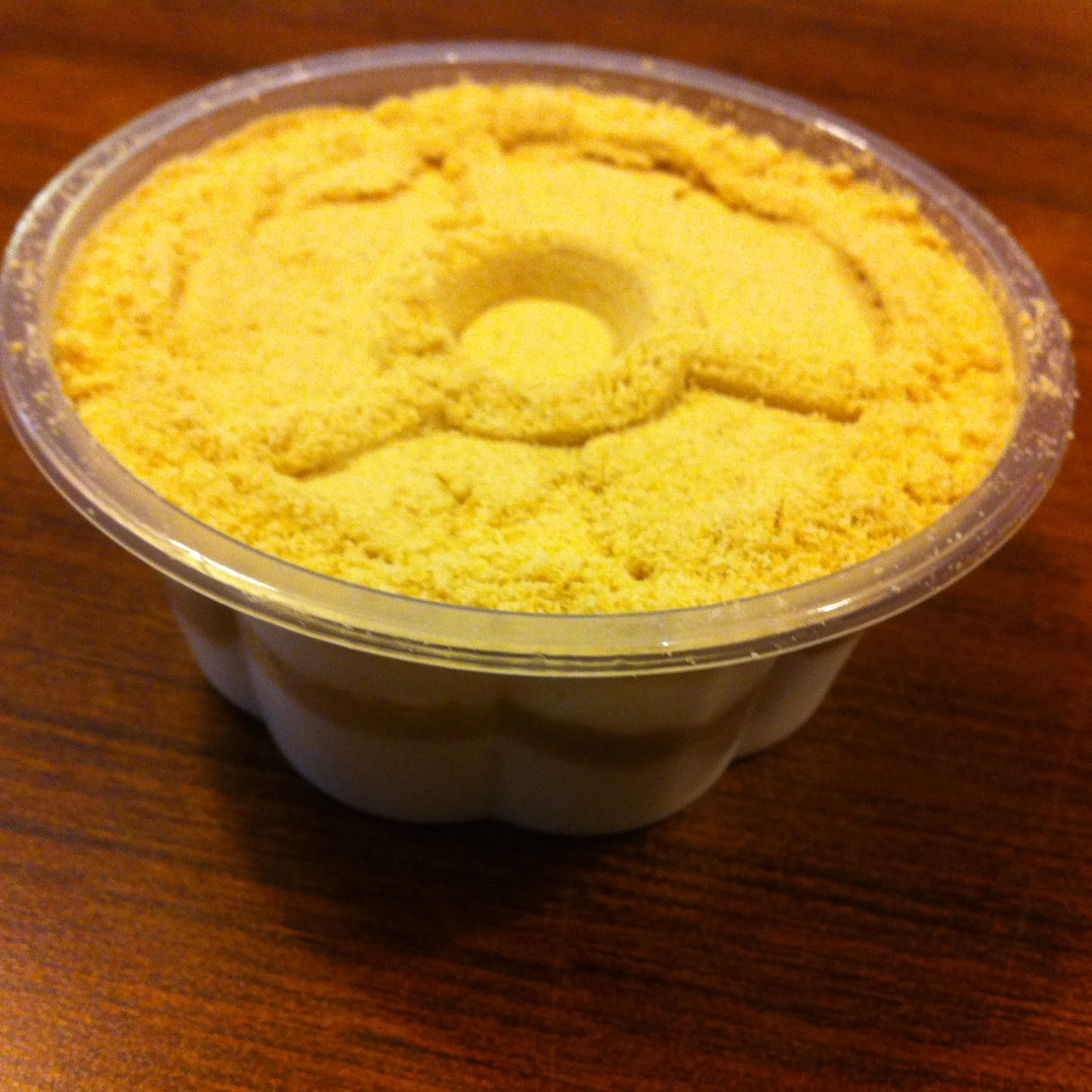
Serradura is a dessert of whipped cream and Marie biscuit crumbs, listed by Macao Magazine among the cuisine's dishes together with bebinca de leite, a coconut milk custard. Bebinca also appears in a list of fine sweets of the Far East that Pacheco Jorge quotes from Alberto de Castro Osório, alongside aluá and bicho-bicho. Lord Stow's Bakery, founded in 1989 by Andrew Stow, is known for its pastéis de nata. Feijoada, a pork and beef bean stew, and pastéis de bacalhau appear in the same Macao Magazine list as serradura.
MACANESE FOOD IN COOKBOOKS AND HERITAGE LISTS
Cecília Jorge told the South China Morning Post that there are few accounts of the food served since the Portuguese arrived in Macau almost 450 years ago. Among the earliest printed records are two recipe books from Pacheco Jorge's grandmother's collection: O Recreio Económico, published in Pangim on 1 March 1892, and Recipes de Confeição e Iguarias, published in Bombay by B. X. Furtado and Brother in 1901. She wrote that both show Portuguese influence and Indian Portuguese vocabulary. Her bibliography also lists António Vicente Lopes's Receitas da Cozinha Macaense (1977), the second edition of Maria Celestina de Mello e Senna's Bons Petiscos por Celestina (1977) and Maria Margarida Gomes's A Cozinha Macaense (Imprensa Nacional, 1984).
Pacheco Jorge's own A Cozinha de Macau da Casa do Meu Avô was published by the Instituto Cultural de Macau in 1992. Cecília Jorge's Macanese Cooking: A Journey Across Generations (2004) gathers several variations of dishes such as minchi; she notes that "there is no one perfect recipe". In 2014 the Instituto Cultural listed a 215-page bilingual Portuguese and English edition of The Cuisine of Macao from My Grandfather's House, also issued in Chinese, which compiles the recipes left by the author's grandparents, the collector José Vicente Jorge and his wife Matilde Pacheco Jorge, to conserve and promote Macanese gastronomy.
MGTO's gastronomy website records that the Confraria da Gastronomia Macaense was founded in 2007 to spread Macanese gastronomic heritage and gives its membership as 160. Macanese gastronomy was inscribed on the Macao Intangible Cultural Heritage List in 2012. After Macao's designation as a UNESCO Creative City of Gastronomy on 31 October 2017, Macao has promoted Sustainable Gastronomy Day internationally since 2018, and in 2020 MGTO was building a Macanese cuisine database to record the cuisine's history, recipes and culinary arts. Macao Magazine reports that the Macao government recognises the Macao Institute for Tourism Studies (IFTM) as a "protector" of Macanese gastronomy.
HYATT REGENCY HENGQIN AND ITS VIEWS TO MACAU

Silverfox Studios' interior for Hyatt Regency Hengqin was completed in 2019, seven years after Macanese gastronomy entered Macao's Intangible Cultural Heritage list and two years after Macao's designation as a UNESCO Creative City of Gastronomy. The hotel, with 493 rooms and suites, is the anchor of Lai Sun Creative Culture City in Novotown on Hengqin Island. It is connected to Hong Kong and Macau by the Hong Kong-Zhuhai-Macao Bridge, the two cities in Pacheco Jorge's account of minchi, which she says was improved in Hong Kong after the first influx of Macanese from Macao in 1840.
Views to the Hengqin hills and to Macau shaped the hotel's design. Its interiors use vertical timber slats, woven linen, rattan and pale veined stone. In Macau, MGTO traces Macanese cooking to the Portuguese sea route to the East in the 16th and 17th centuries, which brought spices and food traditions from Africa, India and the Malacca coast, and to families formed when Portuguese settlers married local Chinese. Those households cooked Portuguese dishes with curry, coconut milk, cloves and cinnamon, using Chinese techniques.
SOURCES
- Macao Government Tourism Office (Government Information Bureau) Macao joins the world again to promote Sustainable Gastronomy Day
- Macao Government Tourism Office Macao, UNESCO Creative City of Gastronomy
- Review of Culture, Instituto Cultural de Macau Graça Pacheco Jorge, The Creole Cuisine of Macao
- Review of Culture, Instituto Cultural de Macau The Creole Cuisine of Macao: bibliography
- Instituto Cultural de Macau The Cuisine of Macao from My Grandfather's House
- Macao Magazine Rediscovering Macanese flavours
- Macao Magazine Evolving palate
- Macao Magazine Preserving the past
- American Historical Association, Perspectives on History Macanese Galinha à Africana
- South China Morning Post Macanese dishes, from minchi to mango pudding, and (roughly) how to cook them