

FROM A RAMPART STEP TO THE RESTAURANT WALL
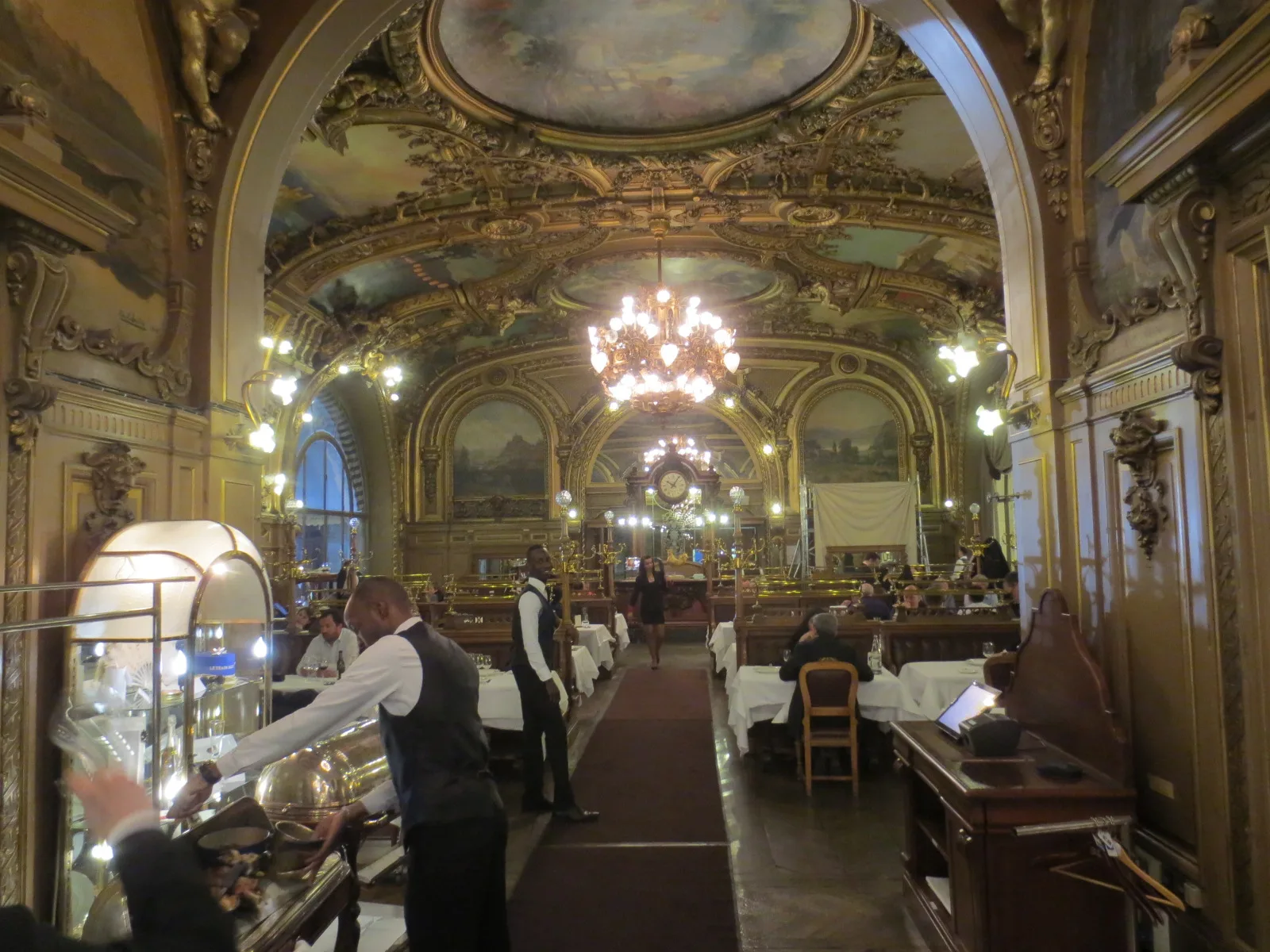
Banquette seating is a long upholstered bench fixed along a wall, with tables set in front of it and chairs on the open side. The word reached English from French in the early 17th century, when it named a firing step behind a fortress parapet, and it later settled on furniture. The seat appears in a John Singer Sargent café drawing of the late 1880s, among the leather banquettes of Le Train Bleu at the Gare de Lyon in Paris, in the oak booths of New England lunch-car diners and in the semicircular banquette Philip Johnson designed for the Four Seasons in New York in 1959. In 2004 researchers at Cornell University measured how long guests stay at banquettes compared with booths and free-standing tables, and what they spend while seated there.
WHAT IS BANQUETTE SEATING?
Dictionaries agree on the core meaning. Merriam-Webster defines a banquette as a long bench with upholstered padding, and separately as a built-in, usually upholstered bench along a wall; it also lists a sofa with one roll-over arm. Dictionary.com gives the American sense as a long cushioned bench, often placed against a wall, as in a restaurant, and the British sense simply as an upholstered bench. The French Larousse dictionary describes a banquette as an elongated bench or stool on four, six or eight legs, either padded or caned, and also as a seat made in a single piece. Larousse adds the shared bench seat of a railway or metro carriage.
In restaurants the banquette is distinct from the booth. In a 2004 paper in the Cornell Hotel and Restaurant Administration Quarterly, Sheryl Kimes and Stephani Robson defined booths as tables with permanently fixed seating and solid architectural dividers on three sides. Banquettes, in their definition, are tables placed along a permanently fixed bench, with companions seated in chairs directly across the table. The same paper grouped both with window tables and tables against half-wall partitions as anchored seating, meaning tables placed against a wall, window or other architectural feature rather than standing free in the room.
WHERE DOES THE WORD BANQUETTE COME FROM?
Merriam-Webster traces banquette to French, through Middle French, from the Old Occitan banqueta, a diminutive of banc, meaning bench. It notes that banc is of Germanic origin and related to the Old English benc, the root of the English word bench. Dictionary.com describes the same route, borrowed from French, which took it from Provençal banqueta, and identifies the suffix -eta as the counterpart of the English diminutive -ette. Larousse also gives Old Provençal banqueta, from banc. Dictionary.com dates the arrival of the word in English to 1620 to 1630, and Merriam-Webster records its first known use in 1629.
That first English sense was military. Merriam-Webster defines it as a raised way along the inside of a parapet or trench for gunners or guns, and Dictionary.com as a platform inside a parapet where soldiers stood to fire. The word then spread to other raised strips. Dictionary.com lists an embankment supporting the base of a levee, a raised sidewalk of brick or planks in coastal Louisiana and East Texas, a ledge running along the back of a buffet, and a bench for passengers on top of a stagecoach. Merriam-Webster records the Southern American use for a sidewalk. Larousse lists a stone bench built into the embrasure of a window in medieval buildings, a towpath and the walkway along an aqueduct canal.
BANQUETTES IN PARIS CAFÉS AND RESTAURANTS
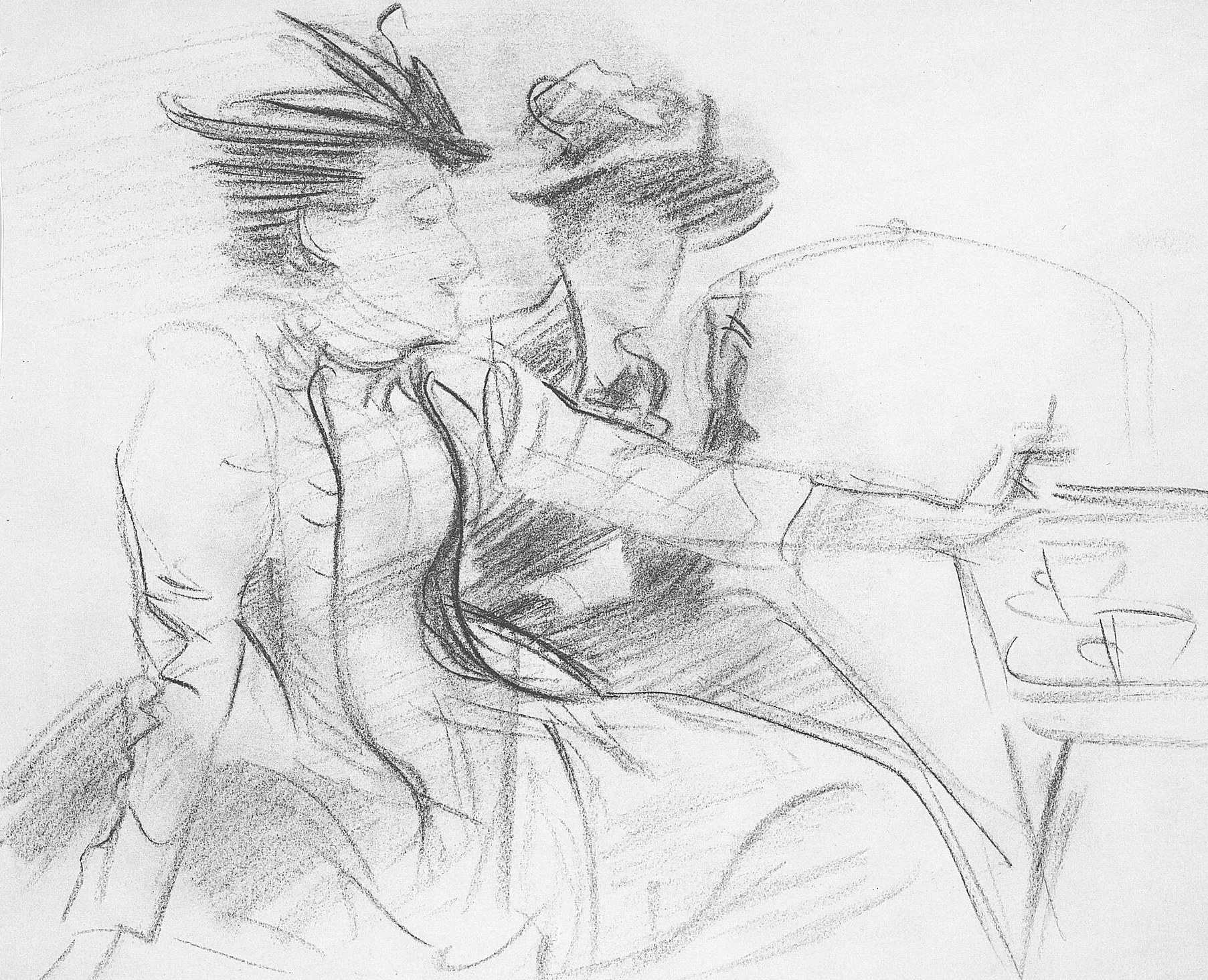
The café banquette appears in a small charcoal drawing by John Singer Sargent, Two Women in a Café, made in the late 1880s and now in The Metropolitan Museum of Art. The sheet measures 22.1 by 28.3 centimetres and was given to the museum by Mrs Francis Ormond in 1950. The Met's catalogue describes the two women as seated on a banquette and states that the setting is likely a café. One of them is probably Flora Priestley, a friend of Sargent's from childhood; the other is unidentified. The catalogue suggests the two may be "new women" who smoke in public, and notes that Sargent, described by friends as shy, was in fact very social.
Leather banquettes are part of the station restaurant Le Train Bleu at the Gare de Lyon. According to the restaurant, it was built in 1900 for the Exposition Universelle and designed by the architect Marius Toudoire, who also designed the station's clock tower and facade. It opened in 1901 as the station buffet and took the name Le Train Bleu in 1963, after the Paris to Vintimille line. The restaurant lists its paintings, chandeliers, gilding, floors, wood panelling, leather banquettes and furniture as elements of the 1900s decor. In 1972 several of its rooms, including the Salon Doré, were classified as historic monuments.
HOW DID THE AMERICAN DINER BOOTH DEVELOP?
Smithsonian magazine, profiling the diner historian Richard Gutman, director and curator since 2005 of the Culinary Arts Museum at Johnson and Wales University, sets out the sequence. The magazine places the diner's origins in Providence, where in 1872 Walter Scott introduced the first night lunch wagon; a customer took his food from the wagon's window and ate sitting on the curb. Samuel Jones added seats inside the wagon in 1887. Around 1913 Jerry O'Mahony, founder of one of the first of a dozen diner factories in New Jersey, New York and Massachusetts, made the first stationary lunch car. Diners, unlike coffee shops, were traditionally built in a factory and transported to their sites. Around 1924 the name moved from lunch car to dining car and was shortened to diner.
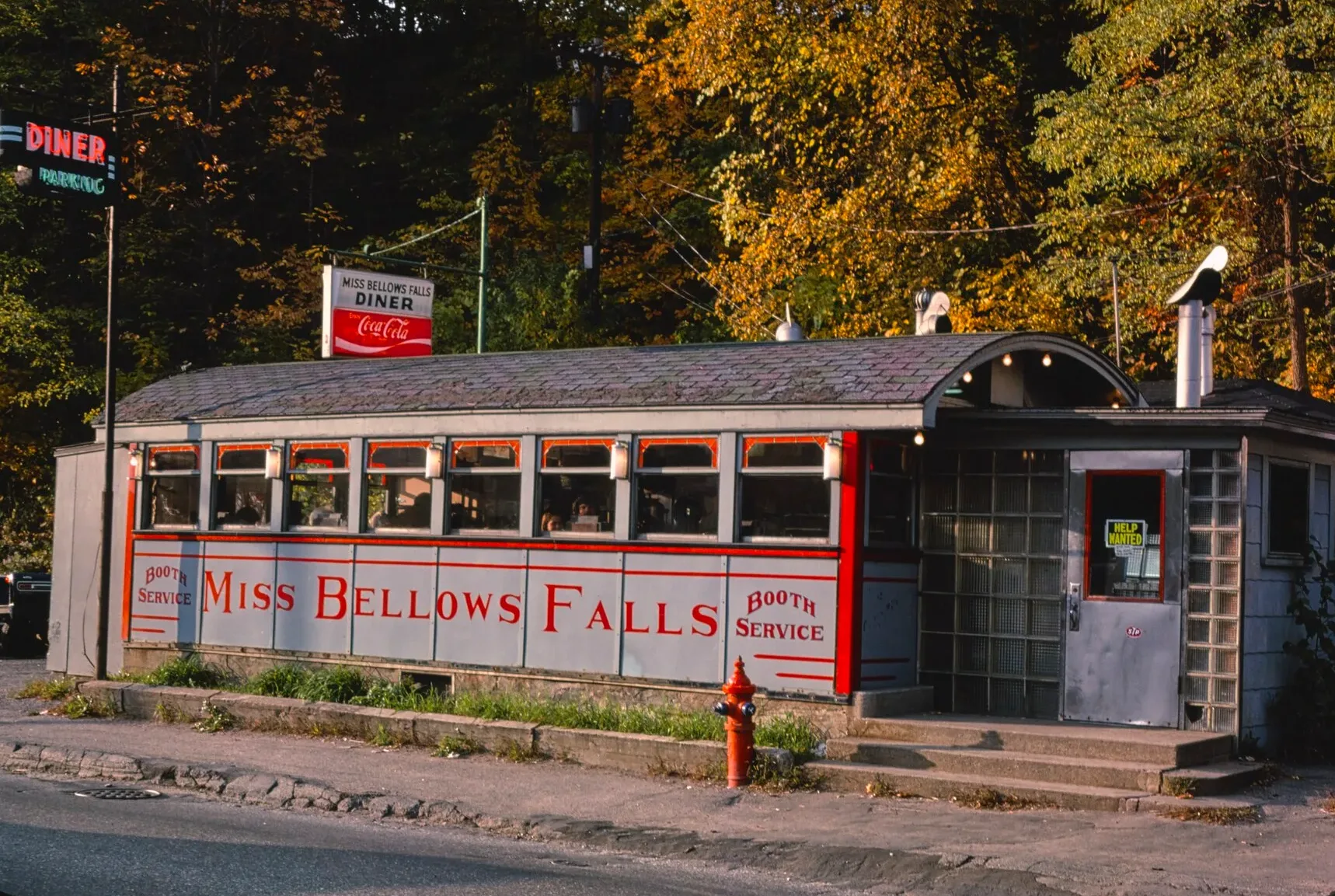
The magazine counts 6,000 diners across the United States at their 1950s peak and about 2,000 today, more than 600 of them in New Jersey. A National Register of Historic Places nomination for the Miss Bellows Falls Diner in Vermont shows the layout of one. The diner is a barrel-roofed model by the Worcester Lunch Car Company, production number 771, installed at 90 Rockingham Street, Bellows Falls, in 1942. A central counter with its original reddish marble top runs nearly the full length of the car. Along the street wall stand five four-person oak booths, their oak-legged tables topped with red Formica, and the diner seats thirty.
NEW YORK BANQUETTE SEATING: THE FOUR SEASONS GRILL ROOM
The Four Seasons Grill Room in New York opened in 1959 and closed in 2016. The Metropolitan Museum of Art describes it as a celebrated icon of American modernism. Philip Johnson led the design in collaboration with Ludwig Mies van der Rohe, William Pahlmann, and Garth and Ada Louise Huxtable. The finishes included Pahlmann's beaded metal curtains, French walnut panels and smoked cracked glass room dividers, and the room also held works by Pablo Picasso, James Rosenquist and Richard Lippold. The Met describes the result as a combination of a minimalist aesthetic with mid-century opulence.
According to the Met, leaders in business, real estate and architecture met in the room daily at Johnson's reserved lunch table, where he arbitrated career-making deals between clients and figures from the architecture world. In 2016, the year the Grill Room closed, the museum bought one of its seats with a gift from Lila Acheson Wallace. It catalogues the piece as "Semicircular Banquette and table no. 33", designed by Philip Johnson in 1959 and manufactured by Treitel Gratz, under accession number 2016.551a, b. The banquette and its table together measure 77.5 by 218.4 by 101.6 centimetres.
HOW IS BANQUETTE SEATING BUILT?
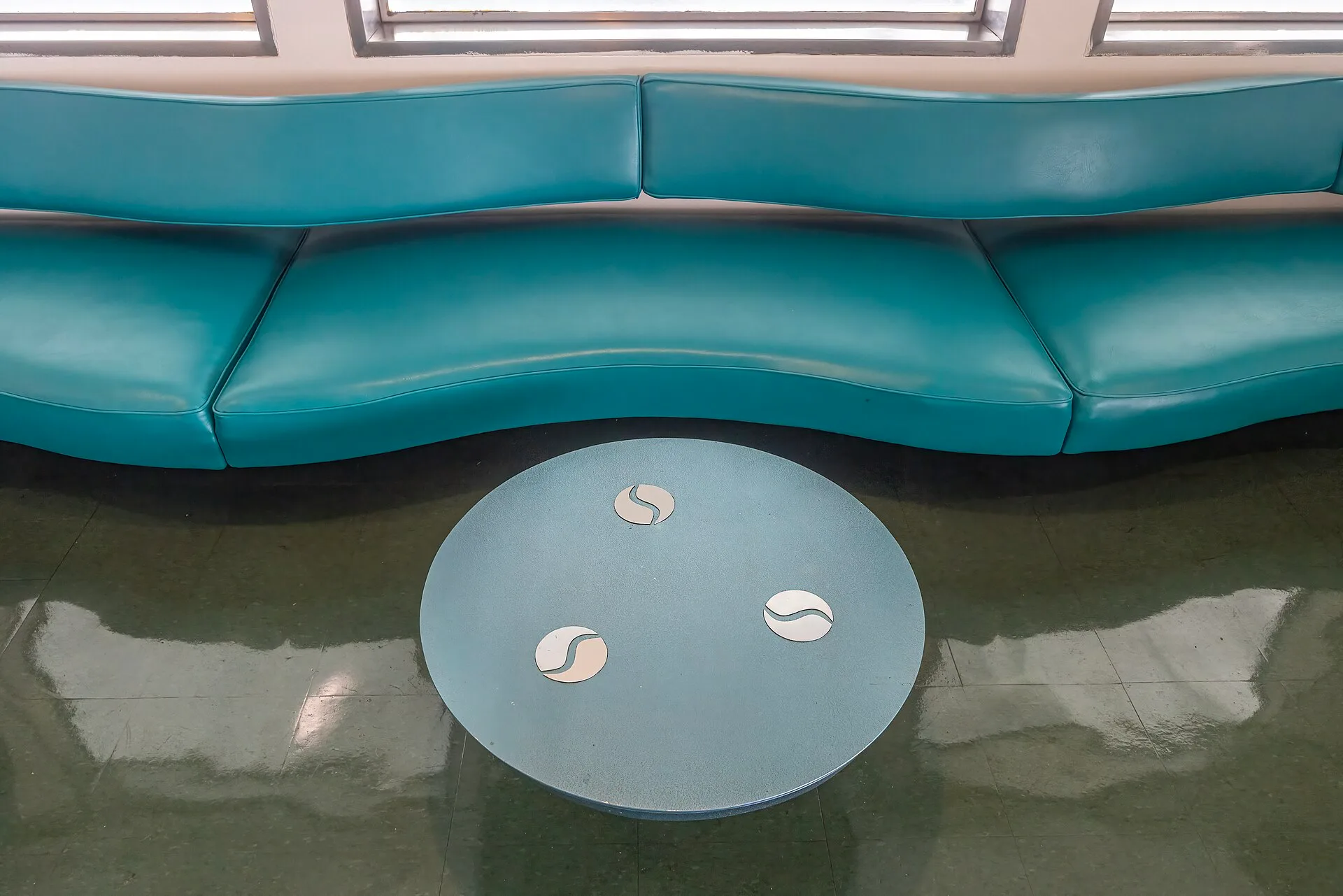
The construction of a banquette follows the general history of upholstery. Encyclopaedia Britannica records that the earliest upholsterers, from early Egyptian times to the beginning of the Renaissance, nailed animal skins or dressed leather across a rigid framework, then developed cushions, padding and pillows stuffed with materials such as goose down and horsehair. Springs, which allowed soft, bulky shapes, were first used by upholsterers in the 18th century. They were helical by the mid-19th century and were later flattened for greater resilience. In the 20th century, Britannica notes, moulded sponge rubber, dirt and liquid retardants, plywood, Naugahyde and synthetic fibres gave upholsterers new springing, cushioning and covering materials.
The documented restaurant seats use different combinations of these materials. Le Train Bleu lists leather banquettes among its decor of the 1900s. The booths of the Miss Bellows Falls Diner are oak, set against oak-legged tables with red Formica tops. The Met records the medium of the Four Seasons banquette of 1959 as upholstery, steel, walnut and enamelled steel. Larousse allows for either a padded or a caned seat, and Merriam-Webster separates the upholstered bench from the built-in bench along a wall, the form the Cornell researchers describe as permanently fixed.
WHY DO RESTAURANTS USE BANQUETTE SEATING?
The Kimes and Robson study measured the effect of table types in one restaurant: Chevys Freshmex, a 210-seat, midprice Mexican-style restaurant in a shopping mall in suburban Phoenix, Arizona. The researchers analysed 67 tables in the dining room, made up of 31 tables for two, 32 for four and 4 for five, using four weeks of point-of-sale records from peak periods. They compared meal duration, average check per person and spending per minute across anchored tables, including booths, banquettes and window tables, and exposed tables. Some bar and patio tables were dropped because their seating capacity could not be determined. The authors stated that the findings were based on a single restaurant.
Guests at banquettes stayed longest. Their meals averaged 51.1 minutes against 46.7 minutes for all tables, a difference the authors found significant, and their spending per minute was the lowest of any table type at 25 cents, against an average of 29 cents. The researchers could not identify the cause of the longer stays from their data. Booths produced a higher average check, 14.21 dollars per person against 12.56 dollars overall, but their spending per minute was not significantly higher than at other tables. Meal duration at booths, 48.6 minutes, was also not significantly different from the average.
The paper also records why operators install banquettes. It describes them as frequently adopted as an efficient use of space and as a highly flexible seating arrangement that can be modified quickly to accommodate a wide range of party sizes. Its literature review cites research showing that individuals and groups often choose architectural features such as walls or columns to define their territory in a room, and an earlier Robson study of college students that found anchored tables preferred over unanchored ones regardless of the occasion.
RED LEATHER BANQUETTES AT TAPAS, MANDARIN ORIENTAL SHENZHEN

Tapas is a restaurant and bar at Mandarin Oriental Shenzhen, completed in 2022. The interior is built around exposed brick walls, which are combined with steel-framed glazing. A glass-fronted wine display is set into the brick. The room has framed photographs, suspended black metal shelving and a wrought-iron chandelier, and the bar counter is marble, with views over the city. The seating includes red leather banquettes. Leather is also the covering Le Train Bleu lists for the banquettes in its Gare de Lyon dining rooms of the 1900s.
Encyclopaedia Britannica records dressed leather nailed across a rigid framework as the earliest form of upholstery, used from early Egyptian times to the beginning of the Renaissance, before springs were introduced in the 18th century and moulded sponge rubber in the 20th. In the single Phoenix restaurant the Cornell researchers studied, guests at banquettes stayed longer than at any other table type, and the authors described banquettes in general as an efficient use of space and a flexible arrangement for parties of different sizes.
SOURCES
- Merriam-Webster Banquette definition and meaning
- Dictionary.com Banquette definition
- Larousse Banquette, dictionnaire de français
- The Metropolitan Museum of Art John Singer Sargent, Two Women in a Café
- Le Train Bleu Histoire
- Smithsonian Magazine A Life Devoted to the American Diner
- National Park Service National Register of Historic Places nomination: Miss Bellows Falls Diner
- The Metropolitan Museum of Art Philip Johnson, Semicircular Banquette and table no. 33
- Encyclopaedia Britannica Upholstery
- Cornell University eCommons Kimes and Robson, The Impact of Restaurant Table Characteristics on Meal Duration and Spending


