WIRE, GLASS AND GILDING IN CHINA'S IMPERIAL ENAMEL WARES
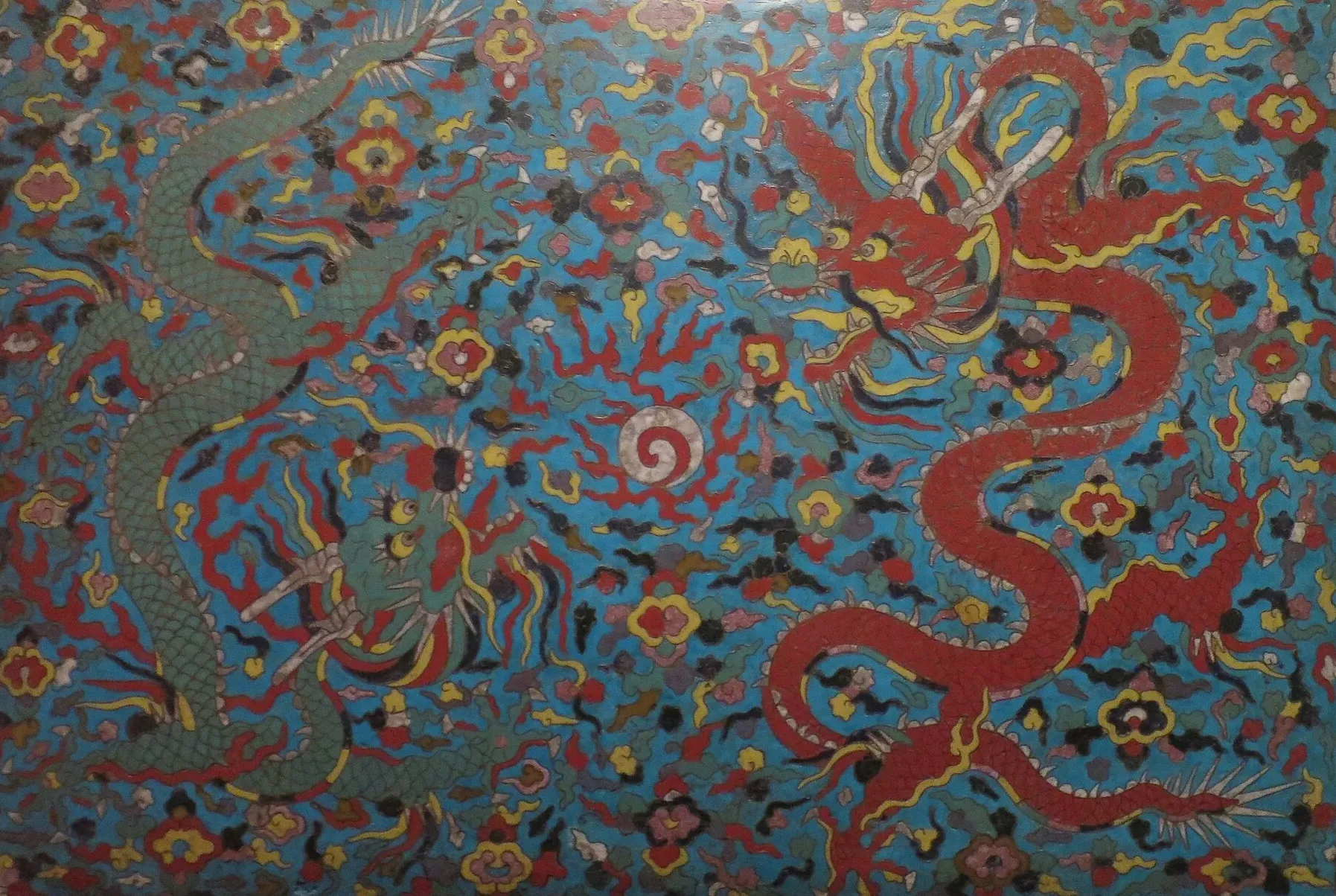
Cloisonné is an enamelling technique in which coloured glass paste is fired inside small compartments formed by metal wire fixed to a metal body. In China the ware is called jingtailan, a name linked to the Ming emperor Jingtai and to the word lan, meaning blue. The Metropolitan Museum of Art describes the Jingtai era, from 1450 to 1457, as a golden age of Chinese cloisonné production. The ware was made mainly to furnish temples and palaces, and by the reign of the Xuande emperor it was greatly prized at court. Its history runs from a disputed arrival in the Yuan or early Ming dynasty, through the reputation of the Jingtai pieces and the gilt altar sets of the Qing Imperial Household Workshops under the Qianlong emperor, to the listing of the craft on China's first national list of intangible cultural heritage in 2006.
WHAT IS CLOISONNÉ ENAMEL?
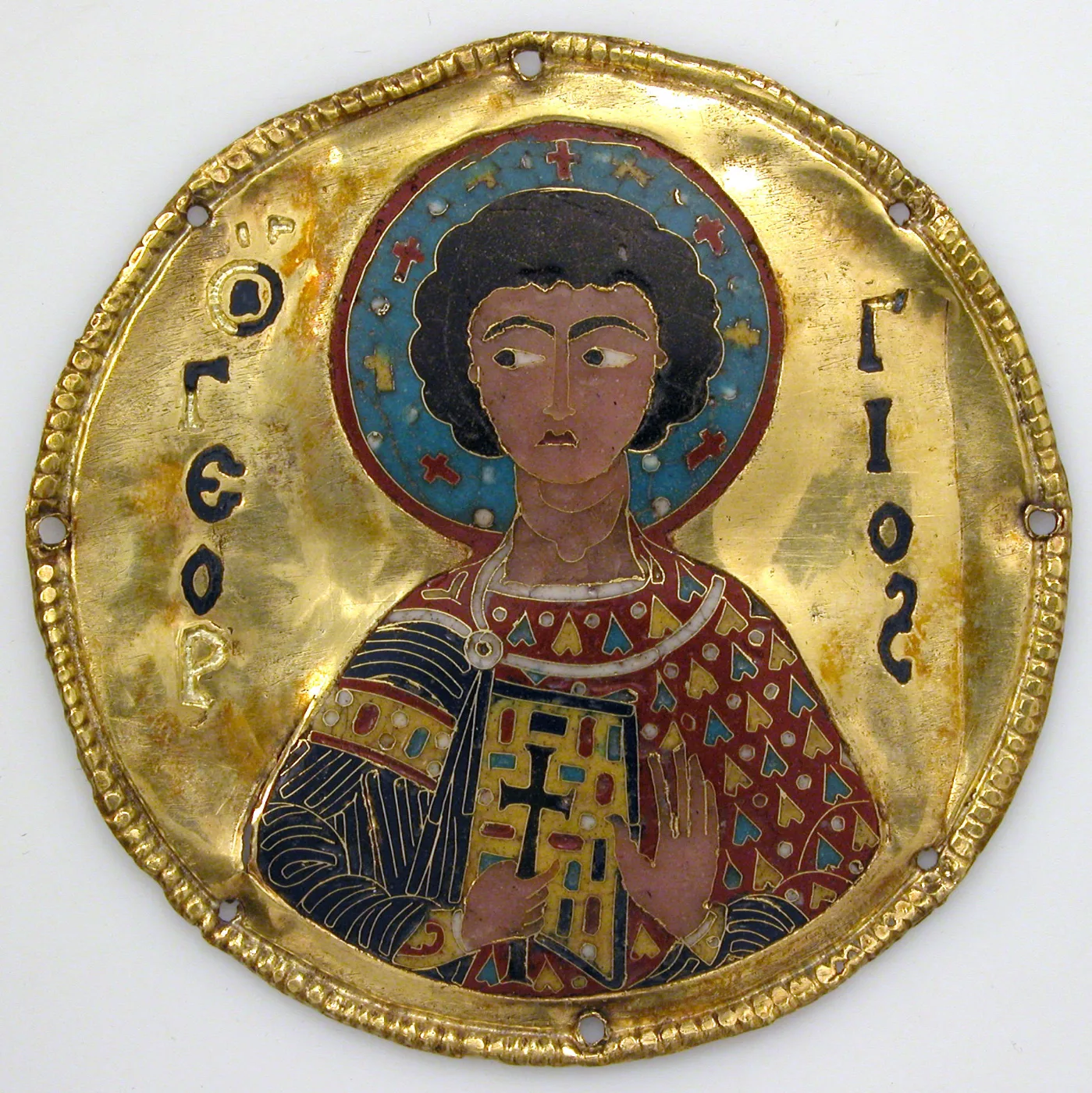
The name comes from the French cloison, meaning partition, and refers to the thin metal enclosures that hold each colour. Britannica defines the technique as soldering delicate metal strips, bent to the outline of a design, onto a metal surface, then filling the resulting compartments with powdered glass paste, or vitreous enamel. The strips may be gold, brass, silver or copper, and metal wire can be used in their place. Once the cells are filled, the object is fired, ground smooth and polished.
Britannica lists six Mycenaean rings of the 13th century BCE among the earliest known examples, and it identifies the 10th to 12th centuries, particularly in the Byzantine Empire, as the great Western period of cloisonné enamelling. In East Asia the technique was widely produced in China during the Ming (1368 to 1644) and Qing (1644 to 1911/12) dynasties, and in Japan it was especially popular in the Tokugawa (1603 to 1868) and Meiji (1868 to 1912) periods. The earliest surviving unambiguous Chinese mention of the ware, published in 1388, compares it with the inlay of Folang, the Chinese name for Rome. Pengliang Lu, a curator in the Department of Asian Art at the Metropolitan Museum of Art, reads that inlay as Byzantine enamel, while noting that no Byzantine enamels have been found in China.
HOW IS CHINESE CLOISONNÉ MADE?

The Met uses a fragment from a late 19th-century Chinese sample set, given in 1880, to explain the stages. Copper or bronze wire is bent or hammered into the pattern, and the enclosures are glued or soldered onto the metal body. Enamel paste ground from coloured glass is packed into the cells, and the piece is fired several times at a relatively low temperature of about 800°C. The surface is then polished until the edges of the cloisons show, and gilding finishes the work. The museum's essay on Chinese cloisonné adds that the enamels are coloured with metallic oxides and commonly shrink in the kiln, so the filling and firing are repeated several times until the designs are filled. After polishing, the cloisons and areas such as the edges, interior and base are gilded.
China's Ministry of Culture and Tourism describes the craft as copper-body filigree enamel and divides it into seven major steps: design, forming the copper body, filigree inlay, applying enamel glaze, repeated firing, gilding and polishing. It puts the total at 108 processes. Zhang Yongzhen, director of a Beijing Gongmei Group arts-and-crafts factory, told China Daily in 2024 that he does not know the exact number of steps, and that no single person completes the whole process. The same report notes that cloisonné was first made mainly for the royal family, because copper and bronze were costly materials.
WHERE DID CHINESE CLOISONNÉ COME FROM?
The Metropolitan Museum of Art attributes the development of cloisonné in China during the early 14th to 15th century to foreign influence. Its essay records the technique under the Yuan dynasty and suggests it may have arrived through Yunnan, which received an influx of Muslim settlers under Mongol rule. A very few objects are dated on stylistic grounds to the Yongle reign (1403 to 1424), and the earliest securely dated Chinese cloisonné comes from the reign of the Xuande emperor (1426 to 1435).
The first written evidence is the Gegu yaolun by Cao Zhao, first published in 1388. Cao listed the ware as Dashi ware, with a copper base and designs in five colours made with chemicals and fired, and compared it with the inlay of Folang. He considered it suitable only for a woman's apartment, and the Met's essay notes that it was out of place in the more restrained setting of a scholar's home. Pengliang Lu points out that Cao dated older wares such as Ge, Raozhou and Huo, and did not call Dashi ware antique, which suggests the cloisonné he knew was contemporary.
The dating remains debated. In a study of the 1960s, Sir Harry Garner found no examples earlier than the 15th century. Since the 1980s some Chinese scholars, mainly at the Palace Museum in Beijing, have dated certain pieces to the Yuan dynasty, and an exhibition at the Bard Graduate Center in New York accepted the early date for some of them. Writing in Arts of Asia in 2023, Lu argues that Chinese cloisonné more likely began in the early Ming, between the late 14th and early 15th centuries, before the Xuande period brought works with reliable reign marks.
WHY IS BEIJING CLOISONNÉ CALLED JINGTAI BLUE?
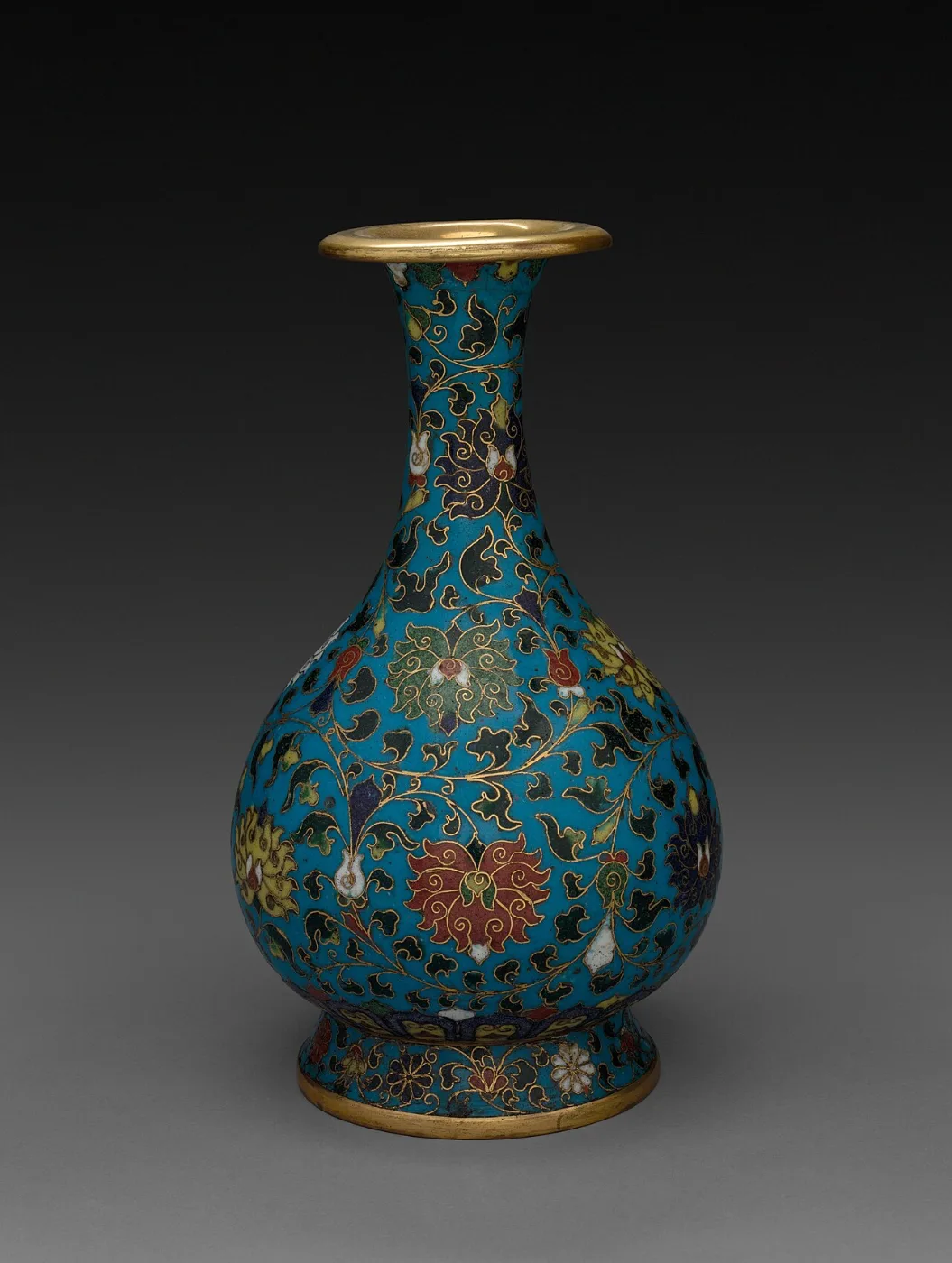
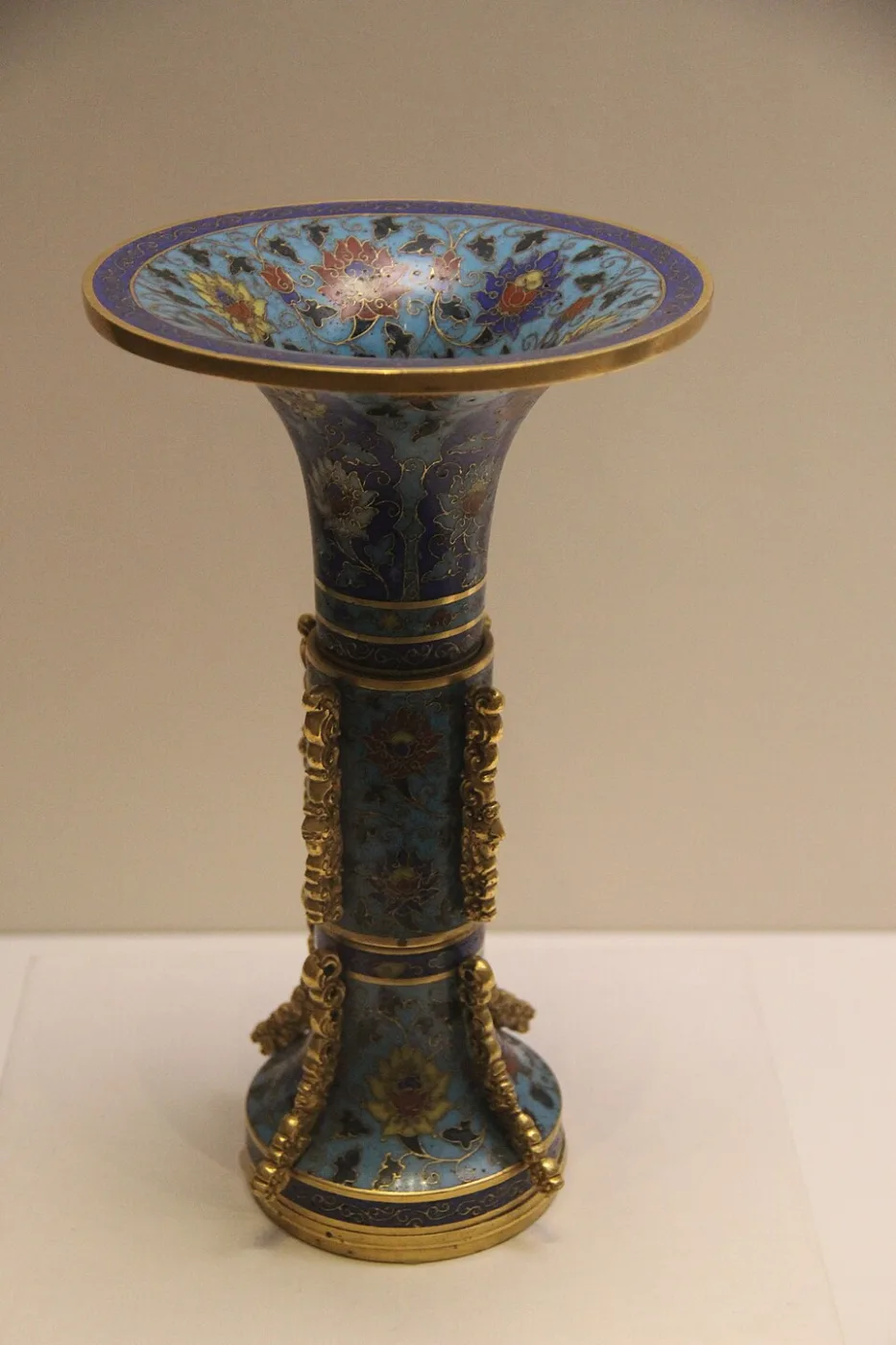
The Ministry of Culture and Tourism explains that the craft flourished in the Jingtai period of the Ming dynasty and that, because its enamel glazes were mostly blue, it became known as Jingtai blue. China Daily adds that the pieces often had a dark blue enamel ground and that the craft is believed to have peaked, and received its current Chinese name, under Jingtai. A Victoria and Albert Museum record of a 15th-century gui ritual vessel states that pieces from the Jingtai reign were considered the best. The vessel, 24 cm high and probably used as an incense burner, is decorated with stylised lotus blossoms on a turquoise-blue ground, and its two angular handles extend from gilded dragon heads.
The Met holds a covered box with hibiscus and grapevines, 16.7 cm in diameter, in cloisonné enamel on copper alloy with gilding. Its label calls it the highest quality cloisonné produced by the imperial Ming workshop and dates it to the mid-15th century, most likely the Jingtai era. Instead of the stylised lotus scrolls of earlier work it shows naturalistic flowers and fruit, with subtle shifts on the leaves made by blending yellow, green and red enamels. Written opinion changed within the same century: Wang Zuo revised the Gegu yaolun in 1456, republished in 1459, and described imperial court pieces as "delicate, lustrous and lovely". The collector Sun Chengze (1592 to 1676) later praised Jingtai imperial cloisonné as more delicate than older works.
Reign marks complicate the attribution. Garner held that the Jingtai mark was used no earlier than the mid-17th century and described Jingtai cloisonné as "a complete myth". Lu notes that most Jingtai marks on cloisonné were added later and proposes studying the mid-15th century as a whole. A Met vase illustrates the problem: the Bard Graduate Center catalogue dated its lower body to the Yuan or early Ming and its neck, base, handles and feet to the Kangxi reign (1662 to 1722), and its base carries an apocryphal Jingtai mark.
CLOISONNÉ IN THE QING IMPERIAL WORKSHOPS

According to China Daily, the craft advanced in the Qing dynasty after improvements in copper smelting. Rose Kerr, writing in the Bard Graduate Center's 2011 catalogue on Chinese cloisonné, describes the Qianlong emperor (reigned 1736 to 1796) as a prolific collector of antiquities. In 1748 he restored archaic vessel forms for ritual use, replacing the bowls and plates that had been used since the Ming. The Imperial Household Workshops produced gilt cloisonné steadily. Altar vessels were kept in stock in the palace storerooms and assembled into sets when needed, and old, tarnished or worn objects could be melted down and recast as new sets. The Xiqing gujian catalogue was published from 1749 to 1755, with a supplement in 1793.
Kerr explains that archaism was considered synonymous with refined craftsmanship and that under Qianlong it became a more strictly defined concept, though many vessels still combined ancient features with newer designs. Five-offering altar sets, or wugong, were common on temple and palace altars. Cloisonné versions of a yi pouring vessel and a jue reproduce Bronze Age shapes, a duck-headed vase follows a Han form, and bird vessels on wheels derive from catalogue illustrations rather than ancient originals. An elephant zun reflects Buddhist associations, and Qing temples used such pieces in gilt cloisonné. Champion vases were popular in the Qianlong reign, when many cloisonné versions were made.
A Qianlong-period incense burner at the Victoria and Albert Museum is credited to the Beijing Palace Workshops and made in cloisonné enamel on copper with gilding. It stands 72.4 cm high and 109.9 cm wide. Two kneeling bearded figures support a domed, partly openwork cover topped by a gilt lion finial. The object was first identified as an ice chest for cooling a room in a north Chinese summer. The museum now considers it more likely an incense burner, because the pierced cover and thin metal lining would have melted ice too quickly, and because the Buddhist lion, or suanni, often decorates incense burners.
BEIJING CLOISONNÉ AS NATIONAL INTANGIBLE HERITAGE
The cloisonné enamelling technique was included in China's first National Intangible Cultural Heritage List in 2006. The Ministry of Culture and Tourism describes the Beijing Enamel Factory, founded in 1956, as the only time-honoured enterprise in the country's cloisonné industry. Its three-storey building holds the China Cloisonné Art Museum on the third floor, a cloisonné workshop and sales area on the second, and a gallery of cloisonné-based cultural products on the first. The factory occasionally runs hands-on workshops in filigree and in dotting enamel.
China Daily lists cloisonné among the Yanjing Eight palace handicrafts, a group that also includes embroidery, jade carving, ivory carving and carved lacquer. Yanjing is an old name for Beijing. The paper's 2024 report visited a Beijing Gongmei Group arts-and-crafts factory near Yonghegong, the Lama Temple, where the work is still divided among specialist craftspeople rather than carried out by one maker. The report describes the same sequence that the Met records for the 19th-century sample set: wire bent and fixed to a shaped copper body, metallic-oxide colours filled into the cells, repeated firing to make up for shrinkage, then polishing and gilding.
MAN WAH: BLUE AND GOLD AT MANDARIN ORIENTAL HONG KONG
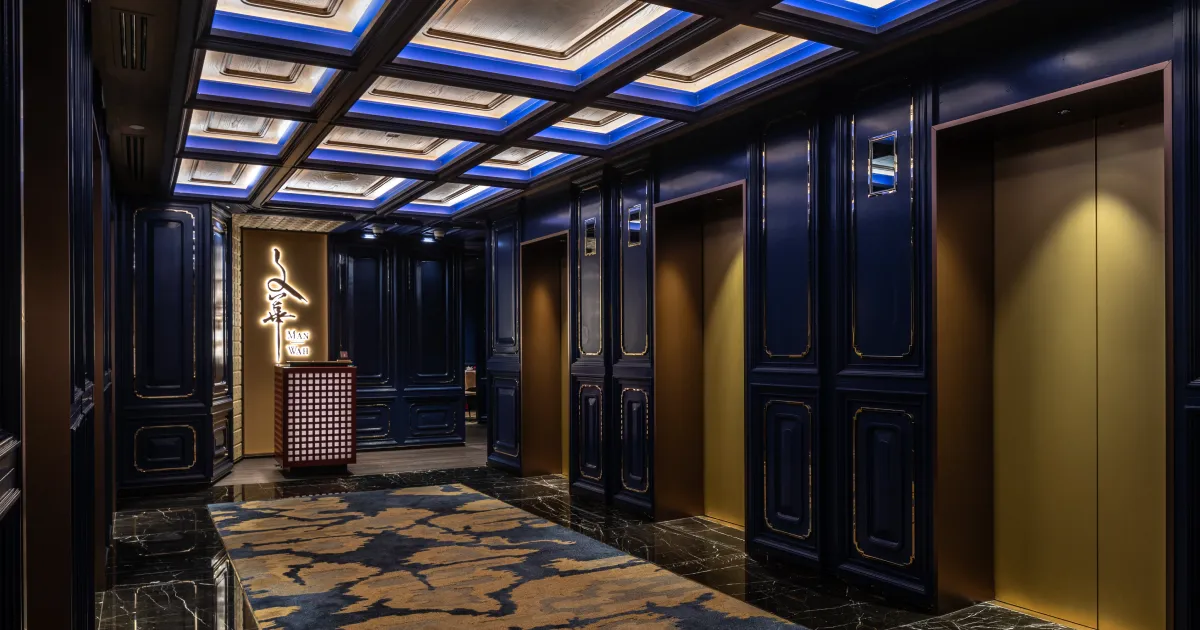
Man Wah is the Cantonese restaurant on the 25th floor of Mandarin Oriental Hong Kong. It was redesigned in 2021 and holds One MICHELIN Star. The interior design interprets the Hong Kong skyline and Victoria Harbour seen from the restaurant's windows, together with references to the hotel's heritage. The lanterns reinterpret the original Man Wah lanterns, which the new design renders as clustered brass cages with embroidered pleated shades, and an embroidered dragon and floral artwork is set on a navy wall panel.
The palette of the room pairs blue with gold. A bespoke blue and gold carpet in silk carries hand-carved patterning that evokes light on the harbour, and the room has navy panelling with gold trim. Blue grounds set against gilded metal run through the cloisonné described in the earlier sections, from the turquoise-ground Ming gui with its gilded dragon-head handles and the dark blue grounds behind the name Jingtai blue to the gilt altar sets of the Qing Imperial Household Workshops.
SOURCES
- The Metropolitan Museum of Art Chinese Cloisonné
- The Metropolitan Museum of Art Fragment from sample set of Chinese cloisonné
- The Metropolitan Museum of Art Covered box with hibiscus and grapevines
- Britannica Cloisonné
- Arts of Asia Out of the Blue: Rethinking Early Chinese Cloisonné Enamel
- Bard Graduate Center A Reverence for the Past: Influences from Chinese Antiquity
- Victoria and Albert Museum Ceremonial vessel, cloisonné enamel, Ming dynasty
- Victoria and Albert Museum Incense burner, cloisonné enamel, Qianlong period
- Ministry of Culture and Tourism of the People's Republic of China (Travel China) Discover This Touch of Chinese "Blue": The Cloisonné Enameling Technique of Beijing
- China Daily Tracing a golden legacy