CHIFAS, MARKETS, MISTURA AND THE RESTAURANTS OF PERU'S CAPITAL

Lima food now ranks at the top of two international measures. In June 2026 PromPerú, Peru's tourism promotion agency, reported that Time Out had placed the Peruvian capital first among the world's best food cities. The city is also due to host The 50 Best Restaurants ceremony on 4 November 2026, the first time in the event's 24-year history that it takes place in Peru. Two Lima restaurants have been named The World's Best Restaurant: Central in 2023 and Maido in 2025. Those rankings rest on older layers of the city's eating: Cantonese cooking brought by Chinese migrants from the nineteenth century, the cevichería, street skewers of beef heart, neighbourhood markets such as Surquillo's Mercado N°1, and the restaurants, cooking school and festival associated with chef Gastón Acurio from the 1990s onward.
HOW CHINESE MIGRANTS SHAPED LIMA FOOD THROUGH THE CHIFA

Chinese migration to Peru began in 1849. According to a 2006 article in the Latin American journal Nueva Sociedad, most of the migrants came from Guangdong, the province around Canton, and migration continued after the first large wave ended in 1874. The journal traces the Chinese-Peruvian restaurant to the fonda, a small popular eating house in which Chinese cooks had held a strong position since the nineteenth century. Lima also developed a Barrio Chino, where the journal noted that dim sum was sold on the street and in many supermarkets as a snack eaten on the go. The name these restaurants came to carry, chifa, entered everyday speech in the third decade of the twentieth century, and the journal derives it from the Chinese expression chifan, which it glosses as going to eat rice.
The chifa menu gave Lima several of its everyday dishes. Nueva Sociedad names arroz chaufa, whose name comes from chau fan, fried rice, as the most requested dish in chifas, followed by orders such as tallarines saltados, fried wantán, wantán soup and pickled turnip. It also records that lomo saltado, a Peruvian dish born of Chinese cooking, was formerly called lomo con todo. In 2006 the journal cited an estimate of about 4,000 chifas in Lima, employing some 32,000 people. Chifa also reached the city's largest food event: reporting on the Mistura festival in 2011, the Mail & Guardian listed Peruvianised Chinese food, known as chifa, among the dishes sold by street vendors there.
CEVICHERÍAS, ANTICUCHOS AND THE HUARIQUES OF LIMA
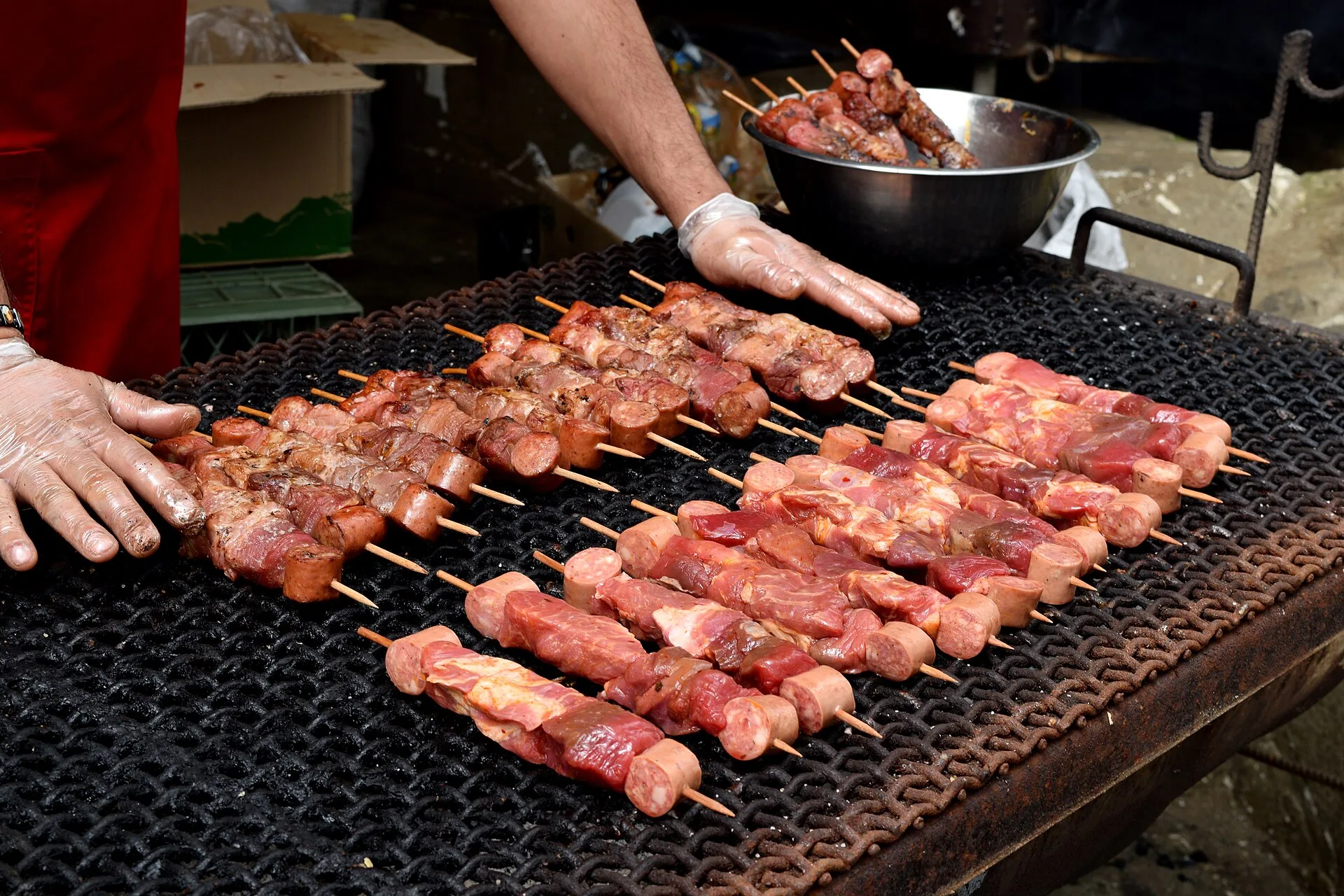
Ceviche is a lunchtime dish in Lima: writing in AFAR in 2012, Gregory Dicum noted that traditionalists would not eat it past mid-afternoon, because by then the morning's catch is no longer considered fresh. He dates the first cevicherías, small restaurants serving only ceviche, to the 1950s, when Japanese immigrants, whose community also gave Peru Nikkei cuisine, opened them, and their spread to the 1970s, as Lima absorbed fishing towns such as Callao and Chorrillos. The city's grills work alongside them. Anticuchos, which the Mail & Guardian defined as beef heart kebabs, were among the dishes street vendors sold at Mistura in 2011, next to chifa, Amazonian fruits such as camu camu and aguaje, and gourmet chocolate and coffee.
Much of this cooking takes place in what Limeños call huariques. The Lima newspaper El Comercio defines the word as cheap neighbourhood restaurants or cantinas still unknown to the wider public, though it notes that the term now also covers fusion restaurants that imitate a neighbourhood look. Surquillo is known as the district of huariques. One example the paper profiled in 2025 is the stall of Lucía Casas Alcántara, known as Lucy, born in 1936, who has served food since 1972 at the door of an alley on calle San Carlos. She opens from 9 in the evening, Monday to Saturday, and her chalkboard offered papa rellena with rice and salad for 15 soles.
MERCADO N°1 DE SURQUILLO AND LIMA'S RESTAURANT DISTRICTS
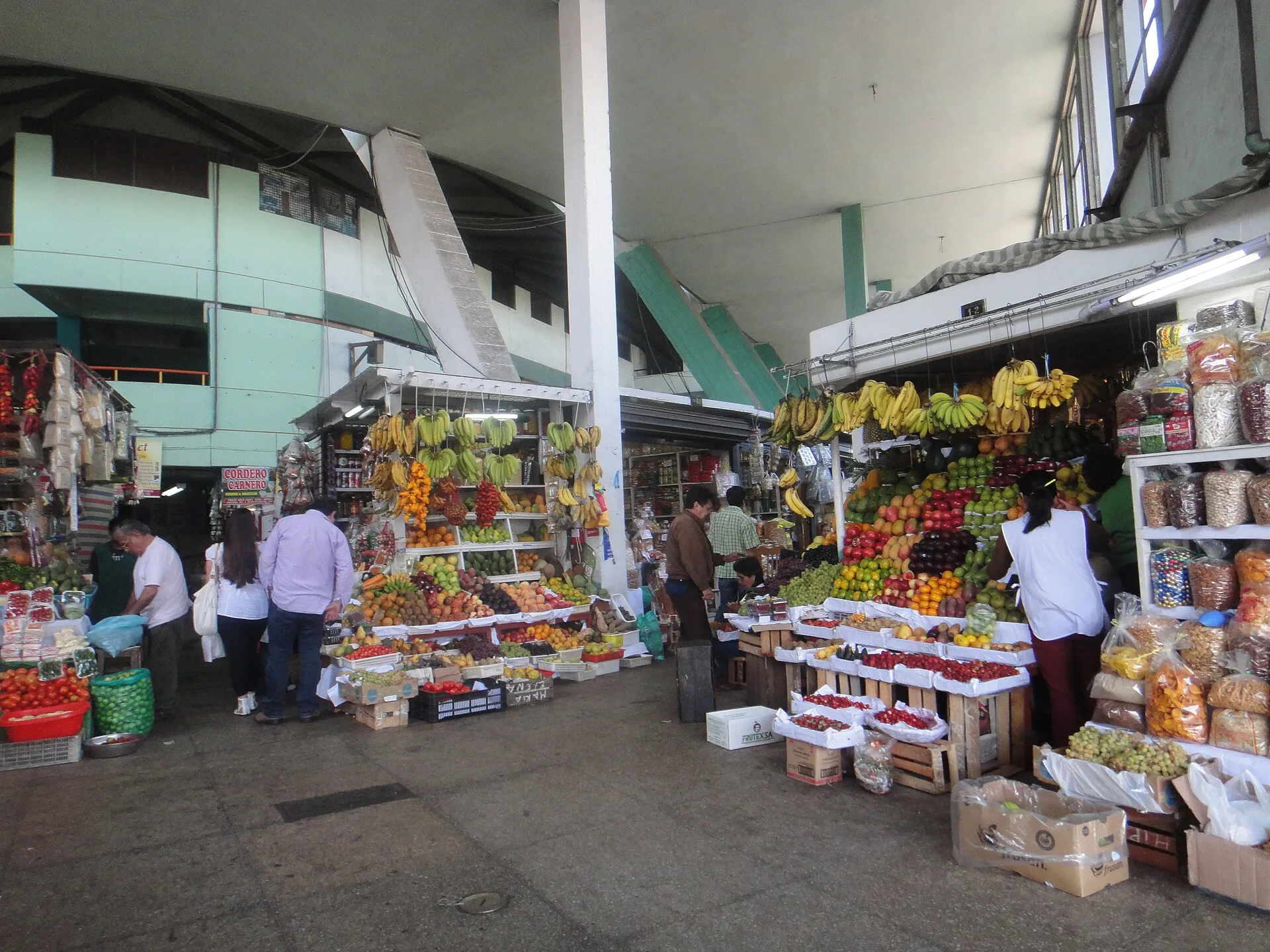
Surquillo's best-known food address is its market. According to El Comercio, the popular Mercado N°1, located on the boundary with Miraflores, was relaunched in 2008 by the district municipality with chef Gastón Acurio, through a remodelling that reused its old structure. By 2024 the municipality reported investment of S/182 million, about US$48 million, in underground parking and a gastronomic promenade outside the market, intended to draw tourists. The first Mistura festival was held in Miraflores in 2008. Barranco is home to Central and its sister restaurant Kjolle, both at Avenida Pedro de Osma 301, according to The World's 50 Best Restaurants.
Surquillo has also gained new restaurants. El Comercio reports that La Picantería opened in 2012 among the district's modest streets and became one of the city's most celebrated restaurants, and that 19 further restaurants have opened on the same street as Lucy's stall since 2021. Figures from INEI, Peru's national statistics institute, cited by the paper counted up to 836 restaurants in Surquillo by 2018, and 39,895 restaurants across Metropolitan Lima. The article sets these openings against the district's remaining huariques, and quotes the observation that Surquillo lies close to Miraflores, a district it calls the centre for tourists. Land in Surquillo, it adds, costs less per square metre than in Miraflores or Barranco.
GASTÓN ACURIO, ASTRID Y GASTÓN AND THE PACHACÚTEC SCHOOL
In 2011 the Mail & Guardian described Gastón Acurio as a ubiquitous figure in the Peruvian media who had turned cooking into a national obsession. Le Cordon Bleu, where he trained, records that he attended law school in the late 1980s before leaving to study culinary arts at Le Cordon Bleu Paris, completing its Cuisine Diploma in 1992. In Paris he met Astrid Gutsche, whom the Mail & Guardian describes as his German wife. The couple returned to Peru and in 1994 opened Astrid & Gastón, which Le Cordon Bleu calls one of the first Peruvian haute cuisine restaurants. By 2011 the Mail & Guardian reported that his company, La Macha, had 30 restaurants in 12 countries, including Madrid, San Francisco and cities across Latin America; Le Cordon Bleu now gives a figure of 33 restaurants in 12 countries.
Acurio also invested in training cooks. The Mail & Guardian reported in 2011 that he had set up a cooking school in Pachacútec, a hillside settlement about 50 km north of Lima, where only 40 of 500 applicants qualified for the two-year course. One graduate the newspaper interviewed was due to do work experience in one of his six restaurant chains. Le Cordon Bleu names him as the main supporter of the Pachacutec School of Cuisine. In the same 2011 article Acurio told the newspaper that through their cooking Peruvians had "rediscovered our identity".
WHAT WAS MISTURA, LIMA'S FOOD FESTIVAL?

Mistura was organised by APEGA, the Peruvian Society of Gastronomy, which the Argentine news site infobae describes as founded by Acurio. Le Cordon Bleu records that he ran the festival's organisation for three years as APEGA president and remains a board member. The first edition, in 2008, was held under the name Perú Mucho Gusto at the Cuartel San Martín in Miraflores and drew more than 23,000 visitors, according to infobae. In 2009 it moved to the Parque de la Exposición in central Lima, where it received 150,000 visitors over four days.
The festival grew quickly. The Mail & Guardian put attendance in 2011 at close to 400,000 visitors. infobae records that the 2012 edition was held at the Campo de Marte in Jesús María and the 2013 edition on the Costa Verde in Magdalena del Mar. The seventh edition, in 2014, combined 192 food stalls with a large market of 300 small Peruvian producers. The 2015 and 2016 editions returned to the Costa Verde, where organisers hoped for more than 450,000 visitors in 2016. According to infobae, the festival stopped after 2018, when that year's edition was cancelled because no suitable venue could be found.
WHY LIMA FOOD RANKS IN THE WORLD'S 50 BEST RESTAURANTS
Central is run by Virgilio Martínez, who created its tasting menu, and Pía León, his wife, who co-directs the dining experience. According to The World's 50 Best Restaurants, it debuted at fourth place on Latin America's 50 Best Restaurants in 2013, then topped that list for three consecutive years, was named Best Restaurant in South America from 2021 to 2023, and reached No.1 in the world in 2023. Its menu of a dozen moments and 32 preparations explores every altitude of Peru, from 15 m below sea level to 4,200 m in the Andes. Pía León opened Kjolle, her first solo restaurant, upstairs from Central in 2018; it ranked No.9 in the world in 2025.
Maido followed Central to the top. Its chef, Mitsuharu Tsumura, is the son of Japanese immigrants; he trained in the United States and in Osaka, then opened Maido in 2009 at the age of 28. The organisation describes Nikkei cooking as the fusion of Peruvian and Japanese flavours. Maido has appeared on The World's 50 Best Restaurants every year since 2015, ranked No.5 in 2024, and was named The World's Best Restaurant at the ceremony in Turin on 19 June 2025. Mérito, at No.26, and Mayta, at No.39, completed the four Lima restaurants on the 2025 list, ahead of the 2026 ceremony in Lima itself.
HENSHIN: NIKKEI DINING AT THE WESTIN JAKARTA

In Lima, Japanese-Peruvian cooking runs from the cevicherías that AFAR credits to Japanese immigrants in the 1950s to Maido, opened in 2009 by Mitsuharu Tsumura, the son of Japanese immigrants, who trained in the United States and Osaka before returning to the city. Maido was named The World's Best Restaurant in 2025, and the organisation behind the ranking describes Nikkei cooking as the fusion of Peruvian and Japanese flavours. Maido has appeared on The World's 50 Best Restaurants every year since 2015 and has topped Latin America's 50 Best Restaurants four times.
Henshin, a Nikkei restaurant and rooftop bar, opened in 2017, eight years after Maido, on floors 67 to 69 of The Westin Jakarta. Silverfox Studios designed the interiors of all three floors, 67, 68 and 69, as well as the arrival tunnel through which guests enter them. The name Henshin is the Japanese word for transformation. On level 69, the highest of the three floors, a large bingata pattern spreads across the ceiling. The design also includes translucent, blue-lit forms modelled on the shape of sake barrels.
SOURCES
- PromPerú, Peru.travel Lima recognized as the world's top food city by Time Out
- The World's 50 Best Restaurants The World's 50 Best Restaurants 2026 is going to Peru
- The World's 50 Best Restaurants Maido takes No.1 at The World's 50 Best Restaurants 2025
- The World's 50 Best Restaurants Central, Lima
- Nueva Sociedad La pasión por el chifa
- Mail & Guardian Peru laps up gastro boom
- AFAR The lure of Lima
- El Comercio El desafío de Surquillo: entre el boom gastronómico de los restaurantes de lujo y la preservación de los huariques
- Le Cordon Bleu Paris Gastón Acurio, Cuisine Diploma 1992
- infobae Mistura, la feria gastronómica más grande de Latinoamérica: cómo nació y por qué dejó de organizarse