

QING COURT RECORDS, YANGZHOU SALT MERCHANTS AND A FEAST RETOLD

The Manchu Han Imperial Feast, Man Han quanxi in Chinese, is usually described as a Qing dynasty banquet that brought the dishes of the Manchu court and the Han Chinese kitchen to one table, served over three days and running to 108 dishes or more. Much of that description cannot be documented. Qing court statutes list Manchu banquets and Han banquets as separate formats, and the written account of a combined feast cited most often is linked to Yangzhou, where salt merchants entertained officials, and to a Qianlong-era book about the city. In the 20th century it reached a wider audience through a Beijing comedy routine, then through restaurants in Beijing and Hong Kong that served versions of it.
WHAT IS THE MANCHU HAN IMPERIAL FEAST?
Accounts of the feast disagree on its size. Beijing's official tourism portaldescribes guests being served pastry first, then three courses of tea, then a main sequence that usually consisted of 108 dishes, eaten in two meals a day over three days. It quotes a Yangzhou saying, "six meals in three days". Jacqueline M. Newman, writing in the Chinese food journal Flavor and Fortune in 2010, gives a range of 108 to 300 courses, with the largest banquets lasting up to three days and some divided into six sessions. A 2019 article in the magazine The World of Chinese repeats a count of 196 main dishes and 124 side dishes, and notes that some doubt the banquet ever existed.
The historian Isaac Yue examined these claims in "The Comprehensive Manchu-Han Banquet: History, Myth, and Development", published in the journal Ming Qing Yanjiu in 2018. Yue argues that no single authentic recipe exists and that historians disagree over when the banquet began, with three candidate periods, all within the Qing dynasty: the reign of the Kangxi emperor, the reign of the Qianlong emperor and the dynasty's final decades. His study analyses a sample menu from the Qianlong period, read against Manchu and Han dietary customs.
HOW DID THE QING COURT SERVE BANQUETS?

State banquets at the Qing court were the responsibility of the Guanglu Si, an office set up on earlier models to manage them, according to the historical writer Chen Huasheng. The Da Qing Huidian, the dynasty's collected statutes, divided court banquets into Manchu banquets, man xi, and Han banquets, han xi. An article by Sun Chengde in the archives journal Dang'an Chunqiu, reprinted by The Paper in 2019, records six grades of Manchu banquet and five grades of Han banquet. Chen gives the price of the top Manchu grade as eight taels of silver a table, with Han banquets priced slightly lower, and notes that the Guanglu Si's list contained no combined Manchu Han banquet.
The statutes set the fourth-grade Manchu banquet for New Year's Eve, New Year's Day and the emperor's birthday. Sun describes it as the highest grade served to the living, since the grades above it were laid out for sacrifices to deceased emperors and empresses. At midday on New Year's Eve the emperor gave a banquet for close officials in the Hall of Preserving Harmony of the Qing palace, and on the first day of the year a banquet for princes, nobles and foreign envoys in the Hall of Supreme Harmony. The Kangxi emperor's veritable records state that New Year's Day banquets should change from the Manchu to the Han format, because the Manchu banquet was troublesome to prepare and killed too many animals.
The fourth-grade Manchu menu was mainly pastry and fruit. Sun lists plates of moulded pastries in four colours, filled white-skinned pastries, twelve plates of dried fruit and six of fresh fruit, including apples, pears and grapes, followed by a plate of piglet, a plate of goose and a piece of mutton. Court ritual set its own order. Teng Deyong, a researcher at the Palace Museum, told the Associated Press in 2026 that drinking milk tea was an important first step at Qing banquets, and that princes and officials who received wine or food from the emperor performed rites and paid their respects before eating or drinking.
WHERE DID THE MANCHU HAN IMPERIAL FEAST COME FROM?
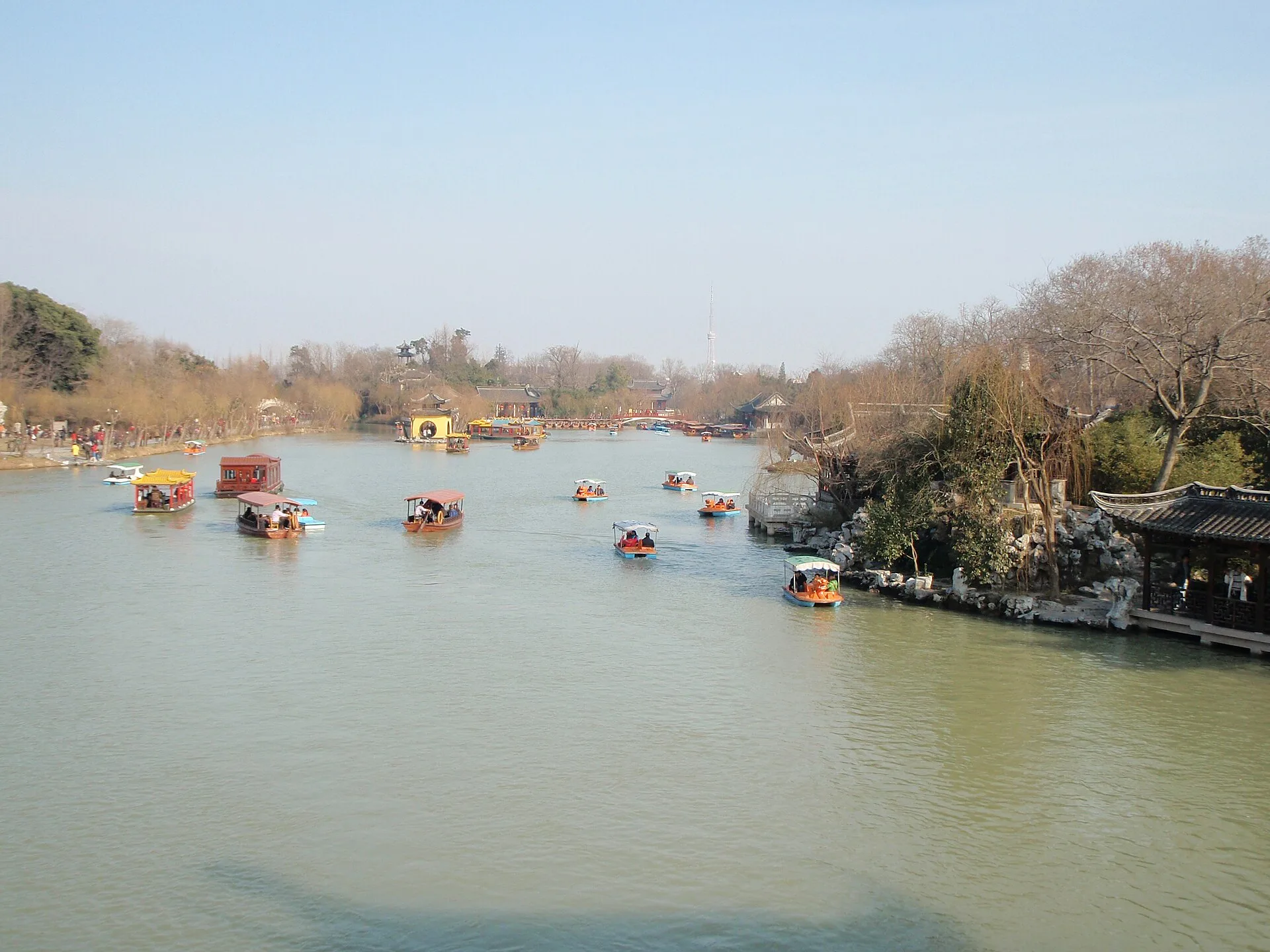
Most accounts place the origin outside the palace, in Yangzhou. The Sing Tao column, written by a Hong Kong secondary school vice principal, describes the city's salt merchants as exceptionally rich and says they spent lavishly entertaining officials, gathering the rare dishes of Manchu and Han banquets into a single feast. Chen Huasheng makes the same point: the term first described not court cuisine but the banquets of the salt merchants' great kitchens, which combined the prized dishes of both formats and later became the general name for any large luxury banquet. Some say, according to Sing Tao, that the combined feast spread from Yangzhou to other places after the Qianlong emperor's tours of the south.
The written record cited most often is Yangzhou Huafang Lu, a book on Yangzhou by Li Dou, which Beijing's tourism portal translates as Notes of Yangzhou Pleasure-boat and credits with recording the original menu. Sing Tao dates it to the Qianlong era and cites it as recording a "full banquet" of Manchu and Han dishes numbering in the hundreds. The name followed later. Sing Tao writes that only after the Daoguang reign did the format become known as Man Han xi, the Manchu Han banquet, and then as Man Han quanxi, and that the combined format became an official banquet only in the late Qing.
WHICH RARE INGREDIENTS DO THE HISTORICAL LISTS NAME?
Accounts of the feast group its rarest ingredients into four sets of eight, the "eight delicacies" or ba zhen of the mountains, the sea, the birds and the plants. The Sing Tao column gives the four lists in full. The mountain set includes camel hump, bear's paw and deer tendon. The sea set includes bird's nest, shark's fin, sea cucumber, fish maw and abalone. The bird set includes quail, swan, partridge and dove. The plant set includes lion's mane mushroom, silver fungus, bamboo fungus, morel, shiitake and dried daylily. Sing Tao introduces them as the better-known ingredients of the feast, without tying the lists to a particular recorded meal.
Newman's list for Flavor and Fortune names camel toe and camel hump, bear's paw, deer tail, carp tongue, deer tendon and leopard placenta, "real or mock". She notes that few of these exotic dishes are served today and that some are illegal. At Fangshan, in Beijing, she was served a mock bear's paw made of firm tofu wrapped in thin slices of black mushroom. Fan Liangliang, Fangshan's executive chef, told the Associated Press that bear paws are no longer served and that some ingredients have been replaced for availability and modern taste. Newman adds that the few Hong Kong restaurants still preparing such meals to order replace the exotic items with less expensive, more easily obtained and less rare ingredients.
HOW WAS A CHINESE BANQUET STRUCTURED?
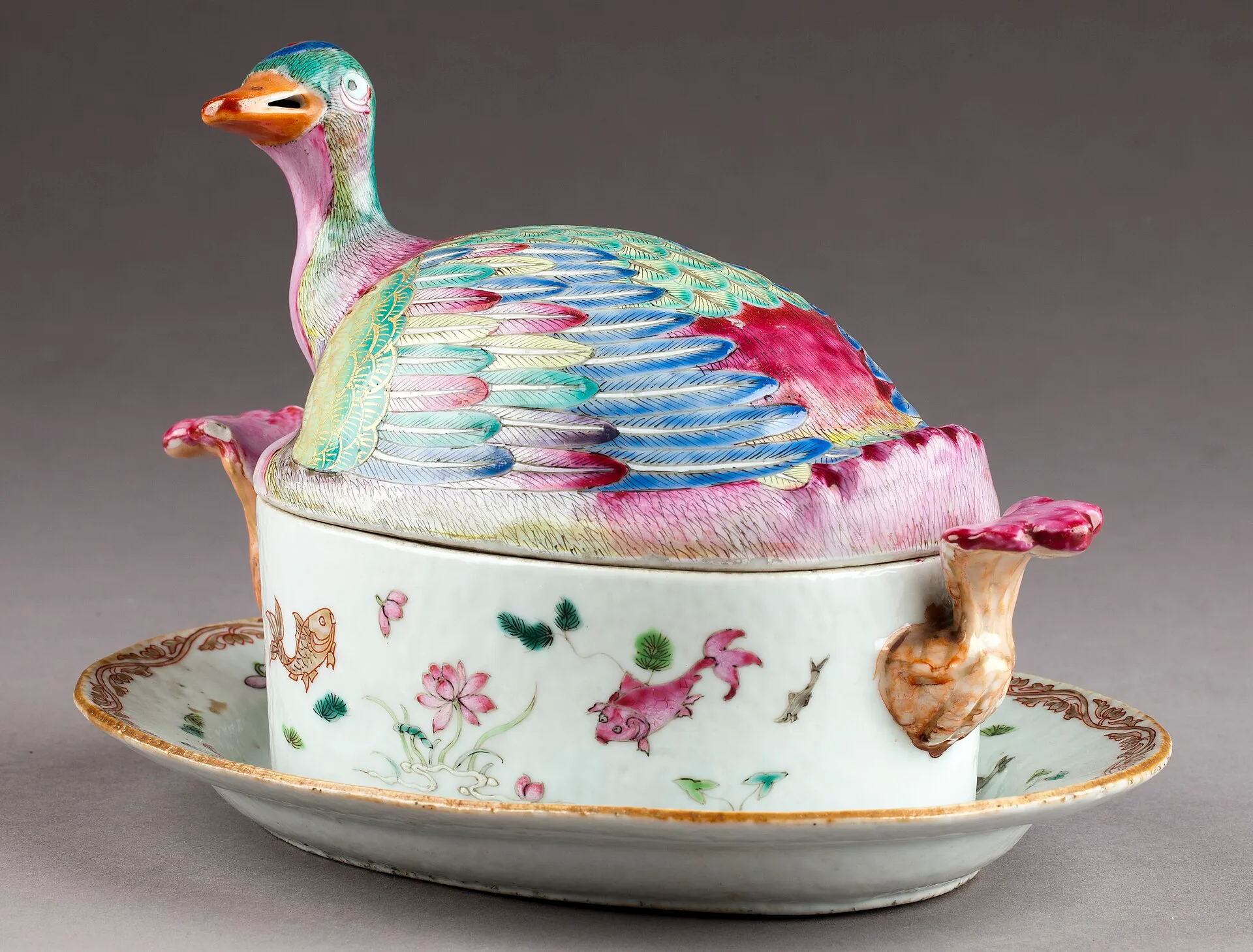
The Sing Tao column traces the format of Qing official banquets to Yuan Mei, the Qing poet and essayist sometimes called China's food sage, whose cookbook Suiyuan Shidan was published in the Qianlong era and sets out cooking techniques and dishes systematically. Official banquets, it writes, largely kept the model Yuan Mei describes: sixteen small dishes, eight gui serving bowls and four pastries. Guests sat at the traditional square Eight Immortals table, and the head seat was often a table of its own.
Newman describes how such a banquet was paced. Exotic delicacies alternated with sets of four small foods, which slowed the meal and cleansed the palate before the next special dish: four dried fruits such as walnuts, almonds and dried persimmons; four dim sum shaped like fruits or vegetables; and four fresh fruits such as tangerines, kumquats and preserved plums. Main dishes arrived after gongs rang, cymbals clanged, lights went off or firecrackers sounded, and lavishly dressed staff served them on red tablecloths. Wine was plentiful, following the saying that "it is not a banquet without wine".
FROM CROSSTALK TO FANGSHAN: THE FEAST IN 20TH CENTURY BEIJING

Part of the feast's modern fame comes from the stage. Sing Tao records that the xiangsheng comic routine Bao Cai Ming, Reciting the Names of Dishes, also performed under the title Man Han Quanxi, originally listed 204 dishes, opening with steamed lamb and steamed bear's paw, and that later versions grew to about 300. Chen Huasheng's book Chihuo Jianshi, excerpted by the Taiwanese food publication foodNEXT, goes further and calls the full banquet a legend shaped by crosstalk. Citing another writer, Chen credits the routine to Wanrenmi, a well-known Beijing crosstalk performer of the 1920s, and argues that a rapid-fire list of dishes was later remembered as a real feast.
Fangshan, a Beijing restaurant serving court cuisine, opened in the same decade. It was founded in 1925 inside Beihai Park, Beijing, by former Qing dynasty chefs, and its name, according to assistant general manager Di Xin, means imitating the imperial cuisine. Newman, describing a visit made about thirty years before her 2010 article, found the chefs elderly men who had cooked for the imperial family. Its Small Imperial Banquet ran to more than 40 dishes, not 108: three sets of eight individually served dishes, each followed by a platter of four snacks, ending with many sweet soups. Dishes included abalone, a whole shark's fin, venison and eel with leeks.
MANCHU HAN IMPERIAL FEASTS IN HONG KONG AND BEYOND
In Hong Kong the feast was staged for television. In 1977, according to Sing Tao, a Manchu Han Imperial Feast tasting group organised by a Japanese television station held the banquet at a restaurant in Kowloon, with twelve guests including Liza Wang. The feast ran over two days and four meals and included wild game such as bear's paw. It was valued at about HK$100,000 and broadcast live to Japan by satellite. The column sets the price against the cost of a large flat in Tai Koo Shing at the time, about HK$150,000.
The World of Chinese reports that restaurants have tried to recreate the banquet's menu since at least the 1970s. In 2004, it records, twelve diners at a restaurant in Xi'an spent 366,000 yuan on 14 entrees and several side dishes from a menu presented as an authentic Manchu Han banquet. Newman wrote in 2010 that such meals had to be ordered and paid for in advance, that some rare dishes were still available to those willing to pay a high price, and that modern versions include vegetarian menus built on mushroom-based mock meats.
GRAND IMPERIAL COURT AT MGM MACAU

Grand Imperial Court at MGM Macau is a Chinese fine dining restaurant with interiors designed by Silverfox Studios and completed in 2024. An automated sliding entry leads to a display wall of Moutai, with rare vintage bottles set in floating, lit red-and-gold vitrines in the form of jewel boxes. Newman records wine as plentiful at Qing-style banquets, under the saying that it is not a banquet without wine, and Teng Deyong, the Palace Museum researcher, describes the emperor bestowing wine on princes and officials.
Beyond the entrance, the restaurant's private suites are themed on four precious materials, sapphire, emerald, ruby and gold, and each is fitted with custom hand-crafted tapestries. The Qing banquet sources describe dining divided by table and grade: the six Manchu and five Han grades recorded by Sun Chengde, and the head seat that the Sing Tao column says was often a table of its own. Fangshan's Small Imperial Banquet, as Newman recorded it, served its dishes in sets of eight, each followed by a platter of four snacks.
SOURCES
- Sing Tao Headline 滿漢全席 到底吃甚麼?平民都吃得到?|星島教室
- The Paper 档案春秋︱清宫御膳那些事:皇帝一日两餐,乾隆偏爱苏杭菜
- Associated Press (via ABC27) Once shaped by court rituals, China's imperial cuisine lives on today
- Ming Qing Yanjiu (Brill) The Comprehensive Manchu-Han Banquet: History, Myth, and Development
- Flavor and Fortune Banquets at the Palace called Quanxi are Man-Han Banquets
- The World of Chinese Eating Like Emperors
- Visit Beijing Legends of Manchu Han Imperial Feast
- foodNEXT 滿漢全席只是個傳說!竟然是被相聲塑造出來的美食饗宴?


