A PARIS FAIR THAT BANNED COPIES OF HISTORIC STYLES AND GAVE A GENERATION OF DESIGN ITS NAME
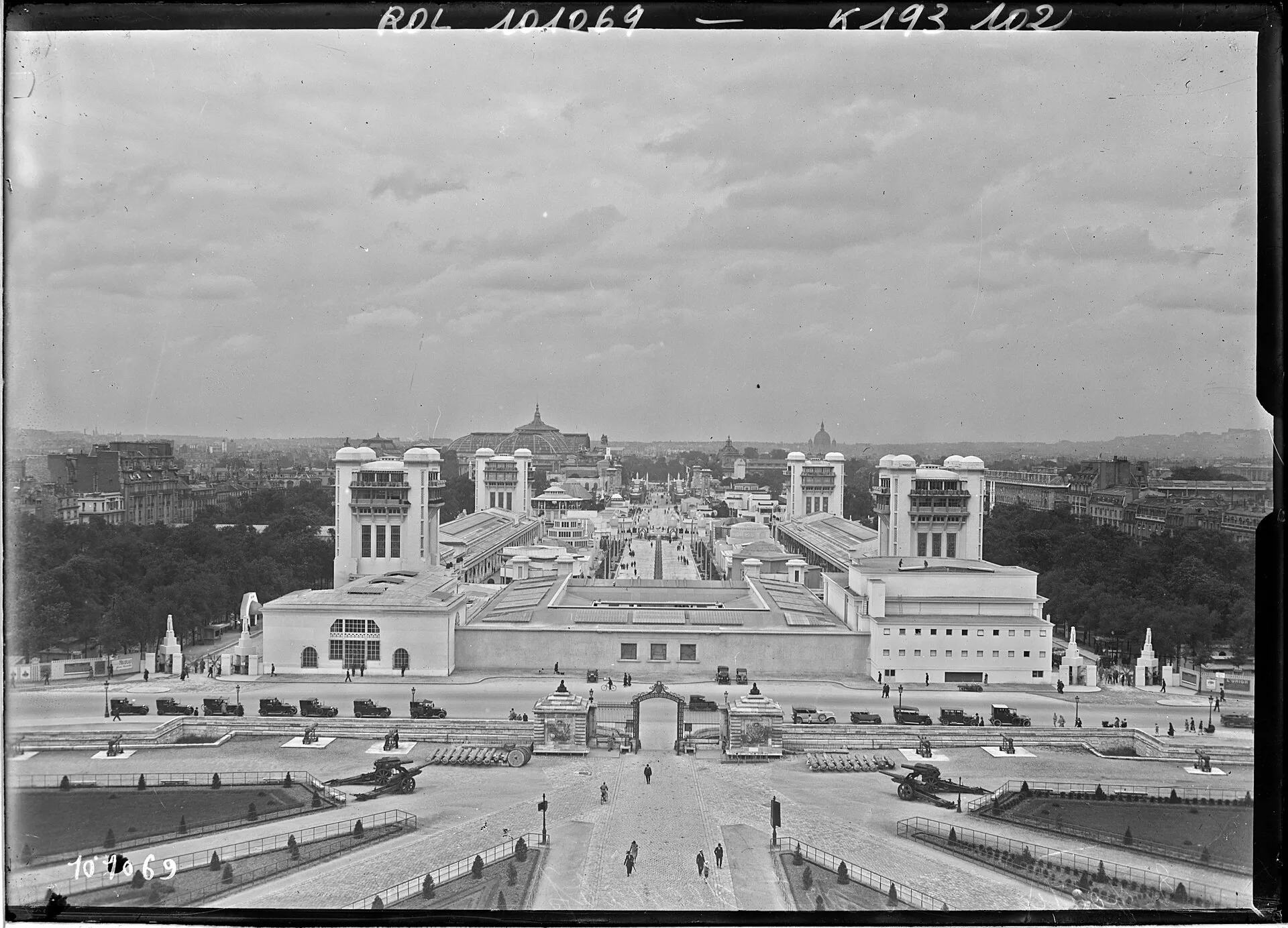
Art Deco history begins with one event: the Exposition Internationale des Arts Décoratifs et Industriels Modernes, held in Paris in 1925. The fair drew more than 16 million visitors, and its central rule, that every work shown had to be thoroughly modern, ruled out copies of historical styles. What filled its pavilions was furniture, glass, metalwork, lacquer and fashion with geometric or stylised ornament, made from luxury materials by highly skilled workshops. At the time the style was known as Style Moderne. The shorter name Art Deco, taken from the exposition's title, was coined only in the 1960s. Britannica notes that the 1925 exposition made the style highly popular for the next 15 years, and Art Deco design went on to shape interiors and buildings from Paris to New York and Mumbai.
WHAT WAS THE 1925 PARIS EXPOSITION?
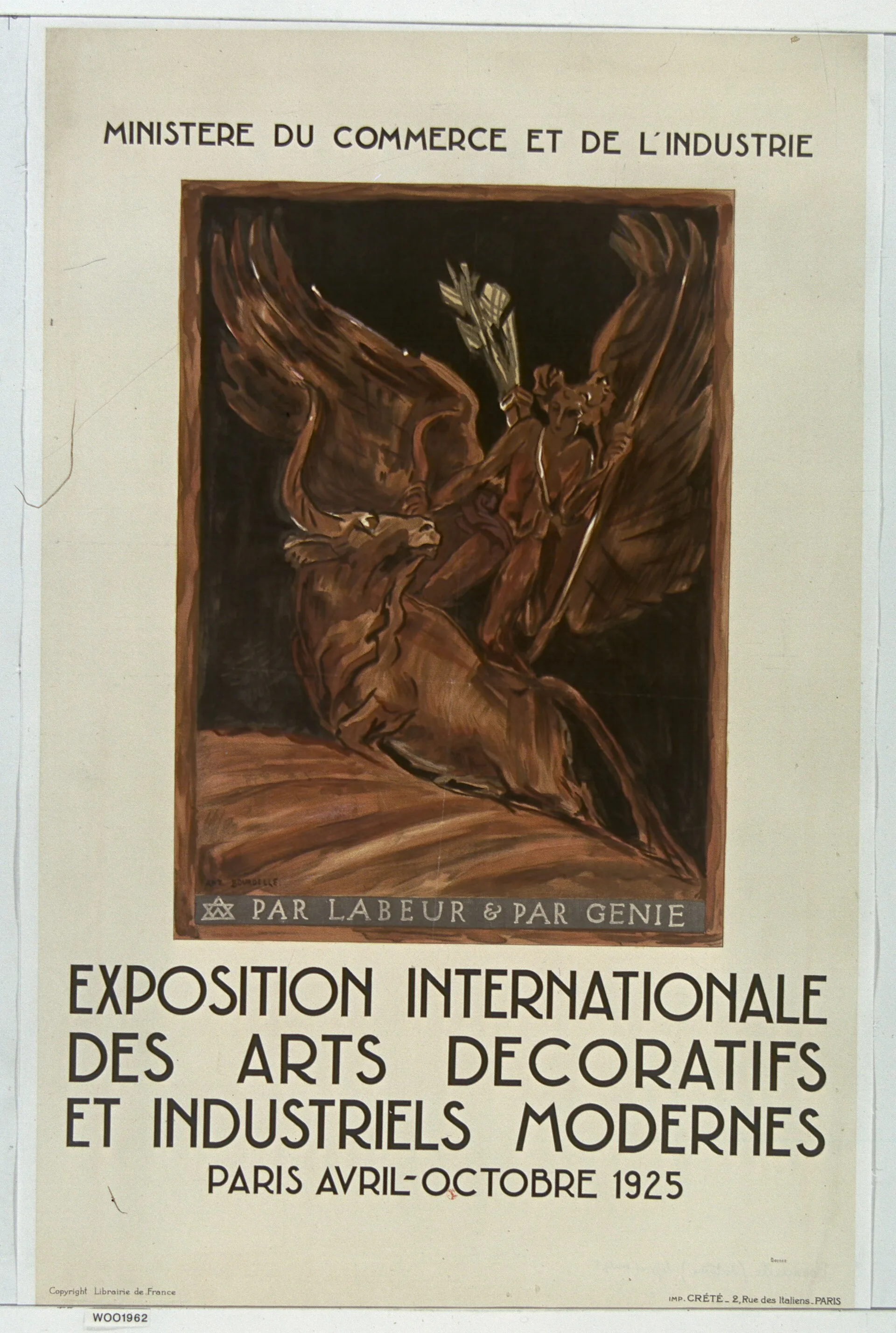
The exposition grew out of French concern about the state of design. The Metropolitan Museum of Art's essay on French Art Deco describes designers disillusioned by the commercial failure of Art Nouveau and worried by the advances made in Austria and Germany. The Société des Artistes Décorateurs, a professional association founded in 1900, gave a new direction its first official encouragement through its annual exhibitions. In 1912 the French government voted to sponsor an international exhibition of modern decorative arts, scheduled for 1915. The First World War postponed it for a decade, and it finally opened in April 1925.
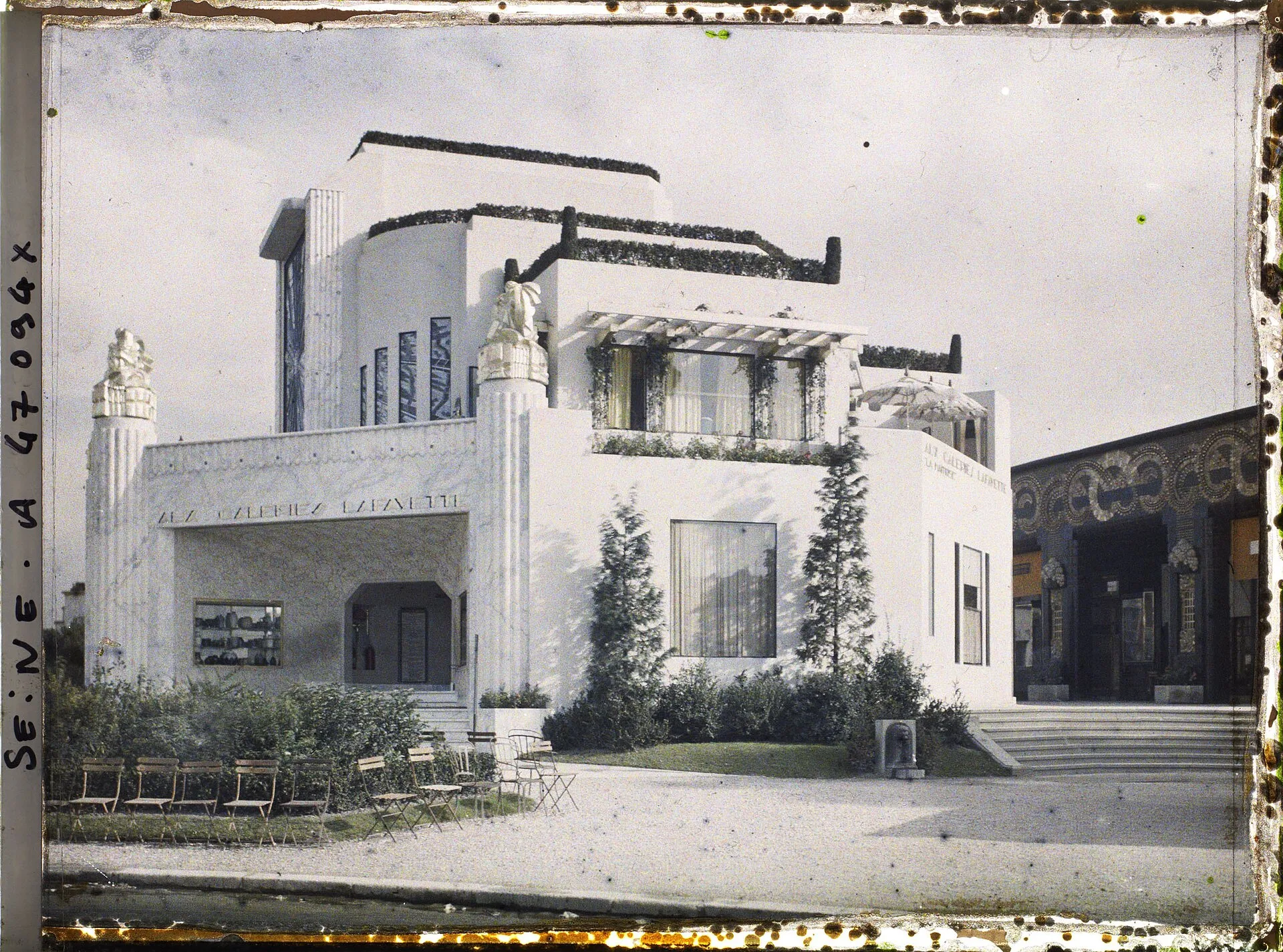
The fair occupied about 57 acres of central Paris, running from the Esplanade des Invalides across the Pont Alexandre III to the Grand Palais and the Petit Palais, on both banks of the Seine. Two-thirds of the ground went to French pavilions and the rest to other nations, most of them European. The Musée des Arts Décoratifs describes decorators, manufacturers, magazines, department stores, artists and foreign governments competing to occupy buildings in Paris or put up temporary structures. The Galeries Lafayette, Le Bon Marché and Printemps department stores each built a pavilion of their own.
THE RULE THAT DEFINED ART DECO DESIGN
The organisers set one condition that shaped everything on show: works had to be thoroughly modern, and copies of historical styles were not accepted. More than twenty countries were invited, but participation was uneven. ArchDaily's history of the fair records that Germany was not invited until too late to build a national pavilion, and that the United States stayed away because too few American designers could meet the requirement. A few historicist entries were admitted regardless.
The designers who did take part drew on recent painting and on cultures outside Europe. The Met's essay traces the influence of Fauvism, of Cubism as Picasso and Braque developed it between 1907 and 1909, and of the colour and exoticism of Diaghilev's Ballets Russes. The V&A adds the arts of Africa, East Asia and Mesoamerica, and the excavation of Tutankhamun's tomb in 1922, which set off a wave of lotus flowers, scarabs and pyramids in decoration. Britannica characterises the result as simple, clean shapes, often streamlined, with ornament that was geometric or stylised from natural forms, made in an unusually varied range of materials. Critics of the period used labels such as Moderne, Jazz Moderne and Zigzag Moderne.
The V&A records that critics dismissed the British contribution to the exposition as conservative, although British textile companies were praised for bright, modern furnishing fabrics. The style reached fashion as well as furniture, and the Musée des Arts Décoratifs' centenary exhibition showed work by Madeleine Vionnet, Jeanne Lanvin and Sonia Delaunay beside furniture by Ruhlmann and Eileen Gray. Ruhlmann himself, the V&A notes, was one of the star exhibitors of 1925.
RUHLMANN AND THE HÔTEL DU COLLECTIONNEUR
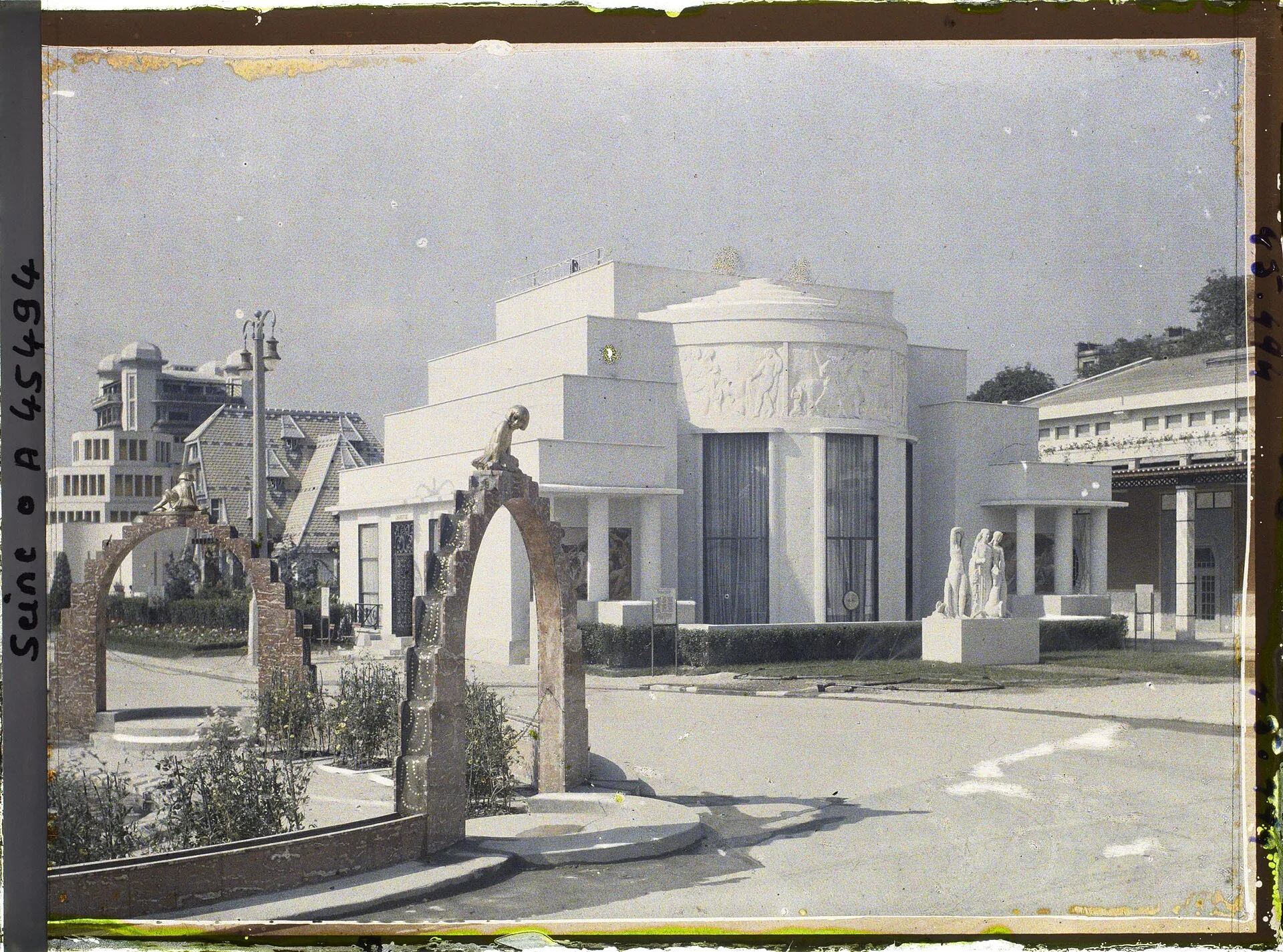
The most admired attraction of the exposition, according to the Metropolitan Museum, was the Hôtel du Collectionneur, a pavilion conceived as the imaginary villa of a rich and discerning collector. It was designed by the architect Pierre Patout as a setting for the work of Émile-Jacques Ruhlmann. Born in Paris in 1879, the son of a decorating contractor, Ruhlmann took over the family business in 1907 and added furniture design and interior decoration to it. By 1913 he was producing work in the new style, and in the 1920s he ran a workshop of more than 500 craftsmen and assistants.
Ruhlmann adapted late eighteenth-century French cabinetmaking to a modern idiom, and was called the Riesener of the twentieth century. He worked in rare woods, ivory, lacquer and precious metals, with fine veneers and inlay. A desk of about 1918 to 1919 shown in the Met's Ruhlmann exhibition combines amboyna burl veneer with ivory inlay and a sharkskin writing surface, and his Chariot sideboard of 1919 is made of macassar ebony with the tapering legs that became his hallmark. One very large piece reportedly took up to 1,000 hours of labour and cost as much as a house. The V&A notes that he called his richest creations his "precious pieces".
LACQUER, GLASS AND METAL: THE MATERIALS OF ART DECO
The Met lists sharkskin, ivory and exotic woods among the materials of French Art Deco, with lacquering and ceramic glazes among its techniques, and the Musée des Arts Décoratifs adds galuchat (shagreen), enamel, silver, macassar ebony, rosewood, amaranth and mahogany. Jean Dunand worked in lacquer, and Cartier, Raymond Templier and Jean Desprès made jewellery in the same geometric manner. The cost of these materials and techniques, the museum notes, meant the style was often reserved for wealthy clients. Britannica points out that the fair showed handcrafted luxury goods beside mass-produced ones, and that Art Deco materials ranged from jade, silver and ivory to chrome and plastics.
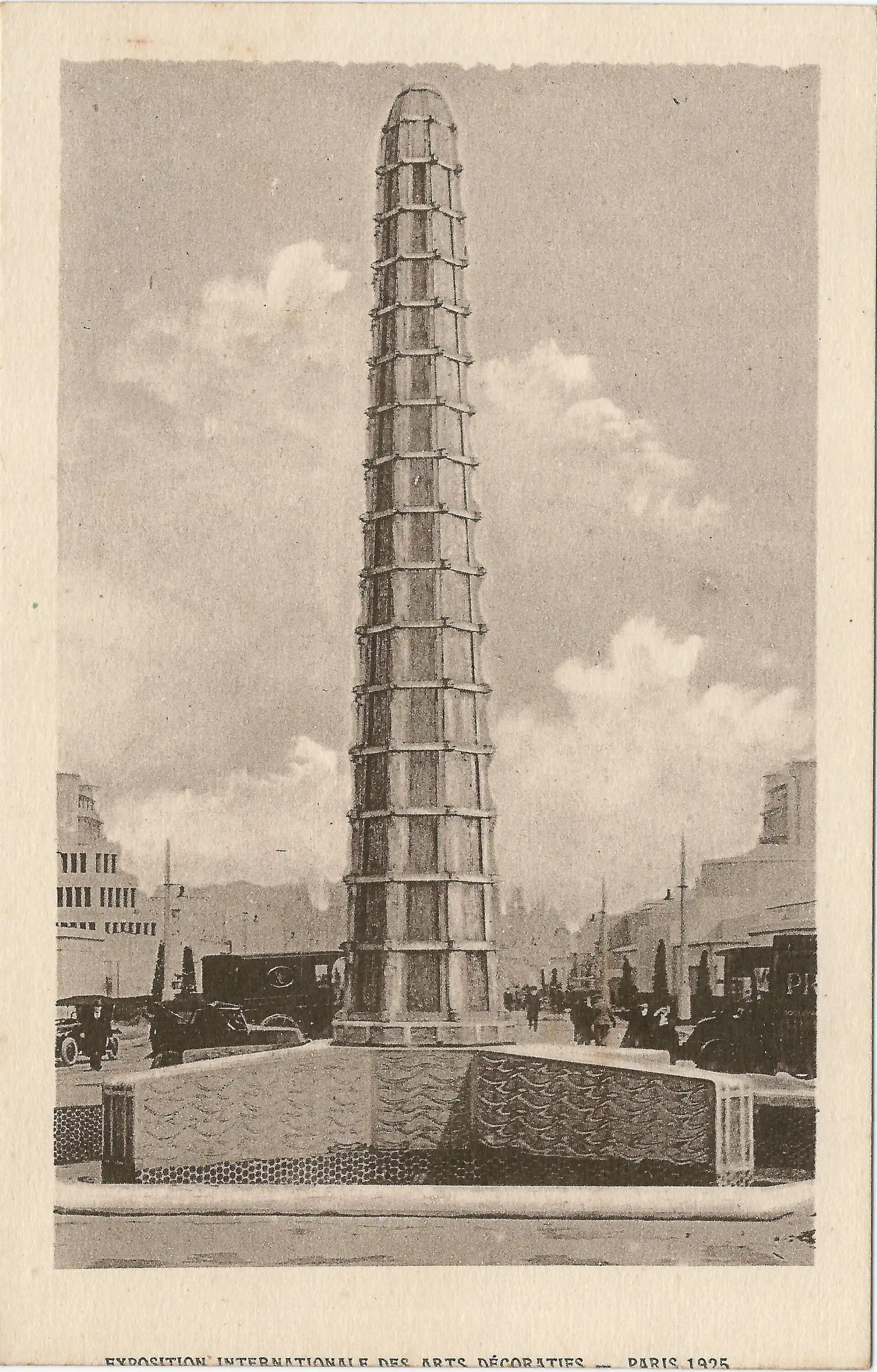
Glass and metal stood beside wood. René Lalique, who had made Art Nouveau jewellery before turning to glass, produced press-moulded vases at his factory at Wingen-sur-Moder in Alsace, and the V&A describes his mid-1920s technique of contrasting clear and frosted glass. His Fontaine Lumineuse at the exposition was a tiered obelisk with moulded-glass caryatids. Ruhlmann also designed lighting, including a chandelier of crystal and silvered metal of about 1925. The Viennese architect Josef Hoffmann's two-handled bowl in gilt brass, made by the Wiener Werkstätte around the same year, influenced many silver designers of the decade. In 1928 Lalique was one of the designers chosen to decorate the carriages of the Côte d'Azur Pullman Express, for which he made glass panels of blackbirds and grapes that divided the carriages, and the Musée des Arts Décoratifs names René Prou and René and Suzanne Lalique among the decorators of the Orient Express.
THE PAVILIONS THAT REJECTED ORNAMENT
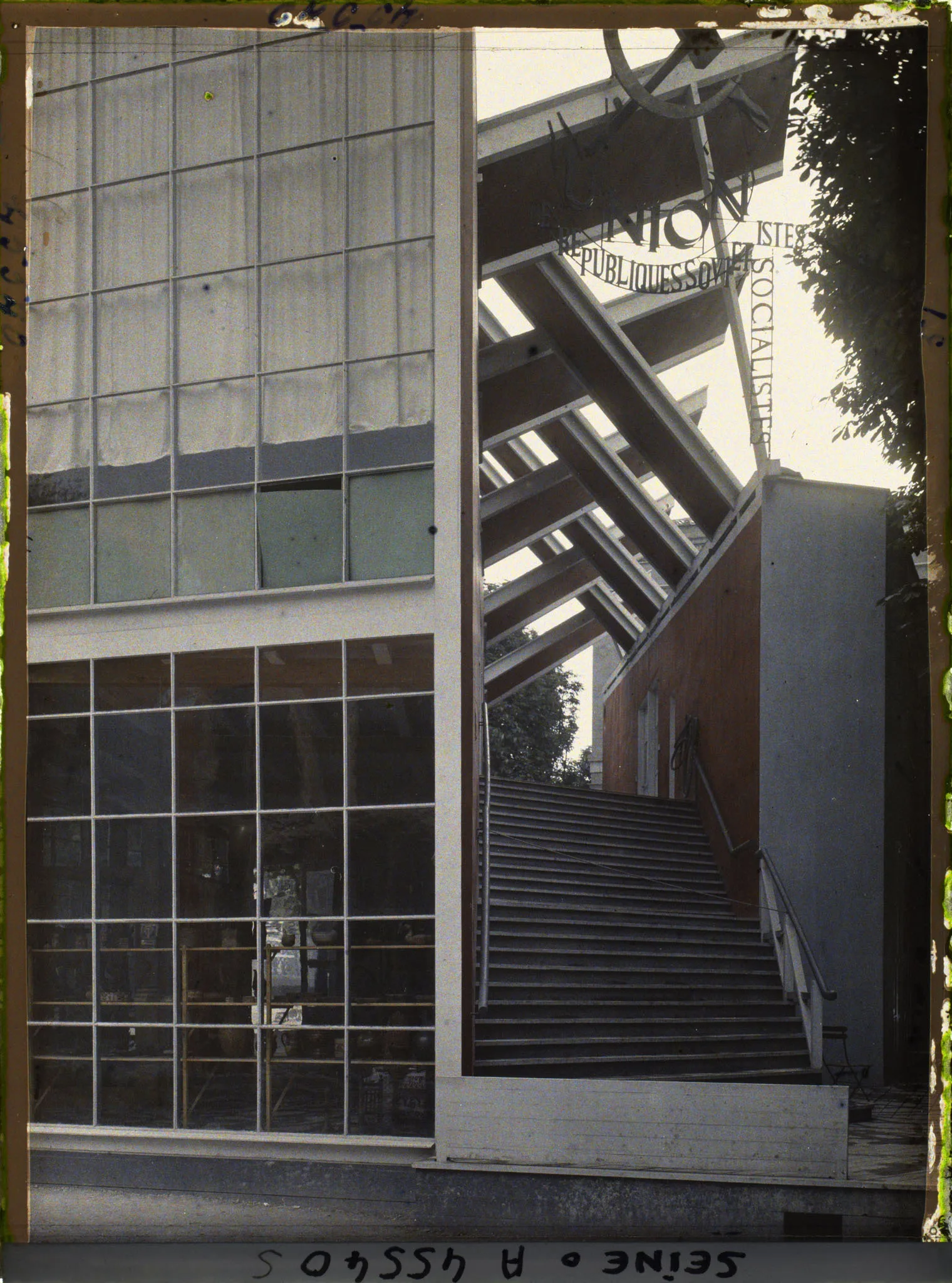
Not every pavilion followed the decorative line. Konstantin Melnikov's Soviet Pavilion, built of wood and glass in red and white to an angular Constructivist design, was hailed by the French press, Britannica records, as one of the most innovative architectural works of the twentieth century. Le Corbusier's Pavillon de l'Esprit Nouveau presented a model apartment that demonstrated his idea of the house as a machine for living in, without Art Deco styling. Victor Horta, known for his Art Nouveau buildings, designed a stepped, rectilinear Belgian pavilion, and J.F. Staal's Dutch pavilion was built in red brick. The French Embassy pavilion, by contrast, presented furnished rooms: it included a desk-library by Pierre Chareau, which the Musée des Arts Décoratifs reinstalled for its centenary exhibition, and André Groult made sketches for the bedroom of "Madame" in the same pavilion.
HOW ART DECO SPREAD AND WHY IT FADED
After 1925 the style travelled. Britannica describes Art Deco developing into a major style in the United States during the 1930s, and cites the Chrysler Building in New York, designed by William Van Alen and completed in 1930, as the epitome of the Art Deco skyscraper for its sunburst-patterned stainless steel spire. In Mumbai, early twentieth-century cinemas and residential buildings combined Indian design with Art Deco imagery in a style UNESCO calls Indo-Deco. In 2018 UNESCO inscribed the Victorian Gothic and Art Deco Ensembles of Mumbai as a World Heritage Site, a listing that links the city's westward expansion to the Backbay Reclamation and the creation of the Marine Drive sea front.
The luxury version did not survive the Depression. The V&A records that after the Wall Street Crash sales of luxury interiors fell, and through the 1930s chromed steel, aluminium, mirror, coloured glass and plastics such as Bakelite replaced exotic woods, ivory and sharkskin. By the mid-1930s critics were dismissing the style as a "gaudy, false image of luxury". Ruhlmann died in 1933, and the Met's essay sees the 1937 Paris exposition, devoted to science and technology, as marking the end of the Art Deco era.
The Met had collected the style while it was new: its curator Joseph Breck acquired work by Süe et Mare, Rateau and Lalique through a fund set up in 1922 by Edward C. Moore Jr, and in 1923 established the Met's first gallery for modern design. Interest returned in the 1960s, when the term Art Deco was coined, and ArchDaily credits a 1966 exhibition in Paris with giving the style its name. From 22 October 2025 to 26 April 2026 the Musée des Arts Décoratifs marked the centenary of the fair with the exhibition 1925-2025: One Hundred Years of Art Deco.
OPUS AT MANDARIN ORIENTAL SHENZHEN

Opus is a restaurant at Mandarin Oriental Shenzhen, designed by Silverfox Studios and completed in 2022. The dining room combines geometric metal and lattice screens with red leather banquettes, blue chairs, brass panelling and globe pendants. Its chef's table is a counter with a stainless steel kitchen hood, glass wine cabinets, brass panelling and views over the city. The screens and the brass carry the two elements of the 1925 exposition that this article has followed: geometric ornament and worked metal.
SOURCES
- The Metropolitan Museum of Art French Art Deco
- The Metropolitan Museum of Art Ruhlmann: Genius of Art Deco
- Britannica Exposition Internationale des Arts Décoratifs et Industriels Modernes
- Britannica Art Deco
- Musée des Arts Décoratifs 1925-2025: One Hundred Years of Art Deco
- ArchDaily AD Classics: Exposition Internationale des Arts Décoratifs et Industriels Modernes
- Victoria and Albert Museum An introduction to Art Deco
- Victoria and Albert Museum Art Deco in the home
- Victoria and Albert Museum Art Deco: René Jules Lalique
- UNESCO World Heritage Centre Victorian Gothic and Art Deco Ensembles of Mumbai