SANDALS, RAIN CAPES, BASKETS AND NEW YEAR WREATHS MADE FROM THE STALKS LEFT AFTER THE RICE HARVEST
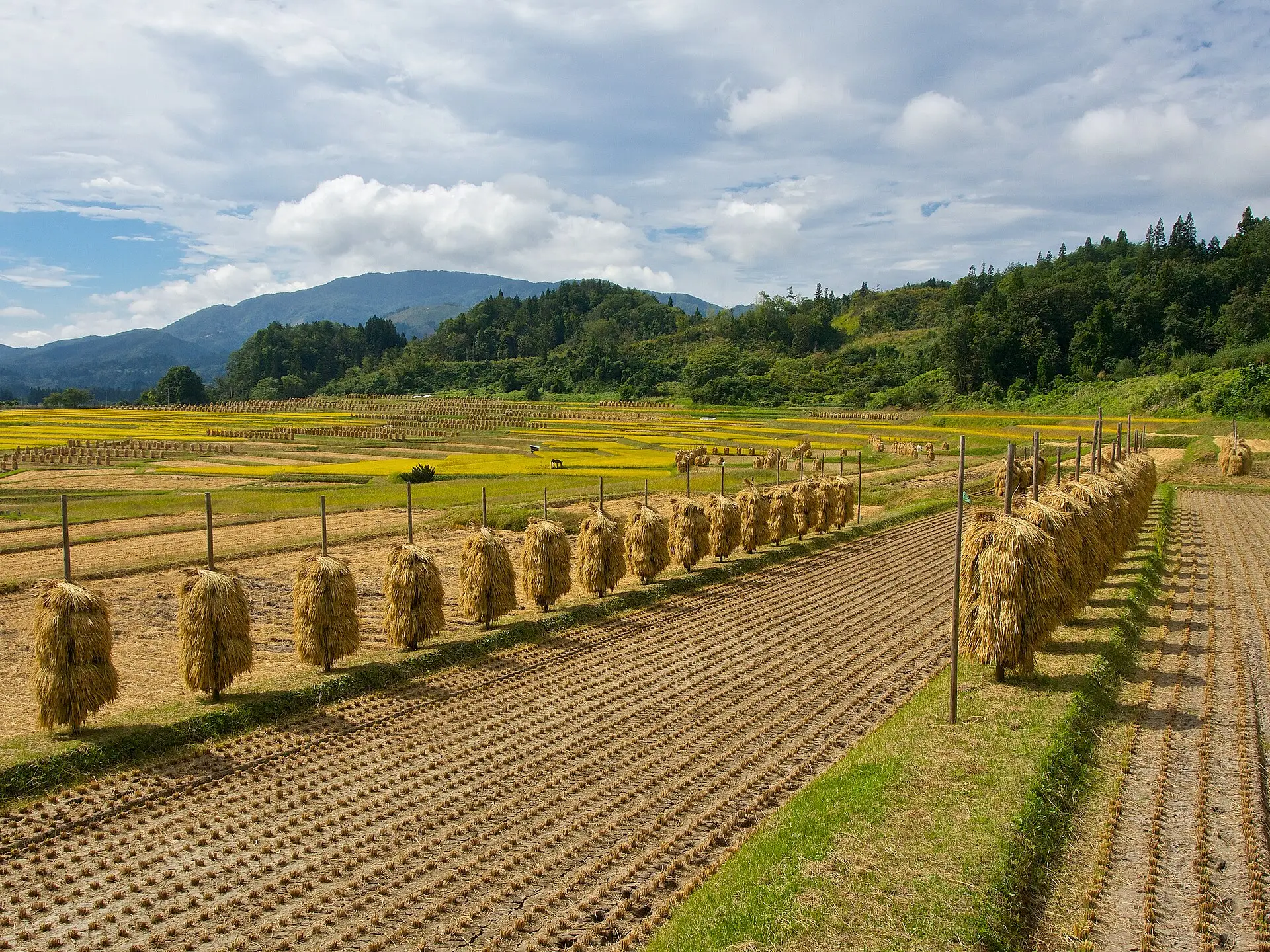
Wara zaiku is the Japanese craft of making objects from rice straw, or wara, the stalks of the rice plant left after the harvest. For most of Japan's history these rice straw crafts supplied the everyday equipment of farming households: sandals, rain capes, rope, mats, bags, baskets and boots. According to a 2023 study by Pandu Purwandaru of Universitas Sebelas Maret, published in the arts journal Mudra, Japan's rice straw culture, wara no bunka, began about 2,000 years ago in the Yayoi period and reached its height at the start of the Edo period (1603 to 1868). Japanese tradition divides straw objects into two groups: those for ke no hi, ordinary working days, and those for hare no hi, festivals and rites. Fourteen museums in Japan hold 1,164 traditional rice straw artefacts between them. The craft declined with mechanised farming, but it is still practised by craft groups, taught in museum workshops and used for an annual straw sculpture festival.
WHAT IS WARA ZAIKU AND HOW IS THE STRAW PREPARED?
Makers distinguish between grades of straw. In the Mudra study, wara is freshly harvested straw used for animal feed and compost; suguriwara is straw with its leaf sheaths stripped away, used for crafts, roofing and shimenawa ropes; and tatakiwara is suguriwara beaten with a wooden hammer until it is soft enough for finer weaving. The variety of rice matters. Craftsmen in Nagano Prefecture prefer Koshihikari straw to Akitakomachi, which is thinner and has shorter spaces between its nodes. Because machine harvesting breaks the stalks, many makers grow their own rice. The straw is dried by hasakage, hung on bamboo outdoors for about 10 to 14 days depending on the climate, and some makers soak it in hot water or smoke it to keep insects away.
The study identifies three basic methods, nawa (rope making), ami (weaving) and tabane (bundling), from which 26 variations are derived. Regional specialities follow from these. In Otari village in Nagano, craftsmen mainly use coiling to make nekotsugura, straw cat houses, each of which takes seven to ten days and nine bundles of tatakiwara. In Azumino, makers weave baskets and bags with a technique called tawara ami, and a basket takes about a day. Other traditional products listed in the study include enza seats, baby cribs, containers for serving rice, sandals, boots, hats, and brooms and brushes made from the ears of the rice plant. Purwandaru links the habit of using every part of the harvest to mottainai, the Japanese sense that wasting something still useful is a shame.
STRAW SANDALS: WARAJI, ZORI AND ASHINAKA
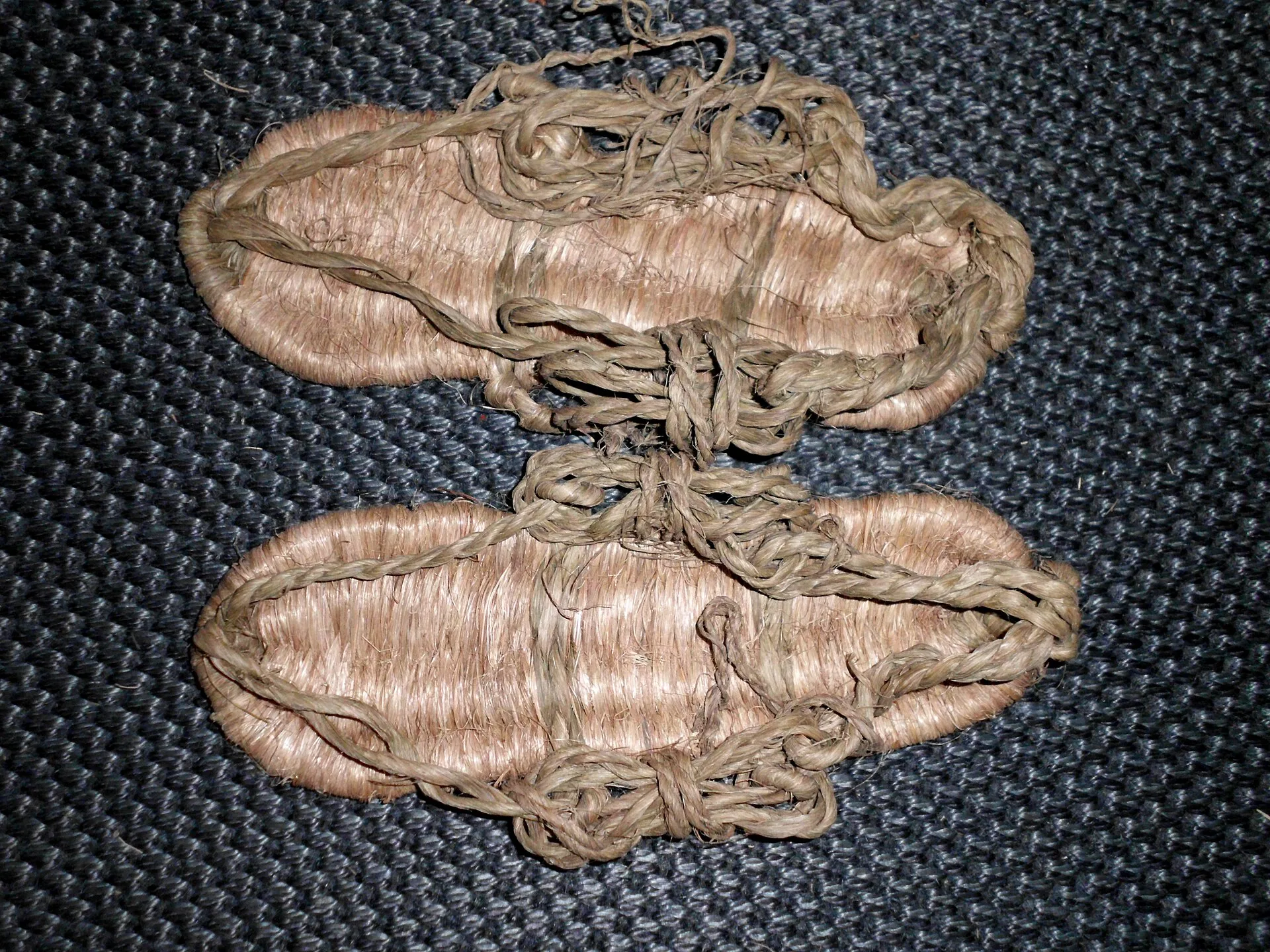
Footwear was the most widespread straw product. Kyoko Ichida of the Japan Footwear Museum in Hiroshima Prefecture told The Japan Times in 2005 that woven straw sandals were common from at least the 9th century until well into the 20th. A Japan Tourism Agency commentary written for a straw workshop in Fujino, Kanagawa, describes waraji as the ordinary outdoor footwear of common people from the Heian period (794 to 1185) to the end of the Edo period. Ichida distinguished two forms: warazori, everyday sandals, and waraji, which have ties that hold the sole to the foot and leg and were worn for travel and work. Nipponia magazine describes waraji as light and cheap, and lists lower-ranking soldiers, construction workers and ordinary travellers among their wearers.
A pair in the Horniman Museum in London shows how they were made. The sole is woven from four bands of rice straw in a gourd shape over lengthways cords, which extend beyond the toe and heel as twisted cords; at the front these pass through loops on each side of the sole and hang loose for tying. Straw zori, with a thong and an oval woven sole, developed from the waraji, and Nipponia calls them the ancestor of the beach sandal. Ashinaka are short sandals covering only the toes and the front of the foot. The Fujino commentary records that farming and fishing labourers wore them in the Edo period and that ukai cormorant fishermen, a practice found in only 13 places in Japan, still use them.
MINO RAIN CAPES AND WINTER WORK IN SNOW COUNTRY
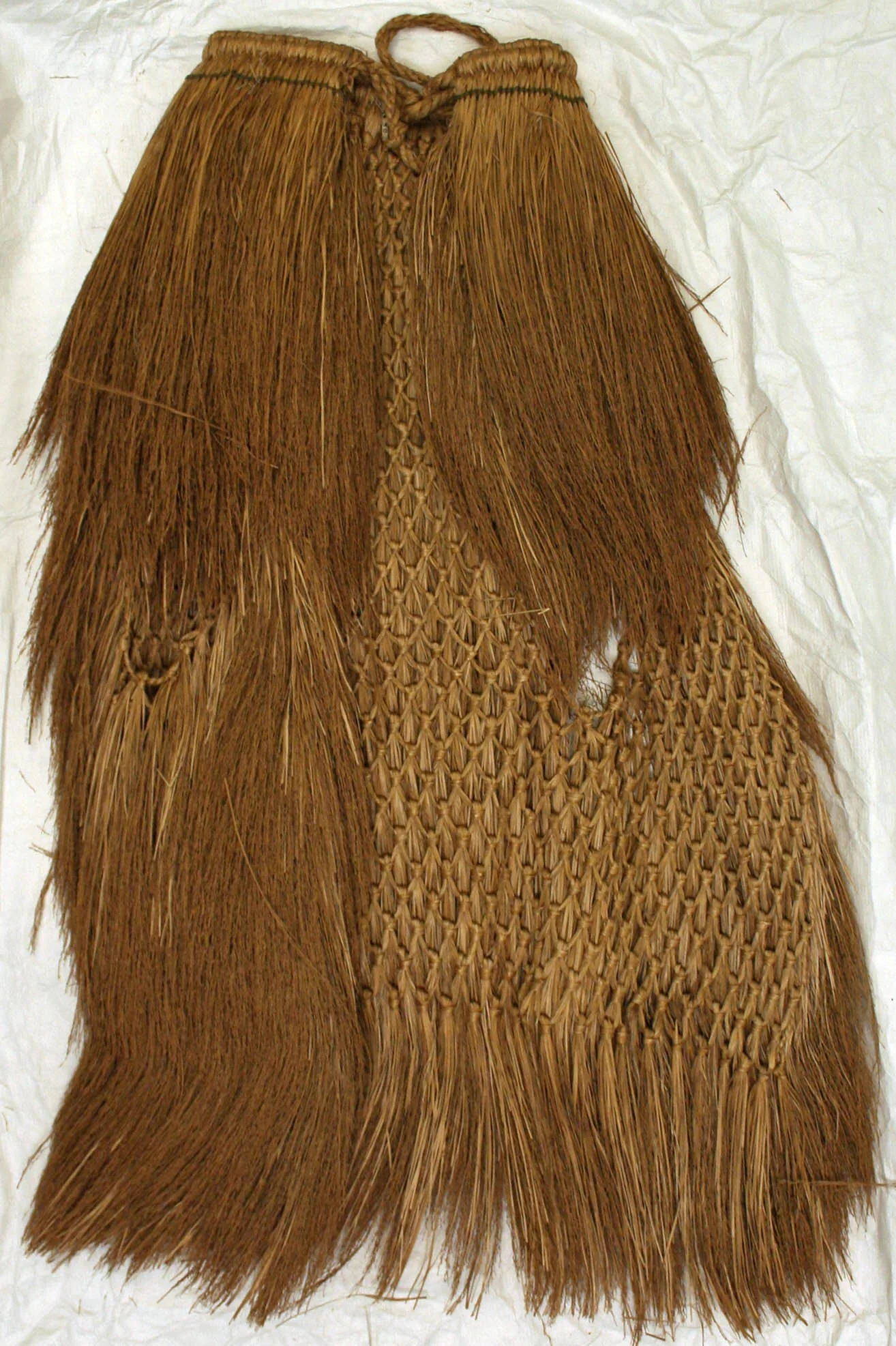
Straw also protected farmers from the weather. The mino is a rain cape made from plant fibre. An example in the Brooklyn Museum, made in Akita in the 19th century, between the late Edo and Meiji periods, combines bark, bast fibre and dye and measures about 137 by 125 cm. In 2012 the Japan Folk Crafts Museum in Tokyo exhibited braided mino and kera, a raincoat made mainly from straw, from the Tohoku region of northern Japan, together with senaka-ate, protectors worn on the back. The exhibition presented them as works made as part of everyday life in Tohoku, alongside the region's ceramics, kogin and hishi-zashi embroidery and lacquerware.
Most straw goods were made in winter. A Japan Tourism Agency commentary for the Gasshozukuri Minkaen open-air museum in Shirakawa-go, Gifu Prefecture, explains that men made sandals, mats, rope, backpacks, boots and gaiters during the snowy months, when outdoor work was difficult. In this mountain village rice was hard to grow and straw was scarce, and the short ashinaka saved material. A villager needed about 40 pairs of ashinaka a year, and making them took many hours of evening work by firelight. The museum now runs a workshop of about two hours, held inside one of its gassho-style houses, in which visitors weave their own pair. In Fujino, a similar workshop teaches visitors to dampen the straw, beat it with a wooden mallet and twist it into rope before making sandals.
STRAW OFFERINGS AND NEW YEAR DECORATIONS
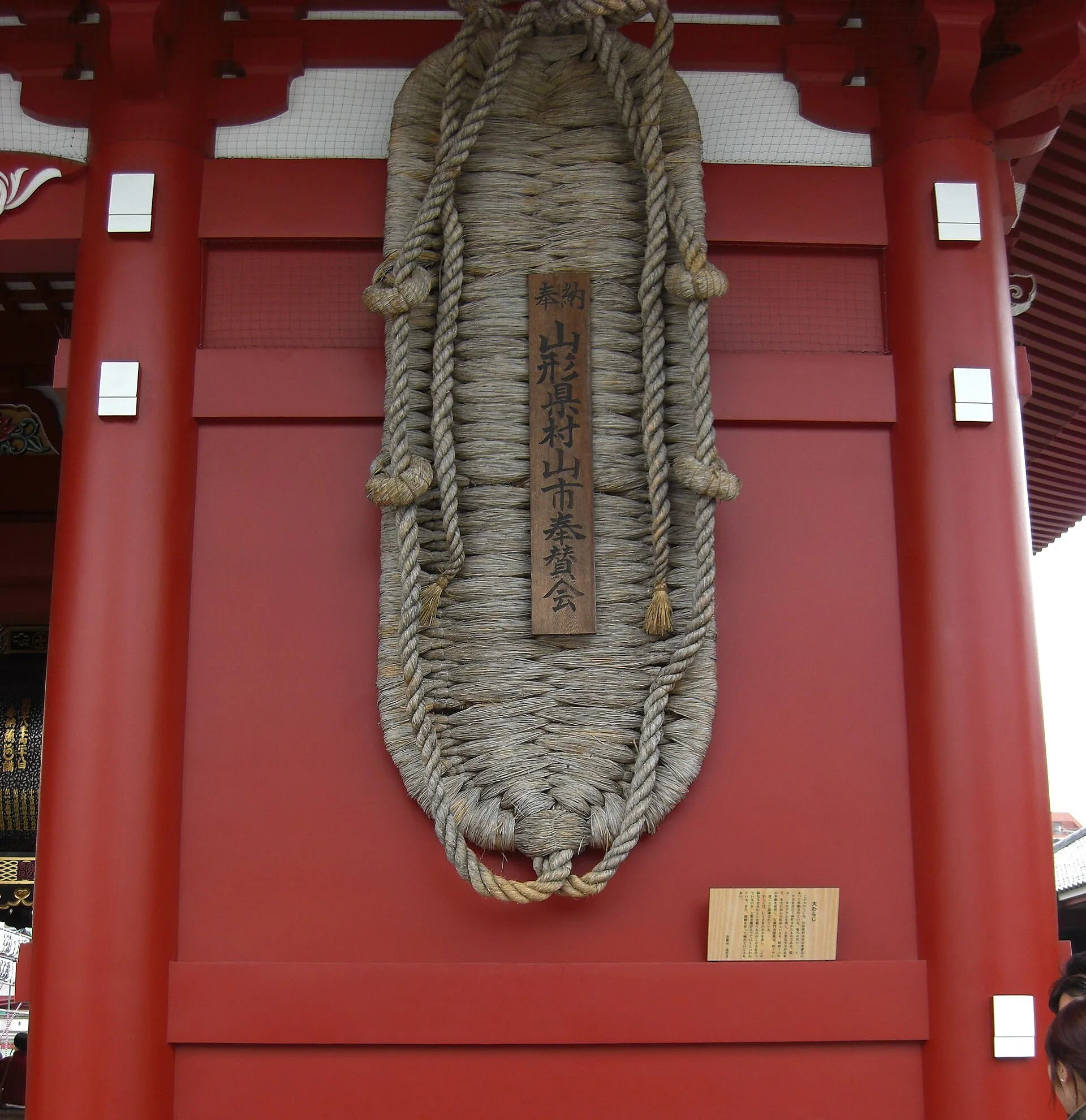
Straw objects also served the ritual side of village life. Straw sandals have long been offered at temples and shrines, The Japan Times reported, mainly with prayers for safe travel and for the health of the legs. The largest example hangs at the Hozomon gate of Senso-ji in Asakusa, Tokyo: a pair of owaraji, giant waraji, each about 4.5 metres long, 1.5 metres wide and about 500 kg in weight. They are made by Murayama in Yamagata Prefecture from straw grown in a dedicated paddy, with about 800 people involved over a year and a half. The first pair was offered in 1941, arranged by Toshizou Matsuoka, a Diet member from Murayama, as thanks for government relief after snow damage and as a prayer for the nation's safety. It was destroyed in the 1945 bombing, and replacements have been donated since 1964, roughly every ten years.
Rice straw is also the material of the New Year. In the January 2025 issue of Highlighting Japan, the Japanese government's English-language magazine, the folklorist Shintani Takanori explains that shimekazari, wreaths made from lengths of straw rope, are hung at the entrance to show that a house welcomes Toshigami, the deity believed to visit each home at New Year and bring good fortune for the year ahead. Some regions build a Toshigami-dana, a shelf of split bamboo tied with straw cord and hung from the ceiling for the deity's visit. Preparations traditionally begin on 13 December. Shintani connects these customs to the belief that rice holds a spiritual power, inadama, because a single grain planted in spring multiplies into hundreds or thousands by the autumn harvest.
THE DECLINE AND REVIVAL OF RICE STRAW CRAFTS
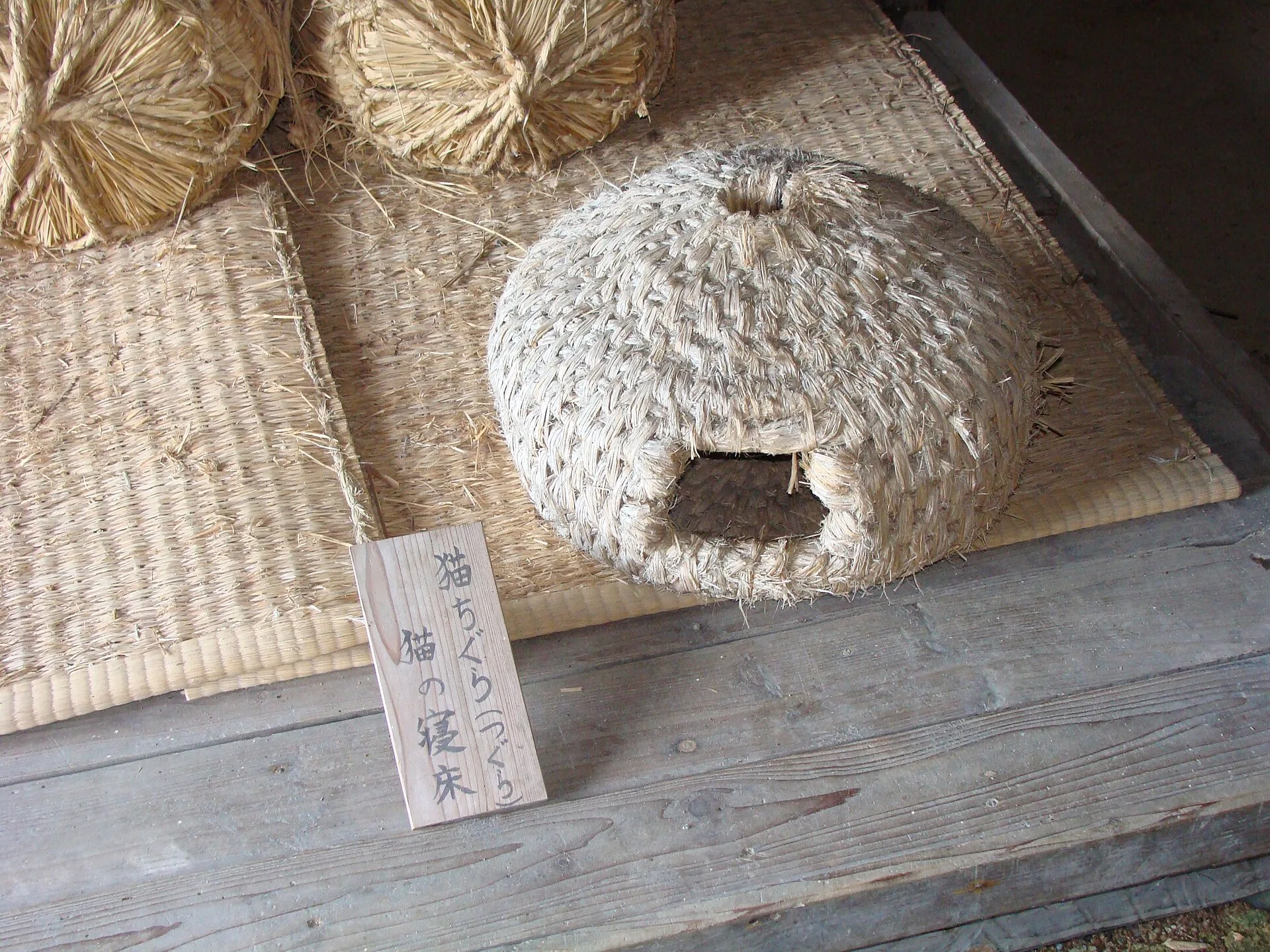
Mechanisation and the move away from farming reduced demand. The Mudra study cites figures showing that Japan's straw rope workshops fell from about 2,000 in 1967 to about 400 in 1978, and notes that in Itoigawa, Niigata, traditional cultivation and straw use continued only until 1980. Today the average craftsman is 50 or older, and local interest in farming is falling. Preservation now depends on organised groups. In Otari, the local government founded the Otarimura Warazaiku Shokunin Guruppu, the Otarimura Rice Straw Craftsmen Group, in 2017 under a regional revitalisation programme. It has about 20 members, runs nekotsugura workshops twice a week and issues certified craftsman labels so that buyers, particularly online, can be sure of the quality.
New designs have followed. Otari makers produce a portable nekotsugura, a miniature version and decorations from leftover straw, and in Azumino a rectangular basket was developed from the traditional round design, based on baskets once used to carry manure and crops. Products are sold through roadside stations, craft shops, social media and the furusato nozei hometown tax donation scheme. After one national television broadcast the Otari group sold 24 nekotsugura, against a usual maximum of ten a year. Straw has also become a material for public art. The Wara Art Festival at Uwasekigata Park in Niigata grew out of a 2006 request from local farmers to Shingo Miyajima, a professor at Musashino Art University, to find a use for surplus straw. Hyperallergic reported that by 2021 students and residents were building rice straw animals on wooden frames up to about 30 feet (around 9 metres) tall.
STRAW AND FIRE AT STRAWFIRE
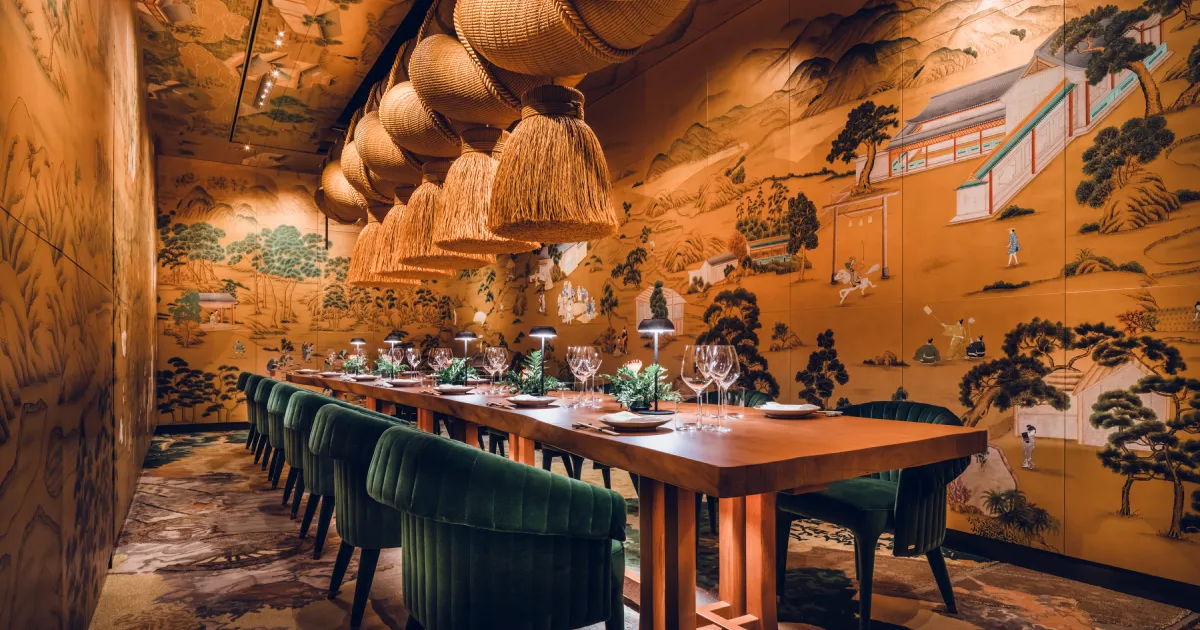
Strawfire at Emirates Palace Mandarin Oriental, Abu Dhabi, is a Japanese restaurant by chef Ross Shonhan, designed by Silverfox Studios and completed in 2024. Its concept draws on rice straw in rural Japan and on warayaki grilling, in which burning straw sears meat and fish. The design follows three themes: straw, fire and Japanese heritage. Straw is expressed in cream, gold and mustard tones, and fire in orange, gold and rust. The warayaki counter sits under a hand-beaten brass hood fronted with faceted gold tiles, and a back-illuminated kumiko screen shows the shadows of the chefs at work. In the booths, straw bales stand up to 2 metres tall.
SOURCES
- Mudra Jurnal Seni Budaya Rice Straw Craft Preservation and Development in Nagano Prefecture, Japan
- The Japan Times Dear Alice: Owaraji
- Japan Tourism Agency Satoyama Experience
- Japan Tourism Agency Rice-Straw Handicrafts
- Nipponia, Web Japan Traditional Footwear
- Horniman Museum and Gardens Pair of sandals, waraji
- Brooklyn Museum Mino (Straw Rain Cape)
- The Japan Folk Crafts Museum Tohoku Crafts and Shiko Munakata
- Highlighting Japan, Government of Japan Celebrating a Bright New Year in Japan: The Origins and Significance of Japan's New Year's Culture
- Hyperallergic In Japan, Enormous Straw Sculptures Pop Up After Annual Rice Harvest